
I think it’s logical for people who have never been in the military to wonder why some veterans have such a deep, abiding, and visceral hatred of military posers—the people who pretend to be what we are. After all, this is a free country, what’s the harm in a couple of lies to impress a girl, score a free drink, or get 10% off at your local hardware store? A little exaggeration never hurt anyone, right?
Wrong. Dead wrong. A veteran lives in a world where honor and integrity have real meaning. Military posers are charlatans who defile the memory of our dead and damage the credibility of the living by contaminating the validity of our service. They are cowards in life and are miserable excrement of humanity who are willing to perjure their souls for honor they do not have and can never attain; honor which is a gift of self and a personal testament of worth. And we loathe them for it.

Most veterans, the ones who aren’t complete douches at least, don’t look down on civilians who never served in the military. Most vets realize that without people like teachers and technicians, doctors and drivers, policemen and politicians, businessmen and busboys, our American system simply wouldn’t work. There are many different ways to serve our country, including by simply being a responsible citizen. The military is only one of those ways.
But there is a group of people that many veterans utterly detest, with every ounce of our collective being: military posers. A military poser is someone who, through fabrication, exaggeration, omission, or lack of correction creates or allows to be created an incorrect perception of his or her military service status. Simply put, if reasonable people think you are representing yourself as someone or something you are not, then you’re a poser. Period.
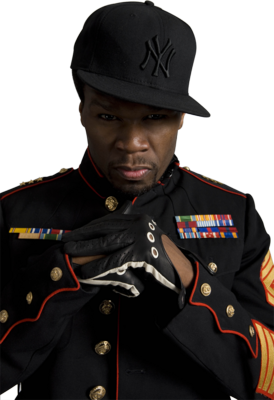
So who isn’t a poser under this definition? The short answer is, outward appearance on its own doesn’t count, it’s all about intent. People who wear military-style fatigues to do rugged work like hunting, or simply to stay warm, are not posers. Children who are obviously too young for military service aren’t posers. People who wear military-themed clothing, including unit- or qualification-specific shirts or hats, are not automatically posers (do you think everyone wearing an NFL jersey played professional football?). Legitimate re-enactors aren’t posers, and as for Airsofters… well, that’s debatable. Anyway, even celebrities who wear stylized military uniforms or hipsters who wear military-style jackets or hats to be “ironic” aren’t posers, they’re just douchebags. That’s an important difference.
But there are plenty of people out there who talk like us, dress up like us, and/or try to convince people that they are us. They make up stories about anything from being a war hero to being a war criminal. They are disgusting excuses for human beings and they make life harder for all real veterans out there, and they are loathed by the military community. Let me explain:
To begin with, it’s important to understand the poser spectrum. There are four general categories of military posers. On the scale of hardest to easiest to detect, you have the “elite fabricators,” then “the exaggerators,” followed by the “let you assume-ers,” and finally the “outright inventors.” The elite fabricators go to great lengths to falsify their military experience. They order realistic-looking certificates, medals, and military regalia online and deeply research their roles. They are often hard to sniff out and might even pass initial muster with real veterans… for a while.
Exaggerators actually served, but inflate or in some cases just make up important details. These are the kinds of people who, for example, might have been a mechanic (an important job!) but want everyone to think that he was some kind of elite ninja SpecOps killer. They generally have enough knowledge about the military to fake it with their civilian friends, but usually get outed quickly enough when in the company of other veterans, especially those with the kind of experience that the poser is claiming to have.
The “assumers” give you very few details, but benefit from letting you fill in the details they leave out. They often, but not always, had some kind of military service… but it wasn’t quite good enough for their egos. So, they give a few details and let you assume away the rest. For example, someone you meet might make a comment like, “Well, back when I was with Group…” which may lead you to believe that the individual in question is a Special Forces-qualified individual. When the individual’s story falls apart later, he can always fall back on, “Well, I never SAID that I was a Green Beret.” Right, Sparky, but you actively tried to get people to think it, and you did nothing to disabuse them of the notion once they got it into their heads. You’re a poser, bro.
The final category of military poser, the outright inventors, never served and usually have very little backstop to their tales of supposed service. They invent their military careers out of thin air, often on the spot, and consequently their stories tend to not survive first contact with anyone who knows anything at all about military service. As an example, I remember one time I was gassing up my truck outside of Fort Bragg, North Carolina when I was approached by a man in ragged clothes who reeked of both cigarettes and beer. He asked me for money “for food,” and when I refused, he tried to play the veteran card. “Come on man, I was in the Army too!” he claimed. “Cool story bro, what was your MOS?” I responded. He gave me a confused look. “MOS?” …and the encounter went downhill from there.
There can be hybrid posers; for example, an exaggerator who never made it out of basic training might become an elite fabricator courtesy of the Internet, and may be able to hide it all behind a mask of assumptions and on-the-spot inventions when questioned about his service. Hybrids can be notoriously difficult to spot, but fortunately they’re pretty rare. Unfortunately, sometimes they can get a lot of mileage out of fabricating, exaggerating, inventing, and letting people assume things about their military resume.

Generally, though, most real veterans can sniff out posers out pretty easily, and every veteran deals with posers in his or her own way. This can run the gamut from ignoring the poser, to public shaming, to making “funny cause it’s true” videos and cartoons, to straight up hostility. Take for example the recent viral video of a legit vet confronting a fake “Ranger” at the mall (there’s this, too Go Army, Beat Navy !). Unfortunately, the “summarized ass whipping” is not recognized as a legal course of action, so most of the time military posers do not get the punishment they so richly deserve. The Stolen Valor Act gave some relief, but important parts of it didn’t pass Constitutional muster and got overturned. So now it’s pretty much an open invitation for military posers, to include well-known celebrity actors like Shia LaBeouf, to carry on however they want.
Now that you understand what a poser is and is not, why does it even matter? Well, there are several problems with military posers. First and foremost, they are committing fraud. Every one of them. Being a veteran imparts certain prestige and confers certain benefits to which those who have not earned them are not entitled to partake. Falsely claiming military service, whether it is to get into someone’s pants or to get some other tangible benefit, is fraud and should be treated as such. The military is a values-based organization and integrity is a valued trait within the veteran community. We simply have no patience for liars.
There is a more insidious side to military posers as well. In addition to those who claim to be war heroes, we also have those who claim, for whatever reason, to be war criminals. The idiots at Iraq Veterans Against the War (IVAW) promoted another idiot named Jesse MacBeth, who claimed, among other things, to have committed hideous wartime atrocities while serving as a Ranger in Iraq. Nor is MacBeth the only idiot to have confessed to fake war crimes. Unfortunately, these reports are used by those with anti-military and anti-U.S. agendas, including the very people we’re fighting in Iraq and Afghanistan, to attempt to cause harm to our veterans, our armed services, and our country. The veteran community takes this personally.
Finally, there is the sense of personal injustice that veterans feel when a poser claims credit for something he or she hasn’t done. Our accomplishments in the military are the things that we worked, bled, suffered, and for some of our brothers and sisters in arms, died for. We will be damned if we allow ANYONE to claim those same credentials undeservedly. I’m not going to explain it any further than that. If you worked HARD for something significant in your life, you understand what I’m talking about, and how veterans feel about impostors. If you haven’t, then you won’t get it and no amount of explanation will help. It’s enough to understand that as a rule, veterans love America and hate posers. And you should too.
_________________
This first appeared in The Havok Journal on December 13, 2014.
_____________________________
Charles served over 27 years in the US Army, which included seven combat tours in Iraq and Afghanistan with various Special Operations Forces units and two stints as an instructor at the United States Military Academy at West Point. He also completed operational tours in Egypt, the Philippines, and the Republic of Korea and earned a Doctor of Business Administration from Temple University as well as a Master of Arts in International Relations from Yale University. He is the owner of The Havok Journal, and the views expressed herein are his own and do not reflect those of the US Government or any other person or entity.
As the Voice of the Veteran Community, The Havok Journal seeks to publish a variety of perspectives on a number of sensitive subjects. Unless specifically noted otherwise, nothing we publish is an official point of view of The Havok Journal or any part of the U.S. government.
Buy Me A Coffee
The Havok Journal seeks to serve as a voice of the Veteran and First Responder communities through a focus on current affairs and articles of interest to the public in general, and the veteran community in particular. We strive to offer timely, current, and informative content, with the occasional piece focused on entertainment. We are continually expanding and striving to improve the readers’ experience.
© 2026 The Havok Journal
The Havok Journal welcomes re-posting of our original content as long as it is done in compliance with our Terms of Use.


