There comes a point in every profession where experience alone is no longer enough. Society changes. Technology evolves. New challenges emerge. Expectations increase. If the profession refuses to evolve with them, it slowly falls behind. Law enforcement has reached that point.
Today’s police officer is expected to wear more hats than at any other time in history. In a single shift, an officer may transition from responding to an armed robbery to comforting the family of a deceased loved one, de-escalating a person experiencing psychosis, performing CPR on a child, investigating a domestic violence incident, interviewing victims of trauma, locating a missing juvenile, handling a suicidal veteran, or making a split-second decision about whether deadly force is justified. Few professions require such an extraordinary combination of technical skill, emotional intelligence, sound judgment, and mental resilience.
Yet despite these increasing expectations, much of our educational model has remained largely unchanged. Police academies continue to focus heavily on criminal law, firearms, defensive tactics, report writing, emergency vehicle operations, and physical fitness. These subjects are essential and should remain the backbone of police training. However, they are no longer sufficient by themselves. They prepare officers to perform tasks, but they often do not prepare them to understand the complex human beings standing in front of them or the complex human being wearing the badge.
That distinction matters.
If policing truly wants to continue evolving as a profession, then we must stop asking whether officers need more training. We should instead ask whether officers are receiving the education necessary to perform at the level modern policing demands. Training teaches someone what to do. Education teaches someone how to think.
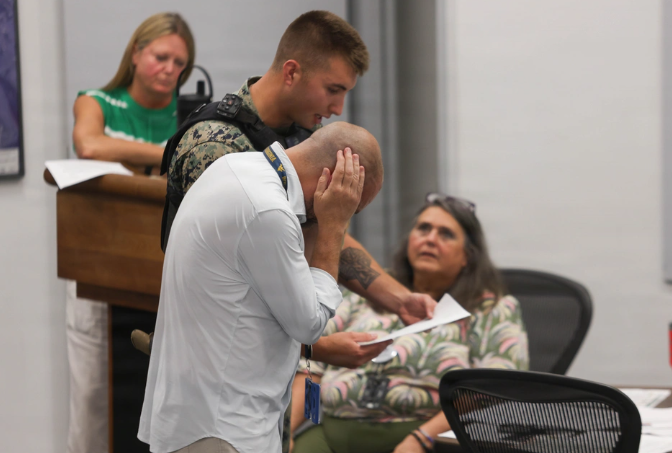
There is a difference between the two.
I was once asked by a friend what I would do if I had the opportunity to change police education. This was my answer. If I had the opportunity to redesign police education from the ground up, I would build it around three pillars: tactical competence, behavioral science, and decision making and human performance.
These three pillars do not compete with one another. They complement one another. Together, they produce officers who are not only capable of surviving violent encounters but capable of understanding people, regulating themselves under pressure, making better decisions, and continuously improving throughout their careers.
Before discussing those pillars, however, I believe we first need to address something much larger.
Police academies themselves need to change. One of the most controversial recommendations I make whenever discussing police education is also the one I believe is the most important. Police academies should be a minimum of one full year.
That statement often receives immediate criticism. Agencies argue they cannot afford it. Staffing shortages make it difficult. Departments need officers on the street now, not 12 months from now. While these concerns are understandable, they reflect short-term thinking applied to one of the most consequential professions in society. We routinely ask police officers to perform one of the most difficult jobs imaginable after only a few months of formal education.
Within their first few years on the job, they may have to determine whether deadly force is legally justified. They may perform CPR on an infant. They may intervene during a suicide attempt. They may investigate child abuse, interview victims of sexual assault, calm an individual experiencing schizophrenia, notify parents that their child has died, recognize indicators of human trafficking, respond to an active shooter, or comfort a spouse after a fatal motor vehicle crash.
Every one of those situations requires extraordinary judgment.
Very few professions carrying this level of responsibility provide so little initial education.

Physicians spend years in medical school before entering supervised residency. Attorneys spend years studying law before representing clients. Clinical psychologists undergo graduate education followed by supervised clinical practice. Airline pilots accumulate hundreds of hours before transporting passengers. Even electricians, plumbers, and skilled trades often complete apprenticeships lasting several years before working independently.
Yet policing, one of the few professions where mistakes can permanently alter or end lives within seconds, often expects officers to learn much of their profession after graduation.
That model no longer serves the profession or the communities it protects.
A one-year academy should not simply mean spending more time sitting in classrooms. It should represent a complete redesign of police education.
The first portion of the academy should establish technical competence through criminal law, constitutional law, ethics, emergency medicine, defensive tactics, firearms, communication, emergency vehicle operations, physical conditioning, and report writing.
The second phase should shift toward understanding human behavior. Officers should receive meaningful education in psychology, sociology, anthropology, neuroscience, crisis intervention, communication, stress physiology, emotional regulation, leadership, and decision making under uncertainty.
The final phase should immerse recruits almost entirely in realistic scenario-based training. Rather than memorizing policy, recruits should repeatedly solve complex problems involving domestic violence, mental illness, active threats, officer-involved shootings, ethical dilemmas, high-risk vehicle stops, tactical decision making, leadership challenges, and rapidly evolving incidents. Every scenario should conclude with structured after-action reviews that explore not only what officers did but why they made those decisions.
The academy should never represent the end of learning.
It should represent the beginning.
Graduates should immediately enter structured field training with carefully selected training officers who understand coaching, leadership, and adult learning. Education should continue throughout an officer’s career because the profession itself never stops evolving.
If we genuinely want to professionalize policing, then we must first professionalize how we educate police officers.
Let’s go over the pillars I wrote about earlier.
Pillar One: Tactical Competence
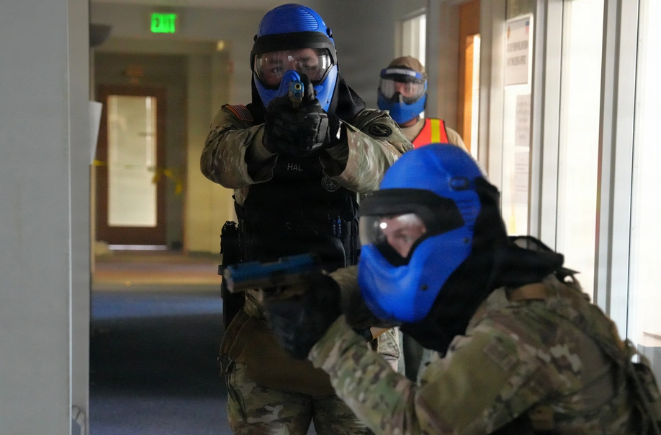
No profession asks its people to confront violence with greater frequency than law enforcement. Whether responding to an active shooter, a barricaded suspect, a domestic violence incident, or a routine traffic stop that suddenly becomes deadly, officers are expected to perform under conditions where hesitation can cost lives.
That is why tactical competence must remain the foundation of police education.
Unfortunately, tactical competence is often misunderstood. Many agencies equate competence with certification. An officer qualifies with their firearm once or twice a year, completes mandatory defensive tactics, passes emergency vehicle operations, and is considered operationally ready. Qualification, however, is merely a minimum standard. Competence is something entirely different.
Competence is the ability to consistently perform under stress when conditions are unpredictable, information is incomplete, and the consequences are immediate.
The body responds very differently during a critical incident than it does on a controlled training range. Heart rate increases dramatically. Fine motor skills deteriorate. Peripheral vision narrows. Auditory exclusion becomes common. Working memory becomes overloaded as the brain prioritizes survival. Officers often experience time distortion, fragmented memory, and reduced cognitive flexibility. None of these responses are signs of weakness. They are predictable physiological adaptations designed to increase survival.
The problem is that many traditional training environments fail to recreate these conditions.
Modern police education should place greater emphasis on stress exposure training, force-on-force scenarios, decision-based firearms instruction, low-light operations, communication under pressure, emergency casualty care, team movement, and realistic scenario-based exercises that integrate multiple disciplines simultaneously. Officers should not simply practice shooting accurately. They should practice making legally, ethically, and tactically sound decisions while fatigued, distracted, emotionally challenged, and physiologically stressed.
Research in expertise consistently demonstrates that elite performance is built through deliberate practice rather than simple repetition. Every repetition should challenge perception, adaptability, communication, and judgment. Officers should not train until they get it right. They should train until they consistently perform effectively under realistic operational conditions.
Physical fitness must also become integrated into tactical education rather than existing as a separate requirement. A physically prepared officer possesses greater endurance, clearer cognition under stress, faster recovery, and improved resilience during prolonged incidents. Strength, cardiovascular fitness, mobility, and recovery are not simply wellness initiatives. They are components of operational readiness.
Ultimately, tactical competence creates confidence. Confident officers communicate more effectively, remain calmer under pressure, and make better decisions because their minds are not consumed by uncertainty about their own abilities. Tactical excellence is not about aggression. It is about preparedness.
Preparedness creates confidence.
Confidence creates clarity.
Clarity saves lives.
Pillar Two: Behavioral Science

If tactical competence teaches officers how to survive violence, behavioral science teaches them how to prevent it whenever possible.
Contrary to public perception, policing is fundamentally a profession built around human behavior. Every day, officers encounter people experiencing trauma, addiction, psychosis, grief, fear, developmental disabilities, personality disorders, emotional crisis, anger, and stress. Every interaction becomes an opportunity to either escalate conflict or reduce it. Understanding behavior is therefore not a soft skill. It is an operational skill.
Psychology provides officers with a framework for understanding perception, motivation, emotional regulation, learning, memory, personality, crisis behavior, trauma, and communication. Officers who understand these principles become more effective interviewers, negotiators, investigators, and leaders because they begin recognizing why people behave the way they do instead of merely reacting to the behavior itself.
Sociology expands this understanding by examining how families, peer groups, neighborhoods, institutions, poverty, social networks, and community dynamics influence behavior. Effective policing requires more than responding to individual incidents. It requires understanding recurring patterns and recognizing how environmental conditions shape both crime and community relationships. Sociology encourages officers to think systemically rather than incident by incident.
Anthropology offers another perspective that is often overlooked in police education. Every culture develops its own communication patterns, traditions, expectations, and methods of resolving conflict. Culture extends far beyond ethnicity. Police departments develop culture. Criminal organizations develop culture. Military units develop culture. Families develop culture. Neighborhoods develop culture. Officers who understand these dynamics become significantly more effective communicators because they learn to interpret behavior within context rather than through assumption.
Neuroscience may be one of the most valuable additions to modern police education. Officers should understand how the brain responds to fear, uncertainty, trauma, and chronic stress. They should understand why victims often struggle to recall events sequentially. They should understand why traumatized individuals may appear emotionally detached or inconsistent. They should understand how repeated exposure to violence changes the officer’s own brain through neuroplastic adaptation and cumulative stress.
Perhaps most importantly, behavioral science teaches officers to understand themselves.
Every officer develops biases based upon previous calls, personal experiences, organizational culture, and repeated exposure to trauma. These biases are normal features of human cognition. The objective is not to eliminate them entirely but to recognize when they may influence judgment.
Self-awareness is one of the highest forms of professional competence. Officers who understand their own emotional responses, physiological limitations, communication style, and cognitive tendencies become more adaptable, more reflective, and ultimately more effective in every aspect of policing.
Pillar Three: Decision Making and Human Performance
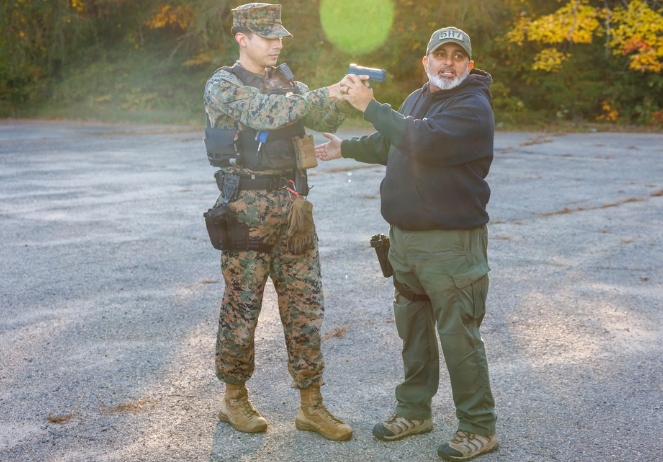
Every action an officer takes begins with a decision. Whether it is the decision to intervene, communicate, disengage, escalate, or use force, each choice is made while processing enormous amounts of information under extraordinary pressure. Officers are expected to interpret behavior, assess threats, recall legal standards, communicate effectively, consider officer safety, evaluate environmental conditions, and anticipate outcomes, often within seconds. It is one of the most cognitively demanding professions in society, yet surprisingly little attention is given to teaching officers how the human brain actually performs under these conditions.
This is where decision making and human performance become essential components of modern police education. Research from neuroscience, military psychology, aviation, emergency medicine, elite athletics, and cognitive science consistently demonstrates that judgment is influenced by far more than knowledge or experience alone. Stress, fatigue, sleep deprivation, dehydration, emotional state, cognitive overload, environmental complexity, and previous experiences all shape how people perceive situations and the decisions they ultimately make. These physiological and psychological factors affect every officer, regardless of experience or skill level.
Ignoring these realities does not make officers more resilient. It simply makes them less aware of the limitations that accompany human performance. The most successful high-risk professions do not pretend these limitations do not exist. Instead, they educate their people about them and develop systems that improve performance despite them. Aviation teaches pilots to recognize cognitive errors before they become catastrophic. Elite military units train repeatedly under realistic stress so decision making becomes more adaptive. Emergency physicians rehearse high-consequence scenarios to improve performance when every second matters. Law enforcement should embrace the same philosophy.
A modern police academy should educate officers on subjects such as autonomic nervous system regulation, stress physiology, heart rate variability, allostatic load, attentional control, cognitive bias, recognition-primed decision making, metacognition, recovery science, sleep physiology, and performance optimization. These are not abstract academic concepts reserved for researchers. They have direct application to everyday policing. Understanding how elevated heart rate affects perception changes how officers train. Understanding cognitive bias improves investigations. Understanding sleep deprivation influences scheduling, recovery, and judgment. Understanding allostatic load helps officers recognize the cumulative effects of repeated trauma before those effects become burnout, poor decision making, or emotional exhaustion.
Perhaps one of the most valuable concepts officers can develop is metacognition, the ability to think about their own thinking. Officers who cultivate this skill become more reflective decision makers. They learn to recognize when stress may be narrowing their perception, when previous experiences may be influencing their assumptions, or when emotional responses may be affecting their judgment. Rather than becoming prisoners of automatic reactions, they develop the ability to pause, reassess, and adapt to changing circumstances. In a profession where conditions can evolve within seconds, that level of cognitive flexibility becomes a significant tactical advantage.
Human performance science also reinforces an important truth. Excellence is not fixed. It is trainable. Decision making can improve. Stress tolerance can improve. Communication can improve. Leadership can improve. Resilience can improve. These are skills that can be systematically developed through education, deliberate practice, realistic scenario-based training, effective recovery, and continuous self-reflection.

Ultimately, the officer of the future will not simply possess superior tactical skills or greater technical knowledge. They will possess greater adaptability. They will understand how their mind and body respond under stress, regulate themselves when others are losing control, and continue making sound decisions when circumstances become uncertain. They will recognize that the greatest tactical advantage they possess is not the equipment on their belt but the ability to think clearly when everyone else is reacting emotionally.
Modern policing demands professionals who understand not only what to do, but why they do it. That is the true value of decision making and human performance. It transforms good officers into exceptional ones by giving them the tools to perform at their highest level when it matters most.
The future of policing will not be defined by the next piece of equipment we purchase, the next technology we adopt, or the next policy we implement. Those tools certainly have value, but they are only as effective as the men and women entrusted to use them.
The greatest investment any agency can make has always been, and will always be, the education of its people.
For too long, the profession has viewed education as something that ends when an officer graduates from the academy. In reality, graduation should represent the beginning of a lifelong pursuit of mastery. I’ve said it all along: this is a profession and should be treated as such. Every call for service, every difficult conversation, every critical incident, and every training opportunity should deepen an officer’s understanding of tactics, human behavior, and decision making under pressure. The badge should never symbolize the completion of learning. It should symbolize a commitment to continuous growth.
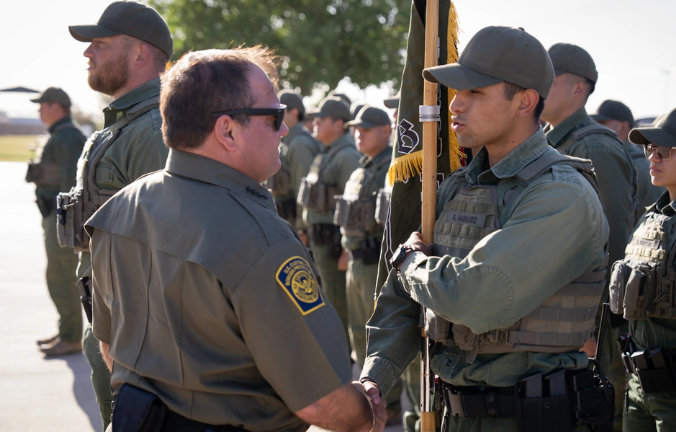
If we truly want to build the next generation of police officers, then we must broaden our definition of professional competence. Tactical proficiency will always remain essential, but technical skill alone is no longer enough. The modern officer must understand human behavior as deeply as they understand the law. They must understand stress physiology as well as they understand use of force. They must understand decision making under uncertainty with the same dedication they bring to firearms or defensive tactics. These disciplines are not separate from policing. They are policing.
The most effective officers I have known shared one common characteristic. They never stopped learning. They sought knowledge outside of law enforcement because they understood that excellence leaves clues. They studied leadership, psychology, neuroscience, history, human performance, communication, and philosophy, not because they wanted additional letters after their name, but because every new discipline made them more capable of serving others. They recognized that becoming a better officer first required becoming a better student of human nature.
For years, policing has debated whether officers should be warriors or guardians. I believe that conversation has distracted us from a far more important question. The real objective should be developing professionals. Professionals possess the tactical competence to confront violence when necessary, the behavioral understanding to communicate effectively when possible, and the judgment to distinguish between the two. They are students of human behavior, masters of their craft, and lifelong learners committed to continuous improvement.
As policing continues to evolve, our educational model must evolve with it. We should not be satisfied with producing officers who simply meet minimum standards. We should strive to develop professionals who think critically, adapt continuously, communicate effectively, lead with humility, and perform confidently under pressure. That kind of officer is not created by chance. They are developed through intentional education, deliberate practice, meaningful mentorship, and an unwavering commitment to lifelong learning.
The communities we serve deserve officers who are prepared not only for the complexity of today’s challenges, but for those we have yet to encounter. Likewise, officers deserve an educational system that equips them with every tool necessary to succeed, not just survive.
The future of policing begins long before an officer answers their first call for service. It begins in the classroom. It is reinforced on the training mat, on the firing line, and in realistic scenarios. It is strengthened through reflection, mentorship, and experience. And ultimately, it is defined by a simple belief. The better we educate our officers, the better they will protect our communities, lead one another, and serve the profession they have sworn to uphold.
_____________________________
Ayman Kafel is a patrol sergeant, combat veteran, and founder of Project Sapient, with more than 20 years of operational experience. He served in Iraq as a U.S. Army soldier and translator and has worked in law enforcement roles including SWAT, DEA task force work, and plainclothes interdiction; he also holds a master’s degree in counterterrorism. For The Havok Journal, he writes from that background on law enforcement, service, training, stress, resilience, and national security, often focusing on the physical and psychological demands of high-stress work. Follow Project Sapient on Instagram, YouTube, and all podcast platforms for engaging content. He can be reached at ayman@projectsapient.com.
As the Voice of the Veteran Community, The Havok Journal seeks to publish a variety of perspectives on a number of sensitive subjects. Unless specifically noted otherwise, nothing we publish is an official point of view of The Havok Journal or any part of the U.S. government.
Buy Me A Coffee
The Havok Journal seeks to serve as a voice of the Veteran and First Responder communities through a focus on current affairs and articles of interest to the public in general, and the veteran community in particular. We strive to offer timely, current, and informative content, with the occasional piece focused on entertainment. We are continually expanding and striving to improve the readers’ experience.
© 2026 The Havok Journal
The Havok Journal welcomes re-posting of our original content as long as it is done in compliance with our Terms of Use.


