
Editor’s note: In-text citations have been removed to align with The Havok Journal’s formatting. Full references remain listed at the end.
There is a conversation we do not have enough of in law enforcement, the military, and the first responder community, and it is long overdue. We talk about stress. We talk about burnout. We talk about PTSD.
But even when we talk about those things, we tend to keep the conversation at the surface. We reduce complex human experiences into single labels because they are easier to define, easier to brief, and easier to fit into training blocks or policy language. It gives the impression that if we can name it, we understand it. But naming something is not the same as understanding it. What often gets missed is the depth behind those words.
Because the reality is, what people are carrying is far more complex than a single diagnosis or a single experience. Trauma in these professions is not one event, and it is not one category. It is layered. It builds over time, often quietly, often unnoticed, until it reaches a point where it begins to affect everything.
The part that makes it more complicated is that it does not always come from where people expect it to. There is the trauma that comes from the job itself. The calls, the scenes, the moments that demand immediate action while everything around you is unstable. That is the part people see from the outside. That is the part most training is built around.
That is only one piece.
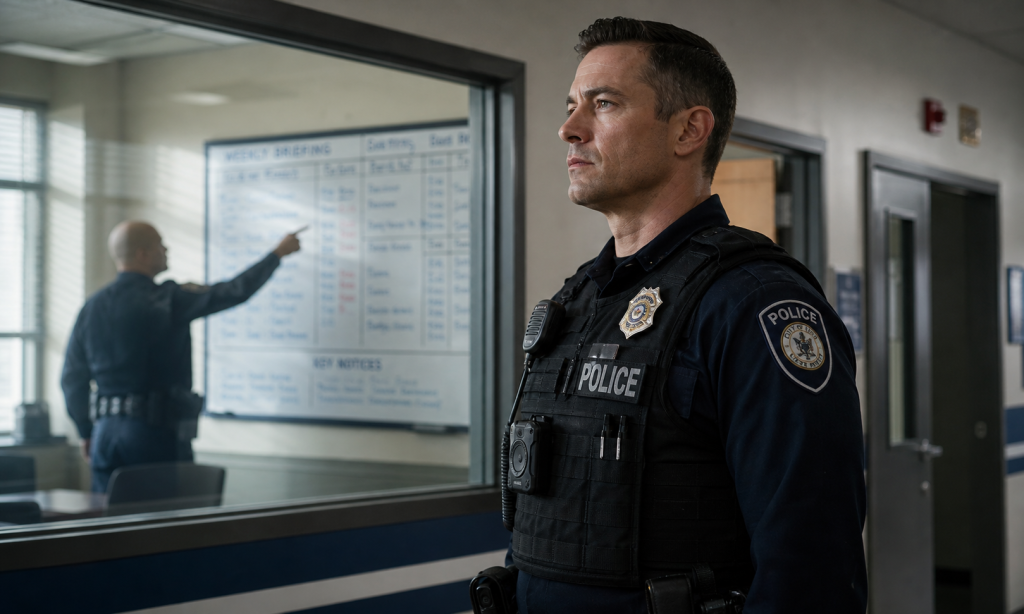
There is also the weight that comes from the systems we operate in. The culture, the leadership, the expectations, the decisions made above and around you that shape how the job is actually experienced day to day. That influence is constant, and over time, it can either reinforce resilience or slowly erode it.
And then there is the part that almost never gets talked about openly. The internal conflict.
The moments that stay with you not because of what happened, but because of what it meant. The decisions that were necessary but did not feel clean. The situations where there was no perfect outcome, only the best possible one under the circumstances. That internal processing does not end when the call ends. It continues long after, often in silence. When these layers begin to overlap, the effect changes.
It is no longer just about managing stress from a difficult job. It becomes something more complex. The operational stress, the organizational environment, and the internal conflict begin to interact with each other. They reinforce each other. They build on each other. What starts as exposure becomes accumulation.
What starts as pressure becomes strain. What starts as experience begins to shape identity. And that is where the real impact is felt. Because at that point, it is not just affecting how you perform on the job. It is affecting how you think when you are off the job. It is affecting how you feel in situations that have nothing to do with work. It is affecting how you interpret people, decisions, and even yourself. It changes your baseline.
The difficult part is that this shift does not happen all at once. It happens gradually, over years. It is subtle enough that most people do not recognize it while it is happening. It becomes the new normal.
That is why this conversation matters. Because what we are seeing in these professions is not isolated incidents of stress or burnout. It is a long-term process that unfolds over time, shaped by multiple factors that are rarely addressed together. This is not theoretical.
This is what plays out over years in these professions. It is what you see in the people who stay. It is what you see in the people who leave. And it is what you feel, whether it is acknowledged or not.
And until we start having the full conversation, we will continue to only address part of the problem, while the rest continues to build beneath the surface.

The Trauma We Expect
Most people entering this line of work understand that they are going to be exposed to difficult things. That understanding is almost a prerequisite. You know you are going to see violence. You know you are going to deal with death. You know you are going to be put in situations where decisions have to be made quickly and with real consequences.
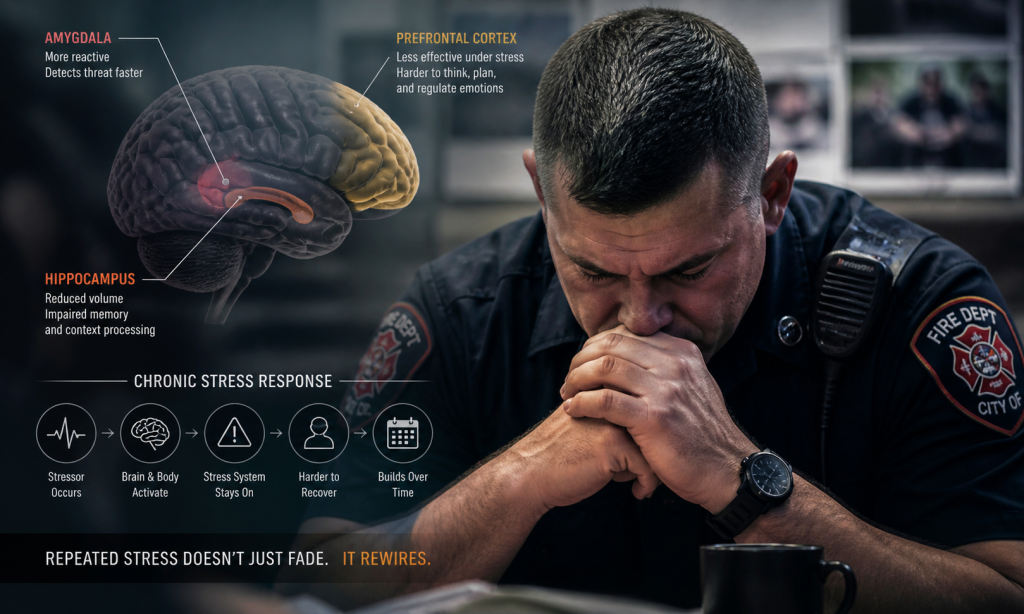
What most people do not fully understand is what repeated exposure to those situations does to the brain and body over time. Post-traumatic stress is not simply about remembering bad events. It is rooted in measurable changes in brain function and structure:
• The amygdala, which is responsible for detecting threat, becomes more reactive.
• The prefrontal cortex, which helps regulate emotional responses and decision-making, becomes less effective under stress.
• The hippocampus, which helps process memory and context, can show reduced volume and impaired function.
What this means in practical terms is that the brain becomes more efficient at detecting threat, but less efficient at shutting that response off once the threat is gone.
That is why hypervigilance becomes a baseline state. It is not something you turn on and off. It becomes how you move through the world. That is why sleep becomes less restorative. The nervous system is still active even when the environment is safe. That is why small stressors begin to feel amplified. The system is already primed.
I have experienced this personally. There are moments in operations where everything narrows. Time compresses. The body does exactly what it is trained to do. Heart rate spikes, breathing changes, and focus sharpens.
I have dealt with this numerous times. One thing to keep in mind: it was not the moment that stayed with me. It was what came after. Two days later, there was a noticeable drop. Not physical exhaustion in the traditional sense, but something deeper. A sense of depletion that did not match the physical output. That delayed response aligns with what we know about dysregulation of the hypothalamic-pituitary-adrenal axis, where the body’s stress system remains activated beyond the event itself.
This is the trauma we expect. It is tied to the job. It is tied to exposure. But it is only one layer.
The Neurobiology of Carrying Stress Over Time
When stress is repeated, the body does not simply return to baseline each time. Instead, it begins to adapt to a new normal. This is where the concept of allostatic load becomes important. Allostatic load refers to the cumulative wear and tear on the body as it repeatedly activates stress response systems. This is not just psychological strain. It is biological.
Chronic activation of the stress response affects multiple systems. It alters neurotransmitter function, particularly norepinephrine and serotonin. It affects cortisol regulation, which plays a role in energy, sleep, and immune function. It influences inflammatory processes throughout the body. Over time, these changes can impact cognition, mood, physical health, and overall resilience.
In operational environments, this often presents as irritability, difficulty concentrating, disrupted sleep patterns, and a reduced ability to recover between shifts or incidents. From the outside, it can look like burnout.
From the inside, it feels like the system never fully powers down.
This is important to understand because it reframes the conversation. What is often labeled as weakness or lack of resilience is, in many cases, a predictable outcome of sustained physiological stress.
And again, this is still only one layer.

The Trauma No One Prepares You For
There is another form of stress that does not come from the calls themselves but from the environment in which they are handled. This is where organizational and institutional factors come into play.
Research has shown that when individuals experience a lack of support, inconsistent leadership, or perceived injustice within their organization, the psychological impact of their work increases significantly. What that research is really pointing to is something simple but often overlooked. The job does not exist in isolation. It exists inside a system, and that system either absorbs pressure or adds to it.
This is not about disagreement or personality conflict. Those things happen in any profession. This is about what happens when the system that is supposed to provide structure, clarity, and support becomes unpredictable or absent. When policies shift depending on the situation, when accountability is inconsistent, and when people are unsure whether decisions will be backed or second-guessed after the fact.
In high-stress professions, that kind of uncertainty is not a small issue. It changes how people operate. Trust in the system is not optional. It is foundational. It is what allows someone to step into a chaotic situation and focus entirely on the task in front of them. It is what allows decision-making to stay clear under pressure. It is what allows people to act without hesitation, knowing that they are supported not just in the moment, but afterward.
When that trust is present, it acts as a stabilizing force. It creates a sense of predictability in an otherwise unpredictable job. It reduces hesitation and reinforces confidence. When that trust is absent, it introduces a different kind of stress, one that does not come from the outside environment, but from within the system itself.

From a neurobiological perspective, this matters more than most people realize. The brain is constantly scanning not just for physical threat, but for social and environmental safety. When an individual perceives a lack of fairness, lack of support, or inconsistency in leadership, the brain can interpret that as a form of threat. Studies have shown that perceived social rejection or injustice can activate neural pathways associated with stress and pain.
That means the body does not distinguish as cleanly as people think between danger on a call and instability within the organization. Both can activate the system. In practical terms, this means the stress does not end when the call ends. It follows you back into the station, into the cruiser, and into the next shift. It becomes part of how situations are processed. It shows up in how decisions are interpreted, how leadership actions are perceived, and whether people feel secure or exposed within their own environment.
You start to see hesitation where there used to be clarity. You start to see second-guessing where there used to be decisiveness. Not because the individual has changed, but because the environment around them has.
I have seen situations where the job itself was not what broke people. It was everything around it. I have seen officers who could handle any call, any situation, and any level of pressure, the ones you would rely on without hesitation, the ones who performed consistently regardless of the conditions. And then over time, something shifts.
• They start to pull back.
• They speak less in briefings.
• They become more guarded in how they operate, not out of fear of the job, but out of uncertainty about the system behind it.
That shift is not immediate. It does not happen after one incident. It builds gradually through repeated experiences where support is inconsistent or absent, where expectations are unclear, and where outcomes feel disconnected from effort or performance.
Once that shift begins, it affects everything. It affects decision-making, confidence, and how people engage with their team and their leadership. Eventually, it affects whether they stay connected to the job at all.
That is the part that often goes unrecognized. From the outside, it can look like disengagement, attitude, or burnout. But underneath it, there is usually something more specific. A breakdown in trust. And once that foundation is compromised, everything built on top of it becomes less stable.
Moral Injury and the Fracture of Identity
There is another layer that goes even deeper.
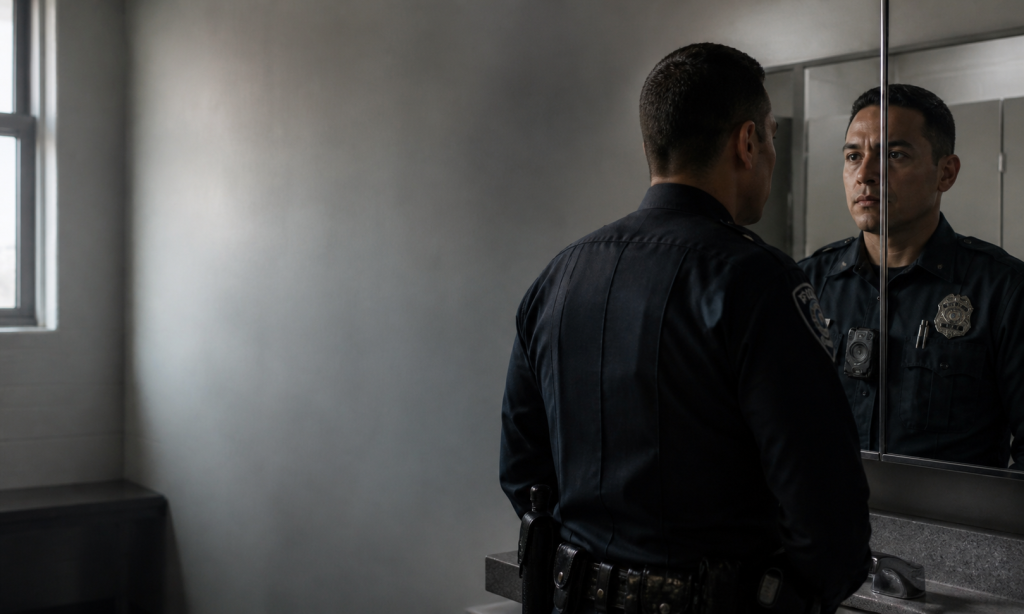
Moral injury is not about fear. It is about meaning.
It occurs when an individual experiences, witnesses, or is placed in situations that conflict with their deeply held values. That conflict is not always immediate. In many cases, it does not fully surface until after the moment has passed, when there is time to think, to replay, and to assign meaning to what just happened.
Unlike traditional trauma, which is rooted in threat response and survival, moral injury is rooted in cognitive and emotional dissonance. It is the gap between what you believe is right and what you experienced or were required to do. It is not about whether you were in danger. It is about whether what happened aligns with who you believe you are.
That distinction matters because fear-based trauma can be processed through safety, time, and regulation. Moral injury is different. It challenges identity. It forces a person to reconcile actions, outcomes, or systems with their internal code.
Research has shown that moral injury is associated with guilt, shame, anger, and a disruption in one’s sense of identity. Those are not surface-level emotions. They are deeply tied to how individuals define themselves, their role, and their purpose.
Identity is a stabilizing factor. It is what allows someone to move through difficult environments with consistency. It provides a framework for decision-making, for interpreting outcomes, and for maintaining a sense of direction under pressure.
When that identity is disrupted, it creates internal conflict that is not easily resolved. In these professions, that disruption does not come from obvious failures. It often comes from complexity. Situations are rarely black and white. Decisions are made with incomplete information, under time pressure, and within environments where multiple outcomes are possible, none of them perfect.
You make the best decision you can with the information you have. You act within the law, within policy, and within your training. And still, something about it does not sit right. That is where moral injury lives. Even when decisions are legally justified and tactically sound, they can leave a residual impact. Not because they were wrong, but because the situation itself did not align cleanly with a person’s internal framework of right and wrong.
I have seen people replay moments not because they made a mistake, but because they are trying to reconcile what happened with what they believe should have happened. That replay is not about correcting an error. It is about searching for alignment. And sometimes, there is no clean resolution.
That kind of conflict does not show up in reports. It is not captured in after-action reviews. It is not something that can be easily articulated in a briefing. It shows up in reflection, in silence, and in the moments after everything slows down, when there is no longer an immediate task to focus on.
It shows up in the questions people ask themselves. Could it have been different? Was that the only option? Would I make the same decision again?
There are times when politicians put certain policies or laws on the books that I do not agree with at all, not because I am the oppositional type, but because there is no common sense in that policy. I could give you examples, but I want you to think of certain laws and policies that have been passed.
Those questions are not about performance. They are about meaning.
Over time, if those questions are not resolved or even acknowledged, they begin to accumulate. That accumulation does not always lead to visible breakdown. More often, it leads to subtle shifts.
A change in how someone sees their role. A change in how they connect with the work. A change in how they view themselves within it.
That is what makes moral injury so difficult to address.
It is not always loud. It is not always obvious. But it is deeply felt.
And when it is left unaddressed, it does not fade. It stays.
When These Layers Combine
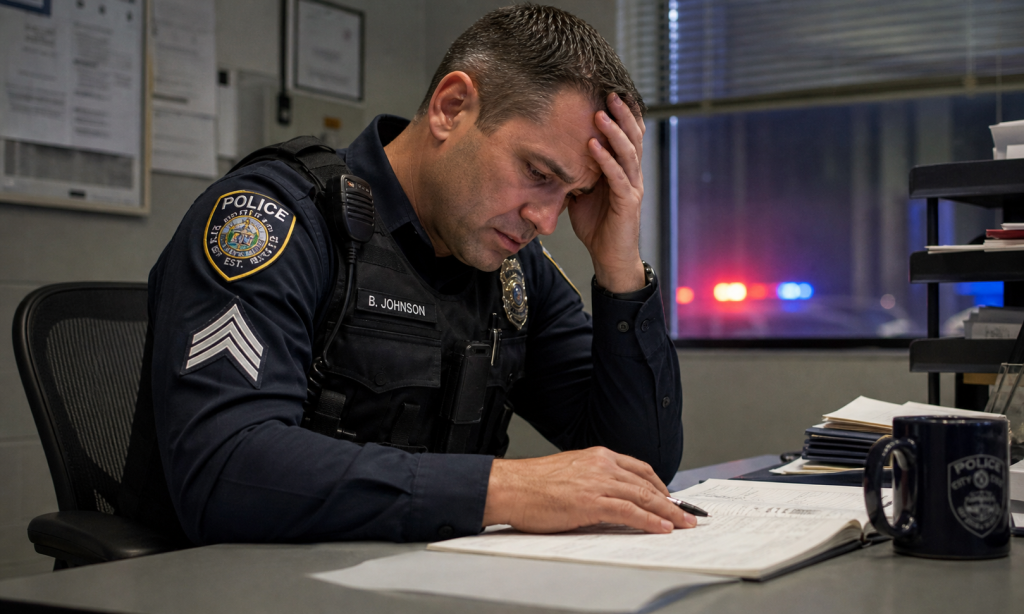
The most important point is that these forms of stress do not exist independently. They interact.
Neurobiological stress from repeated exposure affects how the brain processes information. Organizational instability affects baseline stress levels. Moral conflict affects how experiences are interpreted and integrated. Each one on its own is significant, but together they create something far more complex.
When these layers combine, they do not simply add up. They begin to influence one another in ways that reinforce the overall load. The nervous system is already primed from repeated exposure to stress, which means reactions become faster, but regulation becomes harder. At the same time, if the organizational environment feels inconsistent or unreliable, that baseline stress never fully settles. Then, when moral conflict is introduced, it shapes how those experiences are processed, remembered, and carried forward.
At that point, the same event is no longer just a call. It is filtered through a heightened stress response, interpreted through a lens of organizational trust or lack of it, and then evaluated against a personal moral framework. That changes everything.
Research has shown that co-occurring stressors, particularly PTSD and moral injury, are associated with increased severity of symptoms, including depression and functional impairment. What that reflects in real terms is that when these layers overlap, people do not just feel more stress; they experience it differently. It becomes more persistent, more intrusive, and more difficult to compartmentalize. Each layer amplifies the others. Heightened stress responses make it harder to process complex situations clearly. Organizational instability makes it harder to feel grounded or supported. Moral conflict makes it harder to resolve what has already happened. Together, they create a cycle where stress is not just experienced but continuously reinforced.
That is where people begin to feel the weight in a way that is difficult to articulate, because it no longer feels like one thing. It is not just a bad call. It is not just frustration with leadership. It is not just something that does not sit right internally. It is all of it, layered together. When that happens, it becomes harder to separate where the stress is coming from. It becomes harder to explain, harder to process, and harder to release.
That is often when people start to feel a shift in themselves. Not a breaking point, but a change in baseline.
Things that used to roll off no longer do. Decisions take more mental energy. Interactions feel heavier than they should.
It is not always obvious from the outside, but internally, there is a sense that something has changed.
That is the effect of compounded stress. It is not just the job. It is everything connected to it. And when all of those layers are operating at the same time, the weight is not just something you carry during the shift. It becomes something you carry with you.
Leadership as a Stabilizing or Destabilizing Force
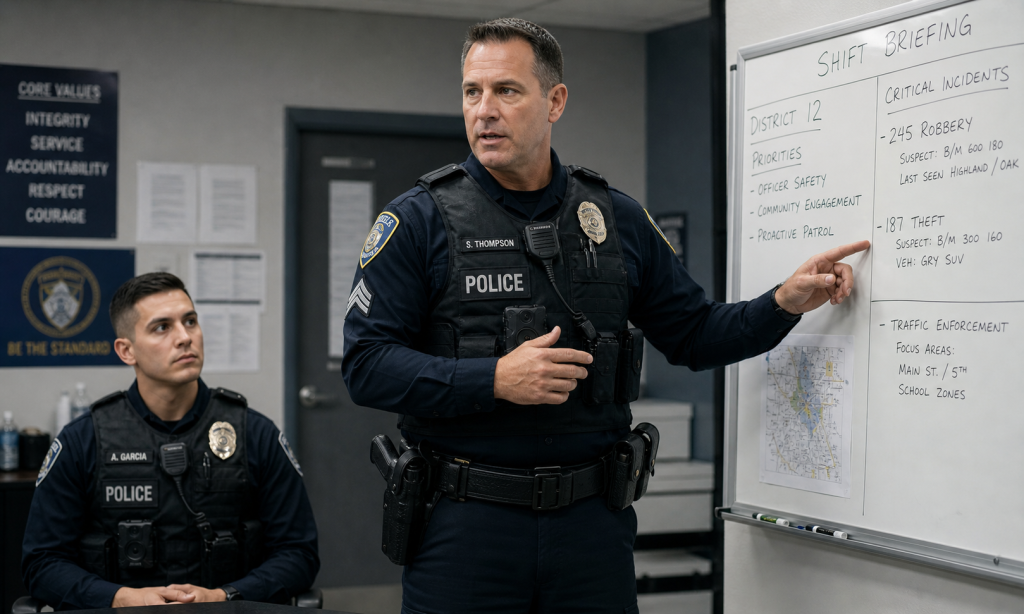
Leadership plays a critical role in this system.
It is not just about direction or performance. It directly influences the psychological environment people operate in every single day. In professions where stress is already high and the margin for error is low, that environment becomes just as important as training, equipment, or experience.
Supportive leadership provides predictability, consistency, and a sense of security. Those three things do more than improve morale. They create the conditions that allow people to think clearly under pressure. When expectations are clear, when accountability is consistent, and when people know where leadership stands, it reduces uncertainty. That reduction matters at a neurological level because it allows the prefrontal cortex to stay engaged, helping regulate emotional responses and maintain decision-making under stress.
In simple terms, when people feel supported and understand the structure around them, they are better able to manage the demands of the job. That kind of leadership does not remove stress from the job. It contains it. It gives people a framework to operate within, even when the situation itself is chaotic. It reinforces confidence not just in the individual, but in the system they are part of.
On the other side of that, inconsistent or absent leadership introduces uncertainty. And uncertainty in high-stress environments is not neutral. It acts as a stress multiplier. When expectations change depending on the situation, when decisions are not consistently backed, or when communication is unclear, people begin to operate differently. They hesitate. They second-guess. They shift from focusing on the task to anticipating how their actions will be interpreted afterward.
That shift may seem subtle, but it has real consequences.
From a neurobiological standpoint, uncertainty increases activation of the brain’s stress response systems. It pulls resources away from the prefrontal cortex, which is responsible for reasoning and regulation, and shifts activity toward more reactive systems. That makes it harder to think clearly, harder to regulate emotions, and harder to stay grounded in high-pressure moments.
This is not abstract. It is measurable. Studies have shown that stress impairs prefrontal cortex function, directly affecting decision-making, impulse control, and emotional regulation. When leadership introduces additional uncertainty, it compounds that effect. People do not just respond to calls. They respond to their environment.
They respond to how leadership communicates. They respond to whether actions are supported or questioned.
They respond to whether the system feels stable or unpredictable.
Over time, those responses shape behavior.
When leadership is consistent, people become more decisive. They operate with confidence. They engage more with their team. They take ownership of their role. When leadership is inconsistent, people become more guarded. They limit engagement. They avoid unnecessary exposure. Not because they are unwilling to do the job, but because the environment has taught them that unpredictability carries its own risk.
I have seen both sides of this.
I have seen environments where leadership provided clear intent, consistent support, and accountability that made sense. In those environments, people performed at a high level, not because the job was easy, but because the structure around them allowed them to focus on the mission.
I have also seen environments where that structure was missing, where decisions felt inconsistent, where communication was unclear, and where people were unsure how their actions would be viewed after the fact. In those environments, the job becomes heavier. Not because the calls are different, but because the system surrounding them adds pressure instead of absorbing it.
That is the part that often gets overlooked.
Leadership is not just about setting direction. It is about shaping the conditions in which people operate. It can either stabilize an already demanding profession, or it can quietly add to the weight people are carrying.
Over time, that difference shows. It shows in performance. It shows in decision-making. It shows in whether people stay engaged or begin to disconnect. Leadership shapes the environment. And the environment shapes everything else.

The Personal Reality
I have personally come close to walking away from this job more than once, and it was not because of the work itself. It was because of leadership. I have worked under leaders who micromanaged to the point where it stripped people of their ability to think and act on their own. Not guidance, not oversight, but control at a level where even basic decisions felt like they required permission.
I have had officers call me and ask if they were allowed to eat. That should never happen in this profession. That is not a reflection of the officer. That is a reflection of the environment that was created around them. An environment where people have been conditioned to believe that every decision will be scrutinized, second-guessed, or questioned after the fact.
When that becomes the norm, people stop thinking proactively. They stop taking initiative. Not because they do not know what to do, but because they are trying to avoid consequences that have nothing to do with the decision itself. That is a leadership failure.
When upper command does not empower its people to think for themselves, it creates a culture of dependency. It sends a message, whether intentional or not, that independent decision-making is a liability instead of an expectation. Over time, that message sinks in.
People begin to hesitate. They pause in moments where instinct and training should take over. They look for direction when there is no time for it. They second-guess themselves, not because they are unsure of what to do, but because they are unsure of how it will be received. That hesitation is not just frustrating. It is dangerous. This job does not allow for delay in critical moments. Decisions often need to be made in seconds, sometimes less. When someone has been conditioned to question every action, it slows that process down. And in this line of work, time matters.
Lives can be affected by hesitation. Outcomes can change because someone was waiting for approval instead of acting on what they already knew was the right thing to do. That is the part that does not get enough attention. We talk about training. We talk about tactics. We talk about decision-making under stress. But we do not talk enough about how leadership directly influences those decisions before the moment ever happens.
Because if you create an environment where people are afraid to make decisions, you are not just affecting morale. You are affecting performance. You are affecting safety. And you are shaping how people respond in the exact moments where it matters most.
I have seen the difference.
I have seen what happens when people are trusted, when they are given clear intent and the space to operate within it. They move with confidence. They make decisions. They own their actions. And I have seen the opposite. Where people are constantly looking over their shoulder, not because of the threat in front of them, but because of the uncertainty behind them. That is not how this job is supposed to function.
And when it does, the consequences are not just internal. They show up in the field.

Where to Start
If there is a starting point, it is awareness. Not surface-level awareness, not checking a box or sitting through a training block, but a real understanding of what is actually happening beneath the surface. Understanding that trauma is layered. Understanding that stress is not just operational. Understanding that leadership and environment play a direct role in how individuals process and carry that stress over time.
That awareness is not just about recognizing what is happening around you. It is also about recognizing what is happening within you. This is where metacognition becomes critical. Metacognition is the ability to think about your own thinking. It is the ability to step back and observe your reactions, your patterns, and your internal responses in real time. In high-stress professions, that skill becomes a form of control. Not control over the situation, but control over how you interpret and respond to it.
Without that awareness, experiences tend to stack without being processed. Reactions become automatic. Patterns go unnoticed. Over time, that leads to accumulation without understanding. With metacognition, there is a pause. A moment where you can recognize what you are feeling, where it is coming from, and how it is influencing your behavior. It allows you to separate the moment from everything that came before it. It allows you to recognize when your response is coming from the current situation and when it is being shaped by everything you have been carrying.
That distinction matters.
Because without it, stress compounds without direction. With it, there is at least the opportunity to process instead of just carry. That awareness changes how we look at performance. It changes how we look at behavior. It changes how we interpret the shifts we see in people over the course of a career.
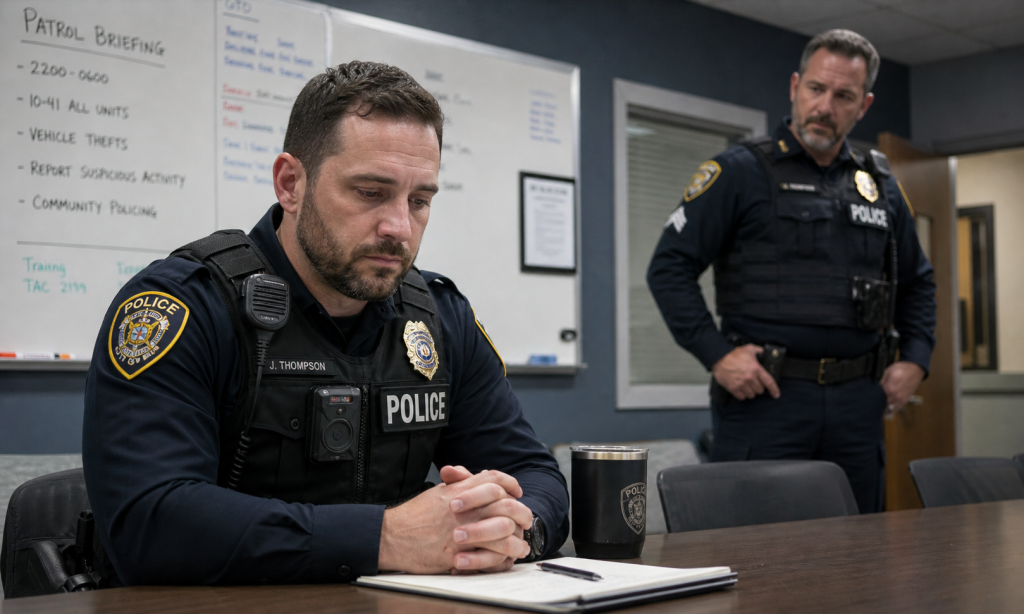
Because when you understand that what someone is carrying is not just tied to a single call, you stop looking for simple explanations. You stop asking what is wrong with the person, and you start asking what they have been carrying.
You start to recognize that the officer who is quieter than they used to be is not necessarily disengaged. The one who is more guarded is not necessarily difficult. The one who seems tired is not necessarily lacking motivation. Sometimes, they are carrying more than they are showing. That shift in perspective matters, especially for leaders.
Because awareness is not just about recognizing the problem. It is about changing how we respond to it. It is about creating environments where people can operate effectively without carrying unnecessary weight on top of an already demanding job.
We spend a lot of time training for the fight. We prepare people for the moment when everything goes wrong. We train for decision-making under pressure, for tactics, for response, and for control. And that training matters. But what we do not spend enough time preparing people for is what happens after years of exposure to all of it. The calls that stay with you longer than expected. The system that shapes how those calls are experienced. The internal conflict that does not resolve when the shift ends.
All of it matters.
Because over time, those things do not stay separate. They build on each other. They influence how people think, how they respond, and how they carry themselves both on and off the job. If we do not acknowledge that, then we are only preparing people for part of the job while the rest of it continues to build in the background.
And eventually, that gap shows.
It shows in how people lead. It shows in how people communicate. It shows in how people make decisions. It shows in how long people stay. If we are serious about addressing it, then awareness has to lead to action.
That means leadership that is consistent, not reactive. It means creating clarity in expectations so people are not operating in uncertainty. It means giving people the ability to make decisions and backing them when they do. It means recognizing that support is not just something you say, it is something you demonstrate, especially when it matters.
It also means creating space for conversations that do not usually happen. Conversations about what people are carrying. Conversations about how experiences are being processed. Conversations that acknowledge that strength is not the absence of weight, but the ability to carry it in a way that does not break you over time.
That does not make the job easier.
It makes it more sustainable. Because the reality is, the job is not going to change. The calls are not going to get easier. The demands are not going to decrease. What can change is how people are supported through it.
And that starts with awareness that is honest, not surface-level.
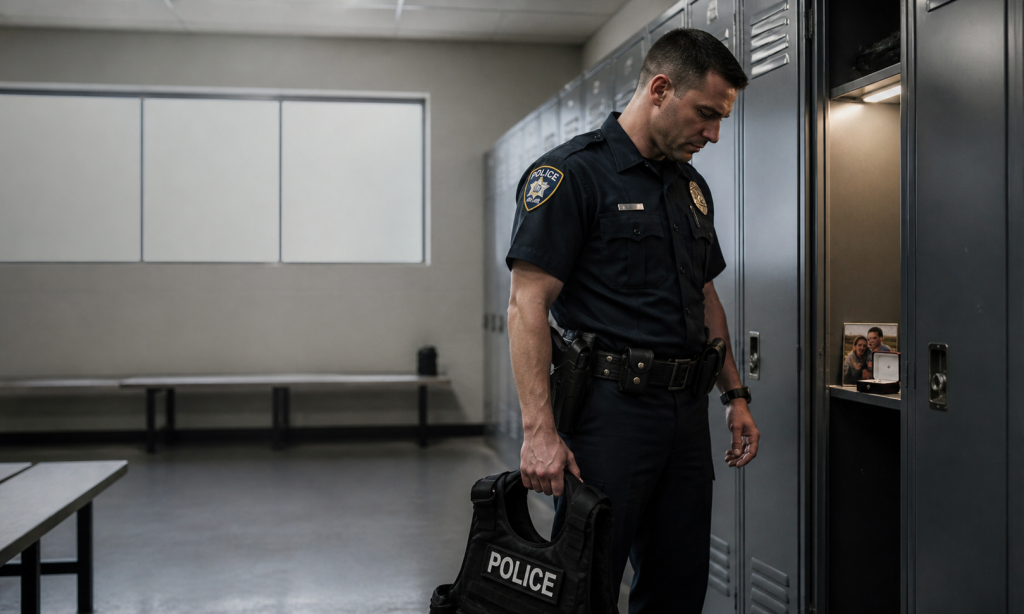
The weight is not just in what we respond to. It is in what we carry after. It is in the moments that stay with you. It is in the decisions that do not fully resolve. It is in the environment that shapes how all of it is processed. It is in the accumulation of years of exposure, responsibility, and expectation. That weight does not always show up immediately. It builds over time, often quietly, often unnoticed, until it reaches a point where it begins to affect how someone thinks, how they feel, and how they see themselves within the job. It changes how you walk into work. It changes how you leave it. It changes how much of it you carry home with you.
And the longer it goes unrecognized, the heavier it becomes.
Not because people are not strong enough to carry it, but because it was never meant to be carried without understanding, without support, and without acknowledgment. At some point, the weight forces a decision.
For some, that decision is to pull back. For others, it is to disconnect. For some, it is to walk away entirely.
Not because they could not do the job, but because of everything that came with it. That is where the conversation needs to change. Because until it does, we will continue to focus on what happens in the moment, while overlooking what happens after. And what happens after is what determines how long someone can keep going. That is where the real weight is.
References
- The Neurocircuitry of Fear, Stress, and Anxiety Disorders, by L.M. Shin and I. Liberzon (Neuropsychopharmacology)
- Post-Traumatic Stress Disorder, by R. Yehuda (New England Journal of Medicine)
- Physiology and Neurobiology of Stress and Adaptation, by B.S. McEwen (Physiological Reviews)
- Stress and Allostasis-Induced Brain Plasticity, by B.S. McEwen and P.J. Gianaros (Annual Review of Medicine)
- Institutional Betrayal, by C.P. Smith and J.J. Freyd (American Psychologist)
- The Neural Bases of Social Pain, by N.I. Eisenberger (Nature Reviews Neuroscience)
- Moral Injury and Moral Repair in War Veterans, by B.T. Litz et al. (Clinical Psychology Review)
- Moral Injury in Military Populations, by V. Williamson et al. (European Journal of Psychotraumatology)
- Moral Injury, PTSD, and Suicidal Behavior, by C.J. Bryan et al. (Journal of Anxiety Disorders)
- Mental Disorder Symptoms Among Public Safety Personnel, by R.N. Carleton et al. (Canadian Journal of Psychiatry)
- Stress Signaling Pathways That Impair Prefrontal Cortex Structure and Function, by A.F.T. Arnsten (Nature Reviews Neuroscience)
_____________________________
Ayman Kafel is a patrol sergeant, combat veteran, and founder of Project Sapient, with more than 20 years of operational experience. He served in Iraq as a U.S. Army soldier and translator and has worked in law enforcement roles including SWAT, DEA task force work, and plainclothes interdiction; he also holds a master’s degree in counterterrorism. For The Havok Journal, he writes from that background on law enforcement, service, training, stress, resilience, and national security, often focusing on the physical and psychological demands of high-stress work. Follow Project Sapient on Instagram, YouTube, and all podcast platforms for engaging content. He can be reached at ayman@projectsapient.com.
As the Voice of the Veteran Community, The Havok Journal seeks to publish a variety of perspectives on a number of sensitive subjects. Unless specifically noted otherwise, nothing we publish is an official point of view of The Havok Journal or any part of the U.S. government.
Buy Me A Coffee
The Havok Journal seeks to serve as a voice of the Veteran and First Responder communities through a focus on current affairs and articles of interest to the public in general, and the veteran community in particular. We strive to offer timely, current, and informative content, with the occasional piece focused on entertainment. We are continually expanding and striving to improve the readers’ experience.
© 2026 The Havok Journal
The Havok Journal welcomes re-posting of our original content as long as it is done in compliance with our Terms of Use.


