There is a tendency in modern training to overcomplicate decision-making. We build frameworks, create models, and teach step-by-step processes as if the environment will slow down long enough for us to apply them cleanly. On paper, it looks organized. It feels structured. It gives the illusion of control. But the reality is that most of those systems begin to break down the moment stress enters the equation. The moment time compresses, the moment information becomes incomplete, the moment uncertainty shows up, people do not reach for complexity. They fall back on what is ingrained. And if what is ingrained is too rigid, too structured, or too dependent on ideal conditions, it fails when it matters most.
The problem is not that structured training has no value. The problem is that it often pulls us away from something far more fundamental. Decision-making under pressure is not theoretical. It is biological.
The human brain is built for this. Long before there were models, SOPs, doctrines or policies, the brain was already solving problems in uncertain environments. It was already reading people, identifying threats, and making decisions with incomplete information. It does not require perfect clarity to function. It works off patterns, subtle cues, shifts in behavior, and changes in the environment that most people would overlook if they were not paying attention. It is constantly scanning, constantly filtering, constantly updating a picture of what is happening in real time. That system is already there. It does not need to be created. It needs to be trusted and refined. But that is where people begin to interfere with it.

Under stress, instead of trusting that process, people try to control it. They slow themselves down in the wrong way. They begin to overanalyze. They hesitate. Or they do something even more dangerous. They lock onto an early interpretation of what they think is happening and begin filtering everything they see through that interpretation. At that point, they are no longer observing reality. They are reinforcing a narrative. Once that shift happens, perception begins to narrow. Information that supports the narrative is prioritized. Information that contradicts it is ignored or minimized. Options begin to disappear. The situation becomes distorted, not because the environment changed, but because the way it is being processed has changed. That is where mistakes begin. Not because someone lacked training, but because they stopped seeing clearly.
I learned that lesson long before I ever wore a uniform. As a kid growing up around conflict, I saw firsthand how quickly environments could shift. There were moments where everything felt normal one second and completely different the next. I remember hearing sounds before I understood what those sounds meant. I remember sensing changes in the environment before anything actually happened. There was a tension in the air that you could feel even if you could not explain it. At that age, you do not have the language for it, but your brain is already learning. It is already connecting patterns. It is already recognizing that something is off. That type of awareness is not taught in a classroom. It is developed in environments where paying attention is tied directly to survival. It is raw. It is instinctive. And it is something that stays with you.
Years later, that same process showed up in a different way. Different environment, different mission, but the same human behavior underneath it. In Iraq, working alongside soldiers and translating in real time, I learned quickly that perception is fragile. You are constantly operating between languages, between cultures, and between what is being said and what is actually meant. Words alone are never enough. Tone matters. Body language matters. The way someone answers a question matters just as much as the answer itself. There were moments where you could feel that something was off, even if you could not immediately explain why. A pause that lasted just a little too long. A detail that shifted slightly when the question was asked again in a different way. A response that sounded complete but did not feel complete.
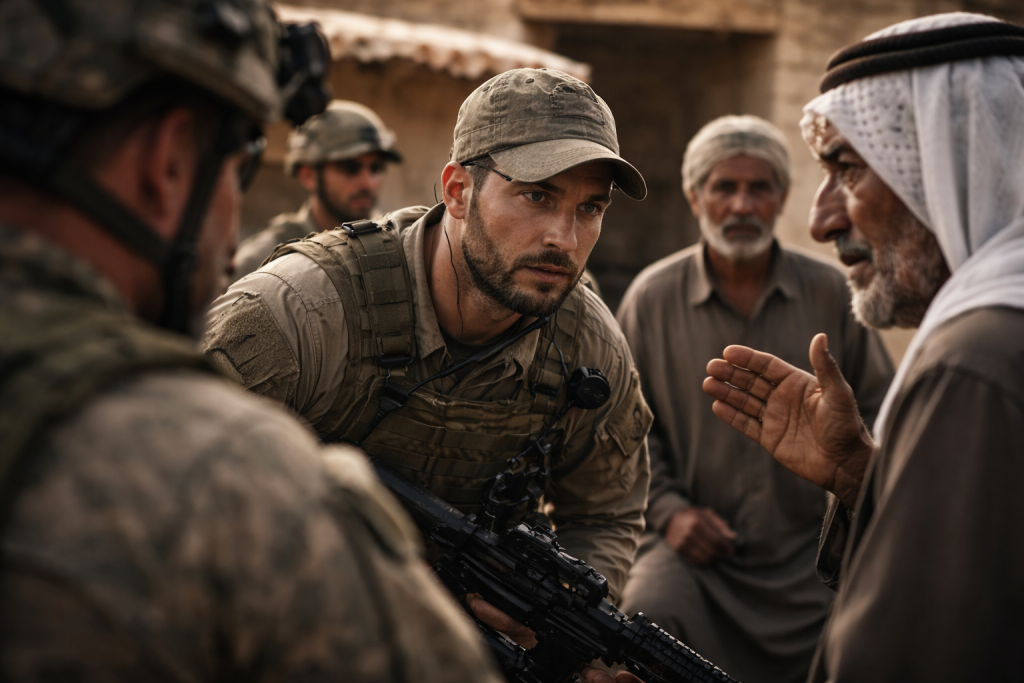
Those moments are not about having immediate answers. They are about recognizing that something does not fully align. That awareness does not give you certainty, but it gives you direction. It tells you to stay engaged, to ask better questions, to avoid accepting the first version of events as the full picture. Because in those environments, taking things at face value is often where problems begin. That lesson stays with you. It becomes part of how you move through situations long after you leave that environment.
That same principle carries directly into law enforcement. The setting changes, but people do not. The same tendencies exist. The same patterns repeat themselves. The same risk of locking onto a narrative too early shows up again and again.
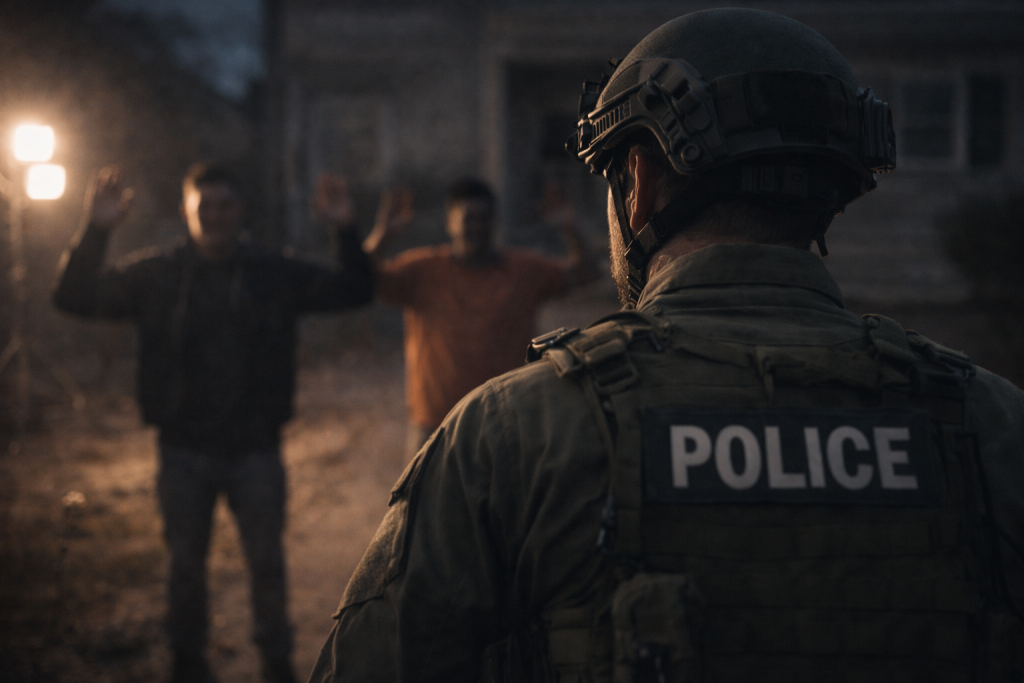
I think about a barricaded subject call involving a family inside a home. From the beginning, there were strong opinions about how it should be handled. Pressure to resolve it quickly. Expectations about what the situation was and what it needed to look like when it ended. But the environment was telling a different story. The behavior of the subject did not fully match the assumptions being made. The dynamics inside the home were more complex than they were being treated as. There were signals that things could be influenced differently if we were willing to adjust.
Flexibility in that moment meant stepping away from the initial narrative and reassessing what was actually happening. It meant accepting that the first read was incomplete. It meant slowing things down when everything around you is pushing for speed. The decision was made to change the conditions rather than force an immediate outcome. Floodlights on the house. Clear, controlled communication. Presence without unnecessary escalation. That was not hesitation. That was control. It was understanding that forcing action too early can create problems that did not need to exist.
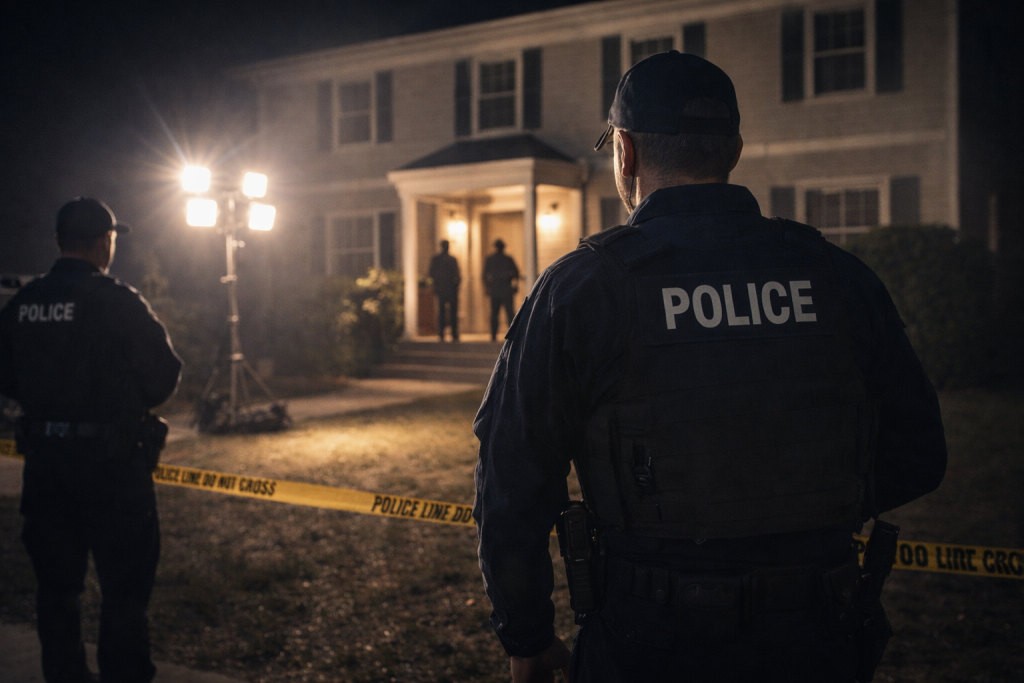
The outcome reflected that decision. The hostages came out safely. The situation resolved without unnecessary force. That is what happens when awareness and flexibility are allowed to work together. It is not about doing less. It is about doing what the situation actually requires, not what we assume it requires.
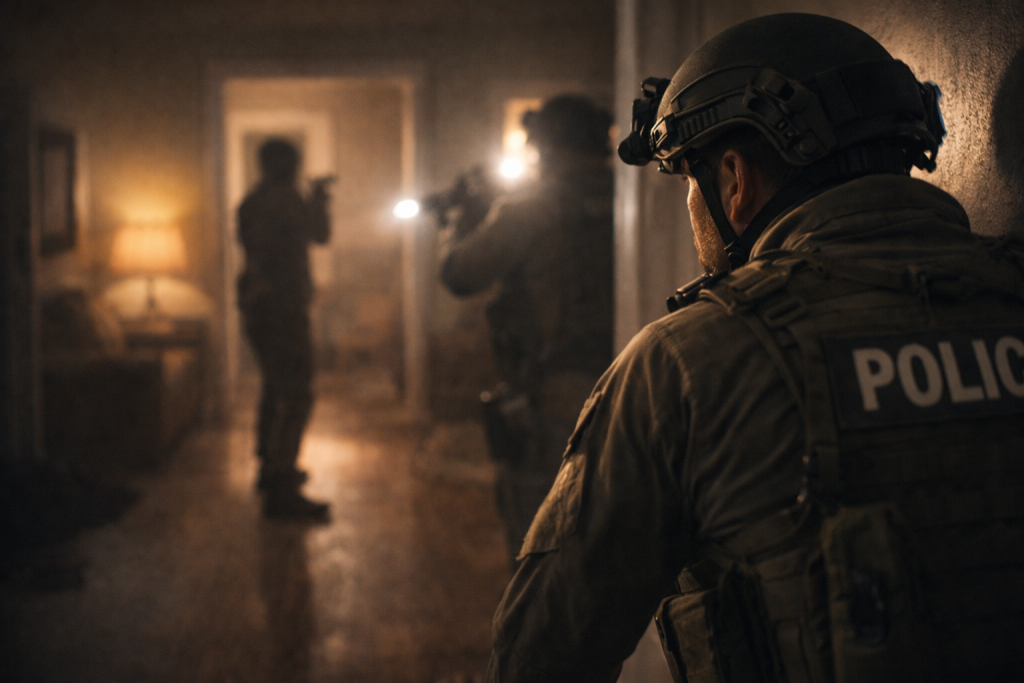
But there are also moments where everything compresses. Where there is no time to slow things down. Where the environment moves faster than your ability to consciously process it. I think about a warrant service where I was on the shield during entry. Movement was fast. The space was tight. As we entered, I saw the suspect reach toward a firearm with an extended magazine. In that moment, there is no time to think through options step by step. There is no time to analyze in the traditional sense.
Awareness picks it up immediately. Flexibility allows you to process what you are seeing without freezing. Action becomes unavoidable.
The weapon came up. The decision point was there. And just as quickly, the situation changed. The suspect complied. Hands came up. The threat shifted in real time. That is where flexibility matters most. Because if you are locked into your initial perception, if you have already committed mentally to a single outcome, you may not see that shift. You may not adjust in time.
Action without awareness is reckless. Awareness without flexibility is dangerous. Flexibility without action is hesitation. All three have to exist together, especially in moments where the margin for error is small.
What stays with you after moments like that is not just what happened, but how quickly it could have gone differently. How narrow the window was. How important it is to stay grounded in what is actually unfolding, not what you expected to unfold. That is not something you can fake. That is something that has to be built through experience and reinforced through reflection.
These experiences make one thing clear. The environment is always giving you information. Always. The question is whether you are actually seeing it, whether you are willing to adjust to it, and whether you are prepared to act on it. That is where everything comes together. Awareness, flexibility, and action are not abstract ideas. They are practical tools that show up in real situations, where decisions carry weight and consequences are real.
The challenge is that stress works against this process. It narrows attention. It creates urgency. It pushes you toward certainty even when certainty does not exist. It amplifies certain signals while suppressing others. If you are not aware of that, you begin to trust a version of reality that is incomplete or distorted. That is why discipline matters. Not rigid discipline that locks you into a system, but disciplined clarity. The ability to slow things down internally, even when everything around you is moving fast.
Without that, awareness begins to collapse. You stop seeing clearly. Flexibility disappears. You stop adjusting. Action becomes reactive instead of deliberate. And once that happens, you are no longer ahead of the situation. You are behind it.
Many of the critical mistakes made in high-stress environments are not failures of skill. They are failures of perception. They are the result of locking into a narrative too early and refusing to let go of it. Under stress, that feels like decisiveness. It feels like control. But it is not. It is a narrowing of perspective at the exact moment when you need to expand it.
Control comes from staying connected to reality while everything around you is changing. It comes from being able to adjust without hesitation. It comes from acting without losing clarity. That is not something that can be memorized. It is something that has to be developed over time, through experience and through honest reflection.
Because experience alone is not enough. If you do not reflect on it, if you do not take the time to examine what you saw versus what actually happened, you risk reinforcing the wrong lessons. You risk becoming more confident in flawed perception. Growth comes from being willing to look back and ask hard questions. What did I assume? What did I miss? Where did I get locked in? Where did I hesitate? Where did I act too soon?
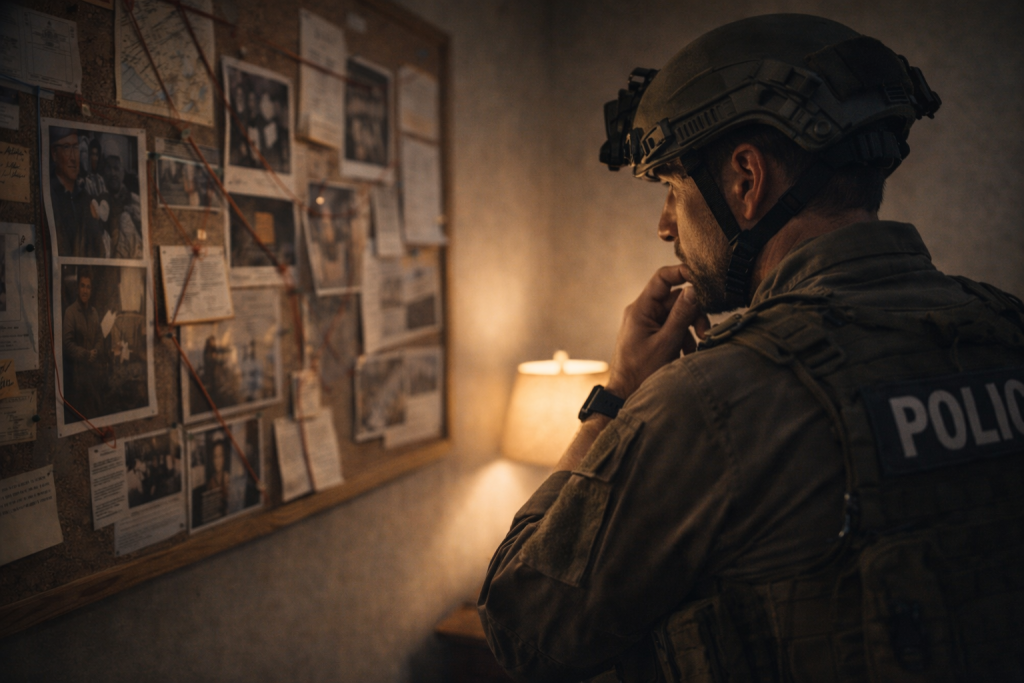
There is also an internal component that cannot be ignored. The ability to maintain awareness, flexibility, and action under pressure is directly tied to how well you manage your own internal state. Stress changes everything. It affects perception, decision-making, and timing. If you do not recognize that, you begin to trust reactions that are being driven by physiology rather than clarity.
That is why composure is critical. Not as a personality trait, but as a skill. The ability to regulate your response, to create space between stimulus and action, is what allows the process to function. Without that space, everything speeds up in the wrong direction. You stop seeing. You stop adjusting. You start reacting.
Awareness, flexibility, and action require presence. They require you to stay grounded in what is happening right now. Not what happened on the last call. Not what dispatch told you. Not what you expect based on past experience. What is actually happening in front of you.
When those three elements are aligned, decision-making becomes fluid. You are not stuck in your head. You are not frozen by uncertainty. You are moving with the situation, adjusting as it changes, and maintaining control through clarity. That is where effectiveness comes from. Not from complexity, but from alignment.
And in the environments where this matters most, that is what separates outcomes. Not who knows the most. Not who talks the best. But who can stay aware when things become chaotic, remain flexible when things change, and take action when it matters.
Awareness. Flexibility. Action.
Simple. But not easy.
And the difference between understanding it and actually living it is everything.
_____________________________
Ayman is a patrol sergeant, combat veteran, and founder of Project Sapient, with more than 20 years of operational experience. He served in Iraq as a U.S. Army soldier and translator and has worked in law enforcement roles including SWAT, DEA task force work, and plainclothes interdiction; he also holds a master’s degree in counterterrorism. For The Havok Journal, he writes from that background on law enforcement, service, training, stress, resilience, and national security, often focusing on the physical and psychological demands of high-stress work. Follow Project Sapient on Instagram, YouTube, and all podcast platforms for engaging content. He can be reached at ayman@projectsapient.com.
As the Voice of the Veteran Community, The Havok Journal seeks to publish a variety of perspectives on a number of sensitive subjects. Unless specifically noted otherwise, nothing we publish is an official point of view of The Havok Journal or any part of the U.S. government.
Buy Me A Coffee
The Havok Journal seeks to serve as a voice of the Veteran and First Responder communities through a focus on current affairs and articles of interest to the public in general, and the veteran community in particular. We strive to offer timely, current, and informative content, with the occasional piece focused on entertainment. We are continually expanding and striving to improve the readers’ experience.
© 2026 The Havok Journal
The Havok Journal welcomes re-posting of our original content as long as it is done in compliance with our Terms of Use.