Over the last year, I’ve heard references to “Microagressions” and “Trigger Warnings”. Trigger Warnings tell trauma victims that certain material may “contain disturbing themes that may trigger traumatic memories for sufferers”; it’s a way for them to continue avoiding what bothers them, rather than facing it (and the memories that get triggered often seem to be about discrimination, rather than mortal danger). Microaggressions are minor, seemingly innocuous statements that are actually stereotype-reinforcing trauma, even if the person making the statement meant nothing negative.
Here are two examples of “trauma” from the “Microaggression Project:”
My dad jokes with my younger sister that he remembers selling Girl Scout Cookies when he was a Girl Scout. She laughs, understanding the fact that since he’s a boy means that he could not have been a Girl Scout. Thanks, Dad. I’m a boy and a formal Girl Scout.
The assumption that Girl Scouts will be girls. That causes trauma.
24, female-bodied, in a relationship – so Facebook shows me ads with babies, wedding dresses, and engagement rings. Change gender on Facebook to male – suddenly I get ads pertaining to things I actually care about.
Facebook thinking a woman might be interested in marriage and children. That causes trauma.

As one might expect, “Microaggressions” and “Trigger Warnings” are most popular in our universities. In late 2013 a group of UCLA students staged a “sit-in” protest against a professor for – no joke – correcting their papers. These “Graduate Students of Color” began an online petition stating “Students consistently report hostile classroom environments in which the effects of white supremacy, patriarchy, heteronormativity, and other forms of institutionalized oppression have manifested within the department and deride our intellectual capacity, methodological rigor, and ideological legitimacy. Empirical evidence indicates that these structural and interpersonal microaggressions wreak havoc on the psychophysiological health and retention rates of People of Color. The traumatic experiences of GSE&IS students and alumni confirm this reality.”
A college professor expecting graduate students to write grammatically correct papers. That causes trauma.
In addition to correcting grammar, the professor insulted the “Graduate Students of Color” by changing “Indigenous” to the proper “indigenous” in their papers, thus reinforcing white colonial oppression of indigenous people. Oh, and he shook a black student’s arm during a discussion. “Making physical contact with a student is inappropriate, [the aggrieved Graduate Student of Color] added, and there are additional implications when an older white man does so with a younger black man.”
A white professor gently touching a black student’s arm. That causes trauma.
I’ve reviewed these reports of “trauma”, and have reached a conclusion about them. I’m going to make a brief statement summarizing my conclusion. While I mean this in the nicest way possible, I don’t want victims of Microaggressions or supporters of Trigger Warnings to doubt my sincerity when I say:
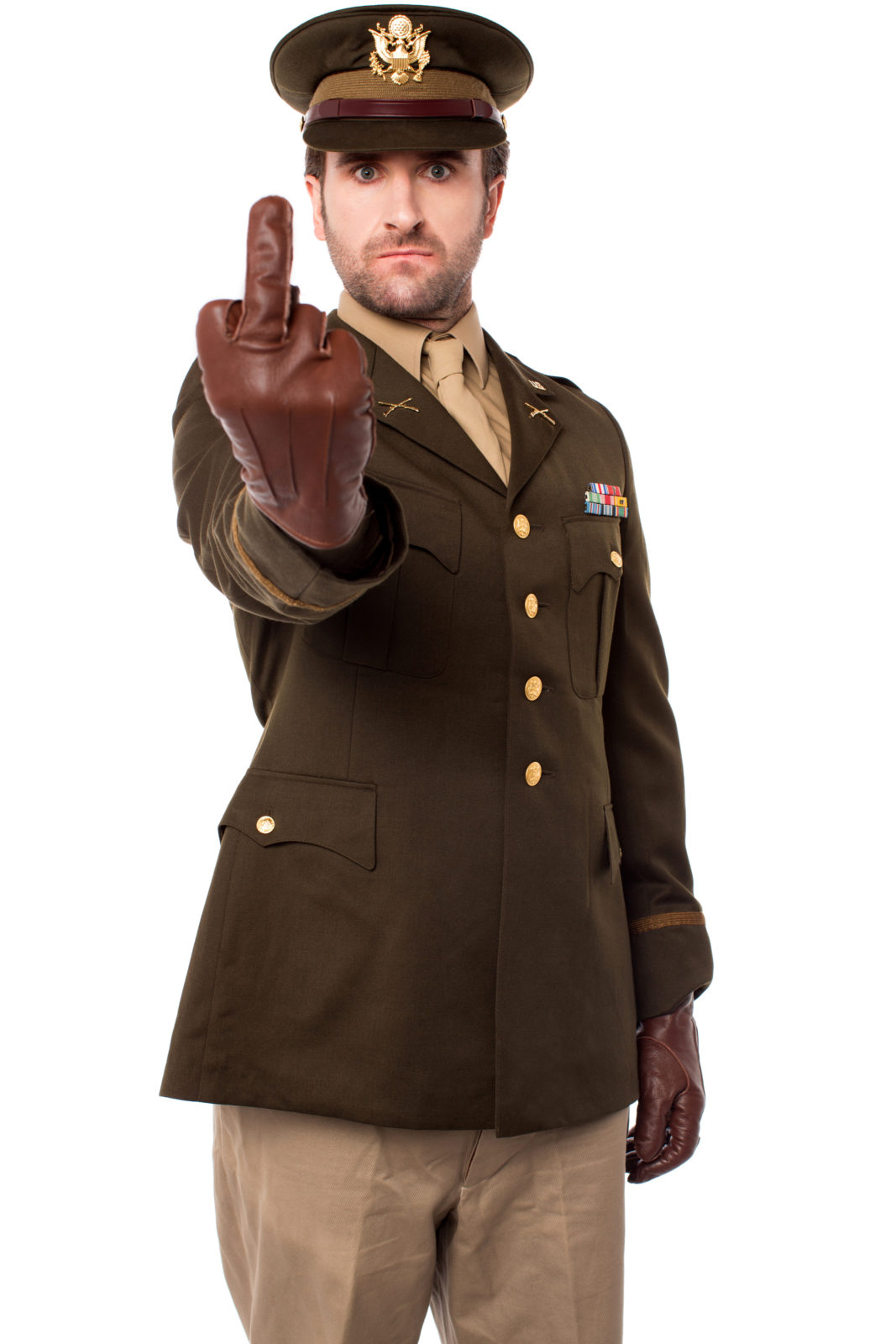
Fuck your trauma.
Yes, fuck your trauma. My sympathy for your suffering, whether that suffering was real or imaginary, ended when you demanded I change my life to avoid bringing up your bad memories. You don’t seem to have figured this out, but there is no “I must never be reminded of a negative experience” expectation in any culture anywhere on earth.
If your psyche is so fragile you fall apart when someone inadvertently reminds you of “trauma”, especially if that trauma consisted of you overreacting to a self-interpreted racial slur, you need therapy. You belong on a psychiatrist’s couch, not in college dictating what the rest of society can’t do, say or think. Get your own head right before you try to run other people’s lives. If you expect everyone around you to cater to your neurosis, forever, you’re what I’d call a “failure at life”, doomed to perpetual disappointment.
Oh, I should add: fuck my trauma too. I must be old-fashioned, but I always thought coming to terms with pain was part of growing up. I’ve never expected anyone to not knock on my door because it reminds me of that terrifying morning decades ago. I’ve never blown up at anyone for startling me with a camera flash (I’ve never even mentioned it to anyone who did). I’ve never expected anyone to not talk about Iraq or Afghanistan around me, even though some memories still hurt. I don’t need trigger warnings because a book might remind me of a murder victim I’ve seen.
And before anyone says it; being Hispanic doesn’t make me any more sympathetic to people who experience nonexistent, discriminatory “trauma”. Discrimination didn’t break me (or my parents, or grandparents). I’ve been discriminated against by whites for being Hispanic. I’ve been threatened by blacks for being white. I’ve been insulted by Hispanics for not being Hispanic enough. Big deal. None of that stopped me from doing anything I wanted to do. It wasn’t “trauma.” It was life.
Generations of Americans experienced actual trauma. Our greatest generation survived the Depression, then fought the worst war in humanity’s history, then built the United States into the most successful nation that has ever existed. They didn’t accomplish any of that by being crystal eggshells that would shatter at the slightest provocation, they didn’t demand society change to protect their tender feelings. They simply dealt with the hardships of their past and moved on. Even my great uncle, the Korea Marine, never expected us to tiptoe around him. He wouldn’t talk about his experience, but he didn’t order us not to.
So again, fuck your trauma. If your past bothers you that much, get help. I honestly hope you come to terms with it. I hope you manage to move forward. I won’t say anything meant to dredge up bad memories, and don’t think anyone should intentionally try to harm your feelings.
But nobody, nobody, should censor themselves to protect you from your pathological, and pathologically stupid, sensitivities.
_____
Chris Hernandez is a 20 year police officer, former Marine and currently serving National Guard soldier with over 25 years of military service. He is a combat veteran of Iraq and Afghanistan and also served 18 months as a United Nations police officer in Kosovo. He writes for BreachBangClear.com and Iron Mike magazine and has published two military fiction novels, Proof of Our Resolve and Line in the Valley, through Tactical16 Publishing. He can be reached at chris_hernandez_author@yahoo.com or on his Facebook page (https://www.facebook.com/ProofofOurResolve).
Buy Me A Coffee
The Havok Journal seeks to serve as a voice of the Veteran and First Responder communities through a focus on current affairs and articles of interest to the public in general, and the veteran community in particular. We strive to offer timely, current, and informative content, with the occasional piece focused on entertainment. We are continually expanding and striving to improve the readers’ experience.
© 2026 The Havok Journal
The Havok Journal welcomes re-posting of our original content as long as it is done in compliance with our Terms of Use.