My understanding of radicalization did not begin in a classroom. It began much earlier, shaped by personal experience, growing up in environments affected by civil conflict, witnessing firsthand how instability, fear, and identity can reshape communities and individuals. I have seen how quickly ordinary life can fracture under pressure, and how narratives of grievance and belonging can take hold when people are searching for meaning or security. Later in life, I would also come to know someone personally who became radicalized, a transformation that forced me to confront the reality that extremism is not something distant or abstract; it can emerge from familiar faces and ordinary relationships.
These experiences stayed with me long before I pursued formal education in counterterrorism. When I eventually entered a graduate program focused on the subject, I expected to spend countless hours studying terrorist organizations, insurgencies, and extremist movements from an academic perspective. I anticipated learning about their histories, tactics, funding streams, and geopolitical contexts. Those subjects were certainly part of the curriculum. Yet one lesson stood out above all others, reinforcing what I had already begun to understand through lived experience.
In 2005, I deployed to Iraq during a period when al-Qaeda in Iraq was actively conducting insurgent operations against coalition forces and Iraqi civilians. My role placed me in direct proximity to the realities of asymmetric warfare: improvised explosive devices, ambushes, and the constant uncertainty of operating in an environment where the enemy was often indistinguishable from the population. We were trained to identify threats, disrupt networks, and respond to violence. But what became increasingly clear over time was that the individuals we were fighting were not simply defined by weapons or tactics. They were driven by something deeper.

Many of the people involved in insurgent activity were not lifelong extremists. They were individuals shaped by a combination of personal experiences, perceived injustices, social pressures, and ideological narratives that gave meaning to their actions. Some were motivated by religion, others by nationalism, others by a sense of grievance or loss. What united them was not a single ideology, but a transformation in how they understood their role in the world. That realization stayed with me long after my deployment ended.
Whether the ideology is rooted in religion, politics, ethnicity, or nationalism, violence almost never begins with a weapon. It begins with a way of thinking. Long before an individual commits an act of terrorism, they undergo a transformation in how they see themselves, how they perceive others, and how they interpret the world around them. Their identity becomes fused with a cause. Their worldview grows increasingly rigid. Complexity gives way to certainty, disagreement becomes betrayal, and those outside the group are no longer viewed simply as people with different beliefs, but as obstacles to justice, truth, or even God’s will.
This is one of the most important lessons modern counterterrorism research has taught us. There is no single terrorist personality, no universal profile, and no religion, culture, or political ideology that possesses a monopoly on extremism. The overwhelming majority of Muslims, Christians, Jews, conservatives, liberals, and nationalists never embrace violence. Yet history repeatedly demonstrates that nearly any ideology can become a vehicle for radicalization when combined with perceived grievances, social reinforcement, moral certainty, and the belief that violence is not only justified but necessary.

For me, this lesson is not purely academic. It is personal.
From 1997 through 1999, I was friends with Ahmad Abousamra. During that time, he was simply someone I spent time with regularly. We hung out, talked, and shared the kinds of ordinary experiences that define young adulthood. On Fridays, we would often go to a local mosque together, where we spent time not only in prayer but also in conversation and community. At the time, nothing about those moments seemed unusual or concerning. It felt like a normal part of life.
Eventually, we lost contact. As time went on, I began to distance myself, particularly as I noticed changes in his thinking and behavior that suggested he was becoming more rigid and ideologically driven. Even then, I never imagined that he would go on to become involved in terrorism.
Looking back, I have often wondered whether certain influences within his environment played a role in that transformation. I cannot point to a single individual or moment with certainty, but it is possible that exposure to particular ideas or influences contributed to the gradual shift I later observed. That reflection is not meant as an accusation against any community, but rather as an acknowledgment of how radicalization can sometimes take root in spaces that otherwise appear ordinary.
He was not born an extremist. Like so many others who later become radicalized, he was once just another young man navigating identity, purpose, and belonging.
His story later became widely reported in national and international news. According to coverage by outlets such as The New York Times, CNN, and The Boston Globe, Abousamra, a Massachusetts native and former college student, eventually traveled overseas and became associated with extremist networks. He was later identified by U.S. authorities as a propagandist for ISIS, appearing in videos and online messaging campaigns aimed at recruiting Westerners. The FBI ultimately placed him on its Most Wanted Terrorists list, citing his role in producing and disseminating extremist media.
What struck me most in hindsight was not a single defining moment, but a gradual shift. The change was subtle at first, stronger opinions, a growing sense of grievance, a deeper attachment to certain ideas that framed the world in increasingly rigid terms. Over time, those ideas hardened. Nuance disappeared. Conversations became less about understanding and more about certainty. The world, in his view, became divided into clear categories of right and wrong, believer and enemy, justice and oppression.
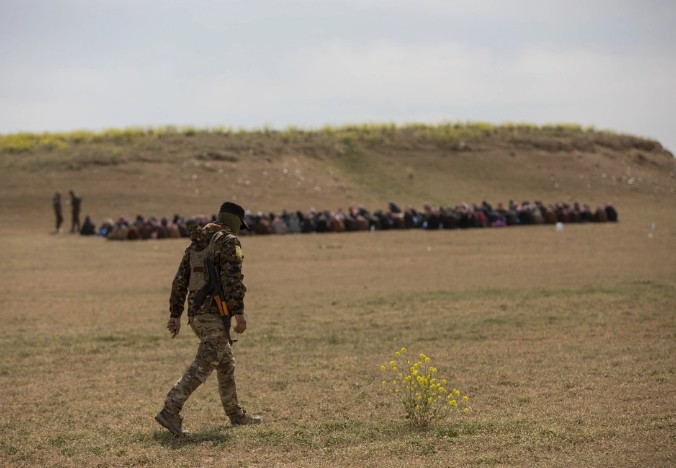
Eventually, that transformation led him down a path that few who knew him early on could have predicted. His story, as documented in public reporting, is not unique in its structure, even if it is unique in its details. It reflects the same psychological patterns that researchers have identified across countless cases of radicalization: identity fusion, moral absolutism, perceived injustice, and the reinforcement of beliefs within insular communities.
Understanding this distinction is essential. Too often, public discussions reduce terrorism to simplistic narratives that blame entire religions or political movements for the actions of a violent few. Such thinking is not only intellectually flawed but also strategically dangerous. Effective counterterrorism does not begin by asking, “Which religion is the problem?” It begins by asking, “What psychological processes transform ordinary individuals into devoted extremists?”
This article is not an attempt to equate Wahhabism, Zionism, and Christian nationalism, nor is it an argument that they produce violence at equal rates or through identical circumstances. They differ significantly in their histories, theological foundations, political objectives, and social contexts. Rather, they serve as examples of a broader phenomenon. Each demonstrates how deeply held beliefs can become fused with identity, moral conviction, and group loyalty in ways that, under certain conditions, create pathways toward extremism.
After serving in the military, working in law enforcement, and studying counterterrorism at the graduate level, I have become less interested in debating which ideology is the most dangerous and far more interested in understanding why human beings become vulnerable to ideological certainty in the first place. The symbols change. The flags change. The slogans change. Yet the underlying psychology often follows remarkably familiar patterns.
If we hope to prevent future acts of political or religious violence, we must look beyond the doctrines themselves and examine the human mind that gives them power. Only then can we begin to understand not just what extremists believe, but how ordinary people become convinced that extraordinary violence is both righteous and necessary.

What Is Ideology?
To understand radicalization, we must first understand ideology itself.
The word ideology is often used as a criticism. People accuse others of being ideological while assuming they themselves are simply being rational. In reality, every human being possesses an ideology, whether they recognize it or not.
An ideology is more than a political affiliation or a religious belief. It is a framework through which we interpret reality. It shapes how we define right and wrong, who we trust, what we fear, and what we believe gives life meaning. It influences how we respond to uncertainty, suffering, injustice, and conflict. In many ways, ideology acts as a cognitive map, helping us navigate an extraordinarily complex world.
This tendency is neither abnormal nor inherently dangerous. In fact, it is deeply human.
Throughout history, people have searched for systems that provide order, identity, and purpose. Some find those answers in religion. Others find them in political philosophies, national identity, cultural traditions, or social movements. These belief systems create communities, establish moral expectations, and help individuals answer some of life’s most fundamental questions: Who am I? Where do I belong? What is worth sacrificing for?
Social psychologist Henri Tajfel argued that much of our identity is shaped not only by who we are as individuals, but also by the groups to which we belong. His Social Identity Theory suggests that people naturally categorize themselves into groups, deriving self-esteem and meaning from those affiliations. Whether the group is based on religion, nationality, politics, military service, or profession, membership creates a powerful sense of belonging. Under healthy conditions, this process fosters cooperation, resilience, and social cohesion. Under certain circumstances, however, it can also create division between “us” and “them.”
That distinction is critical.

Ideologies do not create extremism by themselves. Most people with deeply held religious or political beliefs never advocate violence. The overwhelming majority live productive lives, contribute positively to their communities, and peacefully coexist with those who disagree with them.
The research consistently demonstrates that ideology alone is an insufficient explanation for terrorism. Psychologist John Horgan has spent decades studying individuals involved in extremist organizations and has repeatedly argued that there is no single terrorist profile. Instead, radicalization is better understood as a dynamic process influenced by identity, personal experiences, social relationships, perceived grievances, and opportunities for recruitment.
This distinction matters because it shifts our focus away from asking whether a particular religion or political philosophy is inherently dangerous. Instead, it forces us to ask a more important question: What happens when a healthy belief system begins to transform into an absolute identity?
That transformation rarely occurs overnight.
It often begins with uncertainty. A person experiences loss, humiliation, isolation, injustice, or a crisis of meaning. They begin searching for answers, purpose, and belonging. An ideology offers all three. It explains why the world feels broken. It identifies who is responsible. It promises certainty in place of ambiguity and purpose in place of confusion.
For most people, that search ends there.
For a small minority, however, ideology gradually evolves from a way of understanding the world into the only acceptable way of understanding it. Questions become unwelcome. Doubt becomes weakness. Compromise becomes betrayal. Identity becomes inseparable from belief.
It is at this point that ideology ceases to be merely a worldview and begins to function as something far more powerful.
It becomes identity.
And when identity becomes sacred, challenges to belief are no longer experienced as intellectual disagreements. They are experienced as personal attacks. Understanding that psychological shift is essential because it marks the beginning of the pathway toward ideological radicalization.

The Psychology of Radicalization
If ideology provides the map, psychology determines whether someone follows it to its most destructive destination.
One of the greatest misconceptions surrounding terrorism is the belief that extremists are fundamentally different from the rest of us. Popular culture often portrays terrorists as irrational, mentally unstable, or inherently evil. While some individuals involved in violent extremism may suffer from mental illness, decades of research have consistently shown that there is no single psychological profile that predicts who will become a terrorist. In fact, psychologist John Horgan has argued that asking, “What kind of person becomes a terrorist?” may be the wrong question altogether. A more productive question is, “What processes lead ordinary people toward extraordinary violence?”
The answer is rarely simple because radicalization is rarely driven by a single cause. Instead, it emerges through the interaction of personal experiences, psychological needs, social relationships, and ideological narratives. It is less like flipping a switch and more like assembling pieces of a puzzle over time.
One of the most influential explanations comes from social psychologist Arie Kruglanski and his colleagues through what they call the “3N Model” of radicalization: Need, Narrative, and Network.
The first element is Need.
Human beings possess a fundamental desire to feel significant. We want our lives to matter. We seek purpose, respect, belonging, and identity. For many people, these needs are fulfilled through family, meaningful work, military service, faith, or community. However, experiences such as humiliation, trauma, discrimination, social isolation, political instability, or personal failure can create what Kruglanski describes as a “quest for significance.” During these moments, people become more receptive to belief systems that promise meaning and restore a sense of importance.
The second element is Narrative.
An ideology alone does not radicalize someone. What matters is the story it tells. Every extremist movement offers a compelling narrative that explains why the world is broken, identifies who is responsible, and promises a path toward justice, redemption, or historical greatness. These narratives simplify an extraordinarily complex world into moral absolutes. They reduce uncertainty by dividing humanity into heroes and enemies, believers and infidels, patriots and traitors, victims and oppressors. Complexity becomes uncomfortable. Certainty becomes emotionally rewarding.
The third element is Network.

Perhaps the greatest myth about radicalization is that people are persuaded by ideas alone. Research consistently suggests otherwise. Anthropologist Scott Atran has shown that social bonds are often more influential than ideology itself. Friends recruit friends. Family members reinforce beliefs. Online communities provide validation. Extremist organizations understand that belonging frequently precedes belief. People often become committed to a group first and fully embrace its ideology later.
This understanding fundamentally changes how we think about terrorism. Radicalization is not simply an intellectual process. It is deeply social. Human beings are wired for connection, and those seeking purpose or belonging can become vulnerable when extremist groups provide both.
Another critical psychological process is what psychologist Albert Bandura described as moral disengagement. Most people possess strong moral inhibitions against harming innocent human beings. Those barriers do not simply disappear. They are gradually weakened through psychological mechanisms that allow violence to feel acceptable, even virtuous.
Language plays a powerful role in this transformation. Opponents are no longer viewed as individuals. They become labels: “infidels,” “occupiers,” “traitors,” “colonizers,” “apostates,” or “enemies of the people.” Once people are reduced to categories instead of human beings, empathy begins to erode. Violence can then be reframed as justice, self-defense, divine obligation, or patriotic duty rather than murder.
Neuroscience offers another important perspective. The human brain evolved to detect threats and ensure survival, not to objectively analyze every situation. Under chronic stress, uncertainty, or fear, people often become more attracted to clear answers, strong leaders, and simple explanations. Ambiguity becomes psychologically uncomfortable. Certainty becomes emotionally reassuring. This does not mean fear automatically creates extremists, but it helps explain why environments characterized by instability, humiliation, or prolonged conflict can make rigid ideological narratives more appealing.
This pattern has been observed across numerous forms of violent extremism. Whether motivated by religion, ethnicity, nationalism, or political ideology, many radicalized individuals exhibit similar psychological dynamics. Their identity becomes fused with a cause. Their moral universe narrows. Compromise becomes betrayal. Opponents become dehumanized. Violence becomes reframed as a necessary act of service to something greater than themselves.
This is why effective counterterrorism requires far more than military operations or law enforcement interventions. Those tools may disrupt networks and prevent attacks, but lasting prevention depends upon understanding the human mind. If we focus only on the weapons extremists carry, we will always be responding to the final stage of radicalization. To truly prevent terrorism, we must understand the psychological journey that begins long before violence ever occurs.

Three Different Ideologies Through the Lens of Counterterrorism
Having explored the psychology of radicalization, we can now examine how those psychological mechanisms appear across three very different ideological movements.
At first glance, Wahhabism, Zionism, and Christian nationalism seem to have little in common. One emerged in 18th-century Arabia as an Islamic reform movement. Another developed in 19th-century Europe as a movement advocating for Jewish national self-determination. The third is a modern political ideology that seeks to integrate Christianity with national identity and public life. They differ significantly in their histories, theological foundations, political objectives, and cultural contexts.
Those differences matter.
An intellectually honest analysis cannot ignore them, nor should it suggest that these movements are identical or that they have produced violence at equal rates or through the same historical circumstances. They have not.
Yet after years of military service, law enforcement, and graduate study in counterterrorism, I have come to believe that focusing exclusively on those differences causes us to overlook something even more important.
Counterterrorism professionals rarely ask whether one religion or political ideology is inherently more dangerous than another. Instead, they ask a more practical question.
How do ordinary belief systems become transformed into extremist worldviews?
That question shifts our attention away from doctrine and toward human behavior.
The research discussed earlier offers a compelling answer. Radicalization is rarely the product of ideology alone. It emerges through the interaction of identity, perceived grievance, moral certainty, social reinforcement, sacred values, and the gradual dehumanization of those outside the group. These psychological processes have been documented across a wide range of extremist movements, regardless of whether their underlying ideology is religious, political, nationalist, or secular.
This is the framework through which I want to examine Wahhabism, Zionism, and Christian nationalism.
The purpose is not to compare religions or determine which ideology is “worse.” It is to understand how extremist interpretations of three very different movements can exhibit remarkably similar psychological patterns. The doctrines differ. The histories differ. The symbols differ. Yet when viewed through the lens of counterterrorism and behavioral science, the pathways toward radicalization often reveal familiar patterns.
Each of the following case studies will follow the same framework. We will briefly examine the origins of the movement, distinguish its mainstream beliefs from its extremist interpretations, and then analyze how the psychological mechanisms discussed in the previous section have appeared within violent fringe movements. By applying the same analytical standard to each ideology, we move beyond political rhetoric and toward a deeper understanding of how radicalization actually occurs.

Case Study One: Wahhabism
No discussion of modern Islamist extremism is complete without examining Wahhabism. Yet few concepts in terrorism studies are as frequently misunderstood or oversimplified.
Wahhabism originated in the 18th century through the teachings of Muhammad ibn Abd al Wahhab in the Arabian Peninsula. Concerned that Islam had drifted away from what he believed were the beliefs and practices of the Prophet Muhammad and the earliest Muslim community, he called for a return to strict monotheism and adherence to the Qur’an and the Sunnah. He rejected practices such as the veneration of saints, shrine visitation, and other traditions that he viewed as religious innovations. His teachings eventually formed a political and religious alliance with Muhammad bin Saud, creating a partnership that would become foundational to the establishment of modern Saudi Arabia.
For many Muslims influenced by Wahhabi theology, the movement represents an effort to preserve what they believe is the original purity of Islam. It emphasizes personal piety, strict adherence to scripture, and the rejection of practices considered inconsistent with early Islamic teachings. It is important to acknowledge that the overwhelming majority of Muslims, including many influenced by conservative Salafi and Wahhabi traditions, reject terrorism and have never advocated violence against innocent people.
That distinction cannot be overstated.
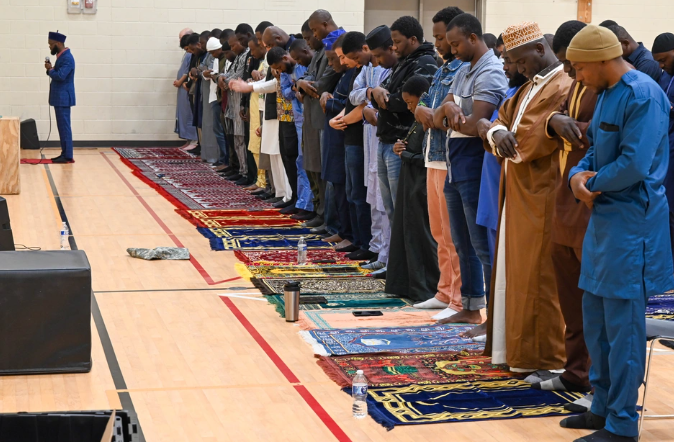
Equating Wahhabism with terrorism is both historically inaccurate and inconsistent with the research on radicalization. Just as Christianity cannot be defined by violent extremists who claim to act in its name, neither can Islam. Counterterrorism professionals recognize that religious beliefs alone do not explain terrorism. If they did, the millions of peaceful individuals who share similar theological views would also become violent extremists, and they clearly do not.
However, it would be equally inaccurate to ignore the influence that Wahhabi and broader Salafi doctrines have had on certain jihadist organizations. Groups such as al-Qaeda and later ISIS drew upon elements of these theological traditions, particularly concepts related to takfir, the practice of declaring other Muslims to be unbelievers, and the restoration of what they believed to be authentic Islamic governance. Yet these organizations did not simply adopt Wahhabi theology. They selectively interpreted religious texts, removed them from their historical and scholarly contexts, and combined them with revolutionary political objectives, creating an ideology that justified global violence against both Muslims and non-Muslims.
From the perspective of counterterrorism, the more important question is not whether Wahhabism caused terrorism. The evidence does not support such a simplistic conclusion. Instead, the question is why certain individuals became receptive to extremist interpretations while millions of others did not.
This is where the psychology of radicalization becomes indispensable.
Many recruits who joined organizations such as al-Qaeda or ISIS were not initially drawn by complex theological debates. Research consistently suggests that they were searching for identity, purpose, belonging, and significance. Extremist recruiters offered all four. They provided a narrative that explained personal suffering, identified clear enemies, and promised participants the opportunity to become part of something sacred and historically significant.
The movement also reinforced a powerful distinction between the in-group and the out-group. Members were taught that they belonged to a select community entrusted with defending the true faith, while those outside the group were increasingly portrayed as corrupt, misguided, or hostile. As commitment deepened, moral certainty replaced intellectual curiosity. Doubt became weakness. Compromise became betrayal. Violence was reframed not as aggression but as a religious obligation in service of a higher moral purpose.
Viewed through the lens of behavioral science, these psychological mechanisms are remarkably familiar. Identity fused with ideology. Sacred values became non-negotiable. Moral disengagement reduced empathy for perceived enemies. Group belonging strengthened commitment, while social reinforcement made disengagement increasingly difficult.
None of these processes are unique to Wahhabism. In fact, they are the very same mechanisms that researchers have identified across multiple forms of violent extremism. The theology may differ, but the underlying psychology follows a pattern that extends far beyond any single religion or culture. Understanding that distinction is essential because it shifts our attention away from blaming belief systems themselves and toward recognizing how ordinary human psychology can, under certain conditions, become vulnerable to extremist interpretations.

Case Study Two: Zionism
Unlike Wahhabism, which emerged as a religious reform movement, Zionism developed primarily as a nationalist movement. Understanding that distinction is essential before any meaningful comparison can be made.
Modern political Zionism emerged in the late 19th century, largely through the work of Theodor Herzl, in response to growing antisemitism throughout Europe. At its core, Zionism advocated for the Jewish people’s right to self-determination in their ancestral homeland. For millions of Jews, it represented not only a political movement but also a response to centuries of persecution, discrimination, expulsions, and ultimately the horrors of the Holocaust. Today, the vast majority of Zionists understand the movement as support for the continued existence and security of the State of Israel, while holding a wide range of political, religious, and cultural views.
It is important to recognize that Zionism is not a single, unified ideology. It encompasses secular, religious, liberal, conservative, and socialist traditions, many of which strongly disagree with one another. Likewise, support for Israel does not imply support for every policy of the Israeli government, just as criticism of Israeli government policies does not necessarily constitute opposition to Zionism itself. These distinctions matter because precision is essential when discussing politically and emotionally charged subjects.
However, as with many ideological movements throughout history, extremist interpretations have also emerged.
Certain fringe movements, particularly within religious nationalist circles, have interpreted biblical promises concerning the land of Israel in absolute and uncompromising terms. For these groups, territory is not merely a political issue but a sacred obligation. Compromise becomes spiritually unacceptable because it is viewed as surrendering land believed to have been divinely promised. Under these circumstances, political conflict can gradually become transformed into a sacred struggle, where opponents are increasingly viewed not simply as adversaries but as obstacles to fulfilling a divine mission.
From a counterterrorism perspective, these developments are significant not because they are unique, but because they illustrate familiar psychological processes.
Identity becomes deeply intertwined with land, history, and divine purpose. Sacred values become resistant to negotiation. Perceived threats to the group’s survival or identity reinforce cohesion and strengthen the distinction between the in-group and the out-group. As polarization intensifies, empathy for perceived enemies may diminish while morally absolute narratives become increasingly attractive.
It is important to emphasize that these psychological mechanisms are not exclusive to religious Zionist extremists. They have been observed across numerous ideological movements throughout history. Scott Atran’s research on sacred values demonstrates that when individuals perceive certain beliefs, identities, or territories as sacred, they become far less willing to compromise, even when doing so would produce objectively better outcomes. Rational cost-benefit calculations give way to moral obligation, and conflicts become framed in existential rather than political terms.
History has demonstrated that extremist violence can emerge from these dynamics. Individuals such as Baruch Goldstein and organizations including Kach justified violence through interpretations of religious nationalism that were rejected by the overwhelming majority of Israeli society and condemned by many Jewish religious leaders. Their actions illustrate an important point. Extremism does not arise simply because people hold strong beliefs. It emerges when identity, sacred values, perceived existential threats, and moral certainty converge in ways that justify violence as both necessary and righteous.
Viewed through the lens of counterterrorism, the comparison with extremist interpretations of Wahhabism becomes clearer. The doctrines are fundamentally different. The histories are different. The cultures are different. Yet the psychological mechanisms identified by modern radicalization research remain remarkably similar. Identity becomes fused with ideology. Sacred values become non-negotiable. Opponents become increasingly dehumanized. Violence is reframed not as an immoral act, but as a moral duty in defense of something perceived as sacred.
Understanding these similarities does not diminish the legitimate historical foundations of Zionism any more than it diminishes the legitimate religious foundations of Islam. Rather, it reinforces one of the central lessons of counterterrorism. Extremism is best understood not through the specific content of an ideology, but through the psychological processes that can transform deeply held beliefs into justification for violence.

Case Study Three: Christian Nationalism
Unlike Wahhabism or Zionism, Christian nationalism is not a denomination or a distinct theological tradition. It is best understood as a political ideology that fuses Christianity with national identity, arguing that a nation was founded upon, or should be governed according to, Christian principles and values. While the movement has taken different forms throughout history, it has become increasingly prominent in modern political discourse, particularly in the United States.
It is important to distinguish Christian nationalism from Christianity itself. The overwhelming majority of Christians neither identify as Christian nationalists nor advocate violence in defense of their faith or political beliefs. Likewise, many Christian nationalists reject violence entirely and pursue their goals through lawful political participation. Any serious analysis must recognize these distinctions rather than treating Christianity and Christian nationalism as interchangeable concepts.
However, as with the previous case studies, extremist interpretations have emerged within the broader movement.
For some fringe groups and individuals, political disagreements become transformed into spiritual warfare. National identity becomes inseparable from religious identity, and defending the nation is framed as defending God’s will. Political opponents are no longer viewed simply as citizens with different ideas, but as existential threats to the country’s moral foundation. The struggle shifts from one of public policy to one of absolute good versus absolute evil.
From the perspective of behavioral science, the psychological mechanisms are once again familiar.
Identity becomes fused with a higher cause. Membership within the perceived in-group provides meaning, belonging, and moral certainty. Sacred values become resistant to compromise because conceding political ground is interpreted as compromising divine truth. As polarization deepens, opponents may become increasingly dehumanized or portrayed as enemies of both God and country. Under these conditions, violence can be reframed by extremists not as criminal behavior but as a necessary act of patriotism or religious duty.
History demonstrates that these dynamics are not merely theoretical. Individuals motivated by extremist interpretations of Christian nationalism have committed acts of political violence, believing they were defending their faith, their nation, or both. Although such individuals represent only a tiny fraction of Christians or Christian nationalists, their actions illustrate the same psychological processes observed across other forms of violent extremism.
Viewed through the lens of counterterrorism, the similarities become increasingly difficult to ignore. The religious doctrines differ dramatically from those found in Wahhabism. The political history differs substantially from Zionism. Yet the pathway toward extremism follows many of the same psychological patterns. Identity becomes absolute. Moral certainty leaves little room for nuance. Group loyalty intensifies. Perceived threats become existential. Violence is redefined as righteous, necessary, and even virtuous.
This does not suggest that Christianity, Islam, or Judaism are inherently violent, nor does it imply that Wahhabism, Zionism, and Christian nationalism produce extremism at equal rates or under identical circumstances. Such conclusions would ignore history, theology, and the overwhelming majority of peaceful adherents within each tradition.
Instead, these three case studies reinforce one of the central lessons of modern counterterrorism research. Human beings are remarkably similar in the ways they construct identity, seek belonging, respond to perceived threats, and justify violence when deeply held beliefs become fused with moral certainty. The symbols change. The scriptures change. The flags change. But the psychological architecture of radicalization often remains strikingly familiar.
For counterterrorism professionals, this is perhaps the most important lesson of all. If we focus exclusively on the ideology, we risk missing the underlying human processes that allow extremism to emerge in the first place. By understanding those processes, we move beyond political rhetoric and toward a more complete understanding of how ordinary individuals can become convinced that extraordinary violence is morally justified.

The Counterterrorism Takeaway
One of the greatest misconceptions about counterterrorism is that it is primarily about finding terrorists.
It is not.
Effective counterterrorism is about understanding how ordinary people become radicalized long before they ever commit an act of violence. It is about recognizing patterns, identifying vulnerabilities, and interrupting the psychological and social processes that allow extremist worldviews to take root. By the time law enforcement or military personnel respond to an attack, the opportunity for prevention has often passed.
That reality has shaped how I think about extremism.
Throughout my military service, my career in law enforcement, and my graduate studies in counterterrorism, I have become convinced that the greatest battlefield is not physical. It is psychological.
The human mind is constantly searching for certainty, belonging, identity, and purpose. Those are not weaknesses. They are fundamental aspects of being human. The problem arises when those needs are exploited by individuals or organizations that offer simple answers to complex problems, absolute certainty in place of humility, and a sense of belonging that depends upon rejecting or dehumanizing others.
Extremist recruiters understand this remarkably well.
They rarely begin by teaching violence.
They begin by offering friendship.
They offer purpose.
They offer identity.
They offer certainty.
Violence usually comes much later, after trust has been established, identities have become fused with the group, and moral boundaries have gradually been redefined.
That lesson extends far beyond terrorism.
The same psychological mechanisms that contribute to violent extremism can also be observed in political polarization, conspiracy movements, gangs, cults, and other forms of ideological absolutism. While these movements differ dramatically in their goals and methods, many rely upon similar human needs for belonging, significance, certainty, and identity. Understanding these mechanisms allows us to recognize warning signs before they escalate into violence.
This is why I believe the future of counterterrorism cannot rely solely on intelligence collection, surveillance, or tactical operations. Those capabilities remain essential, but they address the consequences of radicalization more often than its origins. Preventing extremism requires a deeper understanding of human behavior. It demands that we integrate psychology, neuroscience, sociology, anthropology, and behavioral science into how we educate law enforcement officers, military leaders, intelligence professionals, and policymakers.
The most dangerous extremist is rarely the person shouting the loudest.
More often, it is the individual who quietly withdraws from competing viewpoints, isolates themselves within increasingly rigid communities, and slowly comes to believe that violence is not only acceptable, but morally necessary. That transformation seldom happens overnight. It is usually the result of countless small psychological shifts that accumulate over time.
If there is one lesson my experiences have reinforced, it is this.
Extremism is not confined to a single religion, political movement, or culture. It is a human phenomenon.
The names of the organizations will change.
The flags will change.
The slogans will change.
The technology will change.
But as long as human beings continue searching for identity, meaning, and belonging, the potential for ideological radicalization will remain. Our greatest defense is not simply stronger security. It is a deeper understanding of the human mind and the psychological pathways that can transform conviction into fanaticism and belief into violence.
Counterterrorism, at its core, is not simply about defeating terrorists.
It is about understanding people.

From Theory to Reality: Three Contemporary Expressions of Ideological Extremism
Understanding the psychology of radicalization is only the beginning. The true test of any theory is whether it helps explain real-world behavior.
Throughout this article, I have argued that the greatest value of counterterrorism is not simply understanding what extremists believe, but understanding how ordinary individuals become convinced that violence is morally justified. Modern research consistently demonstrates that radicalization is rarely driven by ideology alone. Rather, it emerges through the interaction of identity, perceived grievance, social reinforcement, sacred values, moral certainty, and the gradual dehumanization of those viewed as enemies.
To illustrate this process, we can examine three contemporary expressions of ideological extremism. Wahhabism, Zionism, and Christian nationalism are fundamentally different in their origins, theology, political objectives, and historical development. They should not be viewed as equivalent movements, nor do they produce violence at the same frequency, scale, or under the same circumstances. The overwhelming majority of individuals associated with each tradition reject violence and live peacefully within their respective societies.
Yet from the perspective of counterterrorism, the comparison is not about doctrine.
It is about process.
When extremist factions emerge within these movements, they often display remarkably similar psychological characteristics. Identity becomes fused with ideology. Sacred values become absolute. Opponents are increasingly dehumanized. Moral certainty replaces intellectual humility. Violence is reframed not as an immoral act, but as a necessary duty in service of a higher cause.
The following case studies are therefore not intended to compare religions or political movements. Rather, they examine how three very different ideological traditions have, under specific conditions, produced extremist interpretations that follow strikingly similar pathways of radicalization. By applying the same analytical framework to each case, we gain a deeper understanding of one of the central lessons of modern counterterrorism: while ideologies may differ dramatically, the psychology that transforms conviction into violent extremism often follows remarkably familiar patterns.
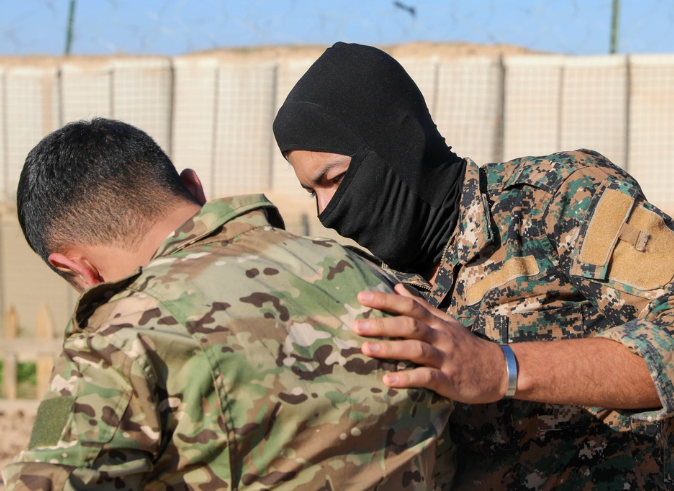
Contemporary Salafi Jihadism: Wahhabism, ISIS, and Global Extremism
Although al-Qaeda brought Salafi jihadism to global attention through the September 11 attacks, the modern evolution of this ideology is perhaps best illustrated by the rise of ISIS. While scholars continue to debate the precise relationship between Wahhabism, Salafism, and Salafi jihadism, there is broad agreement that ISIS selectively appropriated elements of these theological traditions while fundamentally distorting and expanding them into a revolutionary ideology centered on violent global jihad.
This distinction is essential.
Wahhabism itself emerged as an 18th-century Islamic reform movement seeking to restore what its followers believed to be the original teachings of Islam. The overwhelming majority of Muslims influenced by Wahhabi or Salafi traditions reject terrorism and condemn the deliberate killing of civilians. Modern counterterrorism scholars consistently distinguish between mainstream Salafism and Salafi jihadism, the latter representing a militant ideology that embraces violence as a religious obligation.
ISIS transformed this ideology into one of the most sophisticated extremist movements of the modern era. Unlike many terrorist organizations that rely primarily on political messaging, ISIS deliberately combined theology, propaganda, identity, and social media to recruit thousands of followers from around the world. It promised recruits more than participation in a terrorist organization. It offered purpose. It offered brotherhood. It offered significance. Most importantly, it offered the opportunity to become part of what it claimed was the restoration of a divinely ordained caliphate.
This ideological framework translated into a series of high-profile and devastating attacks. ISIS claimed responsibility for the November 2015 Paris attacks, which killed 130 people across multiple coordinated locations, and the March 2016 Brussels bombings, which targeted the airport and metro system. The group also inspired or directed attacks beyond Europe, including the 2016 Orlando nightclub shooting in the United States and the 2019 Easter bombings in Sri Lanka carried out by an affiliated network. These incidents illustrate how the organization combined centralized planning with decentralized inspiration to project violence globally.
From a counterterrorism perspective, ISIS demonstrated nearly every psychological mechanism discussed earlier in this article.
Identity became inseparable from ideology.
Membership in the so-called Islamic State became a source of meaning and belonging.
The world was divided into absolute categories of believers and unbelievers.
Violence was reframed as an act of worship rather than murder.
Opponents were systematically dehumanized through propaganda that portrayed civilians, religious minorities, journalists, aid workers, and even fellow Muslims as legitimate targets because they were considered enemies of God’s law.
Perhaps most significantly, ISIS demonstrated that modern radicalization is no longer confined to physical spaces. Through sophisticated online propaganda, encrypted communications, and social media networks, the organization inspired individuals thousands of miles away who had never traveled to Syria or Iraq. Counterterrorism officials now recognize that many contemporary extremists become radicalized within digital communities where ideology, identity, and social reinforcement reinforce one another with extraordinary speed. Even after the collapse of its territorial caliphate, ISIS continues to inspire attacks through decentralized online recruitment and propaganda, illustrating that the psychological appeal of the movement often outlasts its physical infrastructure.
Viewed through the lens of behavioral science, the lesson extends far beyond ISIS itself. The organization’s success was not rooted solely in its interpretation of Islam. It succeeded because it understood something fundamental about human psychology. People searching for purpose, belonging, certainty, and significance are particularly vulnerable to narratives that offer simple answers to complex problems and transform ordinary individuals into participants in what they believe is a sacred mission.
That is the lesson counterterrorism professionals continue to study. The ideology matters. But understanding why that ideology resonates with certain individuals is ultimately far more important than understanding the doctrine alone.

Contemporary Religious Zionist Extremism: Kahanism and Settler Violence
Unlike Salafi jihadism, which has produced globally recognized terrorist organizations, or Christian nationalist-inspired violence in the United States, contemporary extremist religious Zionism more often manifests through organized settler violence, hate crimes, and politically motivated attacks rather than large-scale terrorist organizations. Understanding this distinction is important because extremism does not always take the same operational form, even when the underlying psychological processes are remarkably similar.
One of the most influential ideological currents within this movement is Kahanism, a Jewish ultranationalist ideology founded by Rabbi Meir Kahane. Kahanism promotes the belief that the biblical land of Israel belongs exclusively to the Jewish people and that Jewish sovereignty should be maintained at virtually any cost. While the overwhelming majority of Israelis and Jews reject Kahanism, its ideas have continued to influence a small but committed fringe of extremists.
Following the Hamas attacks on October 7, 2023, extremist settler violence in the West Bank increased significantly. Human rights organizations, the United Nations, and multiple Western governments documented attacks against Palestinian civilians, including assaults, arson, destruction of property, intimidation, and forced displacement. In response, the United States, the United Kingdom, Canada, and the European Union imposed sanctions on several individuals and organizations associated with violent settler extremism, citing politically and ideologically motivated violence against civilians.
From a counterterrorism perspective, these incidents reveal many of the same psychological mechanisms discussed throughout this article. Land becomes more than territory. It becomes sacred. Political disagreements become viewed as existential struggles over divine promises and national survival. Identity becomes inseparable from religious conviction, historical memory, and territorial claims. Those perceived as threatening that identity are increasingly viewed not simply as political adversaries, but as obstacles to God’s covenant and the future of the Jewish people.
As these beliefs become more absolute, moral certainty often replaces moral reflection. Violence can become reframed not as aggression, but as defense of something sacred. This process mirrors what psychologist Albert Bandura described as moral disengagement, allowing individuals to justify acts that would otherwise violate deeply held moral standards. It also reflects Scott Atran’s work on sacred values, demonstrating how beliefs tied to identity and perceived divine obligation become resistant to compromise and increasingly capable of motivating violence.
It is essential to emphasize that these extremist interpretations do not represent Zionism as a whole. The overwhelming majority of Zionists reject violence against civilians, support democratic institutions, and pursue political solutions through lawful means. Just as extremist jihadists do not represent Islam, and violent Christian extremists do not represent Christianity, violent Kahanist-inspired actors do not represent the broader Zionist movement.
Yet for students of counterterrorism, the lesson remains remarkably consistent. Whether the ideology is rooted in religion, nationalism, or politics, the psychological architecture of radicalization follows familiar patterns. Identity becomes absolute. Sacred values become non-negotiable. Perceived enemies become dehumanized. Violence becomes morally justified. The ideology changes. Human psychology does not.

Christian Nationalism in the United States: From Collective Movement to Individual Radicalization
Unlike the previous case studies, Christian nationalism presents a unique challenge for counterterrorism researchers because it is not a single organization, denomination, or terrorist group. Rather, it is a political and cultural ideology that exists along a spectrum of beliefs. Most individuals who identify with Christian nationalist ideas never engage in violence and pursue their objectives through lawful political participation. However, as with every ideology discussed in this article, extremist interpretations have emerged that demonstrate many of the same psychological mechanisms associated with radicalization.
One of the clearest examples is the events of January 6, 2021. It is important to acknowledge that not everyone who entered the U.S. Capitol was motivated by Christian nationalism. Participants represented a wide range of political beliefs and motivations. However, researchers have consistently documented the prominent presence of Christian nationalist symbolism, rhetoric, and theology among a significant portion of those involved. Crosses, Christian flags, public prayers, biblical references, and appeals to divine authority were woven together with claims that the nation itself was under existential threat. Researchers such as Samuel Perry, Andrew Whitehead, and Robert Pape have argued that Christian nationalist beliefs, particularly when combined with perceived victimhood, conspiracy theories, and strong in-group identity, are associated with greater acceptance of political violence.
From a psychological perspective, these findings are significant. Political disagreement became moral conflict. Electoral defeat became evidence of spiritual warfare. Opponents were increasingly portrayed not merely as political rivals but as enemies of God and the nation. Once identity became fused with both faith and country, violence could be reframed by some participants as a necessary act of patriotism and religious obligation rather than criminal behavior.
A more recent example is the case of Vance Boelter, who pleaded guilty in federal court in 2026 to charges related to the stalking, shooting, and murder of former Minnesota House Speaker Melissa Hortman and her husband, Mark, as well as the stalking and shooting of state Sen. John Hoffman and his wife, Yvette, in 2025. According to federal prosecutors, Boelter maintained a list of political targets. While the attack has not been formally classified as Christian nationalist terrorism, reporting and expert analysis have identified themes of militant Christianity, spiritual warfare, and associations with institutions connected to Christian nationalist thought. Analysts have cautioned against overstating motive beyond available evidence.
After Boelter’s guilty plea, the psychological patterns remain familiar. Boelter reportedly viewed the political landscape through a framework of absolute moral conflict, where ideological opponents represented more than political adversaries. They became participants in a larger spiritual struggle between good and evil. As seen in other forms of violent extremism, identity, sacred values, perceived existential threat, and moral certainty appeared to converge into a worldview capable of justifying violence.
From the perspective of counterterrorism, these examples reinforce an essential lesson. The objective is not to label every politically or religiously committed individual as an extremist, nor is it to suggest that Christian nationalism inevitably leads to violence. The overwhelming majority of Christians and Christian nationalists reject violence completely. Rather, these cases illustrate how extremist interpretations can exploit the same psychological architecture discussed throughout this article. When identity becomes absolute, sacred values become non-negotiable, and perceived enemies are stripped of their humanity, the pathway toward violence begins to look remarkably similar regardless of the ideology that occupies the mind.

Conclusion
Throughout history, humanity has searched for simple answers to complex problems. We seek certainty in times of uncertainty, belonging in times of isolation, and purpose in times of suffering. Those are not flaws in human nature. They are part of what makes us human.
The danger arises when those deeply human needs become fused with ideological absolutism.
Throughout this article, I have examined Wahhabism, Zionism, and Christian nationalism, not because they are identical movements, but because they demonstrate an important lesson that modern counterterrorism research has consistently reinforced. Their histories differ. Their beliefs differ. Their political and religious objectives differ. Yet extremist interpretations within each movement reveal remarkably similar psychological processes. Identity becomes fused with ideology. Sacred values become non-negotiable. The world is divided into righteous believers and irredeemable enemies. Violence is no longer viewed as immoral, but as a necessary act in defense of something perceived as sacred.
For me, this lesson has never existed only in textbooks.
It has been shaped by growing up in regions affected by civil conflict, serving in Iraq during the insurgency, working in law enforcement, studying counterterrorism, and witnessing firsthand how ordinary people can gradually become consumed by extraordinary beliefs. Those experiences have convinced me that the greatest threat is rarely ideology by itself. The greatest threat is the human tendency to surrender critical thinking in exchange for absolute certainty.
That realization has profound implications for how we approach counterterrorism.
If we believe terrorism is simply a religious problem, we will overlook political extremism.
If we believe it is solely a political problem, we will overlook religious extremism.
If we believe it belongs only to one culture or one nation, history will continue to prove us wrong.
Extremism is a human problem.
That does not mean all ideologies are equally dangerous, nor does it suggest that every movement produces violence at the same rate or under the same conditions. It means that the psychological pathways to radicalization are often more alike than the ideologies themselves. Recognizing those patterns gives us a better opportunity to intervene before violence occurs.
As counterterrorism professionals, law enforcement officers, military leaders, and citizens, our responsibility extends beyond responding to acts of terror. We must understand the conditions that allow extremism to flourish and recognize the warning signs before conviction hardens into fanaticism. Prevention begins long before the first shot is fired or the first bomb is built.
Perhaps the greatest lesson I have learned is that the future of counterterrorism will not be determined solely by better intelligence, stronger security measures, or more advanced technology. It will also depend upon how well we understand human behavior.
Because in the end, the flags may change.
The slogans may change.
The scriptures may change.
The political movements may change.
But human psychology remains remarkably consistent.
If we truly hope to reduce the violence of the future, we must spend less time asking which ideology is the most dangerous and more time understanding why ordinary people become willing to embrace extraordinary violence in the first place.
That is where prevention begins.
That is where effective counterterrorism begins.

Selected References and Further Reading
The research and analysis presented in this article are informed by the work of leading scholars and institutions in the fields of counterterrorism, social psychology, behavioral science, and political violence. Key contributors include John Horgan, Arie W. Kruglanski, Scott Atran, Albert Bandura, Henri Tajfel, Marc Sageman, Fathali M. Moghaddam, Clark McCauley, Sophia Moskalenko, Daniel Kahneman, Lawrence Wright, Andrew L. Whitehead, and Samuel L. Perry.
The 9/11 Commission Report, by the National Commission on Terrorist Attacks Upon the United States (U.S. Government Printing Office)
Ahmad Abousamra, by the Federal Bureau of Investigation (FBI)
Boelter Pleaded Guilty for His Role in the Stalking and Murder of Minnesota State Legislators, by the U.S. Attorney’s Office, District of Minnesota (Department of Justice)
National Consortium for the Study of Terrorism and Responses to Terrorism, by the University of Maryland (START)
Global Terrorism Database, by the National Consortium for the Study of Terrorism and Responses to Terrorism (START)
National Counterterrorism Center, by the Office of the Director of National Intelligence (NCTC)
American Psychological Association, by the American Psychological Association
PubMed, by the National Library of Medicine (National Institutes of Health)
Google Scholar, by Google
_____________________________
Ayman Kafel is a patrol sergeant, combat veteran, and founder of Project Sapient, with more than 20 years of operational experience. He served in Iraq as a U.S. Army soldier and translator and has worked in law enforcement roles including SWAT, DEA task force work, and plainclothes interdiction; he also holds a master’s degree in counterterrorism. For The Havok Journal, he writes from that background on law enforcement, service, training, stress, resilience, and national security, often focusing on the physical and psychological demands of high-stress work. Follow Project Sapient on Instagram, YouTube, and all podcast platforms for engaging content. He can be reached at ayman@projectsapient.com.
As the Voice of the Veteran Community, The Havok Journal seeks to publish a variety of perspectives on a number of sensitive subjects. Unless specifically noted otherwise, nothing we publish is an official point of view of The Havok Journal or any part of the U.S. government.
Buy Me A Coffee
The Havok Journal seeks to serve as a voice of the Veteran and First Responder communities through a focus on current affairs and articles of interest to the public in general, and the veteran community in particular. We strive to offer timely, current, and informative content, with the occasional piece focused on entertainment. We are continually expanding and striving to improve the readers’ experience.
© 2026 The Havok Journal
The Havok Journal welcomes re-posting of our original content as long as it is done in compliance with our Terms of Use.


