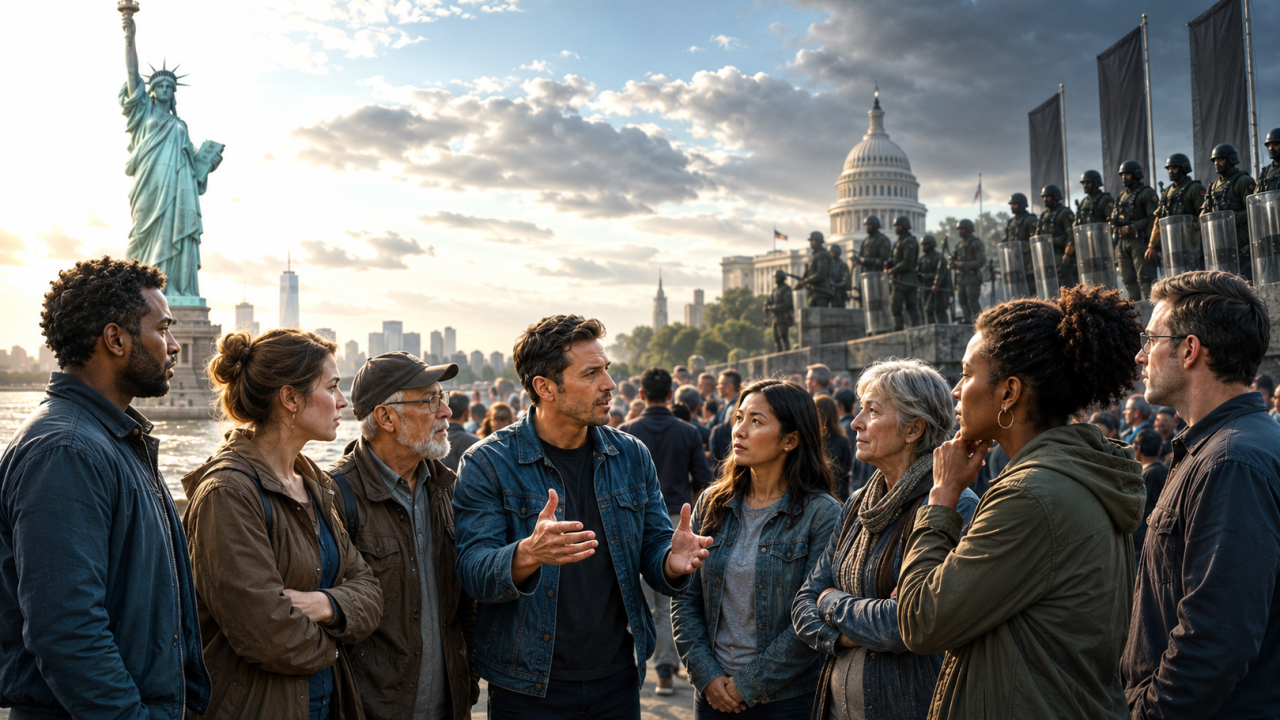
America was founded on a radical idea.
Not democracy. Not capitalism. Not even individual liberty.
The truly radical idea was that people should be free to hold beliefs that those in power dislike.
The founders had experienced governments that imprisoned dissenters, suppressed unpopular opinions, and punished religious minorities. They understood that freedom means very little if it only applies to people who agree with the prevailing political or cultural consensus.
As a result, the United States developed some of the broadest protections for speech, religion, assembly, and political expression in human history.
These freedoms are so expansive that Americans are generally free to criticize their own government, advocate unpopular ideas, and express opinions that many of their fellow citizens find offensive or even dangerous.
Most of us recognize this as one of America’s greatest strengths, yet it also raises an uncomfortable question.
Can a free society survive if it tolerates the teaching of ideas that seek to destroy the freedoms that make that society possible?
That question is not new. It has challenged democracies and republics for centuries. It remains one of the most difficult problems in political philosophy because there are no easy answers.
Too much tolerance can be dangerous, and too little can be dangerous as well.
The Difference Between Disagreement and Destruction
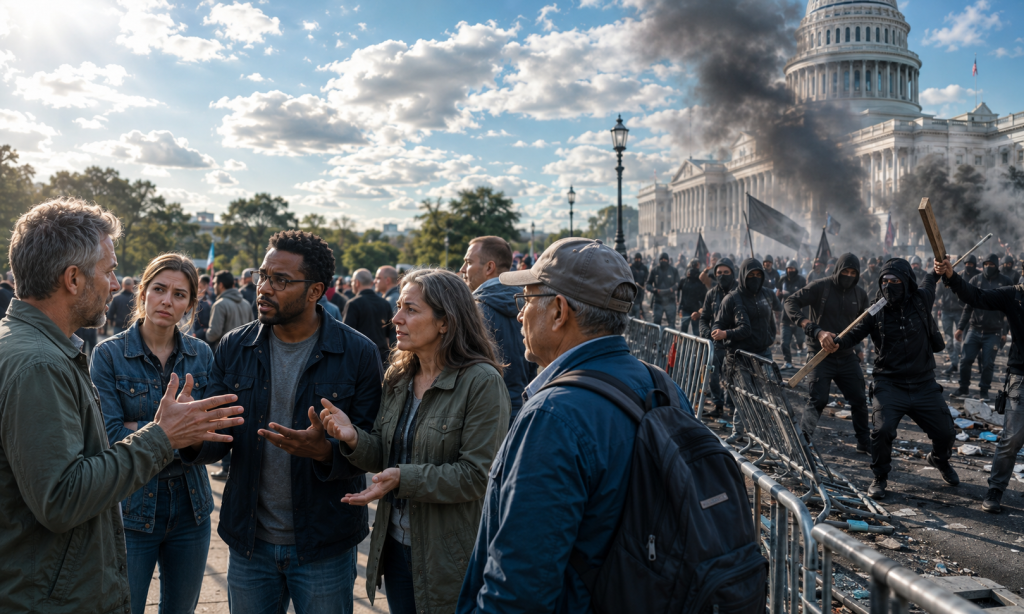
Every healthy society contains disagreement.
Americans argue about taxes, foreign policy, immigration, education, religion, gun rights, abortion, and countless other issues. Such disagreements are not signs of weakness. They are evidence that people are free to think for themselves.
The problem arises when a movement no longer seeks to participate in a free society but instead seeks to eliminate the freedom of others.
There is a significant difference between criticizing America and advocating its destruction.
There is a difference between arguing for political change and seeking to abolish constitutional government. There is a difference between practicing one’s religion and demanding that everyone else be governed by that religion’s laws.
These distinctions matter.
A free society must tolerate disagreement. In fact, it depends upon disagreement.
What it cannot ignore indefinitely is the growth of ideologies that view freedom itself as an obstacle to be removed.
History is filled with examples of movements that used the freedoms of open societies as tools to gain influence and power, only to eliminate those freedoms once they achieved their objectives.
The danger is not disagreement. The danger is replacement.
The American Assimilation Model
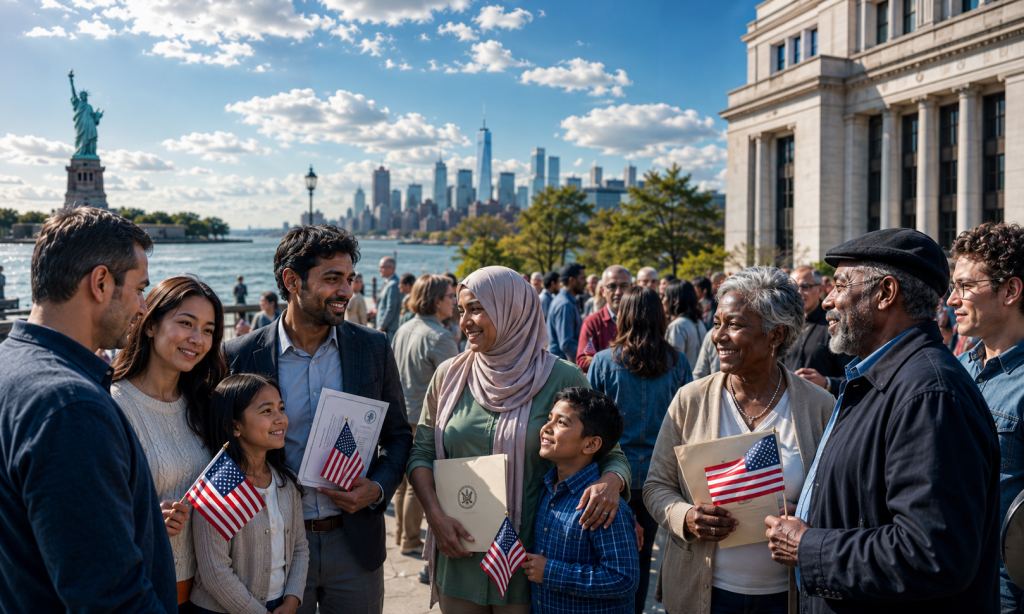
For much of American history, immigrants arrived from every corner of the world carrying different languages, traditions, customs, and beliefs.
The expectation was not that they would abandon their heritage.
Irish Americans remained proud of their Irish roots.
Italian Americans preserved their traditions.
Jewish communities maintained their religious identities.
Countless others did the same. Yet there was also an expectation that newcomers would become Americans.
They would learn English.
They would understand the nation’s laws.
They would participate in the civic life of the country.
Most importantly, they would accept the constitutional framework that governed everyone equally. This process was commonly referred to as assimilation.
The term has fallen out of favor in some circles, often portrayed as oppressive or exclusionary. Yet historically, assimilation was not about erasing identity. It was about creating a common civic culture capable of holding together a nation composed of people from vastly different backgrounds.
A nation can survive tremendous diversity in food, music, language, dress, and religious practice. It cannot survive if its citizens no longer share a basic commitment to the system that protects those freedoms.
Respecting the Culture You Enter

My views on assimilation do not come from hostility toward other cultures. In fact, they come from a lifetime of exposure to them.
One of my great-grandfathers was a Presbyterian missionary to Japan before World War II. My grandmother was born there and later worked with the U.S. Civic Society, helping immigrants navigate the path to citizenship. My father served in the military before becoming a minister, and our family participated in mission work overseas.
Throughout my life, I have lived in or visited other countries and made a conscious effort to learn their customs, traditions, and, when possible, their language. I have often found myself defending those customs against fellow Americans who dismissed them without understanding them. Every culture deserves the respect that comes from making an honest effort to understand it.
Those experiences taught me something important.
Every culture has strengths.
Every culture has weaknesses.
That includes my own.
People who have never spent significant time overseas sometimes imagine that cultural differences are superficial. Those who have lived among other peoples often learn otherwise. Customs matter. Traditions matter. Social expectations matter. They are the invisible glue that helps hold societies together.
When Americans move abroad, we generally understand that we are guests in someone else’s country. We learn local courtesies. We obey local laws. We make an effort to adapt. We may not agree with every custom, but we recognize that respect requires understanding the culture we have entered.
It seems reasonable to expect the same principle in return.
Assimilation does not require abandoning one’s heritage. America has always been enriched by people who brought different traditions, foods, languages, and experiences with them. The goal is not cultural uniformity. The goal is mutual respect.
Respect means learning about the society you have chosen to join. It means understanding its history, its institutions, and the principles upon which it was built. It means contributing to the community rather than demanding that the community fundamentally change itself to accommodate your preferences.
In my experience, genuine cultural exchange works best when both sides approach one another with humility. The visitor learns from the host. The host learns from the visitor. Both are enriched.
But that relationship only works when there is a willingness to respect the culture that opened its doors in the first place.
The Constitutional Oath
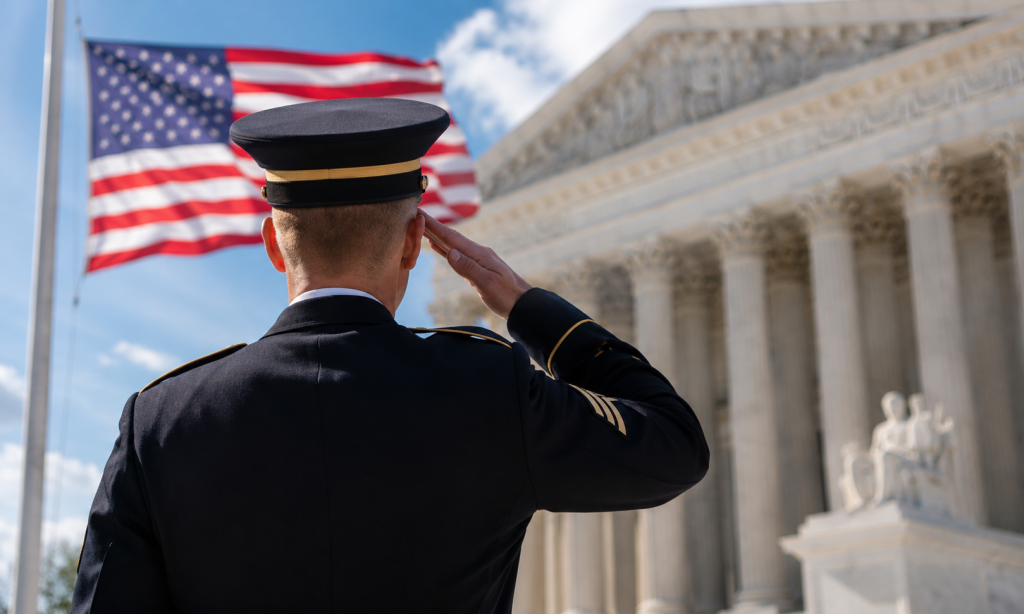
Military veterans may understand this concept better than most.
Members of the armed forces do not swear an oath to a political party. They do not swear an oath to a president. They do not swear an oath to a religion. They swear an oath to support and defend the Constitution of the United States.
That distinction is important.
The Constitution provides a framework in which people of different faiths, backgrounds, and political beliefs can coexist peacefully.
It establishes rules for resolving disagreements without violence.
It protects the rights of minorities while allowing majorities to govern.
It limits government power while preserving public order.
The Constitution is not merely a legal document. It is the social contract that makes peaceful coexistence possible. When individuals or movements reject that contract entirely, the question becomes whether they can continue to benefit from freedoms they openly seek to eliminate.
The Lessons of History

History offers numerous examples of societies that struggled with this dilemma.
Authoritarian movements rarely announce themselves by saying, “Give us power and we will take away your freedom.” Instead, they often use existing freedoms to gain legitimacy.
Political rallies are protected.
Speech is protected.
Organization is protected.
Participation in elections is protected.
The very liberties that make a society free can also provide opportunities for anti-democratic movements to grow. The tragedy is that many people fail to recognize the danger until it is too late. Once freedom has been lost, restoring it is rarely easy.
This is not a lesson confined to any particular religion, ethnicity, or political ideology.
History contains examples from the far left, the far right, religious extremism, secular extremism, and countless other movements.
The common thread is not the specific ideology. The common thread is the rejection of liberty itself.
The Free Speech Dilemma
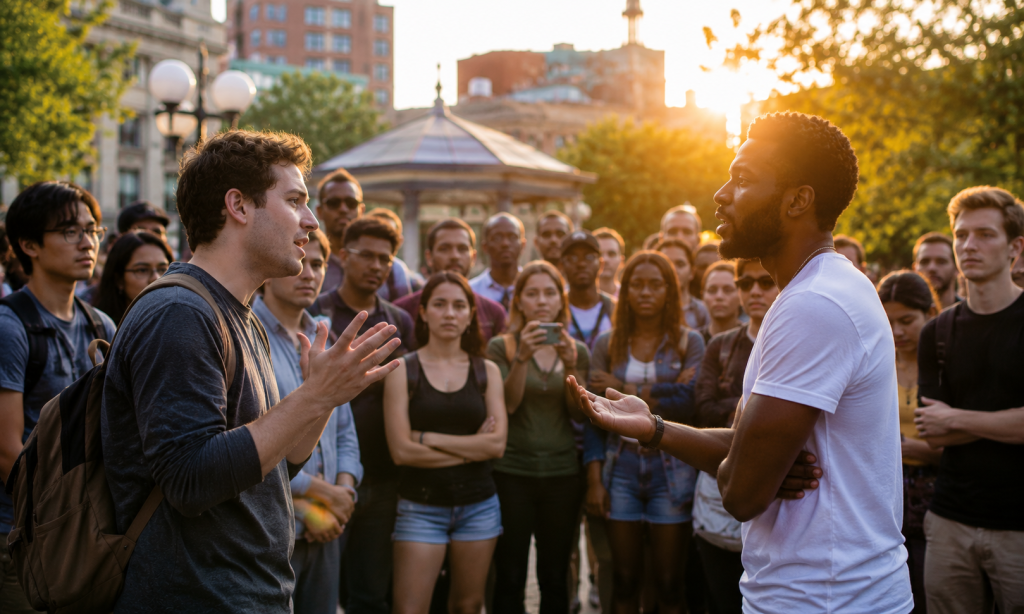
One response is to argue that dangerous ideas should simply be prohibited. That sounds reasonable at first. If an ideology threatens freedom, why allow it to spread?
The answer lies in the unintended consequences of censorship.
Who decides which ideas are dangerous? Who determines which viewpoints may be expressed?
History provides many examples of governments labeling legitimate dissent as dangerous extremism.
The power to silence one unpopular group today can easily be used to silence another tomorrow.
The founders understood this danger. That is why the First Amendment was designed to protect speech that people dislike, not merely speech they approve of. Freedom of speech is easy when everyone agrees. It becomes difficult when they do not.
The Responsibility of Citizenship

The solution is not censorship, nor is it blind tolerance.
The answer may lie in something far less dramatic.
Citizenship.
Free societies depend upon citizens who understand and value the principles that sustain them.
People who understand constitutional government.
People who recognize the importance of individual liberty.
People who appreciate the rule of law.
People who are willing to defend those principles peacefully but firmly.
A society that ceases teaching its own values should not be surprised when those values erode.
The greatest defense against anti-democratic ideologies is not government suppression. It is a citizenry that understands why freedom matters.
An Uncomfortable Question

There may never be a perfect answer to the paradox of tolerance.
A society that suppresses every dangerous idea risks becoming authoritarian.
A society that ignores every dangerous idea risks becoming a victim of its own complacency.
Somewhere between those extremes lies the difficult work of preserving liberty.
Perhaps the most important thing is simply acknowledging that the question exists.
Can a free society survive if it tolerates the teaching of ideas that seek to destroy the freedoms that make that society possible?
That question should make Americans uncomfortable. It should. The moment we stop asking it is the moment we begin taking our freedom for granted.
And history has shown repeatedly that freedom, once lost, is rarely regained without a tremendous cost.
_____________________________
Dave Chamberlin runs a consulting and training company and brings more than 40 years of civilian and military aviation experience to his work. He retired as a Chief Master Sergeant after 38 years as an aircraft crew chief in the U.S. Air Force and Air National Guard, and has also worked in technical, instructor, consultant, and leadership roles. He holds an FAA Airframe and Powerplant license and a master’s degree in aeronautical science, and his writing often focuses on military issues, especially those affecting aircraft maintenance personnel.
As the Voice of the Veteran Community, The Havok Journal seeks to publish a variety of perspectives on a number of sensitive subjects. Unless specifically noted otherwise, nothing we publish is an official point of view of The Havok Journal or any part of the U.S. government.
Buy Me A Coffee
The Havok Journal seeks to serve as a voice of the Veteran and First Responder communities through a focus on current affairs and articles of interest to the public in general, and the veteran community in particular. We strive to offer timely, current, and informative content, with the occasional piece focused on entertainment. We are continually expanding and striving to improve the readers’ experience.
© 2026 The Havok Journal
The Havok Journal welcomes re-posting of our original content as long as it is done in compliance with our Terms of Use.


