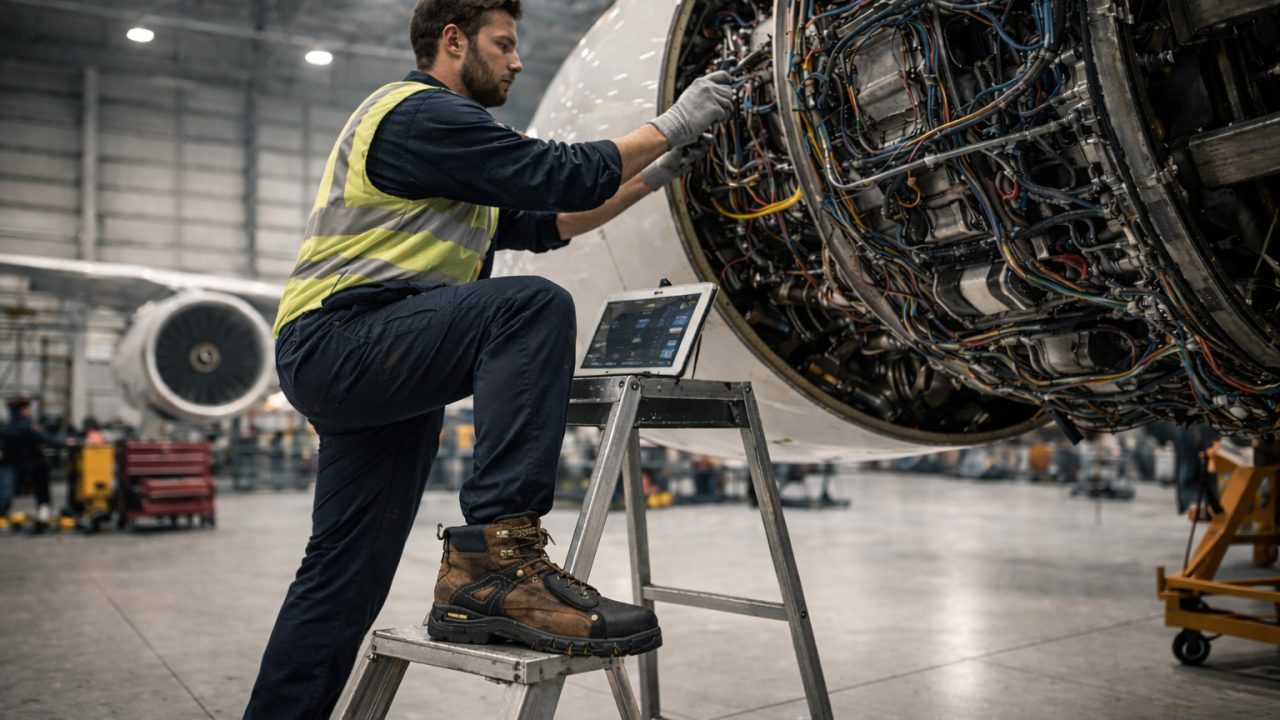
If you spend your day on concrete, around fluids, and under vehicles, your boots aren’t just part of your uniform. They’re safety gear that can prevent slips, reduce fatigue, and protect you from common shop hazards. If you want a curated place to start, browse these best mechanic boots for men built for traction, comfort, and all-day wear.
Workplace injuries aren’t just statistics on a safety poster. U.S. private industry employers reported 2.6 million nonfatal workplace injuries and illnesses in 2023, underscoring the continued prevalence of preventable injuries across job sites and shop floors.
What Makes Mechanic Boots Different From Standard Work Boots
Mechanics work in conditions that test footwear hard: smooth concrete, slick fluids, constant bending, and sharp debris. The best mechanic boots for men deliver these job-specific features:
- Slip and oil resistance for smooth floors and spills
- Flexibility for kneeling and pedal feel
- Toe protection based on real crush risk
- Underfoot protection for punctures and sharp debris
- Comfort support that holds up through long shifts
OSHA requires protective footwear when there is a danger of foot injuries from falling or rolling objects, objects piercing the sole, or certain electrical hazards.
Start With The Hazards In Your Bay
Before you choose a boot, think about what actually puts your feet at risk in your shop.
Common Mechanic Hazards Boots Must Handle
- Dropped parts: rotors, batteries, tools, and components
- Rolling hazards: jacks, carts, and tire stacks
- Sharp debris: fasteners, metal shards, and broken plastic
- Shop fluids: oil, coolant, and brake fluid
- Heat contact: welding areas and hot surfaces
Slip risk deserves special attention. Slips, trips, and falls remain one of the most persistent workplace hazard categories across industries.
Safety Toe vs Soft Toe for Mechanics
Toe type isn’t a style choice; it’s a decision based on the hazards you face.
When Safety Toe Makes Sense
Choose safety toe if your day includes heavy parts, busy bays, or real drop risk. OSHA’s foot protection standard directly ties protective footwear to hazards like falling objects and piercing hazards.
When Soft Toe Can Be Reasonable
Soft toe can work when crush risk is low, and your employer doesn’t require safety footwear. Some mechanics prefer the lighter feel and easier kneeling. If the site requires protective footwear, follow policy.
Quick Rule for Choosing Toe Type
- Heavy parts and frequent drops: Safety Toe
- Light duty and low crush risk: Soft Toe
Outsole Traction Is Non-Negotiable in a Shop
Mechanic boots live on smooth concrete that gets slick fast. Traction is one of the most important features to prioritize.
What to Look for in Slip and Oil Traction
- Oil-resistant outsole compounds to reduce outsole breakdown
- Multi-directional tread for pivots and lateral movement
- Edges and channels that move fluid away from contact points
Comfort Engineering for Long Hours on Concrete
Mechanics don’t just stand. They stand, pivot, kneel, crouch, and walk, usually on hard floors. That adds up. NIOSH notes evidence linking prolonged standing work to outcomes such as leg discomfort, fatigue, and low back pain.
Comfort Features that Matter Most
- Shock-absorbing midsoles to reduce impact on concrete
- Supportive footbeds with structure, not only soft foam
- Stable heel counters to reduce wobble during pivots
- Roomy toe boxes that don’t pinch during kneeling
Underfoot Protection and Puncture Resistance
Shop floors collect sharp debris. If you’ve ever stepped on a screw in the bay, you know this isn’t rare. OSHA explicitly includes “objects piercing the sole” as a reason for requiring protective footwear.
Signs You Should Prioritize Puncture Protection
- You regularly see screws, wire pieces, or metal fragments on the floor
- You work around fabrication, demolition, or mixed-duty tasks
- You walk through yards, lots, or cluttered storage areas
Materials and Build Details That Hold Up in a Garage
Mechanic boots need uppers and stitching that survive abrasion and chemicals.
Upper Materials That Make Sense for Mechanics
- Full-grain leather for abrasion resistance and durability
- Reinforced stitching in flex zones
- Gusseted tongues to keep debris out
- Easy clean finishes because oil and coolant happen
Footwear Standards Worth Recognizing
When buying safety footwear, it helps to recognize the common standards referenced by OSHA. OSHA’s PPE publication notes that protective footwear must comply with standards such as ASTM F2413. This standard covers impact, compression, and puncture resistance, all of which are critical in shop environments.
Heat, Chemicals, and Real World Boot Abuse
Not every mechanic works in the same environment. Some work in climate-controlled bays. Others work in welding areas, outdoor yards, or mixed industrial settings.
Heat Considerations
If you’re around welding or hot surfaces, choose boots with heat-resistant outsoles when available. Heat can soften some outsole compounds, accelerating wear.
Chemical Exposure Considerations
Oil resistance helps, but solvents and aggressive cleaners can still degrade materials. A simple wipe down at the end of the day can extend boot life, especially around the welt and stitching.
Fit Rules That Prevent Regret
Even the best spec list fails if the fit is wrong.
The Fit Checks to Use Before You Commit
- Heel lock with minimal heel lift when walking
- Toe clearance so toes can wiggle freely
- Midfoot security that’s snug but not painful
- End-of-day sizing because feet swell during long shifts
Always try on the socks you actually work in.
Final Thoughts: Match The Boot To The Bay
The best mechanic boots for men should do three things consistently: protect your feet, maintain traction on slick surfaces, and stay comfortable across long shifts. Research shows that prolonged standing contributes to discomfort and fatigue, which is why support and cushioning matter.Choose based on hazards first, then comfort, then durability. Your feet will feel the difference by the end of the week
Buy Me A Coffee
The Havok Journal seeks to serve as a voice of the Veteran and First Responder communities through a focus on current affairs and articles of interest to the public in general, and the veteran community in particular. We strive to offer timely, current, and informative content, with the occasional piece focused on entertainment. We are continually expanding and striving to improve the readers’ experience.
© 2026 The Havok Journal
The Havok Journal welcomes re-posting of our original content as long as it is done in compliance with our Terms of Use.