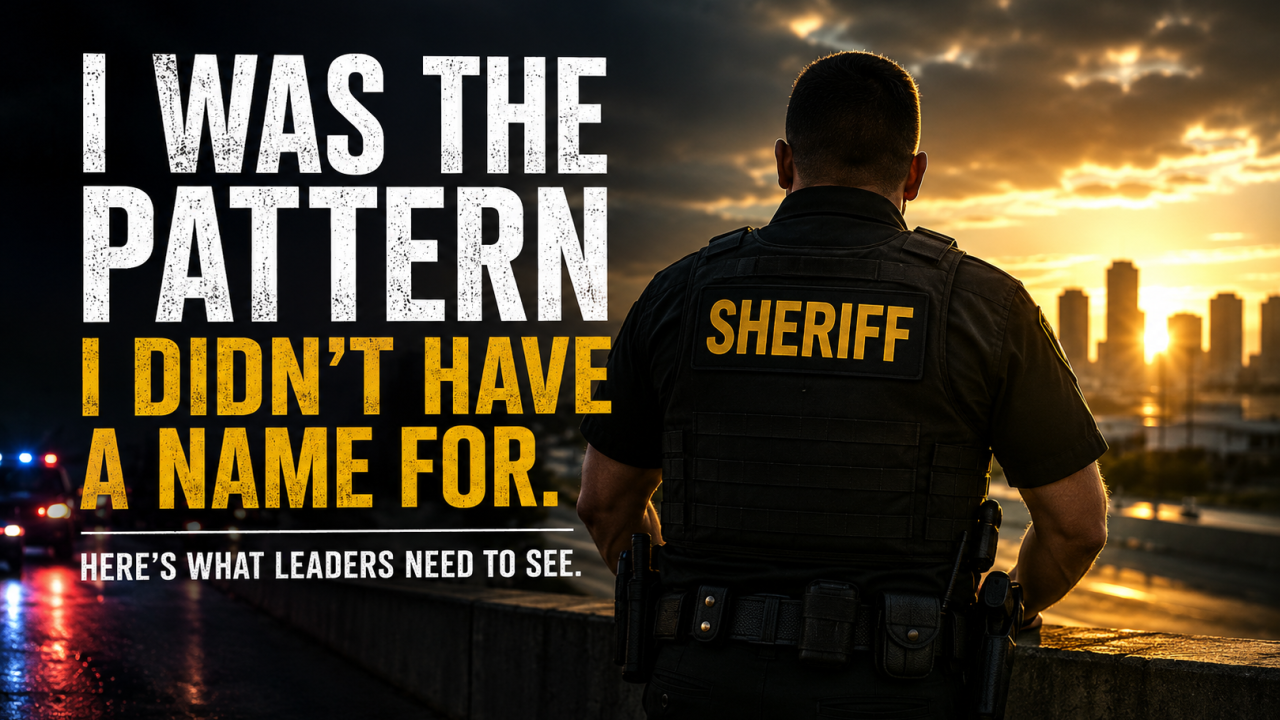
By Doug White | retired deputy sheriff, Hillsborough County Sheriff’s Office | U.S. Air Force veteran
Here’s What Leaders Need to See.
Twenty-five years as a deputy sheriff. Fourteen years in the Air Force. Bomb squad. Field training officer. Lieutenant.
I did not fall apart. I adapted. And the difference between those two words is the entire point of this article.
By the time I retired in 2023, I had been operating under chronic load for so long that I had stopped recognizing it as load. I called it the job. I called it discipline. I called it what it takes. I had language for everything except what was actually happening, and that absence of language cost me more than I can account for here.
What I didn’t know then, and know now, is that what I experienced had a shape. A timeline. A predictable pattern that shows up in first responders across every discipline, at every agency, in every part of the country. Not because they’re weak. Because the career is designed, structurally, by its schedules and demands and culture, to produce exactly this pattern in human beings who give everything to it.
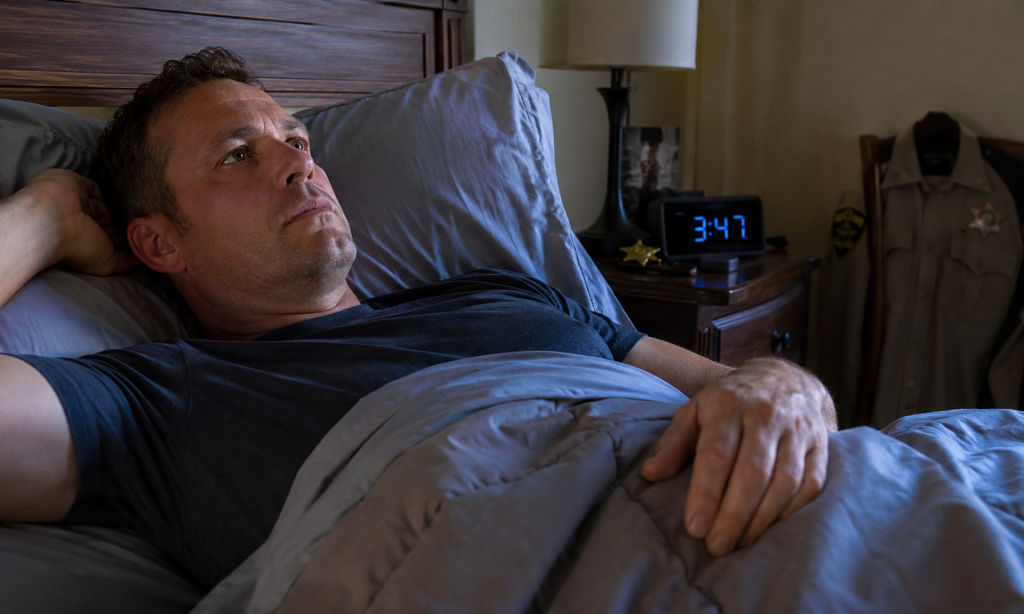
What it looked like at year five
Around year five, sleep started to change. Not dramatically, just harder to stay down. I wrote it off. Every officer I knew wrote it off. It was just the job.
What was actually happening is that rotating shifts were disrupting my circadian rhythms in ways that compound over time. The brain needs deep restorative sleep to consolidate memory, regulate mood, and reset the stress response system. The career wasn’t giving that back. And the hypervigilance that kept me sharp on the street wasn’t checking out when I did.
If a supervisor had asked me how I was sleeping at year five, I would have said fine. That would have been the wrong answer, and we both would have believed it.
What it looked like at year ten
A decade in, the fatigue stopped responding to days off. Motivation had drifted. I was running the calls, putting in the hours, doing the job, but something had changed in how it felt. I had less patience than I used to. I was shorter with people. Empathy had shifted to apathy. Hope curdled to cynicism. I explained it as experience. As having seen too much. As knowing how things actually work.
I was good at hiding the strain of the load I was carrying in professional circles. I continued to drive harder and farther. Supervisors may read the strain of the load in others as attitude in some moments and performance in others. Nobody asked what was upstream. Nobody connected the sleep disruption, the shortened fuse, the creeping cynicism to a system under accumulating load. They did not have the language, so they responded to the behavior. The load continued.
What was actually happening included hormonal drift I wouldn’t understand for years, testosterone below age norms, thyroid function affected, the kinds of physiological changes that present exactly like depression and are frequently treated as depression while the actual driver goes unaddressed.
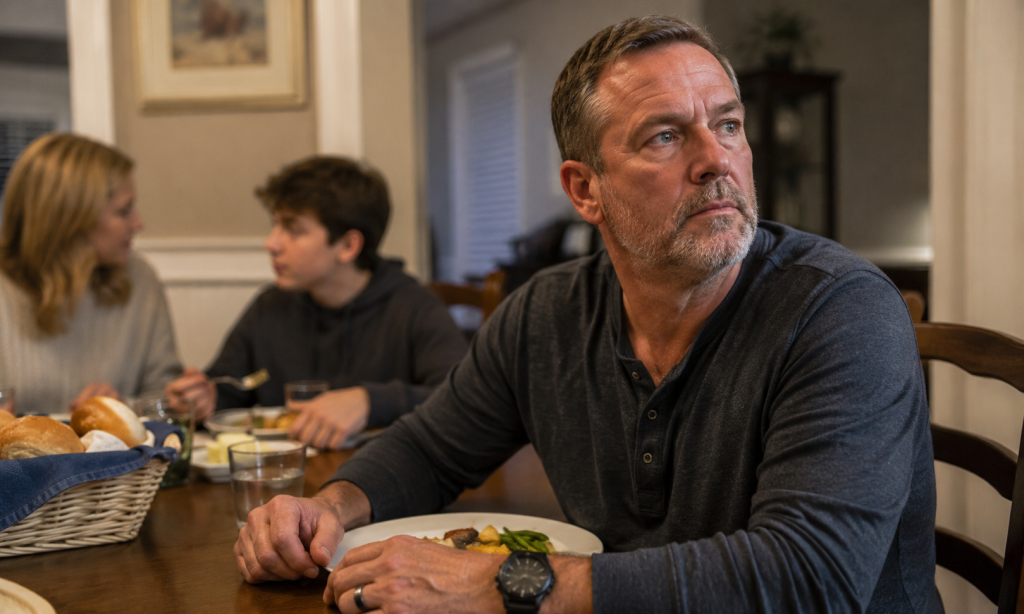
What it looked like at year twenty
By year twenty, my family had adapted around me in ways nobody talked about directly. There were things that had become not worth bringing up. There was a version of me at home that was physically present and somewhere else at the same time. I brought things through the front door that the people I loved had learned to work around.
My nervous system had been trained over two decades to maintain readiness. It did not have a reliable way to disengage. The threat-scanning that was adaptive on the street was corrosive at the dinner table. I did not recognize this as a consequence of the career. I recognized it as something wrong with me.
That is the most important distinction in this entire article.
What I was experiencing was not a character failure. It was a predictable consequence of what sustained occupational load does to the human system, a system that was never trained toward recovery with the same rigor it was trained toward readiness. That realization didn’t come from the career. It came from a researcher I almost never found.
What the research gave me that the career never did
In early 2024, I encountered the work of Dr. Christopher Frueh, a clinical researcher who identified this exact pattern in military special operations forces and named it Operator Syndrome. The mechanism is extraordinarily high allostatic load: the cumulative biological cost of chronic activation without adequate recovery. Frueh has explicitly extended this framework to law enforcement, fire, EMS, and dispatch. The mechanism is identical. The uniform is different.
When I read Frueh’s work, I recognized myself in every domain he described. Sleep disruption. Endocrine dysfunction. Cognitive drift. Behavioral health consequences. Relational breakdown. Transition and identity loss. Not as a diagnostic checklist, but as a description of what the career had actually done to my system in predictable, interlocking ways. I used his work as a blueprint to guide my doctors and advocate for my care. It worked.
Initially, I almost missed this life-saving framework. I recognized the domains; it was describing me, but the title threw me. I was not a special operator. I spent the last year translating that framework into the language of first responders. The point paper, Responder Syndrome / HAL-RA, is available at DougWhiteOfficial.com. Frueh reviewed it and approved it.
But the translation that matters most for this article is not the science. It’s this: I had all of that happening to me, and I did not have the language to name it, report it accurately to a doctor, or ask a supervisor for anything specific. The only framework I had was the one the culture gave me, which said the answer was to be harder and ask for less, and that worked until it did not.
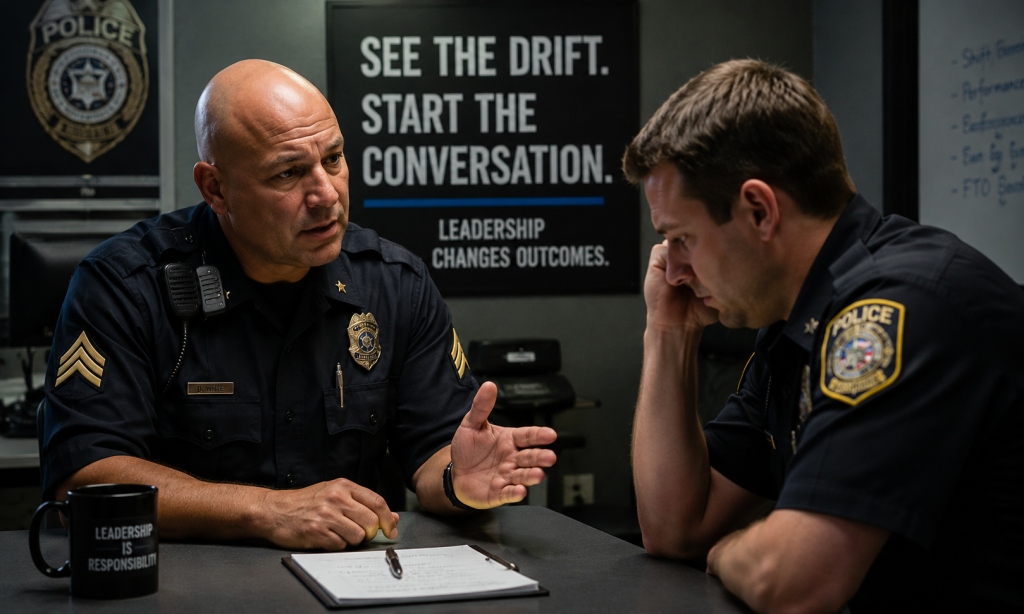
What leaders need to do differently
I spent time in the supervisory ranks. I understand the supervisor’s position from the inside. And I want to say directly: the supervisors who missed this in me were not bad leaders. They did not have a framework or the language for what they were seeing. They responded to the behavior in front of them because behavior is what the system gave them tools to address.
That has to change.
The officers in your briefing room right now, and yes, some of you, are somewhere on this timeline. Some are at year five, sleeping a little worse and writing it off. Some are at year twelve, adapting in ways that are starting to affect the people around them. Some are at year twenty, carrying a weight that has no name in your performance management system.
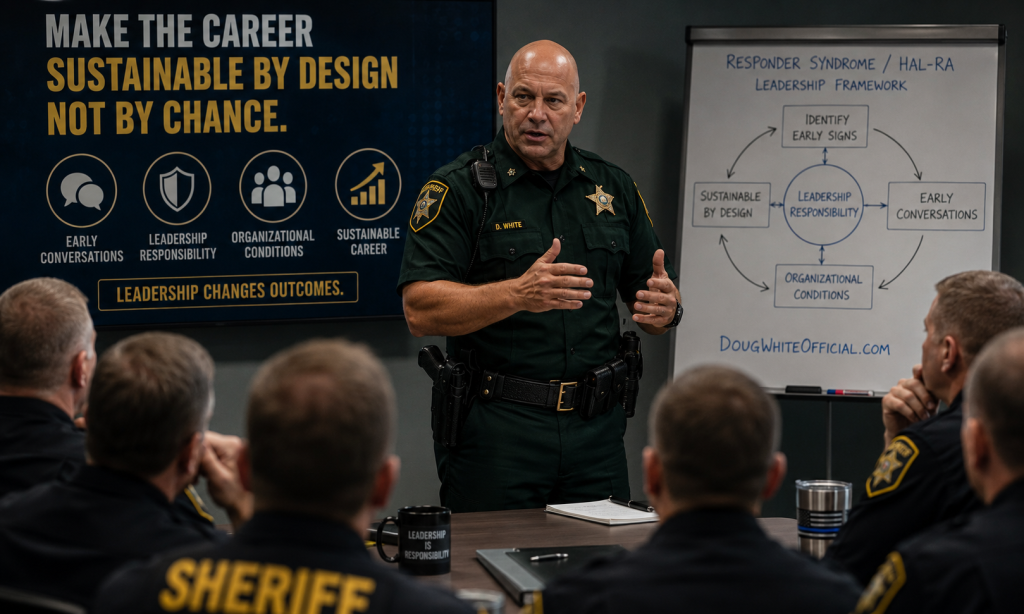
What the career-stage pattern tells us is that leadership’s most important interventions are not crisis responses. They are early conversations. Not the critical incident debrief. Not the EAP referral after something goes wrong. The check-in at the first sign that something is off. It is the direct question and the hard conversation that matters most. It is the leader who notices the drift before it becomes a case, a divorce, or an end of watch.
What that conversation looks like is simpler than most leaders expect. It is not a formal sit-down. It is not a referral. It is a supervisor who has been paying enough attention to notice that something has shifted, and who has the courage to say so directly. “You seem different lately. Not in trouble, not in your work, just different. Are you okay?” That question, asked by someone who has already earned the right to ask it, opens a door that a performance review never will. The leader who asks it is not a counselor. They are someone who sees their people clearly enough to notice the drift, and values the person enough to name it before the system has to.
The leader who understands what the career costs, who sees the load accumulating in real time and takes organizational responsibility for creating conditions that interrupt it, is the only one positioned to change the outcome for the people they lead. Not a wellness program. Not a peer support referral. The leader, making the career sustainable by design rather than leaving durability to chance.
That is not a wellness conversation. It is a leadership conversation. And it starts with having a framework that names what you are actually looking at.
What chiefs and sheriffs should be doing differently is a longer answer than this article can hold, and it’s one I’ve built into a formal point paper and a series of presentations I’m currently delivering to law enforcement leadership audiences. The full framework, including the organizational architecture that follows from it, is at DougWhiteOfficial.com.
I wish someone had handed me that framework at year five. I am handing it to you now.
_____________________________
Doug White is a retired Hillsborough County Sheriff’s Office deputy, U.S. Air Force veteran, former bomb tech and field training officer, and author of Hiding in Plain Sight, which received a 2025 International Impact Book Award. His HAL-RA point paper on Responder Syndrome and additional leadership resources are available at DougWhiteOfficial.com.
As the Voice of the Veteran Community, The Havok Journal seeks to publish a variety of perspectives on a number of sensitive subjects. Unless specifically noted otherwise, nothing we publish is an official point of view of The Havok Journal or any part of the U.S. government.
Buy Me A Coffee
The Havok Journal seeks to serve as a voice of the Veteran and First Responder communities through a focus on current affairs and articles of interest to the public in general, and the veteran community in particular. We strive to offer timely, current, and informative content, with the occasional piece focused on entertainment. We are continually expanding and striving to improve the readers’ experience.
© 2026 The Havok Journal
The Havok Journal welcomes re-posting of our original content as long as it is done in compliance with our Terms of Use.


