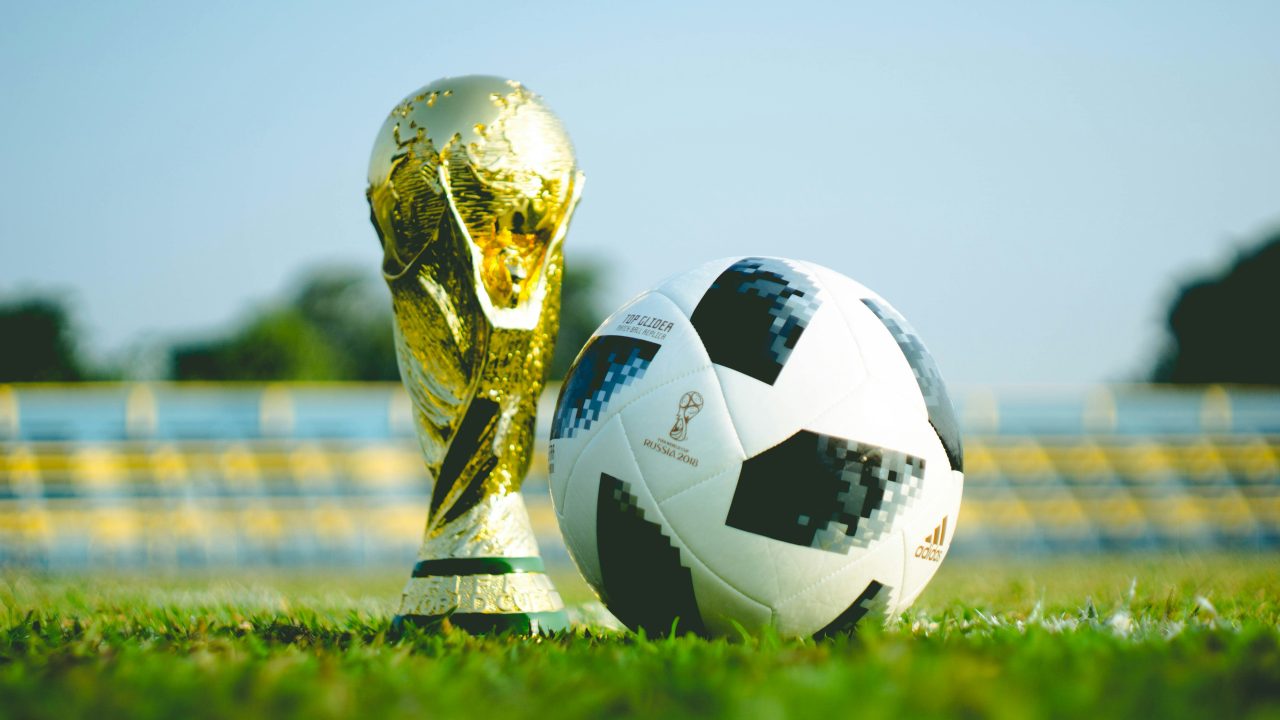
Photo by Fauzan Saari on Unsplash
FIFA has increasingly thrown its strategic and commercial weight towards the Middle East, making the region a core of football’s next growth cycle.
The 2022 World Cup in Qatar was a fully integrated tournament model that had infrastructure, broadcast scale and sponsorship activation.
Saudi Arabia’s confirmation as hosts of the 2034 FIFA World Cup is designed to take football in the Middle East to a whole new level.
The move will have significant impact on several associated sectors, including the online betting industry, which is growing in the region.
All of the best World Cup betting sites 2026 for Arabs will be inundated with wagers when the World Cup is staged this summer.
Betting is part of a wider commercial boom in the Middle East which is being driven in no small part by the football industry.
<h2>Qatar 2022 and the Commercial Reset of Global Football Economics</h2>
The 2022 World Cup in Qatar created a new criterion for how FIFA derives value from host nations and regions.
State-led infrastructure execution and tightly controlled commercial rights created one of the most financially rewarding World Cups in recent history.
Qatar’s investment $200 billion across transport, stadiums and city redevelopment created a lasting platform tailored to change short-term sporting attention into tourism and business income.
FIFA cashed in by integrating sponsorship inventory, streamlining broadcast rights distribution and enforcing premium pricing across ticketing tiers, ensuring that revenue streams stayed predictable and scalable throughout the tournament.
World viewership backed up the strategy, with billions of people watching games across linear and digital platforms.
Engagement numbers surged during games involving emerging football nations, most notably Morocco, whose run to the semi-finals changed long-standing opinions about competitive hierarchy.
This had a commercial impact, as brands switched their investment strategies toward Arab markets, citing a new audience base with numbers and purchasing power.
Football served as a pathway into a fast-expanding regional economy with a visible hunger for premium entertainment.
Sportsbook operators expanded market reach, providing more granular betting options linked to player performance, match phases and progression routes.
<h2>Saudi Arabia 2034 and the Scale of State-Backed Football Investment</h2>
Saudi Arabia’s successful bid for the 2034 World Cup is an intentional escalation of the model first used in Qatar, but done on a significantly higher financial and structural scale.
Their investment framework merges stadium construction with transport improvement, smart city development and entertainment infrastructure, making sure that World Cup assets are profitable after the tournament.
Football is the core of this template, backed by intensive local league investment that has already lured Europe-based stars and attracted world attention towards Saudi competitions.
This fits directly into FIFA’s long-term planning, equipping the governing body with a host that can deliver both financially and operationally at scale, two variables that increasingly decide host selection criteria.
Sponsorship pipelines have begun to take place years in advance, as international brands move early to lock positioning within an environment expected to attract significant global visibility.
FIFA backs this alignment by limiting execution risk while increasing revenue potential across broadcasting, licensing and digital engagement channels.
Betting landscapes grow in parallel with these developments, as increased competitiveness enables higher engagement across regional and international markets, most especially during qualification games involving Arab teams.
Odds compilers now account for improved squad depth, enhanced coaching structures and greater tactical discipline within Middle Eastern football, reducing the margin once assigned to established football nations and creating more balanced pricing across fixtures.
This change demonstrates a larger rearrangement of football’s competitive map, where financial investment is evident in on-pitch credibility and market relevance.
<h2>Eight Arab Nations and the Competitive Shift Reshaping Global Tournaments</h2>
Eight Arab countries qualifying for the 2026 FIFA World Cup is a shift that has sporting and commercial implications.
Morocco, Algeria, Egypt, Tunisia, Saudi Arabia, Qatar, Iraq and Jordan enter the tournament with different profiles, but share a similar foundation anchored on sustained investment in player development, better federation governance and increased exposure to high-level competition.
The Atlas Lions’ semi-final run in Qatar changed internal expectations across the region, taking away participation narratives with real competitive desire and giving a tactical blueprint rooted in discipline, structure and adaptability.
Jordan’s rise offers a different dimension, introducing a debutant that can trouble established sides, while Iraq’s experience in regional tournaments shows the depth of football in the region.
The FIFA Arab Cup served as a testing ground that allowed teams to test tactics, assess squad depth, and simulate tournament conditions against familiar opposition, effectively compressing preparation cycles ahead of the global stage.
This continuity improves cohesion that determines performance in tightly contested games.
FIFA stands to gain from this union of competitiveness and commercial interest, as increased representation drives viewership, strengthens sponsorship appeal and deepens engagement across multiple markets.
Buy Me A Coffee
The Havok Journal seeks to serve as a voice of the Veteran and First Responder communities through a focus on current affairs and articles of interest to the public in general, and the veteran community in particular. We strive to offer timely, current, and informative content, with the occasional piece focused on entertainment. We are continually expanding and striving to improve the readers’ experience.
© 2026 The Havok Journal
The Havok Journal welcomes re-posting of our original content as long as it is done in compliance with our Terms of Use.


