
By Calder M. Serba
My Long Walk Toward the Mountains
No food. No water. Just distance and cold.
I don’t know the penguin’s why.
I mean the one from that Werner Herzog clip that keeps making the rounds online, pulled from his Encounters at the End of the World documentary. Herzog narrating in that voice of his about the little winged creature scampering toward the unknown and almost certain death, set to organ music, and landing on the only question every man ends up asking with him.
“But why?”
I don’t know the penguin’s why. I know I, too, am pulled toward the barren place where the truth lives, hoping to find him there.
So this is me walking.
This is for Connor, because I don’t know what else to do.

The Incubator, the Oath
Connor was born in 1993. I was six and a half.
He came early, premature, and my first meeting with him wasn’t a cradle or a photo. It was fluorescent hospital light, machines humming, and a clear plastic wall between us. An incubator. A tiny body. A life small enough to make you whisper without being told.
I leaned in and spoke anyway. Not because I had the right words, but because I had a little brother and I could feel the moment trying to harden into memory.
I said hello through the cover like it could reach him. I told him I loved him. I told him I was happy to meet him.
Little brother.
Connor didn’t come here to be delicate. He was tiny, yes, but he was ready. He didn’t need the oxygen or the special attention other preemie mountain babies often needed in those first weeks. He made it clear he was staying.
He arrived with that quiet, stubborn certainty some people carry from day one. The world could be hard, but he was going to be harder.
Rolos and the Gospel of Everybody First
Once he was home, he started being Connor immediately. Acts of service. Sharing. A reflex toward other people that never looked performative. It looked like breathing.
Steve, my older brother, and I were only two years apart. We shared because we had to. We fought because we were close enough in age to constantly collide.
Connor shared because he wanted to.
That difference matters more as I get older. He wasn’t generous out of obligation. He was generous because it made him happy to watch other people have something.
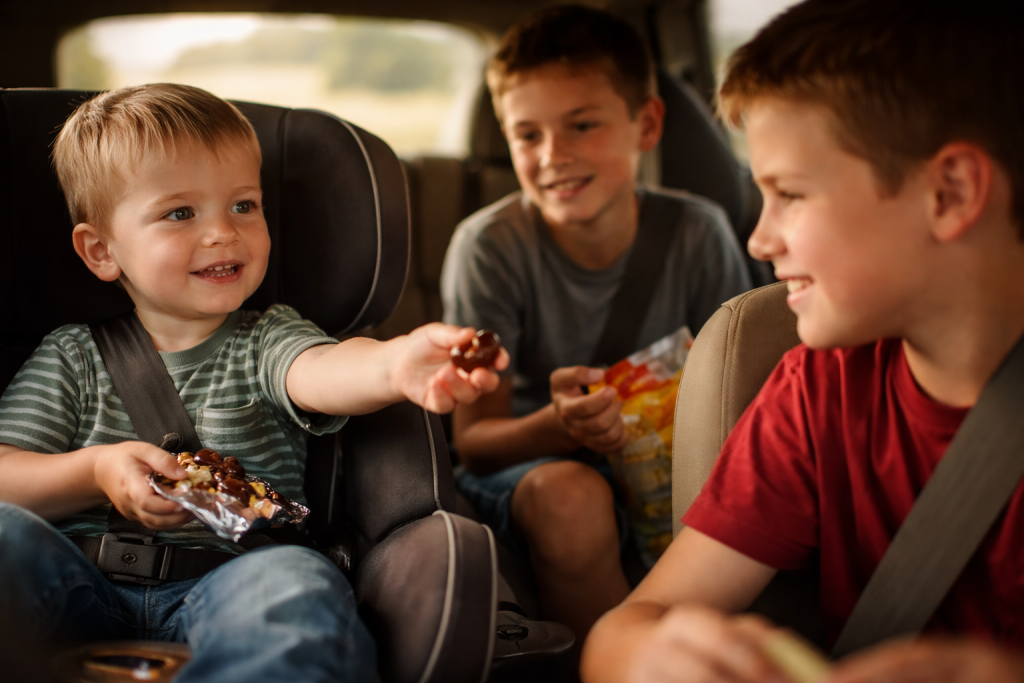
When he was three, on long road trips to our grandparents, we would stop for gas and snacks. Rolos were his favorite. I should say Rolo, one, because Connor had a system.
He would take that single roll and hand one to each person in the car before saving the last one for himself.
He would not taste his until everyone else had theirs.
A three-year-old quietly taking roll call on love.
That’s who he was. Everybody first.
Parallel Waveforms, a Garage, and the Words That Haunt
He wanted to be with me. He wanted my time the way little brothers do, like your presence is the whole event.
But when he was five, I was eleven. When he was ten, I was sixteen. The age gap doesn’t sound like much on paper, but as kids it’s a canyon. Our seasons ran like parallel waveforms, bending toward the same point and then widening again as the years pulled.
So he would show up at my friends’ houses looking for me. He would hover. He would ask, again and again, if I could play.
And I took it the wrong way.
I thought it was annoying. I hate that word now, but it’s true. I didn’t understand what he was offering.
He wasn’t trying to bother me.
He was trying to love me on purpose.
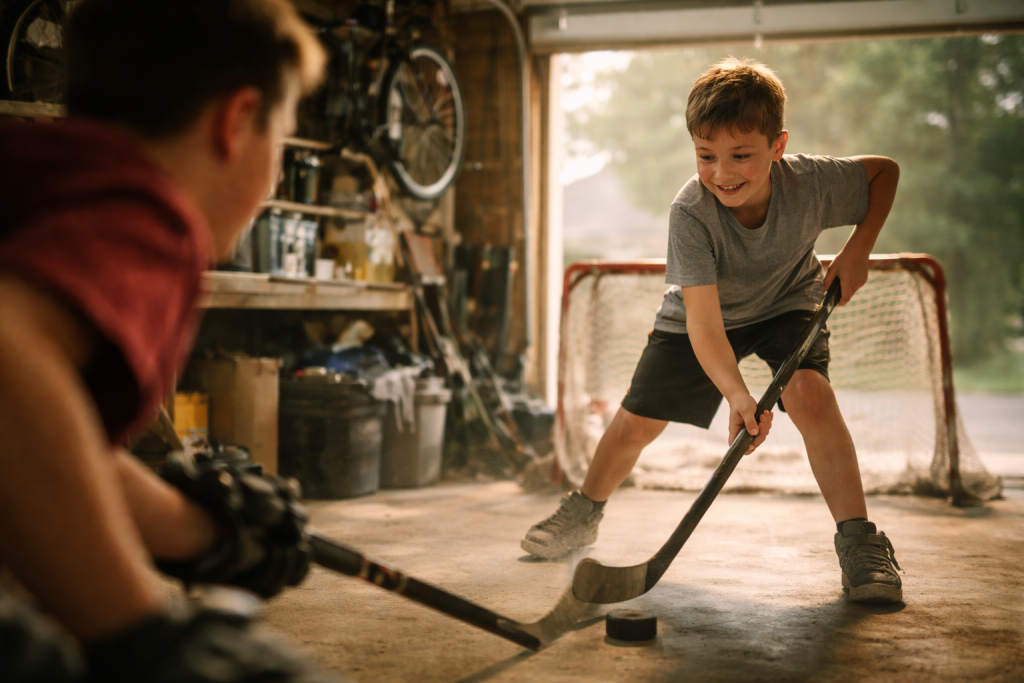
As we got older, the gap narrowed sometimes. Video games. Movies. But his favorite was hockey in the garage. Sticks on concrete, a puck clacking off whatever we called a goal that day, dust in the light.
His grin when he got one past me looked like he had just won the Stanley Cup.
He would ask all the time, “Can you play?”
And I would say yes sometimes. But too often I played because I had nothing else going on, and the moment Steve or my friends called, I would drop the stick and rush out the door.
I made him wait on me for years.
“Next time, man.”
“Tomorrow, I promise.”
“Not right now.”
Those words don’t feel heavy when you’re young. They feel like nothing.
Later, they weigh a ton.

June 2010: The Day the Garage Became Heaven
High school. Graduation. Then poof, I left for the Army. Life did what it does. It made distance feel normal. It convinced me there would always be time.
I thought about him a lot in Afghanistan.
I came home on leave once and got invited to speak to his class. Ms. Dewell, my seventh-grade teacher, was now one of his teachers in high school. I remember standing up there in uniform, trying to say something useful, and then seeing Connor watching me. Quiet. Proud. Measuring himself against the shape of my life.
I made him proud.
And then I did what I had gotten good at back then. Love you, brother, I’ll see you later.
But there was a day in June of 2010, a particularly bloody day, when something inside me broke open. Death wasn’t a concept. It was a presence. Constant. Close. It was everywhere.
And in the middle of that, grief, loss, the metallic taste of it, I felt a wave of fear hit me so hard I almost dropped.
Not fear of dying.
Fear of surviving and living with regret.
And the thing my mind ran toward in that moment wasn’t heroism or medals or a movie version of my life.
It was hockey in the garage.
Connor asking me to play.
An ordinary day I treated like nothing, suddenly revealed as sacred.
So right then I decided I was going to stop postponing the gift he had been offering me since the incubator. I was going to accept my brother’s love with both hands while I still could.
Fort Drum: 118 Signatures and a Three-Day Epic
At the end of May, in early June 2011, during his senior year of high school, Connor flew out to meet me at Fort Drum, New York.
He didn’t come for a vacation. He came to work.
He spent a week straight helping me clear post, pack up, and say farewell to my first unit, the one I had deployed to combat with. He watched the closeness of those guys and me, the way we could be laughing one minute and dead quiet the next.
I could see it land on him. This is what it means to belong to something that costs you.
He also got a front-row seat to the absurdity. Clearing post meant chasing signatures from 118 separate buildings and facilities. Stamp. Signature. Next line. Next office. Another “come back tomorrow.”
Connor just kept showing up, day after day, like it was normal, like he was built for it, like service didn’t start in a uniform. It started in persistence.
We ended up living out of a hotel as one week turned into two. Time stretched. Adulthood came into view.
They gave me a final formation before I left. Connor was there. He watched it happen, watched me stand with those men one last time, and I think it changed him.
Suddenly my stories weren’t far away.
He was standing inside them.
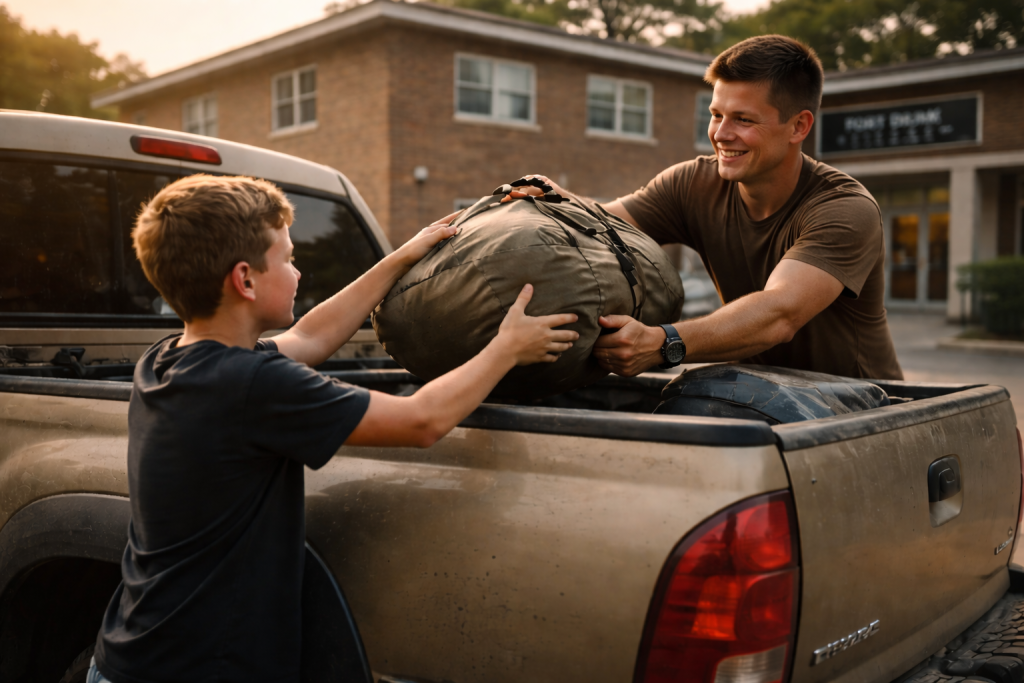
But the moment that became ours was packing up my 2002 Toyota Tacoma. That truck held a whole era of my life. We loaded it together piece by piece like we were closing a chapter with our hands.
And then we drove, three days back home.
It felt like a Greek epic. Biblical thunderstorms. Tornado warnings. Side quests. Wrong turns that turned into stories. Little victories that felt huge.
In a hotel room in Des Moines, Iowa, we watched the Stanley Cup Finals together, two brothers in separate beds, eating trash food, talking late into the night like we had finally found the same frequency.
Somewhere on that road, the waveforms touched.
We arrived on the stage of adulthood together. We both knew it. I could feel it beside me in the cab.
Connor wasn’t just my kid brother chasing me around anymore, and I wasn’t postponing him anymore.
He had waited patiently for years for me to grow up enough to understand what he had been offering.
And I finally did.

The Gentle Drift, the Trade, the Summer We Stole Back
Then life widened the gap again. I moved away right after, four years in Northern California. Not a dramatic split. Not a fight. Just the gentle drift time and distance do so well.
Connor had his own pivot. He had always wanted to serve like me, and in 2012 that dream got sidelined. He thought it was a done deal. So he adjusted. He learned a trade. He became a mechanic in the technical world of ski lifts and gondolas, the unseen machinery that keeps people moving through winter air.
It fit him. Patient. Precise. Responsible for other people’s safety without needing credit.
Summer 2014 I came back, and our waveforms bent close again.
We took full advantage. Endless days and nights dirt biking. Remote mountain explorations, four wheels in the Tacoma, two wheels on our bikes. Just us, chasing horizons, stacking memories like we knew we needed to.
Then I went back to California.
MEPS, the Easy Signature, and the Door He Thought Was Locked
In 2015, I re-entered the service in the National Guard and found something I had missed. A life of service. The feeling of purpose. I became a firefighter too.
That fall, I met my ex-wife in Colorado. Connor was happy for me, happy I had chosen fulfillment over a paycheck. He watched me get married that winter.
And I could see something eating at him.
He still wanted to serve, and he believed it wasn’t possible anymore.
He was embarrassed by how his first attempt had gone. He never fully told me the details. He carried it like a private failure. When I finally pressed him, “Tell me exactly what happened at MEPS,” and he did, I couldn’t help laughing.
Not at him.
At the weight he had been carrying.
That’s a minor administrative detail. That’s fixable.
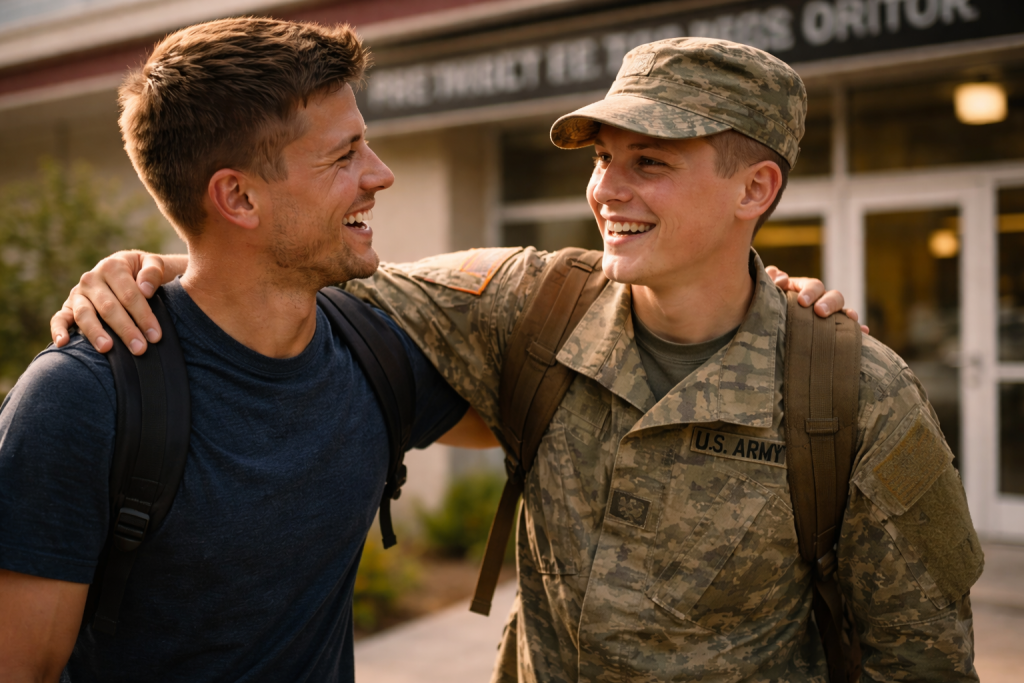
I told him he could not only get back in, he could go to the National Guard.
He could serve with me.
Spring 2016, he left.
I was honor grad at basic training in 2008. Connor, not surprisingly, was the honor graduate of his OSUT in 2016. The first of many awards we would collect in the same season of our lives, like the universe finally lined our timelines up on purpose.
The Long Season: Colton, Cold Feet, Hot Sand
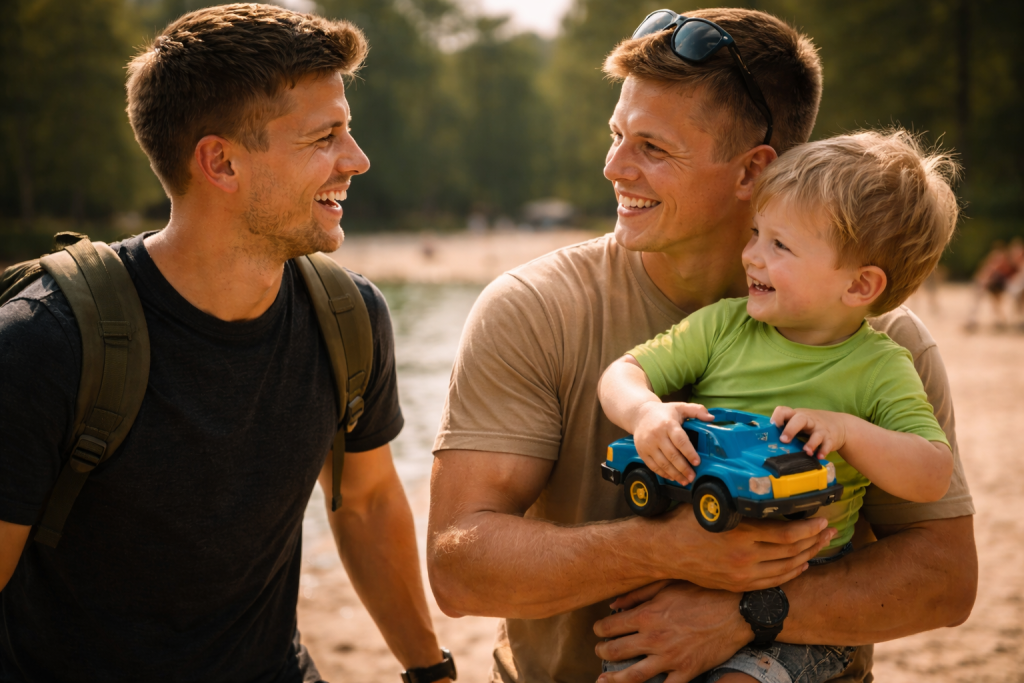
In 2017, I had my son, Colton, and Connor became the kind of uncle kids spend their whole lives wishing they had. Present. Invested. Protective without being overbearing.
He didn’t treat a child like an obligation. He treated my son like a person worth knowing.
Then came the years of training. Big and small. Everywhere. Vermont in the winter. Fort Drum again. JRTC at Fort Polk. The COVID-19 Task Force in Denver. The longest winter sustainment FTX in National Guard history. MOB at Fort Bliss.
Summer, winter, hot, cold, desert, mountains, and everything in between.
I got to step aside and watch him earn his own way in a sister platoon, cut his teeth, build his reputation, become the man he had always been on the verge of becoming.
Then, from 2021 to 2022, we deployed together to the Horn of Africa.
Connor had gotten married shortly before. In July, two corporals, overdue, were retroactively promoted to sergeant together. We pinned each other’s rank on while our company looked on with pride.
I can still see it. The hands, the fabric, the faces.
The moment saying, without speeches, we did this.
In October 2021, Connor was alone in a way no one should ever be alone. He had to see his child born, his son, from an austere MWR tent after a long duty shift, thousands of miles away, trying to be strong through a screen.
I was there for him through it as much as I could be. Because that’s what brothers do when their lives finally overlap in the same hard season.
Toward the end of deployment, he told me he still had the itch to go active duty. I helped him make the decision. I helped him commit. I watched him step toward the life he had wanted for years.
Airborne, Daily Calls, and the World Breaking Its Own Rules
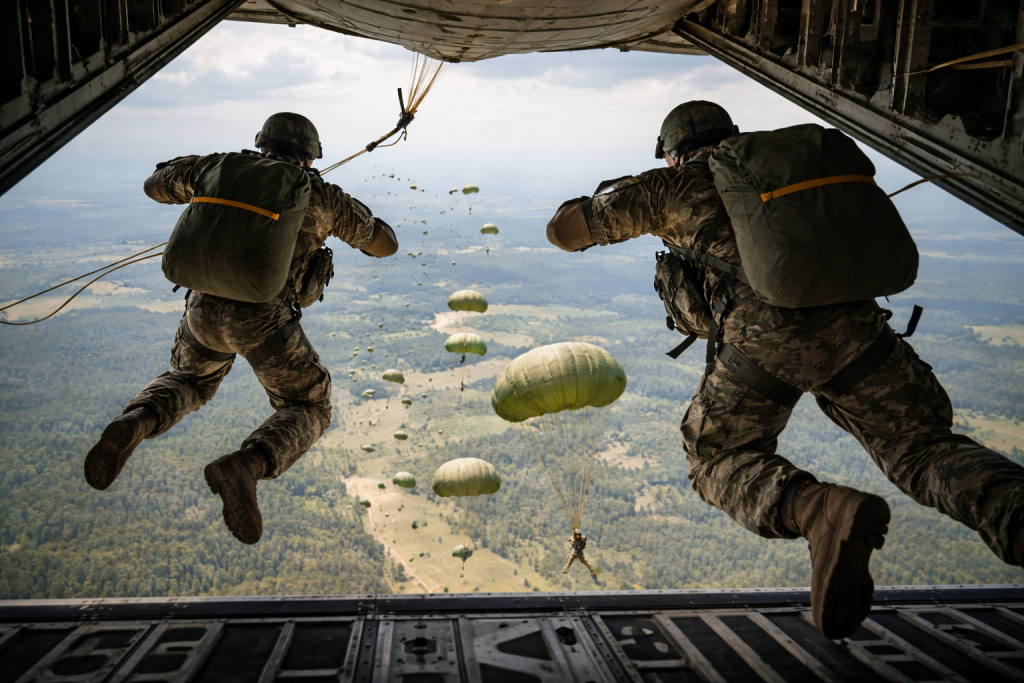
By 2023, he was airborne. A squad leader in the 82nd Airborne Division.
Our waveforms separated again, me in Tennessee, him at Fort Bragg, but the distance didn’t feel like distance anymore. We talked daily. Not occasional check-ins.
Daily.
He was always there. Steady, loyal, present. Helping me in ways that don’t show up in a resume or an award citation.
And then July 2024 happened.
His sudden death ripped us apart.
Afterward, I saw the full shape of who he was and what he had done with his time here. A ski trooper. A warrior in the 86th IBCT (MTN). A paratrooper in the 82nd Airborne Division.
Both units showed up and honored him with standing-room-only services, one in Colorado, another shortly after in North Carolina. Rooms filled with people who loved him, respected him, and owed him something.
Because Connor gave himself away in a thousand quiet ways.
And then there was the part I can’t unsee.
I placed my hand on his chest and felt the stillness. The lifeless quiet under my palm. And my mind did what it always does when it’s cornered. It time traveled.
Clear plastic. Fluorescent light. Machines humming. An incubator.
My hand could not touch him then, not really. There was a wall between us.
Now there wasn’t.
I said goodbye with the same words I greeted him into this world with. Hello. I love you. I’m happy to meet you. Only the meaning had changed. Only the air had changed.
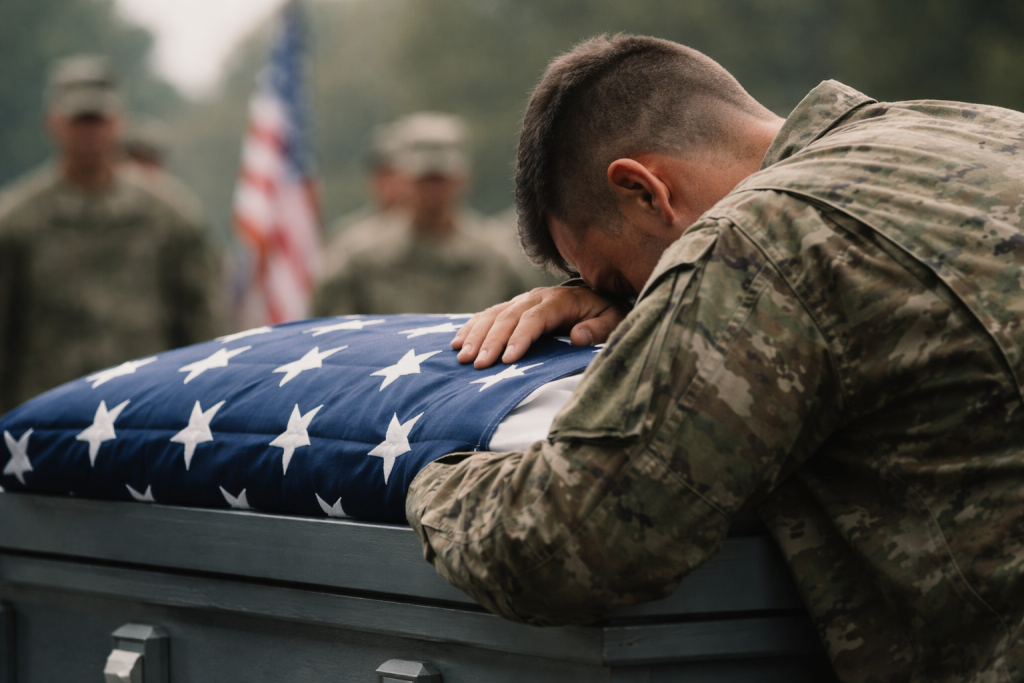
I carried his casket with men who knew him, men who loved him, men who would have followed him. We loaded him into the hearse. The world kept working like a machine that doesn’t care what it’s crushing.
Taps. The final salute. The folded flag. His dog tags cold in my hand like a fact that refused to soften.
Our old LT came close, said almost nothing, and pressed a spent shell casing into my pocket. Not as a souvenir. As a weight. As proof that love and violence and service and loss all live in the same neighborhood, and sometimes the only thing you can do is carry what you are given.
There were hugs. There were faces I hadn’t seen in years. Our unit people. His people. Both, really.
The love. The brotherhood.
It’s what he waited around for me to give.
And somehow, he ended up giving me, and everyone who knew him, lifetimes’ worth.
People say loss leaves a hole. That’s true, but it’s not the whole truth. A hole implies emptiness.
This is worse than empty.
This is a permanent absence where something essential used to live.
Something is permanently broken inside me now.
I miss my little brother in the way you miss a limb you used every day without thinking. In the way your body still reaches for what isn’t there. In the way the world keeps moving like nothing happened while you’re standing in the wreckage trying to understand how a person can be here, so vivid, so loyal, so alive, and then suddenly not.
Connor loved everyone. And I know I’m only one of many carrying this grief. But I have to say this because it’s the only thing that keeps me from being swallowed whole.
There are people who die and you’re haunted by what you didn’t do. The calls you didn’t return. The time you didn’t make. The “tomorrow” you wasted.
My brother, Sergeant Connor Serba, Little Serb, is not one of those people.
We didn’t leave anything unsaid. We didn’t leave the best parts untouched. We lived five lifetimes worth of brotherhood inside the time we had, and it was vivid.
It was ours.
And still, losing him feels wrong. It feels like the world broke a rule.
The penguin walks anyway. Past the safe answers. Past the colony. Into the white. I don’t know his why. I just recognize the pull. So I keep walking too. Not because it makes sense. Because it’s where he must be.
If you’re anyone else still here, thank you. You can stop now if you want, or stay if you choose.
From here on out I’m talking to Connor.
Connor. Brother.
From our little infant in the incubator, to manning machine guns together in foxholes, to your casket, to your ashes: I have had my hands on every version of you, and I still can’t square the math.
I love you, little brother.
Thank you for the Rolos. Thank you for the garage hockey. Thank you for waiting for me to grow up.
Thank you for Fort Drum, for the Tacoma, for that road trip where we finally arrived at adulthood together.
Thank you for your service, your loyalty, your laugh, your steadiness. Thank you for the way you showed up for people without needing anyone to clap.
I’ll always be proud to share who my brother was.
And I don’t know how to carry the rest of my life without you, Connor.
I’m learning it the hard way, one day at a time. But I know this: you left fingerprints on everyone you loved. You changed people. You changed me.
Rest peacefully.
And when my time here is done, I’ll see you again.
_____________________________
Calder M. Serba is a U.S. Army infantryman and combat veteran whose writing explores the human and strategic costs of modern conflict. His work blends on-the-ground observation with analysis of deterrence, alliances, and the downstream effects of national decisions. IG @TheDustwunDispatch
As the Voice of the Veteran Community, The Havok Journal seeks to publish a variety of perspectives on a number of sensitive subjects. Unless specifically noted otherwise, nothing we publish is an official point of view of The Havok Journal or any part of the U.S. government.
Buy Me A Coffee
The Havok Journal seeks to serve as a voice of the Veteran and First Responder communities through a focus on current affairs and articles of interest to the public in general, and the veteran community in particular. We strive to offer timely, current, and informative content, with the occasional piece focused on entertainment. We are continually expanding and striving to improve the readers’ experience.
© 2026 The Havok Journal
The Havok Journal welcomes re-posting of our original content as long as it is done in compliance with our Terms of Use.


