Editor’s Note: This article contains graphic descriptions of torture, sexual violence, and psychological abuse. Reader discretion is advised.
By Scott Chapman and Russ Pritchard
“Architecture of Torture” is not written to comfort or inspire. It exists to document a system of actions and events. This essay is not an opinion, nor is it a theory. It’s an outline of a mechanical system sustained with long levers and bloody pulleys. A sole survivor’s statement is reverse-engineered to study and tell the horror of how Zohra survived the Taliban torture facility known as Section 40. “…What I went through is not just the fate of one woman. It reflects the fate of hundreds of women [soldiers] after the fall of Afghanistan…”
Zohra, and every other woman who enter the Taliban prison No. 40 and the annex torture facility, are not meant to survive the experience. Goats are held with more regard than the women they aim to slaughter. Zohra’s written statement stands as the last gasp for international help from the collective of countless women who lost their breath while being tortured to death.
This month, three years ago, Zohra survived a gruesome assault from a system designed to destroy the human psyche and the physical body. It’s taken Zohra a little over three years to recover enough to recount pieces of her story. Once captured after years of hiding, “…they told me, if you make any noise, we will bury you right here…” Cattle are culled with more care than these humans were treated.
Story of Sequence
When narrative is removed, what remains is function packaged as performative patterns. When emotion is removed, what remains is a real-world story told as a sequence. The result of said sequence will shatter the psyche of the Subject and leave them forever detached.
When you see Zohra as your sister, your mother, or a mirror; then we all become martyred like the departed. What follows below is not a recollection of a memory from very long ago. Per the date on this publication, presented are real-world brick-and-mortar buildings nestled in the heart of Taliban-controlled Kabul. Zohra recounts, “…They took me to the Taliban Intelligence, Section 40….”
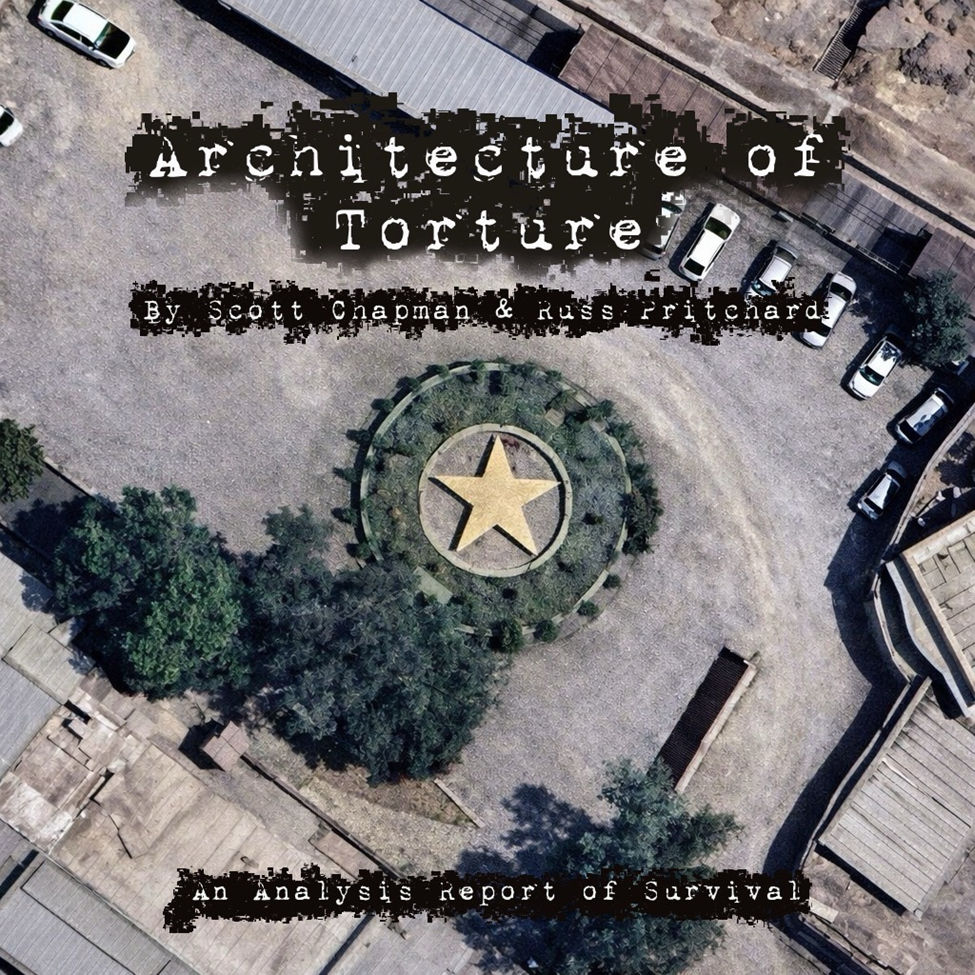
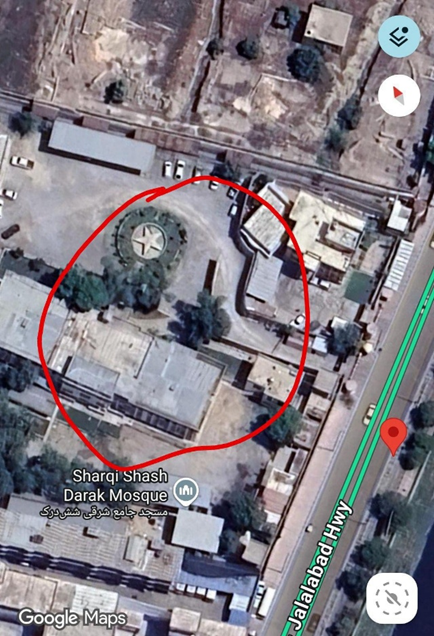
The analysis below is a methodological reduction of a real statement from 19 days of survival within Taliban Prison No. 40 and the adjacent torture facility named “Section 40.” This is essay number 2 of a 3-part essay series about the prison located behind the Saudi Embassy. It is identified by the concrete star centered in the circular courtyard. Zohra explains, “…From the moment I arrived, it felt like hell had begun…”
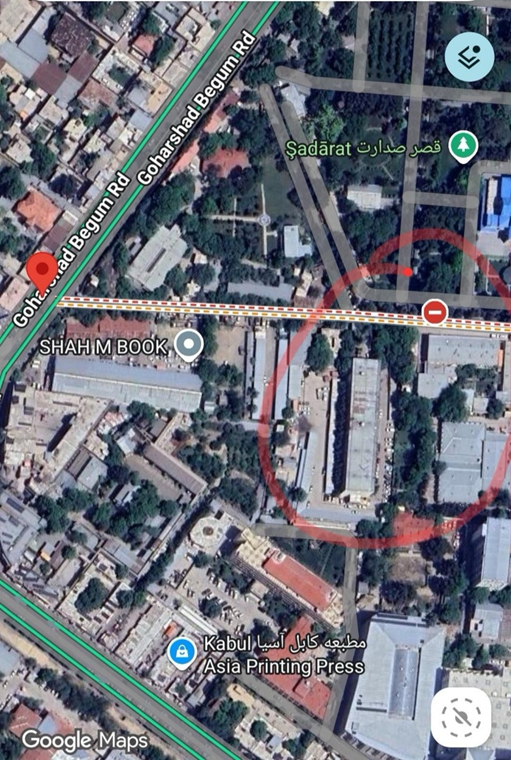
The torture facility complex can be found south of the blue-roof building in Sadarat Park. Both are located a short walk from a cluster of embassies, bakeries, and eateries.
Prepare to Enter
Don your favorite designer helmet, double-knot your boots, and bring a bottle of water for your first unofficial tour of the Back 40. We urge you to please keep your hands and feet within the confines of this typed page, as the authors are not responsible for any reaction that may happen.
Please take a moment to locate the nearest exit. Always remember the closest exit may be behind you. These written words are a transparent tour through the facility as a function, documented for historical antiquity and accuracy.
Entry into Section 40
The door is now locked behind you. A live human being enters the torture system as an identity instead of a human. This is the first ‘other’ bifurcation group once inside the Taliban’s Torture Refinement Facility. The intake pipeline within Section 40 will process a day-1 Subject through the practices and procedures within the guidelines below.
Commander’s Intent
The intent is to fracture, then rupture, the spirit until all personas are deprogrammed from the psyche. To fracture the self until the Subject becomes an emotionless nothing. Attack the Subject mentally and physically until they lack the breath to beg for death.
To silence the spirit until the Subject feels the tears fall from their eyes, but forgets how to cry. The intent is to subdue the Subject until they become a warm pile of flesh on the floor.
Section 40 will reduce the Subject to servitude through trauma-based domination, or death through intake rape processing. Both outcomes are desired answers for a system designed to destroy a beautiful, perfect female human. Rape is the preferred practice for a culture consumed with primal power.
Phase 1:
Shock Induction
The process of Shock Induction takes place before a spoon of sugar dissolves in hot coffee. It begins the moment the Subject is captured. There is no orientation period. No time to prepare. No time to think. There is no negotiation. This is the mission.
There is no ambiguity in the initial attack because your captors come in broad daylight. They first take the breath from your lungs before they remove the voice from your throat. Your captors consume your entire sense of reality. They replace all you’ve ever loved with endless pain and no reprieve. The moment the black Faraday bag covers your head, you’re forever severed from it all. The disconnect is already done.
Subject Paralyzed
The Subject is introduced to swift violence within the first measurable window of time. Zohra says, “…In the first hours, without asking me anything, they started to beat me. They hit the soles of my feet with a wet cable so the wounds would be less visible. Slaps that made my ears ring….”
Actual real-world human-on-human violence is a vast statistical anomaly in any civilized society. The savagery and shock of the assault will cause the initial cascade of fight-or-flight hormone release into the bloodstream.
The early beatings establish a conditional baseline for the Subject to understand: any resistance equals swift consequence. The consequence for any resistance is violence of action. The Subject remains paralyzed by an inability to reconcile the initial assault against the body with the indifference of onlookers.
Cover The Head
When you control the head, you control the body. Inventoried are 18,000 [DOD leftover] Faraday bags to be used for Subject Suffocation Control (SSC). The material is opaque to both light and air. The bag will be tied around the neck to restrict airflow. Any output or over-exertion by the Subject will initiate hypoxic suffocation by CO2. The Subject feels suffocation and instant immobilization.
The Loop is Closed
They will be bound. Within their blood will be a max fight-or-flight hormonal payload. The Subject may begin to vibrate and shake with violent rhythmic bursts. This sometimes happens.
The shaking shows a max-effort adrenaline dump as explosive energy with nowhere to go. Any attempt to utilize their evolutionary survival tool, fight-or-flight, will be met with instant pain as a correction to submit. We attack their body on a genetic level by suppression of evolution. This hatred stems deeper than ideological or material differences.
Since the Subject’s head is covered by a Faraday bag that’s tied around the neck, the Subject must exercise intense awareness and extreme control not to over-exert themselves. Suffocation arrives with an elevated heart rate. The feat of submission and suffocation is a major attack against the psyche. All input signals to the body become dysfunctional.
The purpose of the initial violence is not for information or word extraction. The purpose is recalibration and sheer domination. A painful education arrives as the Subject’s new role of submission. The Subject learns the rules of the environment through the same principles as Pavlov’s dog. Since a lived experience requires no real instructor, a tortured Subject is taught faster than language can teach. The loop is closed because control is complete.
Phase 2:
Continuity Disruption
The concept of time is removed as a reliable structure. Zohra says, “…During the first three nights, they hardly let me sleep. The lights stayed on all the time, and if I closed my eyes, they would wake me with cold water or another blow…” Without the balance of time to keep the mind on track, the mind will turn inwards to further fracture the self into spirals of doom. Fear begets fear. Downward the self will slide while losing their mind.
Sleep is denied for the duration of the meeting. Pain will keep the Subject awake. Exhaust them until every ounce of energy is extracted. Light and darkness will lose meaning. Events occur without predictable spacing. The Subject cannot establish sequence. The mind becomes a crosswire mess.
Without sequence, memory cannot organize or plan the next events. Without organized memory, identity begins to fragment. The Subject no longer experiences life as a continuous narrative. Instead: now isolated moments of brutality become an endless strain to suffer. The mind will fracture, then disassociate, to survive.
When the Subject disconnects from it all, they are no longer anchored to a reality of past personas. Once disconnected, disgraced, and discarded, their mind becomes malleable as wet matter.
Zohra says, “…On the third day, they brought my phone. They showed pictures of me in my military uniform. They shouted at me: ‘You are an American spy!’ ‘You are a product of a system of immorality!’ From that moment, the torture was not just physical anymore; it became ideological. I was a symbol of the military system they hated, and I could feel their hatred in every moment…”
Phase 3:
Stimulus Overload Stepladder
The torture system increases input beyond the body’s ability to process events. Physical stress, sexual violence, psychological pressure, sleep deprivation, sensory confusion, humiliation, etc., all cause havoc to the Subject’s nervous system.
Contradictory signals are introduced as pain followed by stillness. Silence followed by chaos. The Subject will attempt to predict patterns that will fail because randomness is the plan. Failure produces instability. And instability produces compliance. Compliance is surrender.
Phase 4:
Identity Deconstruction
The Subject is no longer addressed as a person. Language shifts and names are removed or ignored. Dehumanizing identifiers may be introduced, or the Subject may be reduced to no identifier at all. Zohra said, “…they took me to another room. A man with a long white beard and a black cloth sat at the head of the room. The officers called him Sheikh Sahib and treated him with extreme respect. The whole atmosphere made it clear that he had full control over the lives and dignity of the prisoners…”
Zohra continued, “…He [Sheikh Sahib] said, ‘Sit on my knees.’ When I refused, they forced me with blows. Being made to sit on his knees was a declaration of ownership. It was breaking the last boundary of my human dignity…”
Without a name, the Subject loses a reference point. Without a reference point, the Subject cannot anchor self-perception and life becomes an illusion.
The system does not need to destroy identity as a stand-alone structure. Instead, it removes the framework that sustains identity. Identity will collapse under its own absence.
Zohra said, “…Sheikh Sahib insulted me with humiliating words, attacked my ethnicity and identity. He said, ‘You must be purified.’ The sexual violence those nights came with humiliation, threats, and psychological breaking. Every time I resisted, I was punished. My body was bruised and inflamed, I had a fever, but there was no care or treatment…”
Zohra continued, “…After three nights he [Sheikh Sahib] told two other officers, ‘Now she is yours.’ From that point, the violence became group violence. While they abused me, they filmed it. They threatened me that if I spoke or complained after release, they would release the videos and kill my family…”
Phase 5: Dependency Conditioning
Relief is introduced as a controlled variable. Relief is also inconsistent. Relief is unpredictable. Sometimes it follows compliance, and sometimes it does not. The Subject cannot determine the rules governing relief.
The Subject begins to associate survival not with resistance, but with submission to the system itself. The system becomes both the source of pain and the only perceived path to its reduction. Dependency on the system forms while the mind continues to fracture.
Zohra continues, “…They kept me in a room with several other girls. Their eyes were empty. Each of us belonged to one of the interrogators. At night, I could hear their muffled cries. We were not allowed to speak, but through our eyes, we understood that our stories were the same. Several times, they threatened that if I went to the media, not only would they kill me, but they would also destroy my father and my husband’s family…”
Phase 6:
Reconstruction Window
At the point of maximum fragmentation, the Subject’s mind becomes most malleable. A hijacked human nervous system now has the capacity to introduce new structure. This process carves a new scratch on the Subject’s vinyl record nervous system. Zohra remembers, “…they forced me to sit in front of a camera and read a fake confession that foreigners had seduced me to lead women astray. If I made any mistake while reading, I would be tortured again…”
New ideas can be introduced as alternate reality frameworks. New people to be. New rules to follow. These are introduced as identity frameworks to follow, if the Subject survives.
The Subject, lacking internal continuity, may accept external identity definitions as a replacement. Not because they are believed. Because they are an island of available real estate for the mind to cling on to. This is the heart of trauma-based control.
This is the sequence.
This is not theoretical.
This is observed and extracted.
A reduced human psyche pushed past an extreme.
Zohra says, “…I suffer from post-traumatic stress disorder. Sometimes, when I talk about it, I faint. I have nightmares. I am afraid of the sound of a door. Even now, when I see a man wearing a black cloth, my body shakes…”
This is What Determination Looks Like
Zohra’s written statement is a testament to her strength and determination. She stands determined to expose this attack against human rights, despite intense pressure to stay quiet and keep the status quo.
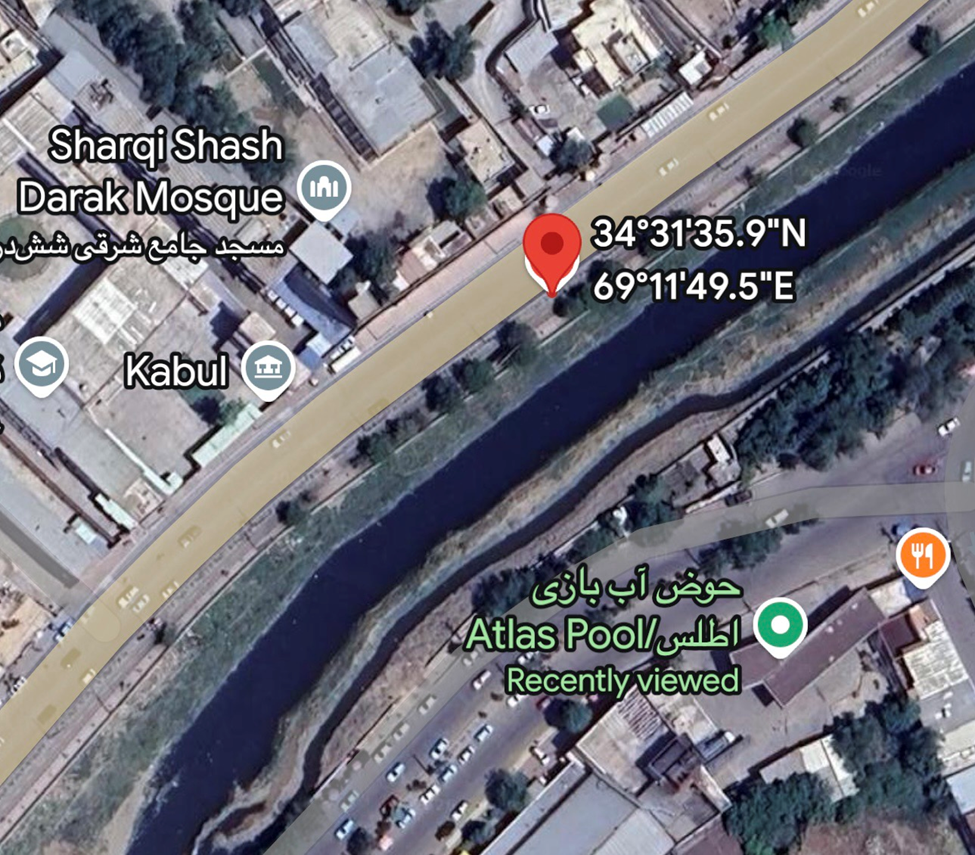
Her written statement becomes a beacon to steer a big change. May Zohra’s statement survive to honor all the women who were weighted with rocks, then dumped in the Kabul River. Nobody is meant to survive Section 40.
An Ode to Strength
As a living operating system, the brain will give you just enough awareness / information to survive the moment. The brain of a traumatized person will repress memories, faint, dissociate, and store away horrendous happenings until the body feels safe enough to feel again.
Once the gateway is open to feel an emotion, repressed memories arrive as nightmares in the night. How do you know what you don’t know until your brain makes you aware of it? Little by little, the veil is lifted. The mind remembers and the body tells the tale.
The safer one feels, the more story is released for the human to recall. Since the brain doesn’t know the difference between a memory or an event that happens in real time, both internal cerebral processes are identical.
With this knowledge, a written statement becomes a choice to face one’s worst fear, while armed with a pen and paper. Zohra says, “…I am writing this statement so that it is recorded. In Section 40, women are not kept for investigation. They are kept to be broken…”
The same fight-or-flight hormones released from a memory are the same hormones released in a lived reality. Spoken words of any event make the nervous system relive the past event. Therefore, the body believes the past torture is happening right now.
This endless perspective of relived past pain stays in place until the emotion is alchemized into actual motion. Zohra’s written statement is a seed of motion. To retell a story is to make it real again. To write a story down is to seek balance before justice.
Closing Statement
“Architecture of Torture” is an analysis report about a real-world torture facility and a real-world survivor. This is part 2 of a 3-part essay series. Essay 3 in this series, titled “Section 40,” will retell the story beginning with Zohra’s years of evasion and family separation before her capture and torture.
Essay 3, “Section 40,” will retell the story of the facility with the accuracy of an insider. You’ll experience the torture camp from the Taliban’s point of view. Make room in the break room because you’ll feel as if you’re there.
Authors Pritchard and Chapman write to expose a humanitarian crisis through endless efforts to write this wrong. Always Here / Never Quit.
“…I am a living witness to a crime that must not be buried in silence.” – Zohra
_____________________________
Scott Chapman is a former U.S. Army Ranger whose writing draws on military service and later security work. He served in the early years of the war on terror, including the invasion of Iraq, and completed five deployments. He later worked in executive protection before returning to Afghanistan with Blackwater and then supporting the U.S. intelligence community over 22 deployments in six years. For The Havok Journal, he often writes about Afghanistan and the aftermath of war, along with more reflective pieces on writing, mental health, and meaning. Learn more at www.ScottChapmanAuthor.com.
As the Voice of the Veteran Community, The Havok Journal seeks to publish a variety of perspectives on a number of sensitive subjects. Unless specifically noted otherwise, nothing we publish is an official point of view of The Havok Journal or any part of the U.S. government.
Buy Me A Coffee
The Havok Journal seeks to serve as a voice of the Veteran and First Responder communities through a focus on current affairs and articles of interest to the public in general, and the veteran community in particular. We strive to offer timely, current, and informative content, with the occasional piece focused on entertainment. We are continually expanding and striving to improve the readers’ experience.
© 2026 The Havok Journal
The Havok Journal welcomes re-posting of our original content as long as it is done in compliance with our Terms of Use.


