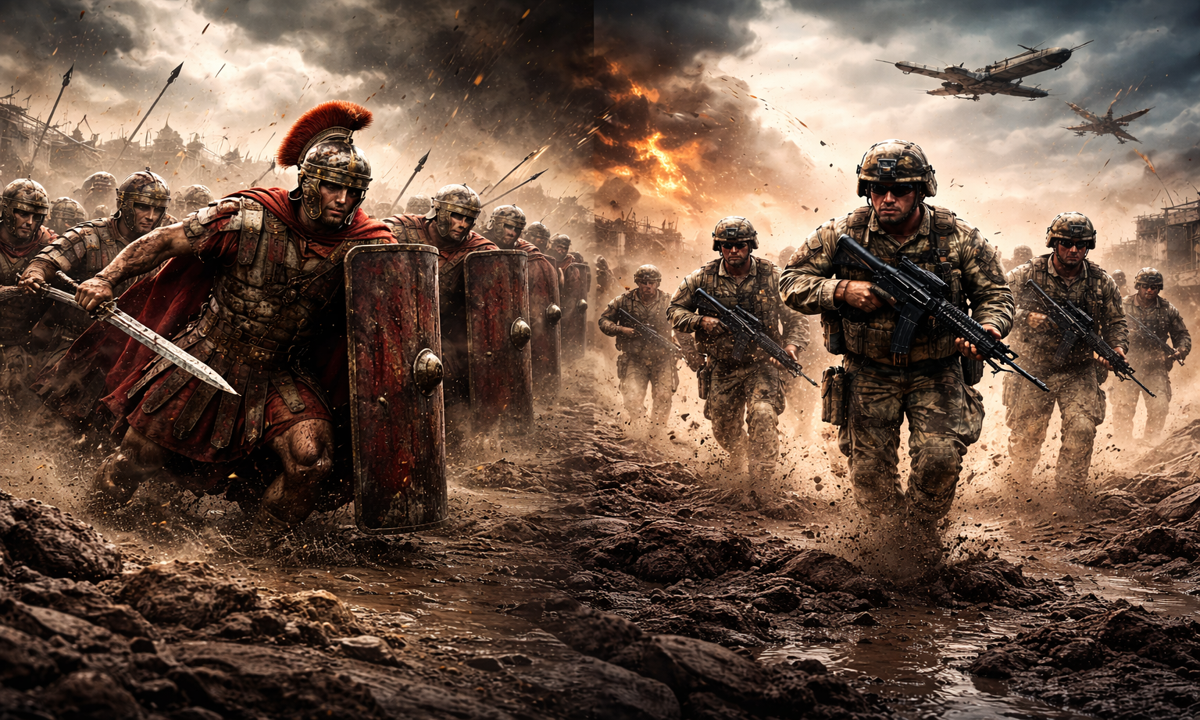
“You may fly over a land forever; you may bomb it, atomize it, and wipe it clean of life — but if you desire to defend it, protect it, and keep it for civilization, you must do this on the ground, the way the Roman Legions did — by putting your soldiers in the mud.”
— T.R. Fehrenbach
Every few years the United States rediscovers the same uncomfortable truth about war. Among them is this:
Bombs destroy things. But they do not control them.
As the air war against Iran unfolds, through strikes on missile facilities, air defenses, and infrastructure, the familiar language of modern warfare has returned. Precision. Deterrence. Degradation. Surgical strikes. Strategic signaling.
Airpower has once again become the preferred instrument of policy.
And airpower is powerful. No serious military professional doubts that. Aircraft and missiles can reach targets thousands of miles away. They can collapse infrastructure, blind command networks, and destroy expensive military systems faster than any ground force could move. And America’s airpower is exquisite. But even American airpower has limits. And that’s because ultimately, everything comes down to… mud.
When I was young, and especially when I was a young Army officer, I read voraciously. Full books, cover to cover. About all manner of things. I recall at my first duty station, when I was in the infantry and stationed at Fort Campbell with the 101st Airborne Division, we were provided with an excerpt of the book This Kind of War by T. R. Fehrenbach, which included the quote I used as the beginning of this article. The excerpt intrigued me so much I bought a copy of the book, which, I discovered, was a history of the Korean War. I read the book again a few years later, when I was a captain and heading to an assignment with the Second Infantry Division and heading to the Republic of Korea for what turned out to be two one-year-long tours of duty.
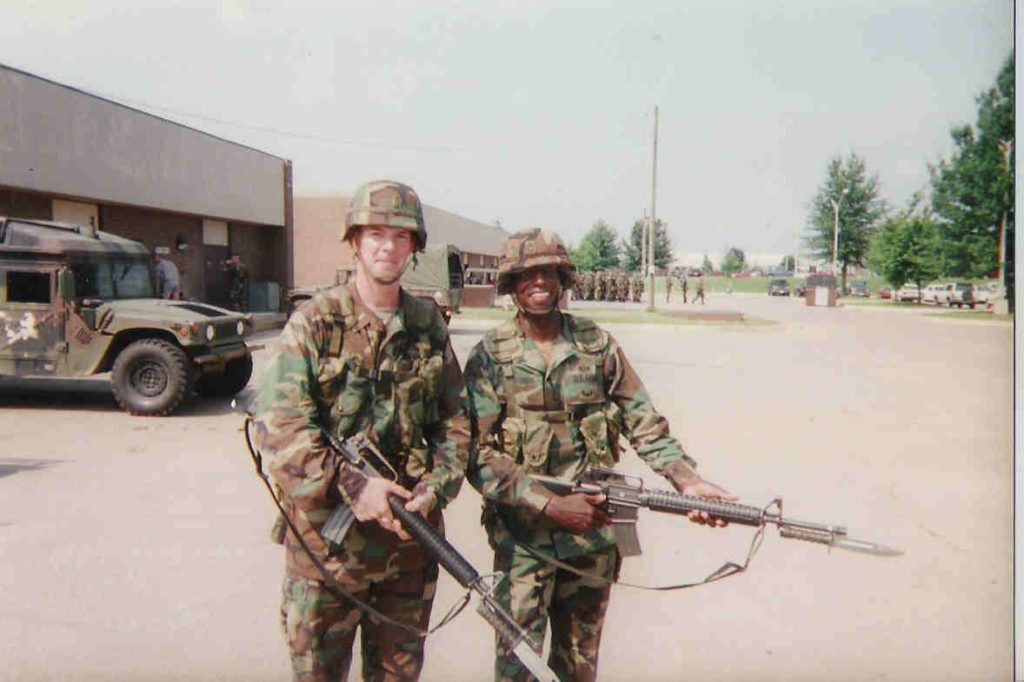
I was stationed in Uijongbu, a city in the northern part of South Korea, not quite on the border but close enough. I had a signals intelligence company, which required me to travel a good bit throughout the country, and to position myself on strategic hilltops, like the ones in the Chorwon Valley, that helped me contextualize the things I read about in the books on the Korean War. Yes, we can bomb the crap out of something. But if we want to hold it, or build it, or make it ours, we have to go in on the ground, just like Fehrenbach said.
And Fehrenbach’s warning from This Kind of War still applies today just as much as it did in Korea:
Airpower can punish a country. But it cannot possess it.
The Illusion of Control From the Sky
Modern warfare has created the illusion that distance equals control. Satellites watch everything. Drones loiter overhead for hours. Missiles strike targets with meter-level accuracy.
From the outside, it can look like war has become a remote activity.
Push a button. Destroy a radar site. Launch another strike. Remove another facility.
Yet destruction and control are two very different things.
You can destroy a runway from the air.
But someone must stand on the runway to keep the enemy from rebuilding it.
You can destroy missile launchers.
But someone must occupy the terrain to stop new ones from appearing.
You can cripple a regime’s military infrastructure.
But someone must impose order if that regime collapses.
Airpower breaks things. Ground forces decide what happens afterward.
This is not a criticism of airpower. It is simply the physics of war.
The Geography Problem
Iran is not a small place.
It is a country of mountains, deserts, and sprawling cities. It has a population of nearly ninety million people and a political system that has survived decades of pressure, sanctions, and regional conflict.
Bombing targets inside Iran may degrade military capabilities. It may slow weapons programs or impose costs on the regime.
But it does not solve the central question of war: Who controls the ground?
That question has haunted nearly every American military intervention since World War II.
In Vietnam, American airpower was overwhelming. But it could not stop an enemy that controlled the countryside.
In Iraq, the United States destroyed Saddam Hussein’s army in weeks. But controlling the country required years of fighting on the ground.
In Afghanistan, twenty years of airstrikes never replaced the need for soldiers and Marines operating in valleys and villages.
The pattern repeats because the underlying logic of war has never changed.
Territory is controlled by people who are physically present.
The Limits of Punishment
Strategic bombing has always carried an implicit theory: that enough destruction will compel political change.
Sometimes it works.
More often, it doesn’t.
Nations under attack rarely collapse simply because their infrastructure is damaged. Instead, bombing often hardens political resolve. Governments rally domestic support by framing the conflict as a fight for national survival.
History provides plenty of examples.
The German bombing of Britain during the Blitz did not break British morale.
American bombing campaigns in Vietnam did not force North Vietnam to surrender.
Even in Iraq during the 1990s, years of airstrikes and sanctions weakened the regime but did not remove it.
Punishment alone rarely produces decisive outcomes.
Victory in war requires control, and control requires presence.
The Mud Still Matters
Fehrenbach understood something that modern military technology sometimes obscures: war is ultimately a human contest fought over physical space.
Someone must occupy the bridges, the cities, the roads, and the terrain.
Someone must secure the population.
Someone must enforce the political outcome that the war was fought to achieve.
Airpower can support that effort. It can make it easier, faster, and far less costly.
But it cannot replace it.
The Roman legions Fehrenbach referenced understood this well. Rome did not control its empire by flying over it. It controlled it by placing soldiers in garrisons across the territory it intended to hold.
Presence was power. The principle has not changed in two thousand years.
That presence does not necessarily have to be American troops. In fact, it’s probably preferable to just about everyone involved that it’s not. In the best case, it’s the Iranians themselves. But, ultimately, it will have to be someone. Otherwise, in a generation, we’ll be right back to doing this again, just like what happened after the Gulf War.
The Strategic Question
And that brings us back to the current air war against Iran.
Airstrikes have achieved, and will continue to achieve, tactical and operational effects. They can destroy infrastructure, delay weapons development, and impose real costs on military systems. But they alone cannot achieve long-term peace and security. That has to happen on the ground.
If the goal is punishment, airpower can do that. If the goal is deterrence, airpower can contribute to that as well. But if the goal were ever to control territory, overthrow a regime, or impose a new political order, the calculus changes immediately. And that’s when Fehrenbach’s quote stops sounding like historical reflection and starts sounding like operational reality.
You may fly over a land forever. You can bomb it into submission. you can kill and destroy at will.
But if you want to keep it for civilization, someone eventually has to stand in the mud.
And that is the part of war no technology has ever been able to automate.
_____________________________
Charles served over 27 years in the US Army, which included seven combat tours in Iraq and Afghanistan with various Special Operations Forces units and two stints as an instructor at the United States Military Academy at West Point. He also completed operational tours in Egypt, the Philippines, and the Republic of Korea and earned a Doctor of Business Administration from Temple University as well as a Master of Arts in International Relations from Yale University. He is the owner of The Havok Journal, and the views expressed herein are his own and do not reflect those of the US Government or any other person or entity.
As the Voice of the Veteran Community, The Havok Journal seeks to publish a variety of perspectives on a number of sensitive subjects. Unless specifically noted otherwise, nothing we publish is an official point of view of The Havok Journal or any part of the U.S. government.
Buy Me A Coffee
The Havok Journal seeks to serve as a voice of the Veteran and First Responder communities through a focus on current affairs and articles of interest to the public in general, and the veteran community in particular. We strive to offer timely, current, and informative content, with the occasional piece focused on entertainment. We are continually expanding and striving to improve the readers’ experience.
© 2026 The Havok Journal
The Havok Journal welcomes re-posting of our original content as long as it is done in compliance with our Terms of Use.


