
By Bruce D. Kowal
Charles Faint’s recent analysis of tang ping in these pages is intelligent, well-observed, and correctly identifies the phenomenon as a significant challenge to the CCP’s developmental ideology. He is right about what tang ping is. The question I want to address is why it exists, and why it is so deeply, so stubbornly, so historically inevitable.
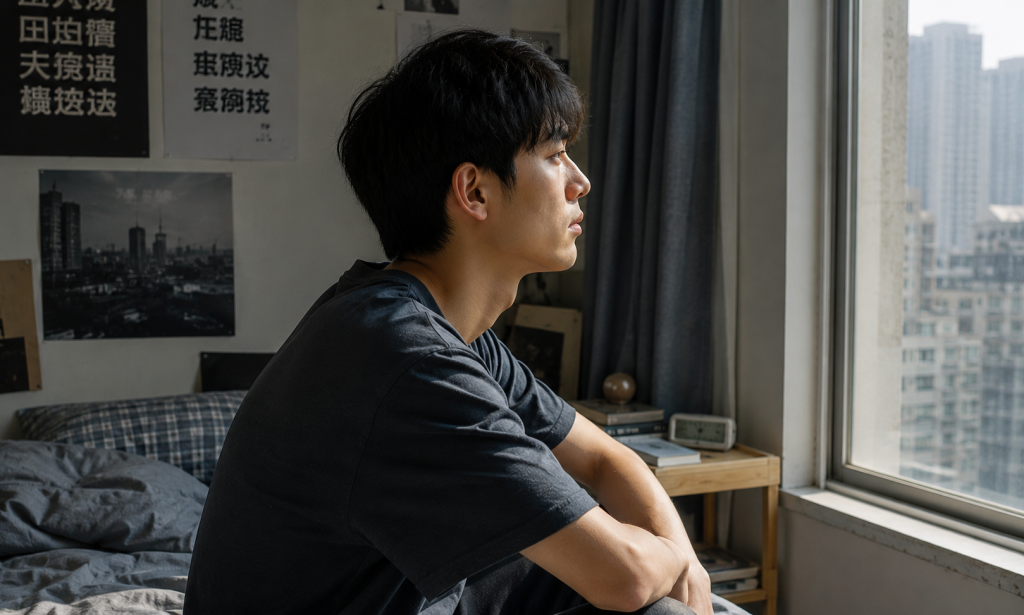
Tang ping, for those unfamiliar, translates roughly as “lying flat.” It describes a growing refusal among Chinese young people to participate in the exhausting competitive machinery of modern Chinese economic life: the brutal work schedules, the frantic accumulation, the endless striving that the Party calls douzheng 鬥爭, or struggle. Official commentators and many Western analysts have treated it as a species of laziness, a failure of ideological commitment, a social media mood that will pass. This reading is wrong, and it is wrong in a way that matters enormously for understanding where China is going.
Tang ping is not new. It is approximately 2,200 years old.
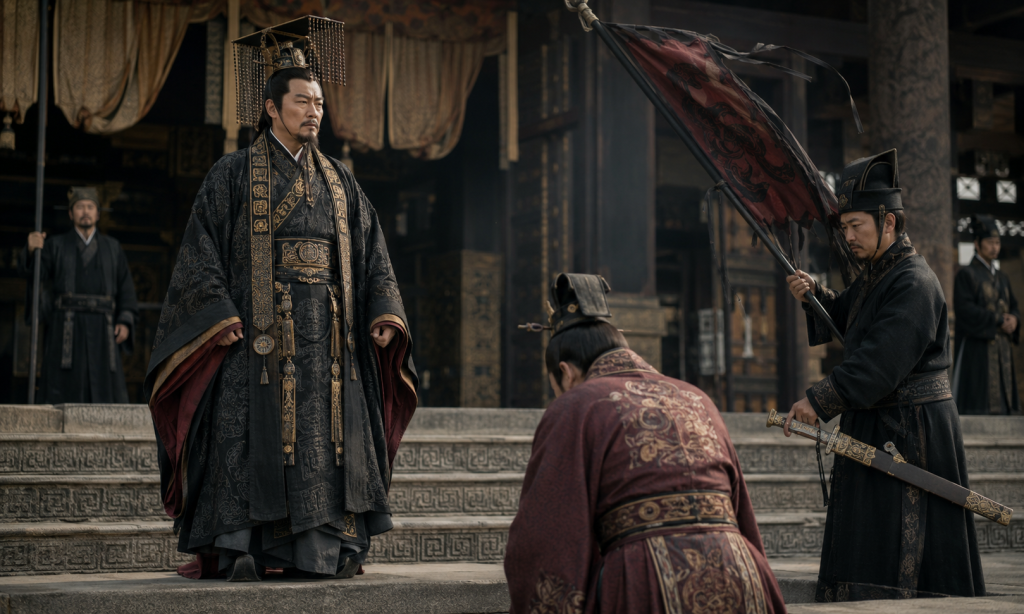
To understand this properly, we need to go back to the third century B.C., to Qin Shi Huangdi, the First Emperor, who unified China in 221 B.C. and in doing so made a civilizational choice whose consequences are still unfolding today. The Qin emperor was not simply a conqueror. He was a systematic destroyer of the feudal order that had characterized the Warring States period. He abolished the hereditary nobility, standardized weights, measures, and writing, built roads that served imperial control rather than local lords, and constructed a state apparatus of breathtaking centralization. The intermediate structures that stood between the individual and state power, including the hereditary baron and the independent lord with his own land, army, and legitimacy, were swept away.
This is the fork in the road that separated China’s civilizational development from that of Japan and Korea, and the consequences deserve to be stated sharply because they are almost never stated at all.
Japan retained and elaborated its feudal structure. The daimyo system created permanent hereditary power centers that the shogunate could manage but never entirely eliminate. The samurai class was a hereditary estate with real autonomy and real obligations running in both directions. When the Meiji Restoration modernized Japan with extraordinary speed in the 19th century, it did not build on nothing; it built on a society already structured by centuries of layered obligation, hereditary equity, and institutional buffers between the individual and the central power. The modern Japanese company, with its legendary loyalty, its near-permanent employment, and its quasi-familial obligations, is feudalism translated into industrial vocabulary. It is not a curiosity. It is a survival.
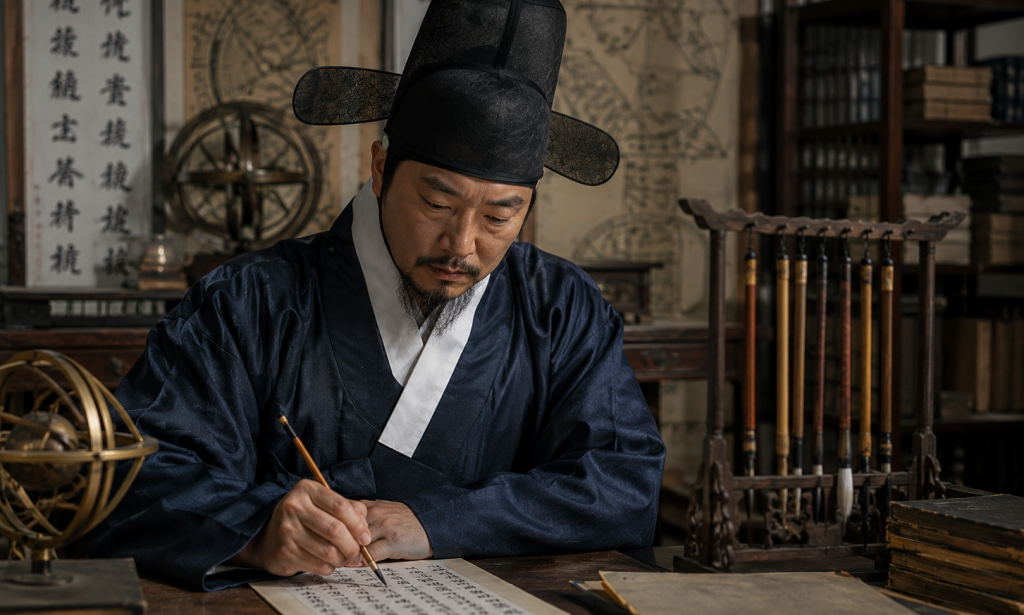
Korea’s yangban class, though more examination-based than Japan’s samurai, was also more permanently hereditary than the Chinese mandarinate, and Korean society retained forms of clan and regional solidarity that served as partial buffers against the full nakedness of the individual before state power.
China had none of this.
What China developed instead was the imperial examination system, centered on the jinshi degree, which was, in its way, a work of genius and, in another way, a perfect trap. Theoretically open to any male subject, the examination system created a mandarin class whose authority derived entirely from demonstrated mastery of classical learning and whose tenure was always contingent upon imperial favor. There were no hereditary roots. There were no permanent estates. There was no Magna Carta moment because there were no barons powerful enough, and permanently enough entrenched, to confront the emperor as near-equals. The Chinese bureaucrat-scholar was powerful but contingent, elevated but exposed. The emperor could always reach down and remove any family from the machinery of advancement.
This produced, over centuries, a very specific psychological condition in the cultivated Chinese individual. He served, but he knew the service was precarious. He advanced, but he knew the advancement could be revoked. He had no equity: no land that was permanently his, no title that descended to his sons as a matter of inviolable right, no institutional structure that would stand between him and the state’s appetite. (The greatest novel in the Chinese canon, “Dream of the Red Chamber,” was written in extreme poverty by a man whose family’s accumulated wealth was confiscated by the Yongzheng Emperor in the 1720s.)
Out of this condition came one of the great recurring themes of Chinese civilization: the cultivated withdrawal. When the political machinery became too corrupt, too dangerous, or too demeaning, the man of genuine cultivation stepped back. He did not revolt. He did not build a competing power base. He had no power base to build. He simply refused to serve.
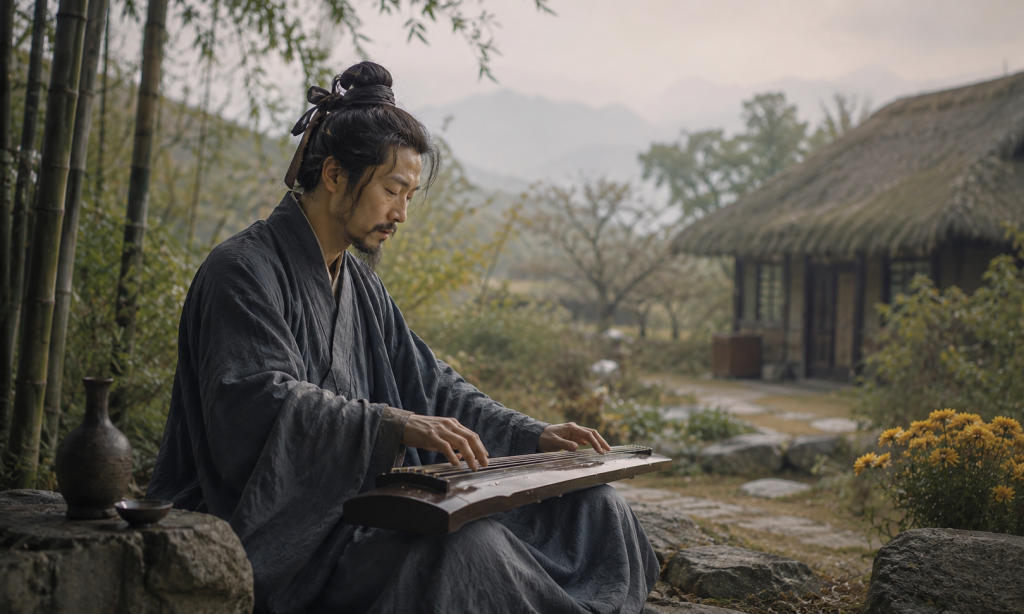
In the third century A.D., during the chaos of the Three Kingdoms period and its aftermath, a group of scholars and artists known as the Seven Sages of the Bamboo Grove made this refusal into a philosophical and artistic posture. Ji Kang, the most brilliant and most dangerous of them, played the qin, wrote poetry, and refused every offer of official appointment. He was eventually executed; the state always reserved that option. But his example lived. Tao Yuanming, in the fourth and fifth centuries, distilled the tradition into its purest literary form, withdrawing to his farm to drink wine, write verse, and cultivate chrysanthemums. His famous refusal to “bend his back for five pecks of rice,” to perform the rituals of official submission for a salary, became a touchstone of Chinese literary and moral culture. The tradition continued through the Tang and Song dynasties in the figure of the literary hermit, the scholar-artist who chose the bamboo grove over the court, ink and stone over advancement.
Lin Yutang, writing in the 20th century, identified this figure, the Scamp, the Vagabond philosopher, the man who refuses the machinery, as one of the central archetypes of Chinese civilization. He was not praising laziness. He was identifying a continuous moral tradition of the individual asserting his dignity against a state that offered precarious advancement in exchange for total submission.
This is the tradition that tang ping belongs to.
The young Chinese factory worker who calculates precisely that advancement is impossible, that the system is rigged, that exhausting himself in douzheng will produce no lasting equity, and who therefore declines to do so, is not failing ideologically. He is making a rational assessment that his predecessors have been making, in different vocabularies, for over two thousand years. The assessment is this: the state offers nothing permanent, takes everything it can reach, and the only dignified response is to minimize your exposure.
The CCP’s legitimacy rests on two related promises: xiaokang, the moderately prosperous society, and Xi Jinping’s more recent formulation of gongtongfuyu, common prosperity. Both promises are essentially economic; the Party’s right to govern is contingent upon delivering material improvement in the lives of ordinary Chinese people. For a period, the reform era delivered on this bargain. And crucially, the real estate market offered the ordinary Chinese worker something that Chinese civilization had almost never offered before: genuine, transferable, heritable equity. A place to put money that the state could not easily reach. A small permanent thing in a world of contingency.
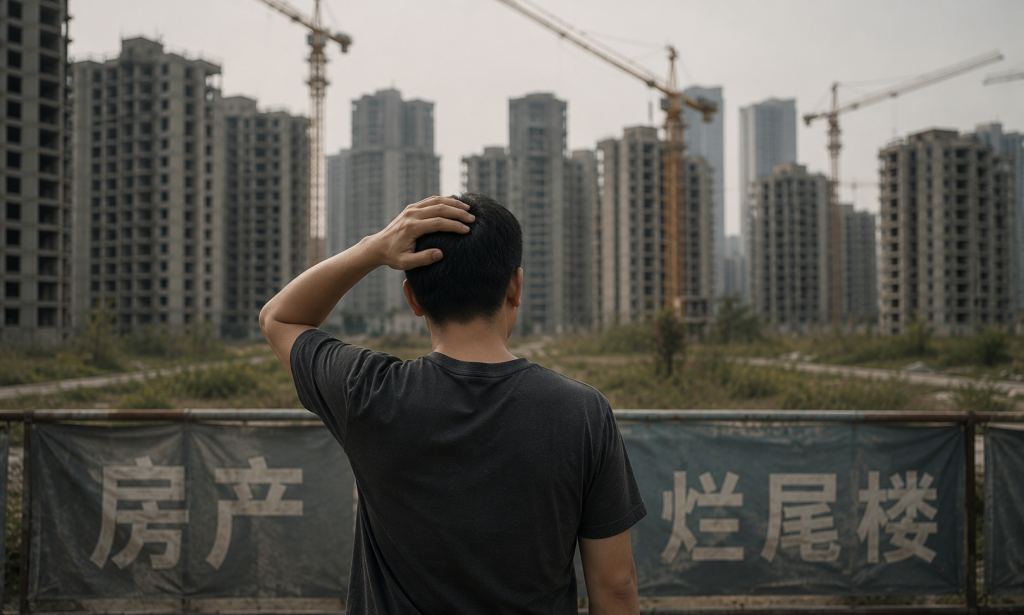
That lifeline has now collapsed. The real estate crisis has not merely destroyed wealth; it has destroyed the one mechanism by which the ordinary Chinese individual could accumulate something resembling the feudal equity that the Japanese worker inherits as a structural feature of his society. The Chinese worker is once again completely exposed: no hereditary protection, no institutional buffer, no equity, no accumulation that survives the state’s appetite.
Corruption and guanxi, the elaborate networks of personal relationships and mutual obligation that lubricate every level of Chinese society, are not moral failures. They are rational adaptations to structural nakedness, 2,200 years in the making. When no institution protects you, you construct personal protection. You build networks. You pay. Because the alternative is to stand entirely alone before a state that has never, in its entire civilizational history, developed the habit of leaving individuals alone.
This is why the CCP’s response to tang ping, including exhortations to struggle, warnings about laziness, and propaganda about national rejuvenation, will not work. The Party is speaking the language of Confucian obligation to people who have switched into the language of Taoist withdrawal. It is calling for douzheng in a civilization that has always known, in its bones, when douzheng is pointless. The young worker lying flat is not ignorant of the Party’s message. He has simply done the accounting, with great precision, and found that the message does not compute.
Never has the great power of the Chinese state to shape thought and feeling been so helpless to kindle belief in its own world. The choice not to strive and not to bear children needs nothing: no gathering, no sign, no speech. It is a vote of no confidence, cast in silence, intensely private, beyond all reach.
_____________________________
Bruce D. Kowal is a U.S. Navy and Naval Reserve veteran, a member of the U.S. Coast Guard Auxiliary, and a certified public accountant. He lives in the New York City metro area.
As the Voice of the Veteran Community, The Havok Journal seeks to publish a variety of perspectives on a number of sensitive subjects. Unless specifically noted otherwise, nothing we publish is an official point of view of The Havok Journal or any part of the U.S. government.
Buy Me A Coffee
The Havok Journal seeks to serve as a voice of the Veteran and First Responder communities through a focus on current affairs and articles of interest to the public in general, and the veteran community in particular. We strive to offer timely, current, and informative content, with the occasional piece focused on entertainment. We are continually expanding and striving to improve the readers’ experience.
© 2026 The Havok Journal
The Havok Journal welcomes re-posting of our original content as long as it is done in compliance with our Terms of Use.


