By Dr. Wylie Brace and Samantha D. Glidewell
This article is the second installment in a three-part series adapted from qualitative research on veterans’ responses to the 2021 U.S. withdrawal from Afghanistan. The full manuscript, including methods, references, and broader clinical discussion, is available through a DOI-linked version on OSF here. Direct quotes are from anonymous study participants.
In Part 1, the focus was on grief: how the Afghanistan withdrawal reactivated loss and forced veterans to reconsider the meaning of sacrifice. But grief did not remain private to the service member. Across participants’ responses, it often turned outward toward institutions: political leaders, senior military leadership, government systems, the media, and sometimes even the VA.
The second major pattern in the research was institutional betrayal. Veterans did not describe the withdrawal only as a military failure. Many described it as a breach of trust by the systems that had asked them to serve, sacrifice, and believe the mission mattered.
One veteran writing in the letter format directed his anger at politicians and corporate backers:
“The system doesn’t reward bullets dodged, it only punishes pies hit in the face. Hard choices and sacrifices are for the peasantry and the soldiery, after all and I’m writing all this flowery mumble jumble because I know that most people aren’t going to, and that their contents will be thus dismissed as the uneducated and the unwashed simply because of their simplistic contents. And lastly, to the politicians and the corporate backers. Enjoy your winnings.”
The language is bitter, but the point is not difficult to understand. The participant is describing an asymmetry: one class of people carries the cost, while another class explains it, benefits from it, or escapes accountability for it. That is the “us-versus-them” model underlying the response. The people carrying the cost are often treated as the masses: simple, angry, uneducated, and unwashed, while the institutions above them remain insulated from the consequences. It echoes the resentment captured in Creedence Clearwater Revival’s “Fortunate Son”: the sense that the veteran is beneath the institution, used by it, and then dismissed by it. That perception ran through many responses.
Another participant ended a letter to national leaders with no attempt to make the anger polite:
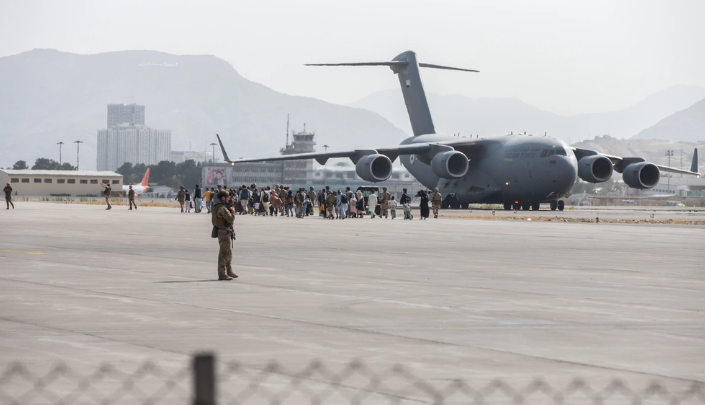
“Let it be known that, after years and years of promising the outcome would be otherwise, after telling us that this wouldn’t be another Vietnam, that we wouldn’t be helicoptering Americans off our embassy this time, that our sacrifices and the sacrifices of our brother and sister service members would mean something, you failed us all. […] Sincerely, and from the bottom of my heart: fuck you.”
That kind of quote can be easy for outsiders to dismiss as anger because the signoff is direct, but anger is often the surface layer of something deeper. In these responses, anger was tied to betrayal, humiliation, abandonment, and the belief that service members were asked to trust institutions that later failed to honor the meaning of their sacrifice. Across responses, corruption and blame were often pointed toward U.S. institutions rather than a single person or party.
One participant described the withdrawal as business as usual for “Permanent Washington,” writing:
“The pull-out was business as usual Permanent Washington was already looking forward to profiteering from a war in Ukraine and knew they couldn’t prosecute two frivolous conflicts without getting put under a microscope. They are all corrupt and care nothing about those that serve. […] The nation’s leaders have brought shame upon this country, may they Live on forever in the minds of better men.”
Though some participants blamed President Biden for the disastrous pullout, others emphasized that the Doha agreement began under President Trump. One active-duty participant wrote:
“Everyone was quick to blame Biden, and quick to forget Trump. We started giving the Taliban the keys in Doha as early as Feb 2020.”
The same participant, along with others, concluded that the failure belonged to both administrations because there appeared to be no real plan from either one. That distinction matters. The strongest finding was not that veterans agreed on partisan blame. They did not. The stronger finding was that many located the failure at the institutional level.
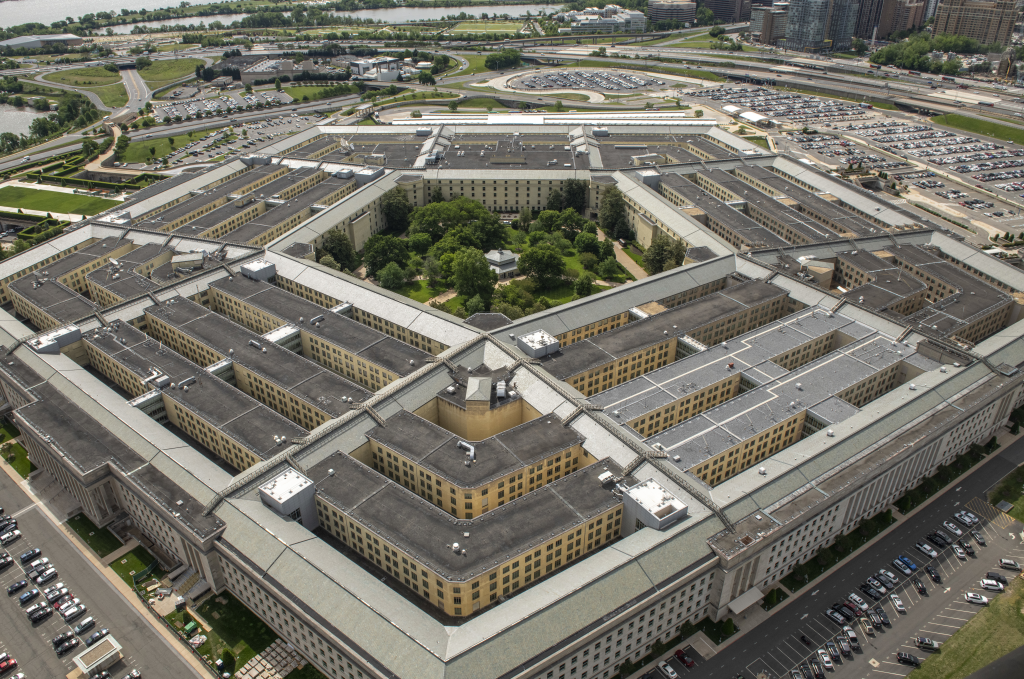
These responses give insight into a kind of justified paranoia that is often seen among veterans toward government institutions. Veterans are sometimes caricatured as tinfoil-hat-wearing conspiracy theorists, suspicious of every agency, politician, and official statement. But in these responses, that paranoia does not appear out of nowhere. It comes from watching institutions claim to support the military community while making decisions that feel disconnected from the lives, losses, and consequences carried by service members, veterans, and their families.
In that sense, the paranoia is not simply irrational distrust. It is distrust shaped by experience. The Afghanistan withdrawal gave many veterans another public example of institutions saying one thing, doing another, and then leaving the individual veteran to carry the weight of the outcome. That distrust did not stop with elected leaders, military leadership, or the broader government class. For some participants, it spilled over into the VA.
That institutional distrust also reached into systems of care. One combat-disabled veteran wrote:
“As a combat disabled veteran, it makes me sick. The VA is a joke and should be shut down and let the vets see normal doctors.”
That quote does not represent every veteran’s view of the VA. But it does show how distrust can spread. A veteran may feel betrayed by elected leaders, abandoned by military institutions, misunderstood by civilians, and then enter treatment already expecting another institution to fail them. For clinicians, that matters. Distrust is not always resistance. Sometimes it is the residue of prior betrayal. For many respondents, that betrayal was not hidden or abstract. It played out on a massive scale, in full public view, and then individual veterans were left to carry the weight of it on their own. While institutional betrayal explains where the anger was directed, moral injury helps explain why it cut so deeply.
Moral injury also ran through these responses. Moral injury is not the same as PTSD. It involves the lasting harm that can follow actions, failures to act, or witnessed events that violate deeply held moral beliefs. In this study, many veterans were not only afraid, sad, or angry; they were morally disoriented. They were trying to reconcile what the war had come to mean to them personally with how it ended in reality.
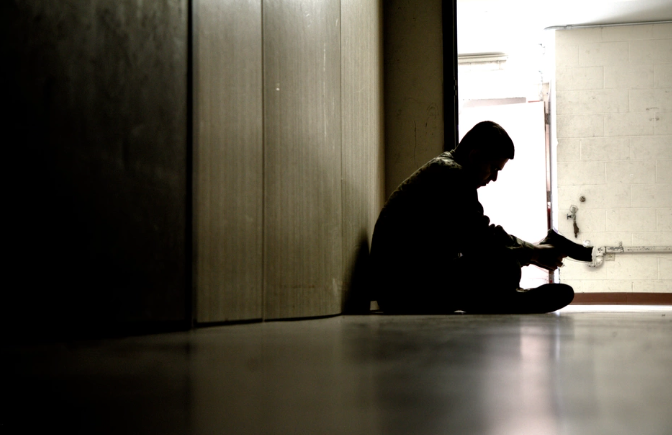
That moral disorientation appeared clearly in the views of Afghanistan itself. Many respondents expressed frustration toward Afghan forces, Afghan leadership, and the broader failure of the mission. These responses should be read carefully. They are not useful as blanket judgments about an entire people, but as therapeutic and social material: evidence of what veterans were trying to make sense of after watching the country collapse.
A veteran letter reflected that:
“From what I have seen during the pullout, the Afghan Forces did not put up a fight even though the U.S. spent a very large sum of money training them and equipping them. Even the president of Afghanistan fled the country without a struggle nor did he try to rally his troops to fight.”
One participant wrote:
“You can’t train in the will to fight. You can’t want it more than the locals do.”
Another participant described the mismatch between American investment and Afghan national will:
“We failed to understand that they don’t give a shit about ‘Afghanistan.’ That’s how things are, they don’t have national pride.”
Those statements are harsh and reveal a central wound. Many American service members were asked to build, train, advise, protect, and fight alongside a partner force that collapsed rapidly once U.S. support disappeared. Whether those judgments are strategically complete is not the point here. The point is that many veterans experienced the collapse as another moral blow: What were we doing there? Who were we fighting for? Why did we care more than the people we were told we were helping?
At the same time, not every view was total condemnation. Some participants recognized individual Afghan soldiers who served honorably while still criticizing the broader structure. One active-duty participant wrote, “Individual Afghans could be fair soldiers,” but argued that they never achieved operational or strategic capability because of political, structural, and organizational failures. That nuance matters because it shows that veterans were not simply lashing out. Many were trying to reconcile loyalty, disappointment, anger, and realism.
The same complexity appeared when veterans talked about their own service. Even when they condemned the withdrawal, many refused to condemn themselves or the people they served with. One participant wrote:
“There’s nothing I can say that will change the outcome, so I’ve come to terms with what happened. I don’t like it but it is what it is. I know what I did there, and what the guys I deployed with did there and it was good. And that’s good enough for me.”
Another wrote:
“I’m proud of my service and honor those sacrifices. I don’t look at any other validation other than they served and sacrificed.”
That is one of the most important findings in the research. Veterans could believe the withdrawal was a disgrace and still believe their own service mattered. They could feel betrayed by institutions and still honor their brothers and sisters. They could say the mission failed and still say the people who served did their jobs. One participant stated, “I feel that we did what we did with the best information at the time. I have zero regrets about my experiences.”
That distinction is critical for anyone talking to veterans about Afghanistan. Do not assume that anger at the war’s ending means shame about service. Do not assume that criticism of the mission means disrespect for those who served. Many veterans are holding both truths at once: I am proud of what we did, and I am furious about how it ended. That tension is where moral injury, institutional betrayal, and meaning-making meet. The veteran is not simply asking, “Was the war worth it?” The deeper question is often: “How do I keep honoring what we did when the ending made it feel like it was thrown away?”
Part 3 of this series turns to the war’s ending, the continuing aftermath, and what clinicians, families, veteran organizations, and the broader public should understand from these voices.

_____________________________
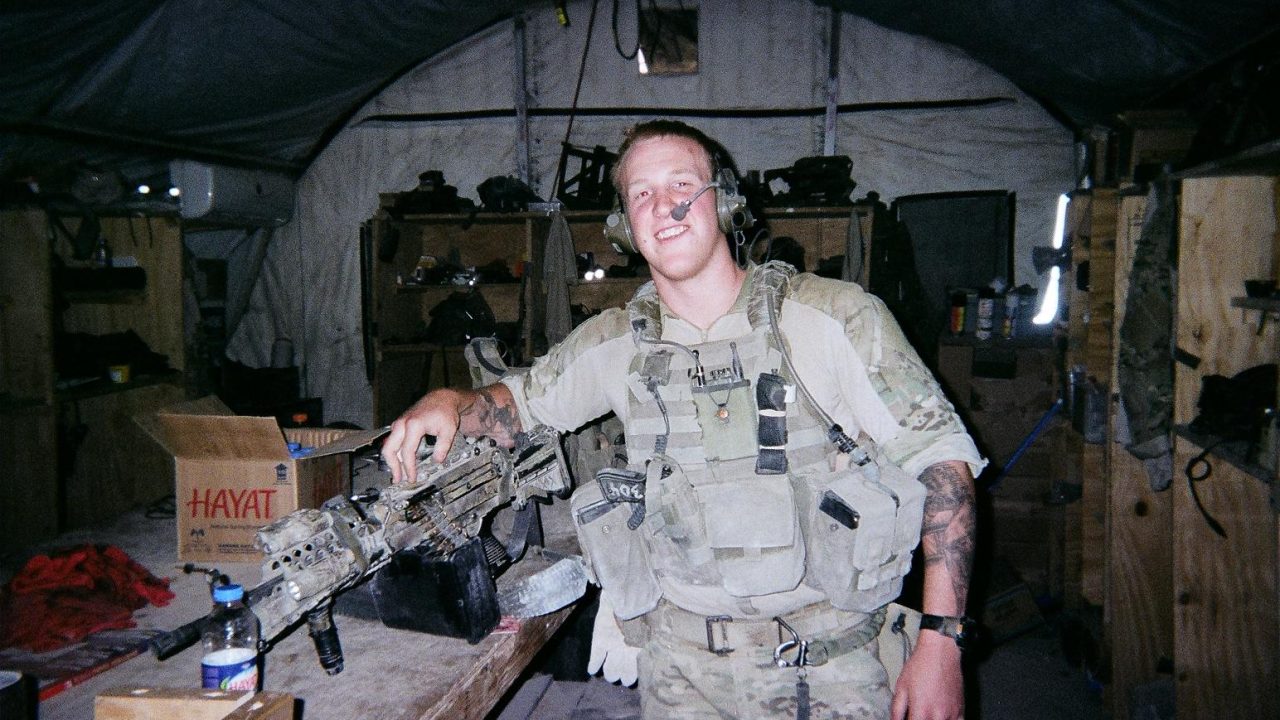
Dr. Wylie Brace served with 3rd Ranger Battalion, 75th Ranger Regiment, and is a cognitive psychologist. He is the founder of Brace Research & Consulting LLC and specializes in perception, decision-making, and applied veteran-focused research.
Samantha D. Glidewell is a doctoral researcher at Miami University specializing in the psychological impact of trauma and the factors that contribute to adverse mental health outcomes, including betrayal. Her clinical interests include psychological assessment, psychotherapy, and evidence-based treatment for individuals experiencing trauma-related and complex mental health concerns.
As the Voice of the Veteran Community, The Havok Journal seeks to publish a variety of perspectives on a number of sensitive subjects. Unless specifically noted otherwise, nothing we publish is an official point of view of The Havok Journal or any part of the U.S. government.
Buy Me A Coffee
The Havok Journal seeks to serve as a voice of the Veteran and First Responder communities through a focus on current affairs and articles of interest to the public in general, and the veteran community in particular. We strive to offer timely, current, and informative content, with the occasional piece focused on entertainment. We are continually expanding and striving to improve the readers’ experience.
© 2026 The Havok Journal
The Havok Journal welcomes re-posting of our original content as long as it is done in compliance with our Terms of Use.

