By Al Franco
There’s a moment, right before the bell, when a fighter’s body stops asking permission. The heart rate spikes. The mouth goes dry. Vision narrows to whatever is just a few feet in front of you. It is not so different from the moment before a convoy rolls out, or the moment a dispatch call turns from routine to anything but. The body doesn’t know the difference between a boxing match and a real threat. It just knows the chemistry of the moment, and it reacts the way it’s been trained to react, well or badly.
That’s the part most people miss about boxing. It isn’t really about hitting or being hit. It’s about giving someone a legal, structured, repeatable way to practice the exact physiological response that combat and emergency response also demand, without the stakes that come with getting it wrong in the field.
Pressure
You cannot think your way out of panic. Not in the ring, not anywhere else. By the time a thought fully forms, the opening it was meant to address has already closed. So boxing doesn’t train fighters to make better decisions under pressure; it trains the nervous system to default to the right response before a decision is even necessary. Hands up. Chin down. Breathe. Move. That sequence has to live below conscious thought, the same way a firefighter’s hands find a mask without looking, or a veteran’s body drops into cover before the brain has finished registering the sound.
The ring is one of the few places a civilian can voluntarily and repeatedly put themselves into that state, with an elevated heart rate, real consequence, and real fear, and practice functioning inside it anyway. Do that enough times, in a controlled setting, and the nervous system stops treating elevated stress as an emergency. It starts treating it as Tuesday.
Control
Anyone can throw a punch when they’re calm and unhurried in front of a mirror. The real test comes three rounds in, lungs burning, hands heavy, when the temptation is to abandon technique and just swing. That’s where most people fall apart, and it’s also where the actual lesson lives. Control isn’t the absence of fear or fatigue. It’s keeping your fundamentals: your footwork, your guard, your breathing, when every instinct is screaming at you to throw them away.
That’s a familiar problem to anyone who has worked an overnight shift on adrenaline or held a perimeter past the point of exhaustion. The training never disappears when things get easy. It disappears when things get hard, unless it’s been drilled past the point of conscious effort. Boxing doesn’t teach control as a personality trait. It teaches it as a skill, built one repetition at a time, that holds up specifically when you’re tired, scared, or both.
Confidence
There are two kinds of confidence, and only one of them is useful. The first is the kind that talks. The second is the kind that’s already been hit, kept its feet, and kept moving forward. Nobody can talk you into the second kind. You have to earn it by getting through something hard and discovering afterward that you’re still standing.
That’s the version of confidence that matters to people who already carry real experience with pressure. Veterans and first responders don’t need a pep talk convincing them they’re capable; many of them have already been tested in ways most people never will be. What boxing offers instead is a way to keep proving it to themselves, on their own terms, in a setting where the only thing on the line is pride.
For some, that’s a quieter kind of value than people expect: not building confidence from nothing, but giving people who already have it somewhere to keep spending it.
Why This Matters to Me
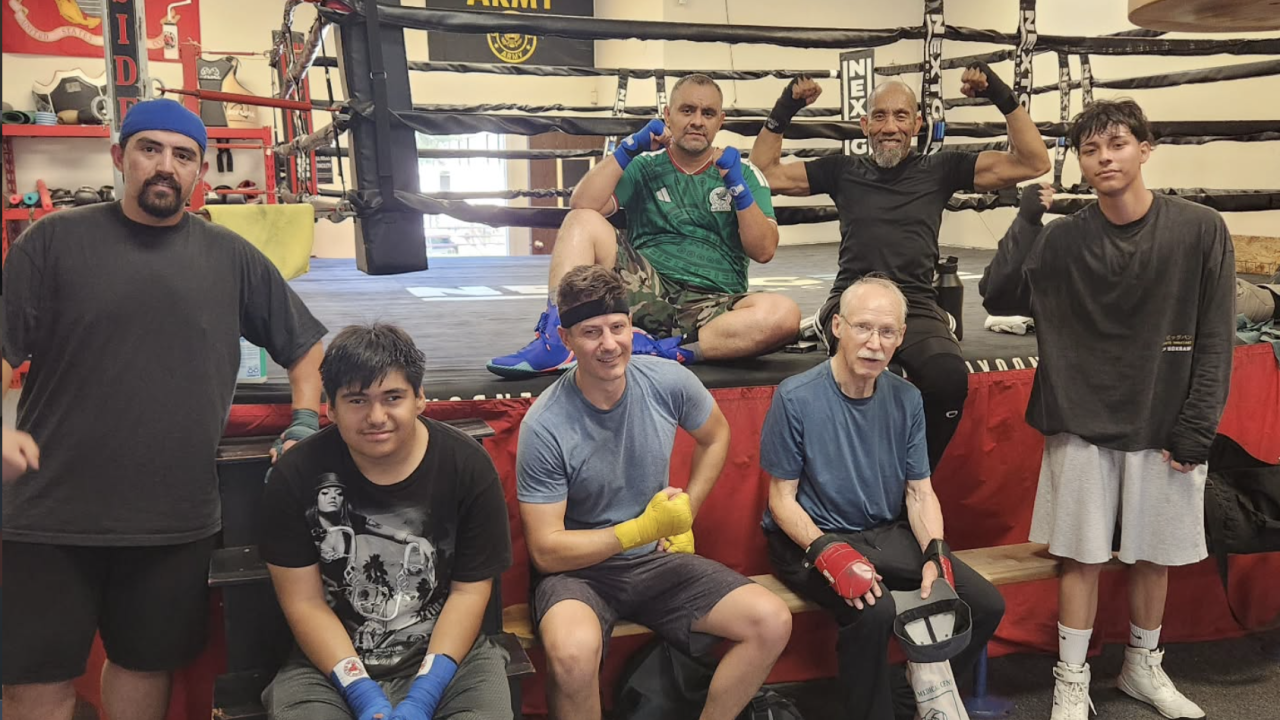
I didn’t arrive at any of this from a textbook. My father served 37 years, 30 of them in the Marine Corps. My son spent nine years in the Army. Service isn’t an abstraction in my family. It’s the dinner table conversation, the framed photos on the wall and the unspoken understanding of what certain silences mean.
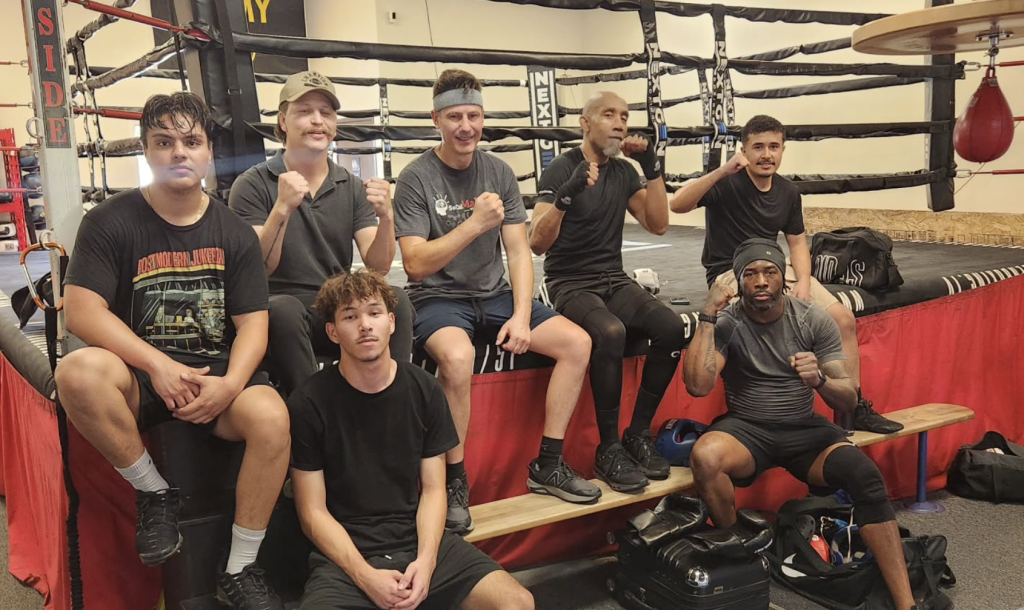
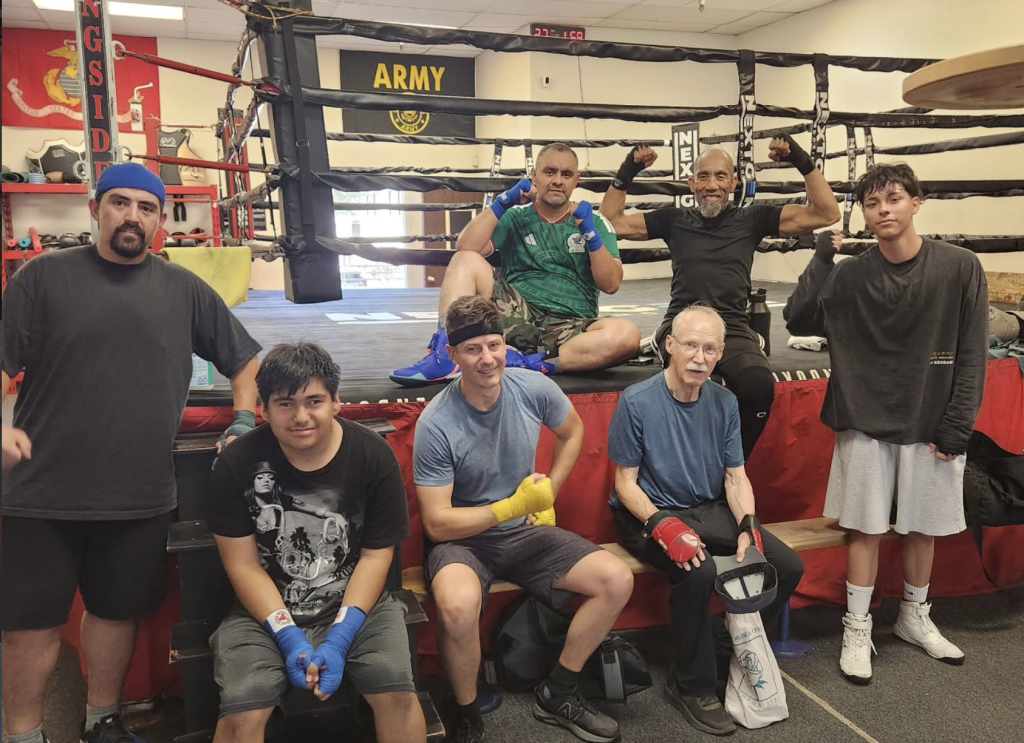
When I opened my gym, offering free training to veterans wasn’t a marketing decision. It was the only version of the gym that made sense to me.
What I’ve watched, training people who’ve carried real weight, is that they don’t show up looking to be fixed. They show up looking for a place to put something physical and disciplined back into their week, something with structure, with accountability, with a clear measure of whether they did the work or didn’t. Boxing happens to be very good at providing that. So would a dozen other disciplines. The common thread isn’t the sport. It’s the deliberate, voluntary practice of staying steady when things get difficult.
The Bigger Point
None of this is really about boxing. It’s about finding a physical practice that puts you back into a state of controlled stress on purpose, on a schedule, with no one forcing you to be there. The body that’s been trained to stay calm in a fight is the same body that stays calm in traffic, in an argument, in a hospital waiting room. The discipline doesn’t stay in the gym. It comes home with you.
For veterans and first responders especially, that kind of training isn’t a novelty or a hobby. It’s a continuation of something they already understand better than most: composure under pressure isn’t a gift some people are born with. It’s a skill, and skills are built the same way every time: badly, then a little less badly, then well enough that nobody else can tell how hard you’re working to make it look easy.
_____________________________
Al Franco is a boxing coach whose commitment to veterans is rooted in his family’s military service. His father served 37 years in the military, including 30 years in the U.S. Marine Corps, and his son served nine years in the U.S. Army. Through boxing, Franco supports veterans by offering structure, training, community, and a place to keep moving forward. https://coachalfranco.com
As the Voice of the Veteran Community, The Havok Journal seeks to publish a variety of perspectives on a number of sensitive subjects. Unless specifically noted otherwise, nothing we publish is an official point of view of The Havok Journal or any part of the U.S. government.
Buy Me A Coffee
The Havok Journal seeks to serve as a voice of the Veteran and First Responder communities through a focus on current affairs and articles of interest to the public in general, and the veteran community in particular. We strive to offer timely, current, and informative content, with the occasional piece focused on entertainment. We are continually expanding and striving to improve the readers’ experience.
© 2026 The Havok Journal
The Havok Journal welcomes re-posting of our original content as long as it is done in compliance with our Terms of Use.


