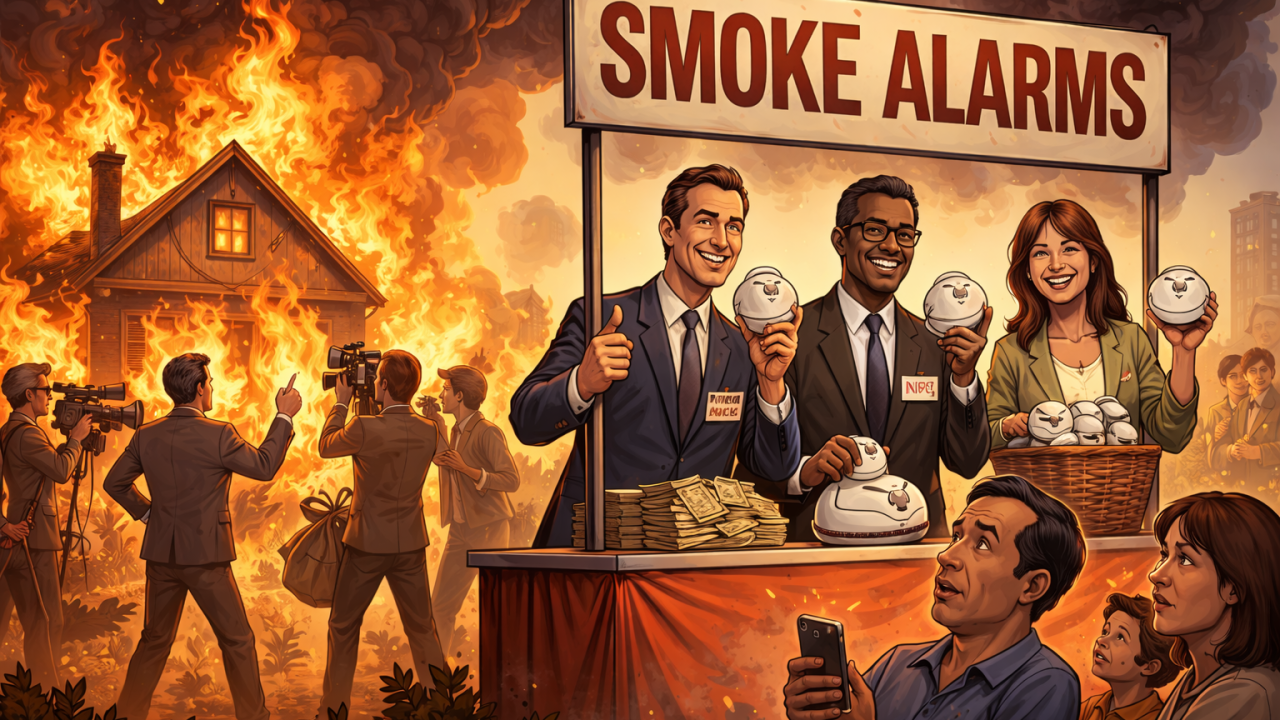
We don’t live in an information age anymore. We live in a panic carnival run by ring lights, consultants, and professionally moisturized frauds who call manipulation “engagement” because “mass psychosis for ad revenue” sounds a little harsh in the quarterly report.
That’s the real scam of modern public life. It isn’t just that people lie. People have always lied. Lying is one of civilization’s oldest cottage industries, right behind adultery, tax avoidance, and pretending to read the article before sharing it. What’s changed is the business model. The people running our platforms, our media, and half our public institutions have figured out that confusion pays better than persuasion. They don’t need you to believe one grand falsehood. They just need you dizzy, tribal, overstimulated, and too exhausted to ask the ancient, vulgar, unfashionable question: is this actually true?
Clarity is bad for business. Clarity ruins entire sectors.
Think about how elegant the racket is. The online grifter gets clicks by staging outrage and passing it off as reality. The platform gets rewarded for boosting whatever makes people convulse with certainty before their coffee’s cooled. The media class gets to turn every rumor, clip, and emotional hallucination into a “conversation,” which is now the polite term for six people interrupting each other while a host makes the face of a labradoodle hearing jazz. Then the political hacks step in and feast on the leftovers, because once enough fakery is sloshing around, every real scandal can be dismissed as another hoax, another smear, another misunderstood clip, another thing nobody has time to verify because everyone’s busy performing certainty on the internet.
It’s not an information ecosystem. It’s a fog machine with shareholders.
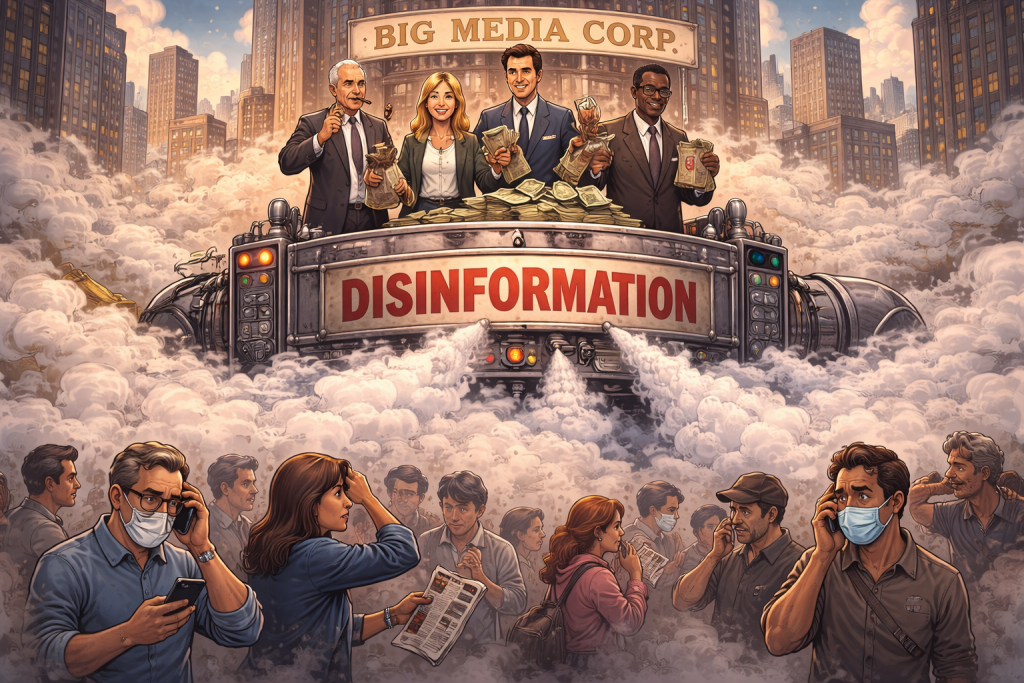
And naturally, the people who helped build this sewage fountain would now like to be seen as the responsible adults in the room. This is the part that would be funny if it weren’t so indecent. The same platforms that turned public discourse into a digital dog park for narcissists now commission solemn panels about trust. The same media culture that confused speed with competence for years now wants a medal for discovering that misinformation exists. Wonderful. The arsonists have arrived with a brochure about smoke safety. Please welcome the vice president of integrity, a title that sounds like a euphemism for a hostage negotiator at a hedge fund.
The deeper rot is that this system doesn’t merely permit deception. It systematically rewards it. A lie that is vivid, emotional, and flattering to people’s prejudices will outrun a careful correction every time. Of course it will. Truth has to be checked. Truth needs sources, context, doubt, proportion, and complete sentences. Nonsense just needs a pulse and a thumbnail. Truth enters the room carrying paperwork. Lies kick the door open wearing mirrored sunglasses and screaming that they’ve got the receipts. Guess which one the algorithm thinks has star power.
And spare me the comforting fairy tale that only idiots fall for this stuff. Plenty of highly educated people are absolute suckers when nonsense arrives wearing the right costume. In fact, credentials often make people easier marks because they confuse status with discernment. They don’t test claims. They curate atmospheres. They don’t ask whether something is true. They ask whether it flatters their side, confirms their disgust, and can be posted fast enough to earn applause from the other peacocks in their little ideological aviary. A graduate degree is not holy water. Half the time it’s just a nicer frame around the same bad instincts.
That’s why the real damage isn’t one fake clip, one false headline, one fraudulent performance. It’s the steady demolition of the boundary between what happened and what played well. We’ve replaced evidence with vibes, then acted shocked that public life now feels like a séance hosted by marketing interns. People experience repetition as proof, emotion as testimony, and virality as significance. If enough screens show it, enough influencers gasp at it, and enough executives monetize it, it acquires the glow of truth without having to endure any of truth’s humiliating obligations.
So what would a less insane society do?
For starters, any materially deceptive digital media should carry obvious, unavoidable labeling attached to the thing itself, not tucked into some legal mulch pile under “more info.” If a piece of content is staged, manipulated, synthetic, or deceptively presented, that warning should cling to it like the smell of bad decisions in a casino elevator.
Second, platforms that algorithmically blast fraud into the bloodstream for profit should face penalties that hurt enough to interrupt executive optimism. Not a tiny fine. Not a performative apology from someone named Skyler who says the company takes concerns very seriously. Actual pain. Corporations don’t respond to moral appeals. They respond to invoices and terror.
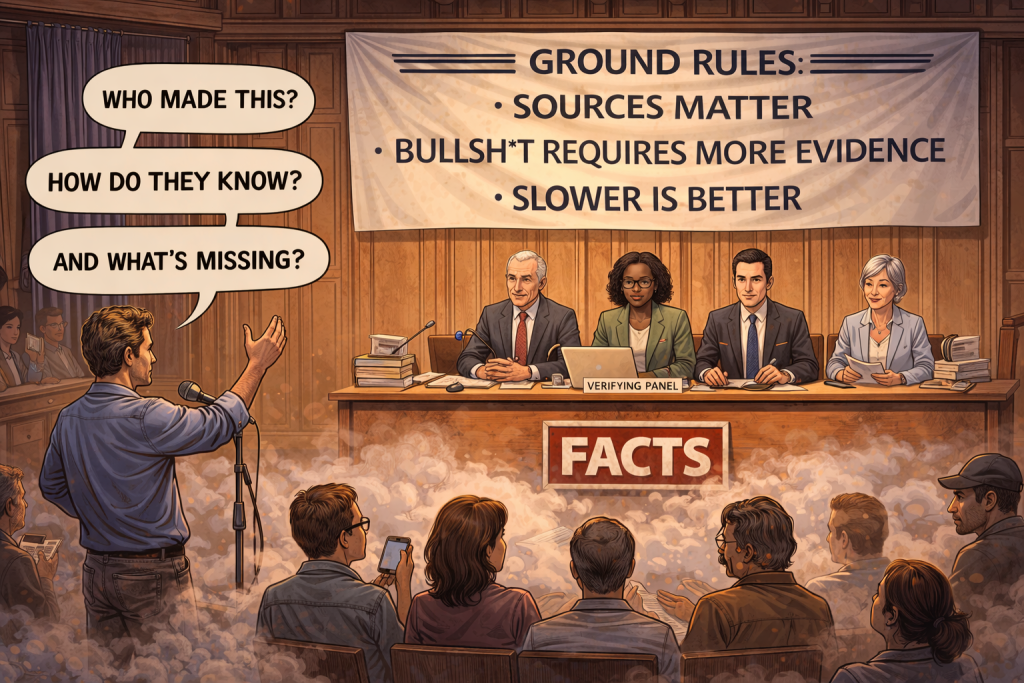
Third, news organizations need to relearn the deeply uncool phrase “we don’t know yet.” Speculation is not reporting. Atmosphere is not evidence. A panel of animated narcissists with studio lighting is not verification. If an outlet gets something badly wrong, the correction shouldn’t be hidden where old embarrassments go to die. It should be loud, public, and impossible to miss. If you spread nonsense with a megaphone, you don’t get to issue the truth with the energy of a guilty man whispering from a hotel hallway.
And yes, the public has responsibilities too, which is always the least popular part because people prefer heroes and villains to grown-up obligations. We need to stop treating immediacy as a civic virtue. We need to stop assuming that a clip is reality, that confidence is expertise, and that being moved is the same as being informed. We need to teach people, including adults who should frankly know better, to ask boring questions. Who made this? How do they know? What’s missing? Who benefits if I believe it right now? Civilization, tragically, depends on exactly this kind of boring.
Because here’s the ugly truth under all the flashing lights. The powerful aren’t trying to inform you. They’re trying to keep you overstimulated, suspicious, tribal, and tired enough to mistake confusion for complexity. They built a national fog factory, handed microphones to opportunists, consultants, and emotional exhibitionists, then had the nerve to market the resulting nervous breakdown as public discourse. At some point, you stop calling that dysfunction. You call it what it is: a con for people who wear lanyards to lunch and think wrecking the public mind counts as innovation.

_____________________________
Tammy Pondsmith is Executive Director of Strategic Disillusionment, which means she watches overpaid idiots turn public life into a haunted escape room and then call themselves thought leaders.
As the Voice of the Veteran Community, The Havok Journal seeks to publish a variety of perspectives on a number of sensitive subjects. Unless specifically noted otherwise, nothing we publish is an official point of view of The Havok Journal or any part of the U.S. government.
Buy Me A Coffee
The Havok Journal seeks to serve as a voice of the Veteran and First Responder communities through a focus on current affairs and articles of interest to the public in general, and the veteran community in particular. We strive to offer timely, current, and informative content, with the occasional piece focused on entertainment. We are continually expanding and striving to improve the readers’ experience.
© 2026 The Havok Journal
The Havok Journal welcomes re-posting of our original content as long as it is done in compliance with our Terms of Use.


