The surest sign a society has lost its mind is when it starts calling basic self-respect oppression. That’s when you know the adults have left the building and handed the keys to a focus group of cowards, profiteers, and very loud idiots who think consequences are a hate crime.
The broad scam is simple. A certain kind of rot gets marketed as authenticity. Disorder becomes identity. Impulse becomes self-expression. Lousy behavior becomes something noble, organic, untouchable. Then anybody who says, “Actually, I’d like to eat dinner without a live reenactment of the fall of Rome happening next to the condiment station,” gets treated like a moral leper. We are now governed by a ridiculous code in which standards are cruel, boundaries are biased, and expecting people to act like they belong indoors is somehow elitist.
That is the con. The behavior itself is often ugly, but the marketing is genius.
Because once dysfunction puts on a cultural costume, people stop criticizing it and start curating it. Suddenly every bad habit has a publicist. Every form of chaos has a graduate seminar explaining why it’s not chaos, it’s pain, or expression, or resistance, or community, or whatever fashionable incense we’re burning this week to avoid saying the obvious. No one wants to be the person who notices that anti-social behavior is, in fact, anti-social. So institutions lie. Teachers lie. managers lie. media lie. Neighbors lie. They call it nuance. It’s not nuance. It’s cowardice with a tote bag.
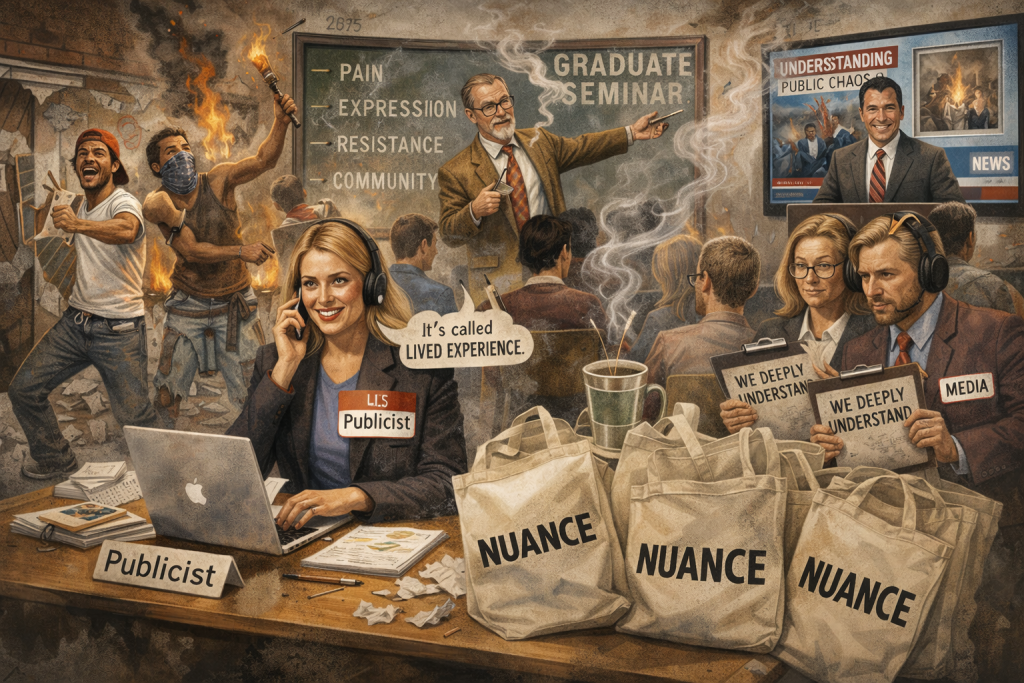
Meanwhile, normal people pay the bill.
They pay for it in the most humiliating ways. Everything gets locked up. Every ordinary transaction requires supervision, paperwork, or a security ritual. Public spaces become obstacle courses. Businesses lower expectations, raise prices, and hire more guards than clerks. Schools turn into hostage negotiations with fluorescent lighting. Service workers learn to fear entire categories of customer behavior but are forbidden from saying so out loud because truth now needs a permission slip from HR. The decent majority, including the people trapped inside the very communities most damaged by this nonsense, are told to endure all of it silently so that nobody has to offend the chaos lobby.
And that’s the filthiest part. The people hurt most by glamorized dysfunction are usually not rich reformers writing essays about systems. They’re the poor, the working, the exhausted, the elderly, the kids who want quiet, the parents trying to raise one child with a bedtime in a neighborhood that sounds like a failed coup. They are expected to live inside a low-trust environment while being scolded for noticing that trust has, in fact, left the chat.
We’ve also built a perverse moral hierarchy around aspiration. If you want order, you’re uptight. If you want discipline, you’re judgmental. If you want your kid literate, employable, and capable of entering a building without treating it like a personal improv stage, apparently you’re a traitor to something sacred. This is how decline protects itself. It doesn’t argue that chaos is good. It argues that rejecting chaos is disloyal. It turns self-sabotage into heritage and then wonders why nobody wants to buy a condo in the museum.
Please. People are not fleeing criticism. They’re fleeing exhaustion.
And no, the answer is not some dreamy sermon about empathy detached from standards. Empathy without standards is how you get entire institutions held together by laminated signage and nervous glances. A civilization cannot survive on “let’s unpack that” alone. At some point you need rules, enforcement, adults, and the radical courage to say, “No, that’s unacceptable, and no, your feelings do not outrank everybody else’s ability to function.”
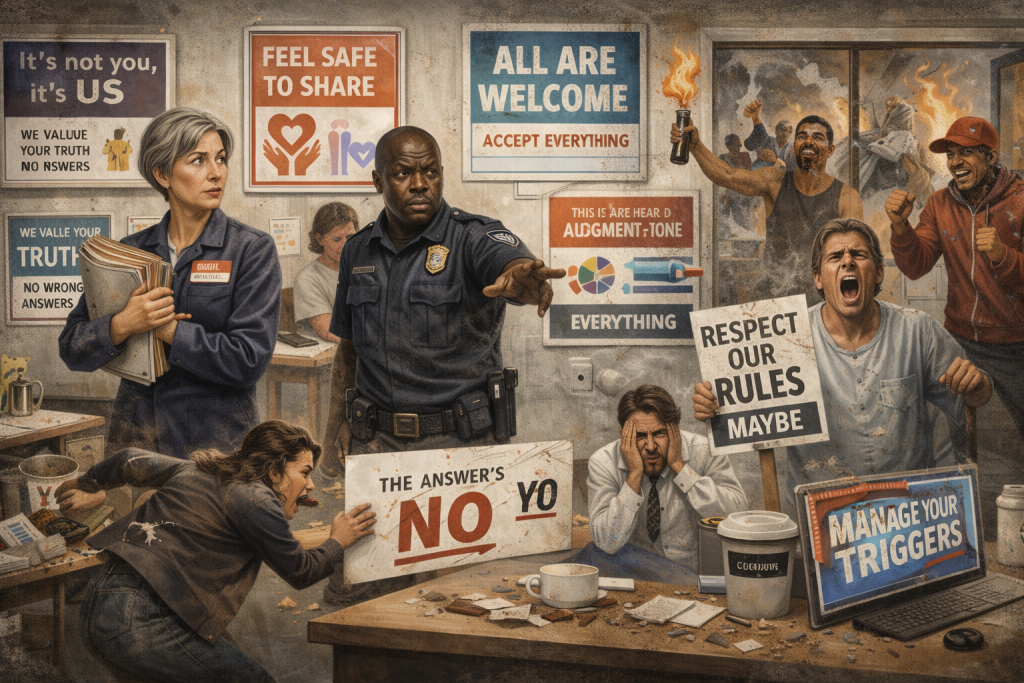
The solutions are not mysterious. They are merely unfashionable.
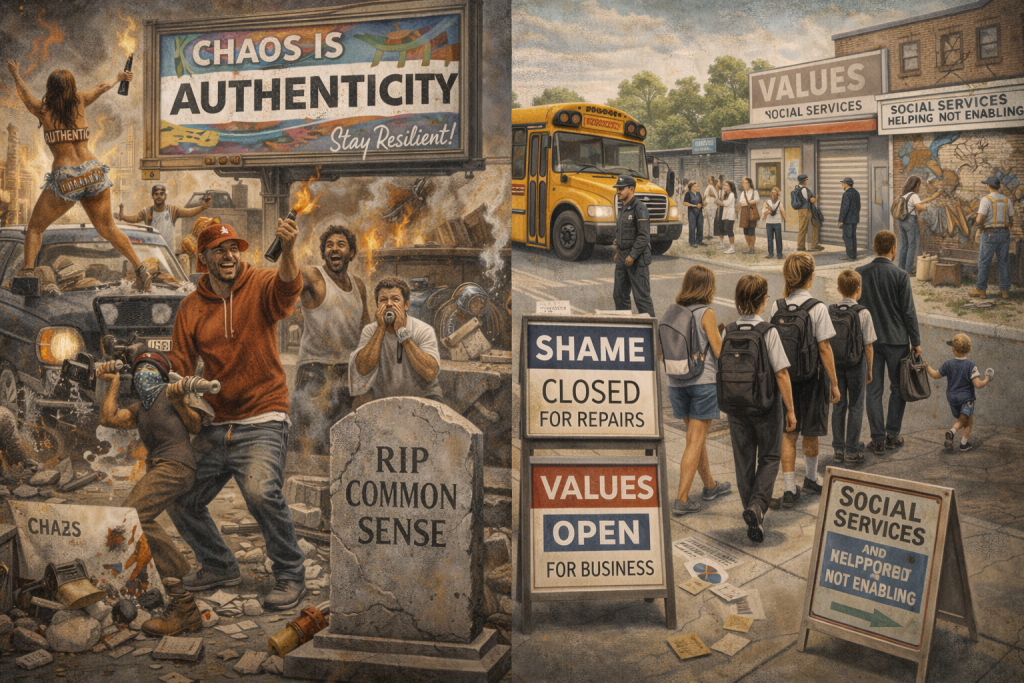
First, stop romanticizing public dysfunction. Stop selling degradation as flavor, rebellion, edge, or authenticity. Some things are not misunderstood. They are just bad. A culture that cannot say that out loud is a culture preparing its own obituary in a thick self-congratulatory font.
Second, bring shame back from exile. Not cruelty. Shame. They are different. Shame is the social immune system telling you not to act like a feral raccoon in a pharmacy. We abolished it in the name of compassion and now everyone acts astonished that standards collapsed like a lawn chair at a cookout.
Third, make institutions tell the truth. Schools should enforce discipline. Businesses should protect workers and customers. City governments should police chronic disorder instead of rebranding it as vibrancy. Social services should help people stabilize, not subsidize permanent irresponsibility with a smile and a brochure.
Fourth, reward the boring virtues again. Reliability. Courtesy. Restraint. Showing up on time. Raising children to understand that every thought need not become a performance. The future belongs to civilizations that can still produce people who know how to stand in line without making it a political statement.
Finally, stop treating every criticism as a blood oath against an entire group. Adults can distinguish between condemning behavior and condemning human beings. In fact, refusing to distinguish the two is how you guarantee the behavior continues, because now every correction sounds like betrayal and every reform sounds like surrender.
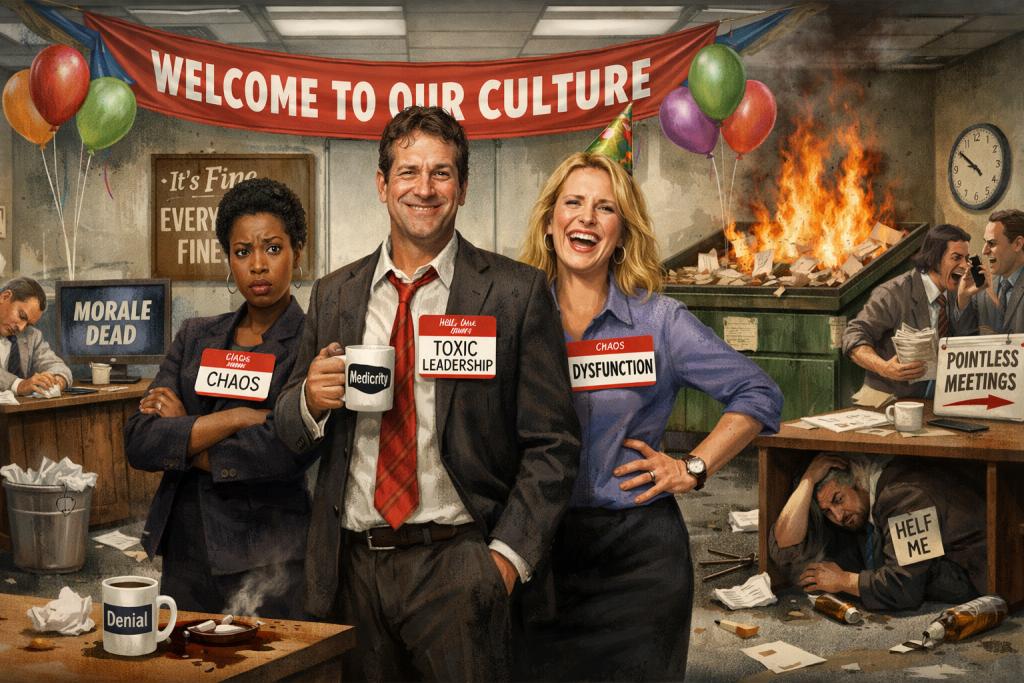
The ugly truth is that a society can survive poverty, conflict, and even corruption for a surprisingly long time. What it cannot survive is the sanctification of obvious failure. Once a culture starts defending the very habits that make life smaller, meaner, and more humiliating, it stops being oppressed and starts being complicit.
And complicit people always want one thing from the rest of us: silence. Not because they’re right. Because deep down, beneath all the branding and moral tap dancing, even they know this circus stinks.
_____________________________
Tammy Pondsmith is Senior Fellow for Social Decay Studies at The Institute for Civic Irritation, where she catalogs national stupidity with the weary precision of a woman who has seen too many adults applaud their own decline.
As the Voice of the Veteran Community, The Havok Journal seeks to publish a variety of perspectives on a number of sensitive subjects. Unless specifically noted otherwise, nothing we publish is an official point of view of The Havok Journal or any part of the U.S. government.
Buy Me A Coffee
The Havok Journal seeks to serve as a voice of the Veteran and First Responder communities through a focus on current affairs and articles of interest to the public in general, and the veteran community in particular. We strive to offer timely, current, and informative content, with the occasional piece focused on entertainment. We are continually expanding and striving to improve the readers’ experience.
© 2026 The Havok Journal
The Havok Journal welcomes re-posting of our original content as long as it is done in compliance with our Terms of Use.