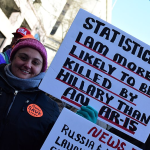
Few parts of the Constitution are as celebrated—or as misunderstood—as the First Amendment. Politicians invoke it when criticized, protestors raise it when arrested, and keyboard warriors deploy it when banned from social media. But for all its fame, the First Amendment is one of the most commonly misapplied and distorted parts of American law. To understand what it truly does—and what it doesn’t—you have to look past slogans and into the hard reality of constitutional law.
The Text Itself
The First Amendment reads:
“Congress shall make no law respecting an establishment of religion, or prohibiting the free exercise thereof; or abridging the freedom of speech, or of the press; or the right of the people peaceably to assemble, and to petition the Government for a redress of grievances.”
That single sentence protects five distinct freedoms:
- Religion (both the Establishment Clause and the Free Exercise Clause)
- Speech
- Press
- Assembly
- Petition
These rights form the backbone of American civic life. But the key to understanding them is this: the First Amendment protects citizens from the government, not from private entities or social consequences.

What the First Amendment Protects
1. Protection Against Government Censorship
The core function of the First Amendment is to prevent federal, state, or local governments from punishing citizens for expression. In Brandenburg v. Ohio (1969), the Supreme Court ruled that even inflammatory speech, including advocating violence, is protected unless it is “directed to inciting or producing imminent lawless action and is likely to incite or produce such action.”
2. Political and Symbolic Speech
The Court has consistently held that political expression is at the heart of the First Amendment. This includes not just words but symbolic actions, such as flag burning (Texas v. Johnson, 1989) or wearing armbands in protest (Tinker v. Des Moines, 1969).
3. Freedom of the Press
Freedom of the press ensures that journalists can investigate and publish without prior government censorship. Landmark cases like New York Times Co. v. United States (1971)—the Pentagon Papers case—confirmed that even classified information, if obtained legally, can be published without government suppression, barring a compelling national security justification.
4. Freedom of Religion
The Establishment Clause prohibits government endorsement of religion, while the Free Exercise Clause protects individuals’ rights to practice their faith. Together, they create the much-discussed “separation of church and state.” Cases like Engel v. Vitale (1962), banning school-sponsored prayer, and Wisconsin v. Yoder (1972), allowing Amish parents to withdraw their children from school, illustrate the balance between government neutrality and individual freedom.
5. Right to Assemble and Petition
Citizens have the right to gather peacefully and demand government accountability. Civil rights marches, veterans’ protests, and modern demonstrations all fall under this protection, provided they remain peaceful and comply with reasonable time, place, and manner restrictions.

What the First Amendment Does Not Protect
Despite popular belief, not all speech is protected. The Supreme Court has carved out specific, narrow categories where expression can be restricted without violating the Constitution.
- Incitement to Imminent Lawless Action – Speech that intentionally provokes immediate violence or unlawful activity is not protected. You cannot legally stand in front of a mob with a megaphone and order them to burn down a building.
- True Threats and Intimidation – Direct threats of violence, such as saying “I’m going to kill you” to a specific person, are unprotected. In Virginia v. Black (2003), the Court held that cross-burning intended to intimidate constitutes a true threat and may be banned.
- Obscenity – Sexually explicit material that meets the three-pronged Miller test (Miller v. California, 1973) is not protected. It must (1) appeal to prurient interests, (2) depict sexual conduct in a patently offensive way, and (3) lack serious literary, artistic, political, or scientific value. Importantly, this does not apply to all pornography, only to material that meets the legal definition of obscenity.
- Defamation (Libel and Slander) – False statements that harm another person’s reputation are not protected, though the burden of proof is high—especially when the subject is a public figure (New York Times Co. v. Sullivan, 1964).
- Commercial Speech and Regulation – Advertising enjoys less protection than political speech. False or misleading ads can be banned, and certain industries (like pharmaceuticals or tobacco) can face heavy regulation on promotional content.
- Speech in Certain Contexts – Speech in schools, the military, or prisons can be restricted more than in civilian public life. Likewise, government employees may face limits on political activity at work. Courts have consistently ruled that rights can be balanced against compelling state interests in these contexts.

The Private Sector Misunderstanding
One of the biggest misconceptions about the First Amendment is that it applies everywhere. It doesn’t. If you’re banned from Facebook, fired for offensive speech by your employer, or silenced in a private forum, the First Amendment isn’t being violated. That’s because private actors—companies, clubs, or individuals—are not bound by it. The Constitution restricts government power, not private moderation. The only exception is when private actors are effectively performing government functions, a rare but recognized situation in constitutional law.
Recent Misunderstandings: “First Amendment Violations” That Weren’t
Campus Encampments (2024): Protest vs. Property and Time/Place/Manner Rules
During the spring 2024 encampments at Columbia University and other campuses, many students and commentators said police removals and university discipline “violated the First Amendment.”
At a private university like Columbia, the constitutional claim fails immediately: the First Amendment binds the government, not private institutions, unless they’re functioning as state actors. Even at public universities, administrators and police may enforce content-neutral time, place, and manner limits (e.g., no camping, no blocking buildings), so long as ample alternative channels exist.
Supreme Court doctrine supports such enforcement. Clark v. Community for Creative Non-Violence upheld a no-sleeping rule for a protest in national parks; Heffron v. International Society for Krishna Consciousness approved fixed-booth distribution rules at a state fair; and Adderley v. Florida allowed arrests for blocking a nonpublic jail driveway.
In short: protest is protected, permanent encampments and obstruction are not.

“My Employer Fired Me for Speech—First Amendment!” (Google Office Protests, 2024)
Dozens of Google employees were terminated after in-office sit-ins opposing Project Nimbus. Some framed the firings as “First Amendment violations.” But the First Amendment doesn’t constrain private employers; it limits government action. Different laws—like labor rules or anti-discrimination statutes—may apply, but that’s not the First Amendment.
“Social Media Moderation Silenced Me—First Amendment!” (NetChoice & Murthy, 2024)
Users often claim platforms “violated their First Amendment rights” by removing posts or accounts. In 2024, the Supreme Court’s NetChoice decisions emphasized that platforms themselves exercise First Amendment-protected editorial discretion; states can’t force them to carry speech. In Murthy v. Missouri, the Court rejected a challenge alleging federal “jawboning” of platforms because the plaintiffs lacked standing—underscoring that to convert moderation into state action, you must show coercion or significant encouragement by the government, not just parallel preferences.
Translation: ordinary takedowns by private platforms aren’t First Amendment violations.
Highway Blockades During Demonstrations: Speech vs. Unlawful Obstruction
Protestors who block freeways sometimes claim arrest is “anti-speech.” Not so. Government may enforce content-neutral laws against obstructing public ways. The Court has long recognized that the First Amendment does not guarantee “the right to communicate one’s views at all times and in all places or in any manner that one wants.”
Adderley sustained trespass arrests at a jail driveway; the time/place/manner line of cases (Heffron, Clark) makes the same point: you can speak, but you can’t paralyze essential infrastructure.
Why It Matters
Understanding the First Amendment is not just a matter of legal trivia—it’s central to maintaining a free society. Protecting offensive, unpopular, and even hateful speech is the price of preserving political dissent, religious liberty, and robust public debate. At the same time, recognizing the boundaries—like threats, defamation, or government neutrality in religion—keeps the balance between liberty and order.
So, the next time someone claims, “I have a First Amendment right to say this,” remember to ask: Is the government the one silencing you? If not, the First Amendment probably has nothing to do with it.
TLDR Version
If the government didn’t create a law to stop you from saying something, then it’s not a violation of your Right to Free Speech. Being banned on Facebook or fired by an employer for posting something on social media isn’t a First Amendment violation either.

References
- U.S. Const. amend. I.
- Brandenburg v. Ohio, 395 U.S. 444 (1969).
- Texas v. Johnson, 491 U.S. 397 (1989).
- Tinker v. Des Moines Independent Community School District, 393 U.S. 503 (1969).
- New York Times Co. v. United States, 403 U.S. 713 (1971).
- Engel v. Vitale, 370 U.S. 421 (1962); Wisconsin v. Yoder, 406 U.S. 205 (1972).
- Cox v. Louisiana, 379 U.S. 536 (1965).
- Virginia v. Black, 538 U.S. 343 (2003).
- Miller v. California, 413 U.S. 15 (1973).
- New York Times Co. v. Sullivan, 376 U.S. 254 (1964).
- Central Hudson Gas & Electric Corp. v. Public Service Commission, 447 U.S. 557 (1980).
- Pickering v. Board of Education, 391 U.S. 563 (1968).
- Marsh v. Alabama, 326 U.S. 501 (1946).
- Clark v. Community for Creative Non-Violence, 468 U.S. 288 (1984); Heffron v. Int’l Soc’y for Krishna Consciousness, 452 U.S. 640 (1981); Adderley v. Florida, 385 U.S. 39 (1966).
- Coverage of Columbia University protest removals, April 2024.
- Reporting on Google employee firings over Project Nimbus sit-ins, 2024.
- Murthy v. Missouri, 603 U.S. ___ (2024); Moody v. NetChoice & NetChoice v. Paxton (2024).
- Quotation on the limits of time, place, and manner: Heffron, 452 U.S. at 647.
______________________________
Dave Chamberlin served 38 years in the USAF and Air National Guard as an aircraft crew chief, where he retired as a CMSgt. He has held a wide variety of technical, instructor, consultant, and leadership positions in his more than 40 years of civilian and military aviation experience. Dave holds an FAA Airframe and Powerplant license from the FAA, as well as a Master’s degree in Aeronautical Science. He currently runs his own consulting and training company and has written for numerous trade publications.
His true passion is exploring and writing about issues facing the military, and in particular, aircraft maintenance personnel.
As the Voice of the Veteran Community, The Havok Journal seeks to publish a variety of perspectives on a number of sensitive subjects. Unless specifically noted otherwise, nothing we publish is an official point of view of The Havok Journal or any part of the U.S. government.
Buy Me A Coffee
The Havok Journal seeks to serve as a voice of the Veteran and First Responder communities through a focus on current affairs and articles of interest to the public in general, and the veteran community in particular. We strive to offer timely, current, and informative content, with the occasional piece focused on entertainment. We are continually expanding and striving to improve the readers’ experience.
© 2026 The Havok Journal
The Havok Journal welcomes re-posting of our original content as long as it is done in compliance with our Terms of Use.