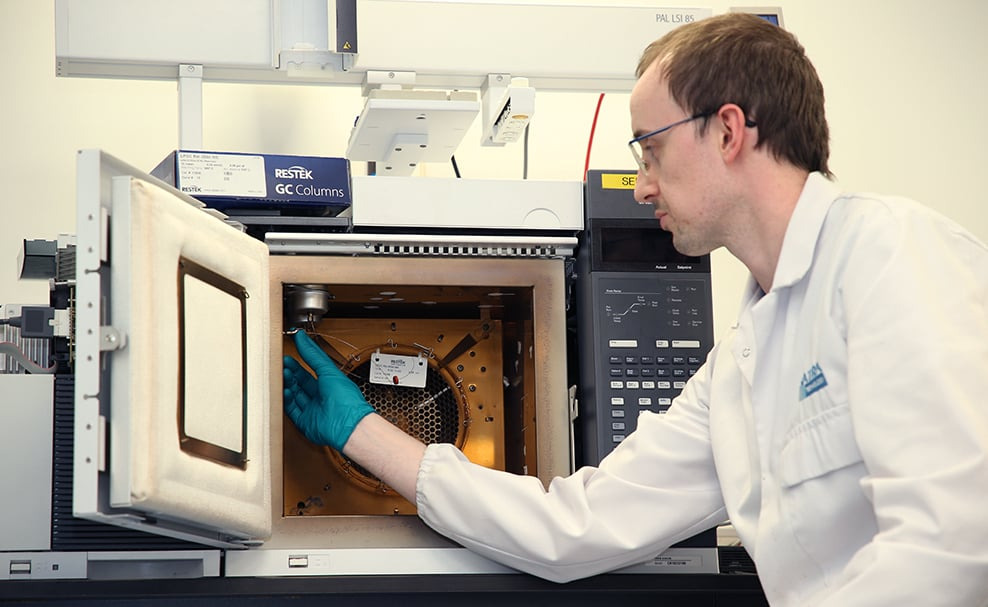
In the military, missed checks cascade into unbelievable mission failures, and laboratory environments face these exact same readiness pressures.
Analytical laboratories operate with strict deadlines where data integrity is always on the line.
Skipping pre-flight inspections or chain of custody checks inevitably leads to scrapped batches and completely wasted resources.
Implementing unusual lab quality control procedures ensures consistent performance and thoroughly protects the organizational bottom line.
1. How To Lock Down Sample Handling
Reruns often trace back to step one with a rushed prep or a missing documentation gap. The space between written protocol and muscle memory is where these costly reruns are born.
Studies indicate that preanalytical phases are responsible for a majority of errors. If a technician skips filtration during sample handling because a liquid looks clear, microscopic particulates easily reach the inlet.
When ghost peaks appear mid-sequence, the entire batch gets scrapped immediately. The cost of instrument downtime completely dwarfs the few seconds a filtration step actually takes.
To ensure consistent separations, many analytical facilities standardize around a core GC component like Restek’s standardized GC columns.
A reliable column eliminates variability, so methods hold up to strict regulatory scrutiny.
Build these interesting lab quality control habits into daily routines:
- Verify sample IDs against the run log before loading the autosampler.
- Log every transfer immediately to maintain strict chain of custody protocols.
- Filter every single field sample regardless of visual clarity.
Chain of custody discipline is not bureaucratic overhead for your dedicated team.
It is your primary layer of defensibility during an audit, preventing upstream errors from reaching the instrument.
| Key Insight: Chain-of-custody discipline is not bureaucratic overhead; it is your primary defense. Preventing upstream handling errors eliminates reruns before they reach the instrument. |
2. Why Does Standardized Method Setup Matter?
Experienced analysts often trust familiar methods to memory, but subtle drift compounds silently until it fails loudly.
A cascade often starts small with an unlogged inlet liner swap or an oven ramp adjusted by feel. This leads to a retention time shift, followed by a peak shape anomaly and a system suitability failure.
This rerun spiral is born entirely from an unbelievable two-minute shortcut that bypasses standard lab quality control.
To enforce method consistency, mandate a one-page setup checklist completed before every sequence begins.
Document the exact column identity, injection parameters, and carrier gas flows in your laboratory information management system.
When variables are strictly recorded, GC troubleshooting becomes highly targeted and incredibly efficient for the entire team.
The analyst is reading a definitive record instead of guessing what changed since the previous shift.
Consistent and documented setups make methods auditable, repeatable, and resilient under regulatory scrutiny.
Laboratories that skip these checks often find themselves repeating entire batches of critical work.
A standardized approach ensures every single team member runs the method exactly as originally validated.
3. Unbelievable Ways To Control Consumable Contamination
The analytical column remains the most consequential consumable variable in any testing sequence.
Regulated labs that build tight consumable protocols anchor those processes to platforms with documented manufacturing controls.
Methods validated months ago must still deliver today, making column consistency strictly non-negotiable for true chromatogram reproducibility.
When a separation drifts, a reliable column ensures it is the absolute last place you need to investigate.
Beyond the column itself, localized contamination serves as a silent and frustrating rerun generator.
Carryover peaks, elevated baseline noise, and irregular response factors are easily misread as complex instrument faults.
The default instinct is to rerun rather than investigate the consumable chain thoroughly and systematically.
Common culprits, like a dirty inlet liner or a worn septum, quickly invalidate otherwise perfectly sound methods.
Instead of reacting to failure, implement unusual trigger-based replacement rules for your laboratory systems.
Swap the inlet liner after a defined injection count rather than waiting for peak tailing to suddenly appear.
Change the septum when visible coring is present, and track guard column installation dates meticulously in logbooks.
Proactive consumable discipline removes unknowns from the equation, giving way to absolute confidence in the collected data.
4. Interesting Troubleshooting Flows To Reduce Reruns
After a failed run, the immediate instinct is often to inject again and hope for a better result. This reflexive action wastes instrument time and consumes highly valuable sample volume unnecessarily.
It often reproduces the same failure because the underlying cause was never properly identified.
Instead of immediately queueing another injection, implement a structured triage before authorizing any rerun.
This systematic check converts panic into precision without requiring a formal investigation. Run through this four-question flow to establish a baseline for your GC troubleshooting:
- Did system suitability pass before the problem samples appeared in the sequence?
- Are carrier gas pressures stable, or is there an indication of a leak?
- Has recent maintenance been verified with a clean blank run?
- Does the chromatogram show all peaks shifting or just late eluters drifting?
Consider a scenario where a suddenly noisy baseline is misread as a column fault. Without triage, the analyst queues a rerun, waits forty-five minutes, and ends up with the same noisy baseline.
Conversely, five minutes of deliberate GC troubleshooting identifies an oxygen trap sitting at capacity. The trap is replaced, a blank confirms a clean baseline, and the sequence runs without incident.
| Important: Before authorizing a rerun, pause for a five-minute triage. Injecting again without diagnosis often reproduces the same failure, wasting time and precious sample volume. |
The Bottom Line
Labs that stop repeating experiments build robust, repeatable processes that catch small failures early.
In highly regulated environments where every result is scrutinized, consistency becomes the ultimate currency.
Tightening sample handling creates a chain of custody integrity that holds up under the strictest audit conditions.
Standardizing your setup ensures method consistency that is demonstrably auditable rather than just assumed.
Strict consumable discipline eliminates hidden contamination as a variable before it forces another frustrating rerun.
Buy Me A Coffee
The Havok Journal seeks to serve as a voice of the Veteran and First Responder communities through a focus on current affairs and articles of interest to the public in general, and the veteran community in particular. We strive to offer timely, current, and informative content, with the occasional piece focused on entertainment. We are continually expanding and striving to improve the readers’ experience.
© 2026 The Havok Journal
The Havok Journal welcomes re-posting of our original content as long as it is done in compliance with our Terms of Use.


