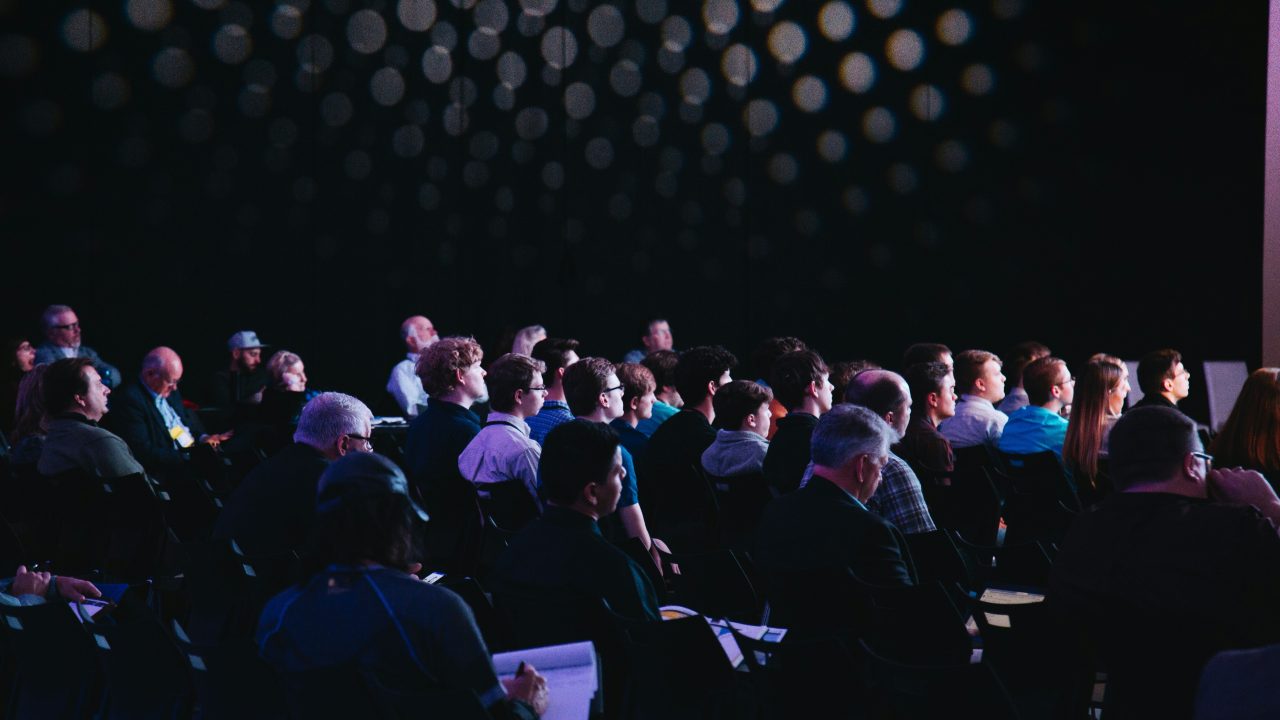
Walk into a conference hall these days and you’ll spot it right away. Half the room is on laptops, someone’s answering Slack messages three feet from the stage, and a few people are watching the livestream of the exact panel happening in front of them, because the captions are easier to follow that way. Odd, right? People flew in for this, blocked off their week, and the pull of the phone still wins.
So here’s a fair question. If you can catch the panels, do the networking, and watch the demos from your couch, why bother showing up at all?
Digital Comfort Raised Everyone’s Standards
Online events trained us to expect a lot. Clean production, chat boxes where you can ask questions without raising your hand, a skip button for the boring parts. That kind of comfort doesn’t stay locked inside a browser tab. People bring it with them into hotel ballrooms too. A panel that runs fifteen minutes over, a keynote that never lands on a point, a session that basically reads like a webinar script out loud, any of that can lose a room. Even a room full of people who chose to be there.
This is a big part of why picking the right conference host matters so much. Whoever’s running the show sets the pace for the entire day. Get that wrong early and you’re fighting an uphill battle by session three.
That’s why experienced hosts like Lior Suchard, known for engaging audiences through interactive performances, quick improvisation, and a unique ability to connect with people, bring far more than stage presence, they create memorable experiences that keep attendees engaged from start to finish.
What a Screen Still Can’t Give You
None of this means physical events are done for. There’s stuff a laptop just can’t fake, like the random conversation while you’re waiting for coffee, running into someone whose work you’ve followed for years and getting five unscripted minutes with them, a room reacting together when a live demo actually works, or better yet, when it almost doesn’t. Nobody can schedule that. It just happens, and that’s the whole point.
The Real Fix Isn’t About Format
The real split isn’t digital versus physical. It’s passive versus active. Stack a schedule full of back to back lectures and you’re asking a lot from people who are used to scrolling past anything boring. Small stuff helps a ton here. Break up long talks, build in actual discussion time, give people something to do besides sit in a chair and nod. None of that requires blowing up the whole format. It just means earning attention all day long instead of assuming you’ve got it because someone scanned a badge.
Substance Still Wins
There’s a temptation to fix engagement with bigger stages, more lighting rigs, more noise. That works for about ten minutes, but if the content underneath is thin, none of it holds. The events people actually remember pair solid ideas with a format that respects their time. Good material, delivered well, beats a fancy set every time.
Final Thoughts
In-person conferences aren’t going away, but they can’t just coast on the fact that people booked a flight. Digital experiences reset what pacing and payoff are supposed to feel like, and physical events have to catch up in their own way. The ones that figure out how to mix real human connection with programming that’s actually well run are the events people keep coming back for.
Buy Me A Coffee
The Havok Journal seeks to serve as a voice of the Veteran and First Responder communities through a focus on current affairs and articles of interest to the public in general, and the veteran community in particular. We strive to offer timely, current, and informative content, with the occasional piece focused on entertainment. We are continually expanding and striving to improve the readers’ experience.
© 2026 The Havok Journal
The Havok Journal welcomes re-posting of our original content as long as it is done in compliance with our Terms of Use.


