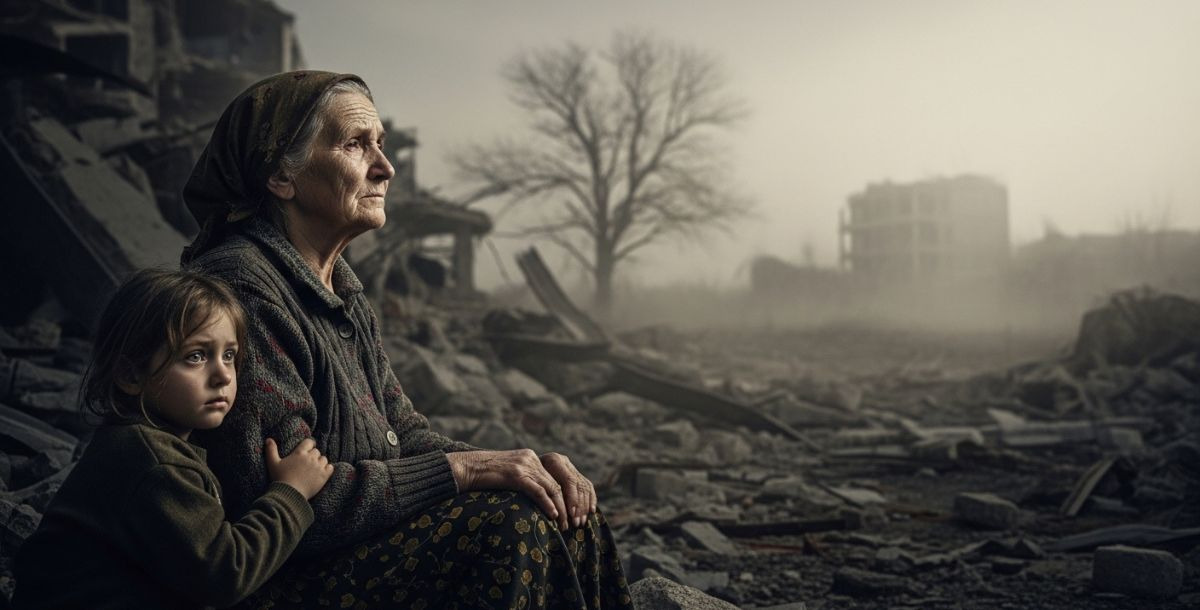
War is usually measured by the changes in terms of territory and military results. Its enduring impacts are, however, experienced in homes, hospitals, and communities. The armed conflict transforms everyday life in a manner that cannot be completely reflected in statistics.
Preventing Impunity
When the violations are not investigated, more abuses will be possible in the future. Humanitarian international law establishes civilian protection standards. These standards have contexts in which they can be interpreted by an Expert Witness. Their objective vision helps the court to determine accountability.
Civilians in the Crossfire
Contemporary wars are often fought within crowded urban regions. People in the civil world are bombarded, hungry, and the infrastructure is crashing. Vital amenities like healthcare and water turn into a sham. The outcome is a long-term humanitarian crisis, and not a disruption in the short-term.
Dislocation and Social Disintegration
Divided families abandon their living and their identity. The refugee settlements tend to be very unstable economically and planless. Children are brought up without education or psychological safety. Exile tears apart the intergenerational social bond.
Psychological Trauma and Community Health
Violence is associated with invisible but permanent scars. Societies suffer trauma and bereavement together. War zones have mental health systems that are generally overloaded. Cycles of instability and fear continue without interference.
Veterans and Ethical Accountability
Soldiers who have come back face complicated reintegration problems. Service may be followed by post-traumatic stress, disability, and unemployment. The societies permitting war are responsible for the welfare of the veterans. Lack of concern increases the individual loss and a social and economic cost.
Legal Scrutiny and Accountability
The justice mechanisms require reliable records of the maltreatment. The testimony of professionals who explain technical matters to the courts is important. An expert witness can examine the command decisions or civilian harm.
Ideas and Critical Thinking
The discourse of the masses should not be based on rhetoric but on proven facts. The independent research bodies help in giving a balanced view. Such resources as an Expert Witness offer to analyze humanitarian and legal issues.
FAQs
Why do civilians greatly suffer in contemporary war?
Modern wars can take place in cities, putting their citizens at risk of direct assault and destruction of facilities. Destruction of health, sanitation, and education infrastructure increases long-term misery even more than short-term victims.
What happens to war veterans after they get out of war?
Old soldiers often have psychological problems, physical disorders, and difficulties with reintegration. Medical, social, and employment assistance should be provided adequately to avoid marginalization in the long run.
Why do we need expert testimony during the investigation of a war crime?
Technical evidence elucidates difficult legal and working aspects. The role of proportionality, responsibility, and adherence to humanitarian law in courts relies on professional examination.
Conclusion
The human cost of war has no end. Civilians are displaced and traumatized, and veterans are faced with a lifetime of problems. Accountability, plausible inquiry, and reforming the institutions would be required to avoid the repetition of harm.
Buy Me A Coffee
The Havok Journal seeks to serve as a voice of the Veteran and First Responder communities through a focus on current affairs and articles of interest to the public in general, and the veteran community in particular. We strive to offer timely, current, and informative content, with the occasional piece focused on entertainment. We are continually expanding and striving to improve the readers’ experience.
© 2026 The Havok Journal
The Havok Journal welcomes re-posting of our original content as long as it is done in compliance with our Terms of Use.


