Introduction
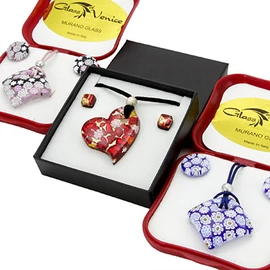
Any woman who ever searched for jewelry that is not like what everyone else wears has most likely encountered a problem. Department stores, chain stores, smaller stores, and websites are full of jewelry that looks like you’ve seen it all before. Same basic designs, same materials, same tired look. But you don’t have to be stuck in this world of uninteresting accessories. Dig a bit deeper, and you will discover Murano Glass jewelry – unique pieces that are crafted by hand on Murano Island, in Venice, according to ancient techniques.
This Italian jewelry is valued for its unique beauty and traditional craftsmanship. It is not only functional but also an art form, created using various techniques that produce stylish and colorful earrings, rings, bracelets, necklaces, and even watches. Each item showcases the artisan’s talent and experience and appeals to those seeking style, appreciating art, and valuing history and tradition.
The Early Days of Murano Glass Jewelry
Early Techniques
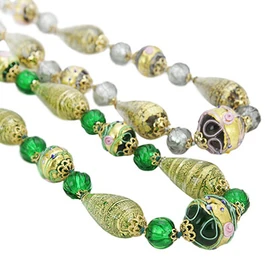
In the 13th and 14th centuries, Murano glass artisans created glass beads by melting silica, sand, and minerals in wood-fired furnaces. For color, they added metal oxides, such as copper or iron for greens and yellows, cobalt for blue, and manganese for violet. Back then, these beads were too expensive to make jewelry; instead, they were used as precious currency during Venetian merchants’ overseas voyages.
The main technique used to craft these beads was Millefiori, which is still used today to create jewelry. It involves layering different colors of molten glass and forming them into canes. The canes are stretched and then sliced to reveal flower-like patterns, which are embedded within glass to form stunning beads. In addition, gold or silver leaf was added to molten glass for a shimmering effect.
The Renaissance and Murano Glass
During the Renaissance, Murano glass artisans perfected techniques to create beautiful jewelry. As well as Millefiori, they used Conterie (seed bead) and the Filigrana techniques. To create Conterie beads, small, thin glass tubes were broken into tiny pieces and then heated again to make the edges smooth. Filigrana, a much more complicated glassmaking method, involved embedding white or colored strands of glass within clear glass to create regular stripe-based patterns. This allowed for crafting delicate and elegant pieces of jewelry.
In the early seventeenth century, the Avventurina technique was invented to imitate natural avventurina mineral, which was rare and expensive. The artisans found a way to infuse copper particles into molten glass. This gives a glittering and luxurious effect, which immediately made Murano Glass jewelry highly desirable to European royalty, nobility, and wealthy merchants. It became a symbol of prestige and sophistication throughout the continent.
Evolution of Modern Murano Glass Jewelry
In the nineteenth century, after a slump in Murano Glass production, jewelry making in Venice expanded from just beads to include pendants, rings, and brooches, sophisticated heavy necklaces, and elaborate earrings.
Early twentieth-century Murano jewelry was a blend of traditional techniques and new ideas inspired by movements such as Art Nouveau and Art Deco. While Art Nouveau jewelry featured floral motifs and natural organic forms, Art Deco brought a big change with a move towards modernity, with its clean lines and geometric shapes.
In the 1930s, Carlo Scarpa of Venini & Co created the Sommerso technique, which has been used to create jewelry since that time. Different colored layers of glass are encased in clear glass, creating contrast and depth and making the glass multi-dimensional.
After World War II, designers such as Fulvio Bianconi brought a new vibe to Murano Glass jewelry. Brighter, more vivid colors were favored, often achieved with metallic oxides. High-end pieces were sometimes paired with gold or silver, making them even more luxurious.
Contemporary designers are using both vibrant colors and subdued hues, giving consumers a choice. In addition to the traditional patterns, abstract designs are being used to cater to different preferences. Tradition is being merged with modern trends and can transform an outfit into a work of art.
The evolution of Murano Glass jewelry has shown how it can reinvent itself with time while staying true to its heritage.
Murano Jewelry as an Art
Jewelry is made to be worn, but each piece of Murano Glass jewelry is also a work of art, reflecting the heart and soul of the island. Every detail is crafted by hand with the precision, care, and love that only highly trained artisans can accomplish. As each piece is individually created, they are all unique, even though the differences may be small.
The various techniques allow for different vibes. Whatever you are looking for, be it classical or modern, there is something to suit your taste, and for the occasion you want it for. This handmade Italian jewelry from Venice isn’t only an accessory, but an amalgamation of history, tradition, and creativity.
The Impact of Famous Murano Glass Artisans
One of the most influential figures in the world of Murano Glass was Antonio Salviati. In the 19th century, he revolutionised glassmaking techniques, which helped elevate Venetian glass jewelry to new heights. He started from producinglong-forgotten glass mosaics like those used in the Basilica of San Marco in Venice, and added modern twists to traditional techniques such as Millefiori and Avventurina. His brand still produces Murano Glass, including handcrafted jewelry, which is of the highest quality.
In the 20th century, an important figure in Venetian jewelry making was master glassmaker Archimede Seguso. He produced jewelry with bold and vivid colors, complex patterns, and unusual shapes. His work still inspires artisans today.
Why Choose Murano Glass Jewelry
Murano Glass jewelry is stunning Italian art and is a superb choice of accessory when you want to exude style and sophistication. Each handcrafted piece is one-of-a-kind so you will be wearing something that nobody else owns.
Murano jewelry has a long and rich history going back centuries. The artisans still use intricate and traditional techniques to create high-quality pieces that are as popular now as they were many years ago
The jewelry is luxurious and is especially known for its vivid colors, intricate designs, and sometimes for being embedded with gold or silver leaf, which shimmers. Murano Glass jewelry catches the light and sparkles, adding a stunning glow to your outfit.
You can purchase both traditional and modern jewelry made in Murano, Italy, meaning that you can find pieces to suit your style or for any occasion. If you want to stand out, choose a bold, vibrantly colored necklace. For a touch of elegance, go for simple, understated earrings.
Murano jewelry is timeless. What was worn centuries ago can still be worn today and not look out of place. It is a combination of Venetian history, passion, artistry, and authenticity.
The Impact of Murano Glass on Global Fashion
As the world gradually moved to mass-produced accessories and “fast fashion”, Murano Glass jewelry stood out for its one-of-a-kind appeal and ability to pick out custom-made pieces that would perfectly match an outfit. This had a big impact on the world of fashion, especially for wealthy women with discerning tastes. The exquisite designs made in Murano workshops, spanning the range of jewelry, accessories, tabletop, and home decor, have been used by top fashion houses, such as Dior, Bottega Veneta, Valentino, Dolce & Gabbana, and are sought after by collectors.
Many high-fashion editorial spreads have featured Italian Murano jewelry. It has been used in runway shows and red carpet events, in Broadway performances and films, emphasizing its quality and rarity. Many fashion designers have been fascinated by the intricate patterns, vivid colors, and exquisite craftsmanship of Murano Glass jewelry and have used it to decorate and accentuate their collections.
Murano jewelry offers a wide range of options to accessorize different outfits, whether you want to go for a bold look with a bangle bracelet or a chunky beaded necklace, or for quiet sophistication with delicate earrings. This adaptability has allowed Venice’s beautiful handmade jewelry to remain popular for centuries through many different fashion periods, ranging from the Baroque’s obsession with luxury to contemporary minimalism.
How to Care for Murano Glass Jewelry
Handmade jewelry from Murano needs gentle care. Keep it in a jewelry box away from the damaging effects of air, sun, and humidity. Before putting jewelry away, put each piece into a separate velvet bag or pouch to prevent it from rubbing against other items. Periodically, wipe it with a dry soft cloth to remove dust. To thoroughly clean it, use a soft, lint-free wet cloth or a mix of lukewarm water and mild soap. Then dry the jewelry well with a microfiber cloth, which will prevent water spots. Don’t ever use harsh chemicals or hot water when cleaning your jewelry, as they will cause damage.
For detailed and intricate glass jewelry, use a soft-bristle brush to get into the tiny crevices.
When swimming, bathing, or showering, or doing any household chores, remove your jewelry. The same goes when you are applying lotions, perfumes, hairspray, or sunscreen, as they can all cause damage to your Murano jewelry.
These factors are important, as while Murano Glass jewelry doesn’t fade, it may tarnish from excessive humidity. If it gets chipped or scratched, or if a thread gets torn, it generally can’t be repaired. But if taken care of well, Venice’s famous jewelry crafted by its experienced and passionate artisans is an investment that can last a lifetime.
Buy Me A Coffee
The Havok Journal seeks to serve as a voice of the Veteran and First Responder communities through a focus on current affairs and articles of interest to the public in general, and the veteran community in particular. We strive to offer timely, current, and informative content, with the occasional piece focused on entertainment. We are continually expanding and striving to improve the readers’ experience.
© 2026 The Havok Journal
The Havok Journal welcomes re-posting of our original content as long as it is done in compliance with our Terms of Use.


