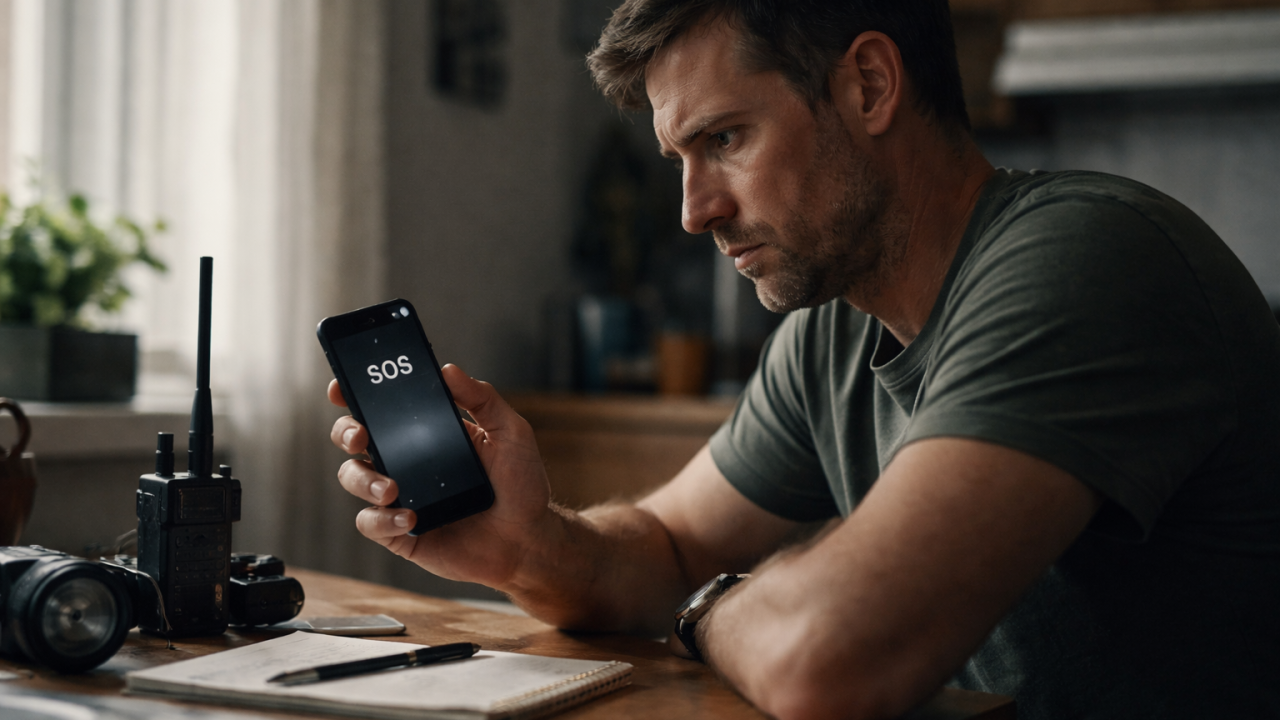
Last week, millions of Verizon customers found themselves disconnected from service and stuck in SOS mode. Initially, I didn’t think much of it when my wife texted me with her concerns about the mysterious lack of signal. My phone still showed a few bars of signal despite being away from the internet while I was at a friend’s business. I figured it was an issue with where she was and not something that concerned me. “That sounds like a you problem,” may have been my exact words.
I continued hanging out with my friend, and the next time I looked down at my phone, I saw the same SOS symbol emblazoned in the top corner of my iPhone. Since I wasn’t connected to Wi-Fi, every text I tried to send from that point forward gave me the red “not delivered” message. I began to worry and felt a sort of ominous foreboding. I assured myself that this was probably just a local outage with our phone carrier. Little did I know that this was a national issue affecting countless Verizon customers.
Once I got back to the house and jumped on the internet, I discovered how widespread the service outage was. Given the state of the world these days, my mind immediately went to conspiracy mode. Who caused this issue? Did the government do this? A terrorist group? Is this a test to see how easy it would be to create chaos and confusion? Or was this just some unlucky IT person’s bad day? There were so many questions. I didn’t like not being able to communicate with my wife. This showed the fragility of our connectivity. How often do you think about the ease with which we can communicate with friends and family?
Growing up, we had landlines and later a fledgling internet that wasn’t good for much more than AIM messages and clunky emails. If you wanted to get in touch with someone, you dialed them up, and hopefully they would be home. Cellphones didn’t become commonplace until I was in high school, and I personally didn’t own one until I was in my early twenties. How did we get by before these magical microcomputers we keep in our pockets?
We now have GPS-guided maps in the palm of our hands, so without thinking, we type an address into our smartphones and set a course. We used to have to read physical maps or print out step-by-step directions from sites like MapQuest. There are many things we relegate to these devices in our pockets that used to require active thought. Now, we enter data and follow the provided instructions with little consideration. It’s easy, and we are complacently dumbed down for the convenience of it. When was the last time you went to a new place without relying on an application to get you there? Could you go back to reading a map?
The darker side of my brain was activated because of recent geopolitical events in Venezuela. Reports came in that their power, internet, and cellphone services were all shut down in the blink of an eye, right before special operations forces invaded and captured President Maduro. So, with that on my mind and a device devoid of connectivity, I wondered if this was a test or a precursor to something bigger. I am still unsure what happened, as Verizon never really said what caused their outage. What a time to be alive.
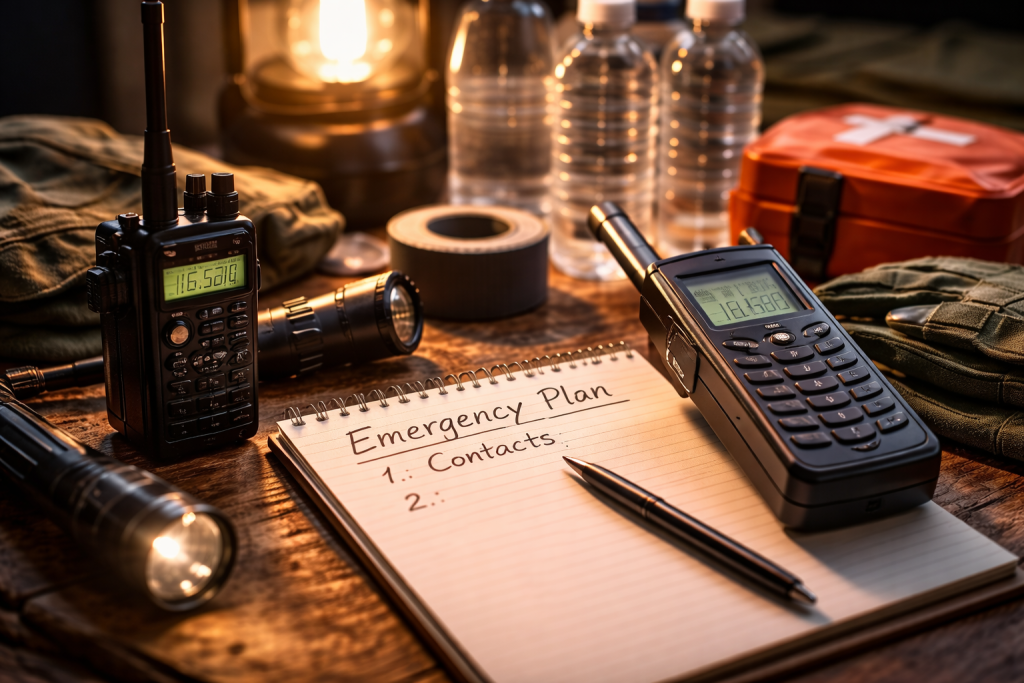
All of this got me thinking about communication and the breakdowns that could happen during a natural disaster or other, more ominous events. Do you have a plan in place to stay connected with your loved ones in the event of a comms breakdown? I went down YouTube rabbit holes about ham radios, satellite phones, CBs, and GMRS radio systems. I’m still confused and lack a proper plan, but I’m working on it. What is your plan? Is it rational to think about things like this, or is this just a paranoid delusion from someone who’s watched Red Dawn one too many times? I guess time will tell.
_____________________________
Stan is a writer, photographer, and filmmaker based in Bethania, North Carolina. His work has appeared in Dead Reckoning Collective, The Havok Journal, Reptiles Magazine, Lethal Minds Journal, and other outlets, and he directed Hammer Down, a documentary about his 2005 deployment in support of Operation Iraqi Freedom with Alpha Battery 5-113th of the North Carolina Army National Guard. For The Havok Journal, he often writes essays and reflections about war memory, veteran life, the outdoors, and everyday experience. You can find his books, collected works, and social media at www.stanlakecreates.com.
As the Voice of the Veteran Community, The Havok Journal seeks to publish a variety of perspectives on a number of sensitive subjects. Unless specifically noted otherwise, nothing we publish is an official point of view of The Havok Journal or any part of the U.S. government.
Buy Me A Coffee
The Havok Journal seeks to serve as a voice of the Veteran and First Responder communities through a focus on current affairs and articles of interest to the public in general, and the veteran community in particular. We strive to offer timely, current, and informative content, with the occasional piece focused on entertainment. We are continually expanding and striving to improve the readers’ experience.
© 2026 The Havok Journal
The Havok Journal welcomes re-posting of our original content as long as it is done in compliance with our Terms of Use.


