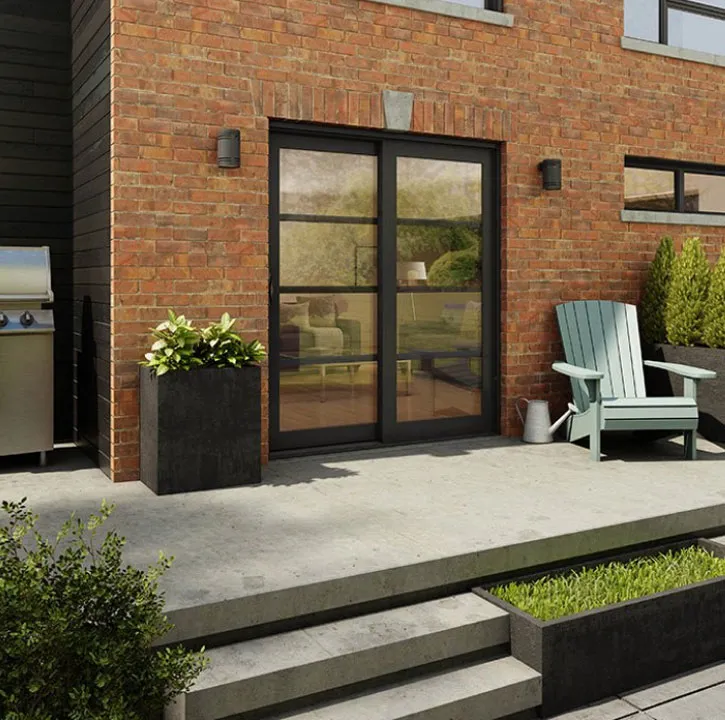
In many Canadian homes, exterior openings are exposed to forces that go far beyond everyday use. Strong seasonal winds, pressure changes during storms, and gradual structural movement all place stress on large door openings. Over time, these forces can affect how doors operate, seal, and feel — especially when openings span wide sections of an exterior wall.
This is where exterior sliding doors deserve closer attention. Because they combine large glass panels with long horizontal frames, they must be engineered to accommodate wind loads and subtle frame movement without compromising smooth operation or weather resistance. Understanding how they manage these stresses helps explain why some doors continue to perform reliably, while others develop issues.
Why Wind Loads Matter More Than People Expect
Wind pressure does not act evenly across a building. When strong gusts hit a façade, pressure builds and releases rapidly, pushing against doors and windows. Sliding doors, with their wide surface area, experience this force more directly than smaller openings.
If a door system is not designed to handle these loads, panels can flex slightly under pressure. Over time, repeated flexing may affect alignment, roller performance, or sealing. These changes are often subtle at first, showing up as increased resistance when opening the door or faint air movement during windy conditions.
Frame Movement Is a Normal Part of Buildings
All buildings move. Seasonal temperature changes cause materials to expand and contract, while wind and settling introduce small shifts in framing. In Canada’s climate, these movements are expected and must be accounted for in door design.
Exterior sliding doors are particularly sensitive to frame movement because their operation depends on precise alignment along a track. Even minor shifts in the opening can affect how smoothly the panel slides or how evenly the seals compress.
Well-designed systems allow for a degree of movement without transferring stress directly to the door panels or hardware.
Structural Design and Reinforced Frames
The ability of a sliding door to resist wind-related distortion depends heavily on its frame design. Reinforced frames, internal stiffeners, and engineered joints help distribute pressure evenly rather than allowing it to concentrate in one area.
Material choice also plays a role. Aluminum frames are strong but must be thermally broken and reinforced to prevent flex. Vinyl and composite frames offer better thermal performance but rely on internal reinforcement to maintain rigidity under load.
Strong winds and frame movement can affect sliding exterior doors if they are not properly engineered and installed — as explained by Modernize’s door materials guide, quality materials with reinforced frames and good structural design help exterior doors resist deformation and maintain performance under pressure.
How Tracks and Rollers Absorb Movement
Tracks and rollers are often overlooked in discussions about wind performance, yet they are central to long-term reliability. A well-designed track system allows the door panel to move smoothly even if the frame experiences minor shifts.
High-quality rollers can accommodate slight changes in alignment without binding. Adjustable roller systems also allow for fine-tuning over time, helping restore smooth operation if seasonal movement affects the opening.
Doors that rely on rigid, non-adjustable components are more likely to develop sticking or uneven movement as the building responds to environmental forces.
Sealing Systems Under Pressure
Seals are the first line of defence against air and moisture infiltration during high winds. Under pressure, seals must compress evenly without being forced out of place.
Multi-layer sealing systems are designed to maintain contact even when panels flex slightly. When wind pressure increases, these seals work together to block air movement rather than relying on a single point of contact.
If frame movement causes uneven compression, lower-quality seals may lose effectiveness, leading to drafts that appear only during windy conditions.
Glass Thickness and Panel Stability
Glass itself contributes to how sliding doors handle wind. Thicker or laminated glass panels are more resistant to flexing, which reduces stress on frames and rollers.
In areas exposed to frequent strong winds, panel stiffness becomes especially important. Glass that flexes excessively under pressure can transfer movement to the surrounding frame, accelerating wear on hardware and seals.
Modern exterior sliding doors are often specified with glass packages designed to balance thermal performance with structural stability.
Installation Quality Shapes Wind Performance
Even the best-engineered door system can struggle if installation does not account for wind exposure and framing conditions. Proper shimming, anchoring, and integration with the wall structure help ensure loads are transferred correctly.
Installation shortcuts may not be obvious immediately. Problems often appear later as doors become harder to operate or as air leakage develops during storms. In many cases, the door itself is blamed when the root cause lies in how it was installed.
This is why wind performance is as much about process as product.
Long-Term Behaviour in Canadian Conditions
Over years of exposure, the cumulative effect of wind and movement becomes apparent. Doors that are designed to flex where needed and remain rigid where required tend to age more gracefully.
Rather than sudden failure, poorly designed systems often show gradual decline — slower operation, uneven gaps, or seals that no longer perform consistently. Well-designed exterior sliding doors, by contrast, maintain alignment and smooth movement despite ongoing environmental stress.
A Practical Perspective for Homeowners
Wind and frame movement are unavoidable realities in Canadian homes. Exterior sliding doors must be engineered to accommodate these forces without sacrificing comfort or usability.
By combining reinforced frames, stable glass panels, adjustable hardware, and resilient sealing systems, modern sliding doors are designed to handle pressure and movement over time. Understanding these mechanics helps homeowners make informed choices and explains why long-term performance depends on thoughtful design and proper installation — not just appearance on day one.
Buy Me A Coffee
The Havok Journal seeks to serve as a voice of the Veteran and First Responder communities through a focus on current affairs and articles of interest to the public in general, and the veteran community in particular. We strive to offer timely, current, and informative content, with the occasional piece focused on entertainment. We are continually expanding and striving to improve the readers’ experience.
© 2026 The Havok Journal
The Havok Journal welcomes re-posting of our original content as long as it is done in compliance with our Terms of Use.