Your garage feels like a buffer. It’s not quite inside your home, yet it’s not fully outside either. That gray area makes it easy to overlook. You focus on front doors, windows, and alarms. Meanwhile, the garage quietly becomes the weakest point in your entire defense system.
Burglars understand that better than most homeowners do. They look for easy access, low visibility, and quick exits. Your garage often checks all three boxes. If you want real protection, you need to rethink how you treat this space and turn it from a liability into a strength.
Why the Garage Becomes the Weakest Link
Homeowners often underestimate how exposed their garage really is. More than a storage space, it’s an entry point that intruders know how to exploit. Several factors combine to make it vulnerable:
- Uneven protection: Front doors usually get the strongest locks, while garage doors rely on basic mechanisms. That imbalance creates opportunity.
- Low visibility: Garages often face alleys or side streets, and detached structures sit away from the main house. These hidden zones give burglars privacy to work unnoticed.
- Design flaws: Many garage doors lack reinforcement, and side doors often use weak materials that fail under pressure. Even built-in safety features, if left unprotected, can be exploited.
- Interior connection: Once inside the garage, an intruder is only one step away from your living space. Interior doors are often underprotected, turning what should be a barrier into a shortcut.
Recognizing these weak points is the first step toward closing the gaps. Once you see how intruders exploit them, you can start building a stronger defense.
Strengthening Your Garage Door
Your garage door is the largest entry point, and its condition directly affects security. Thin, outdated panels are easy to compromise, while steel doors with insulated cores provide durability and resist forced entry. Upgrading the door itself is often the most effective first step.
Technology matters as much as materials. Rolling code systems block signal capture and reuse, eliminating a common exploit in older fixed‑code models. Consulting reputable providers such as Guardian Doors can help you identify reinforced options that combine solid construction with modern garage door openers for stronger protection.
If full replacement isn’t practical, reinforcement kits add meaningful security by strengthening weak points in the door structure. These upgrades turn the garage door from a liability into a reliable first line of defense, ensuring intruders face resistance at the very first barrier.
Securing Secondary Entry Points
Garage side doors deserve the same attention as your front door. Replace hollow-core doors with solid-core or metal options, then install a high-quality deadbolt. Adding a reinforced strike plate helps strengthen the frame.
Windows in garage doors or side walls can expose your interior. Use frosted glass or window film to block visibility. If possible, install window locks or security bars. You want to limit both access and sightlines.
Don’t ignore the emergency release. Install a protective shield designed to block fishing attempts while still allowing the mechanism to function in emergencies. This balances safety with security, ensuring you’re protected without disabling a critical feature.
Upgrading the Interior Connection to Your Home
Treat the door between your garage and home as a primary defense point. If it isn’t already solid‑core, consider replacing it with a sturdier option. Pair it with a quality deadbolt and make a habit of keeping it locked, even when you’re home.
Door frames matter as much as the door itself. Weak frames and hinges can give way under pressure, but with strong hardware in place, the door is far more likely to hold and perform as intended.
Consider adding a door sensor. This alerts you if the door opens unexpectedly. It adds awareness and gives you time to respond. You’re not just relying on physical strength but adding intelligence to your setup.
Using Smart Technology the Right Way
Smart technology can transform your garage security. You can monitor activity in real time, receive alerts when the door opens or stays open too long, and act quickly when needed. That visibility helps you act fast.
Set up your system with strong passwords and two‑factor authentication, since weak credentials can undermine the entire setup. Just as important, keep firmware updated to patch vulnerabilities and maintain protection over time.
Integrate your garage into your broader home security system. Cameras, alarms, and motion sensors should work together. When one detects activity, the others respond. This creates a unified defense instead of isolated tools.
Lighting and Visibility as Deterrents
Darkness gives intruders confidence, but lighting takes that away. Install motion-activated flood lights around your garage, focusing on entry points and blind spots.
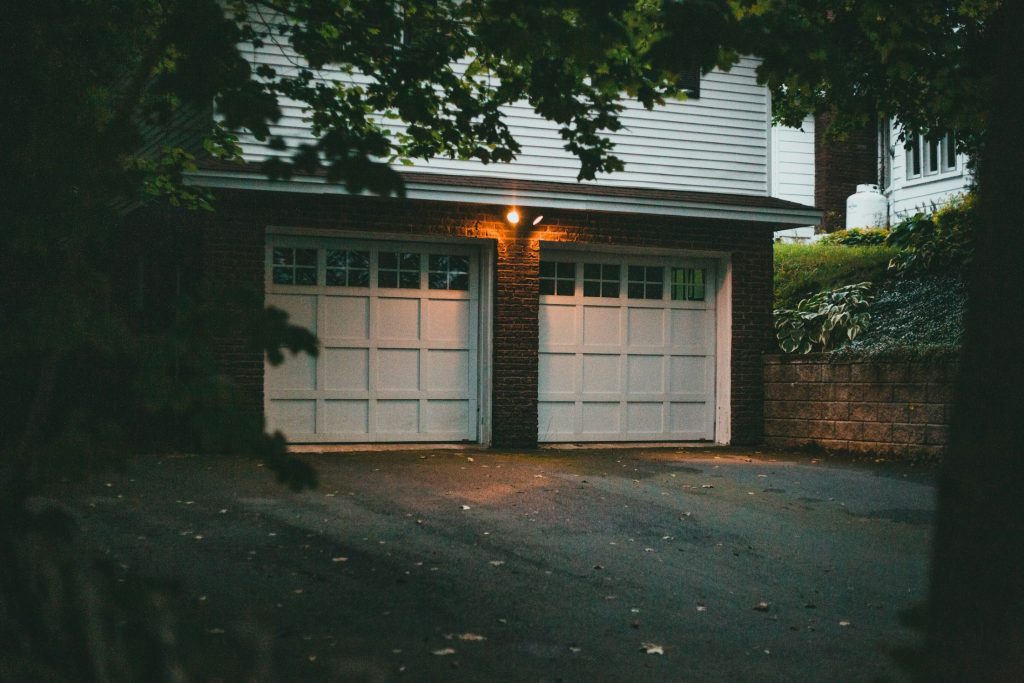
Consistent lighting also helps neighbors notice unusual activity. A well-lit area invites attention. That alone can discourage attempts.
Trim nearby bushes or obstacles that create hiding spots, and keep the area clean and visible. You want to remove every advantage an intruder might use.
Building Strong Daily Habits
Your behavior plays a major role in security. Always close your garage door, even if you step away briefly. An open door invites trouble and signals that no one is paying attention.
Lock your interior door consistently. Don’t treat it as optional. That single step adds a critical layer of protection.
Be mindful of what you store. Keep valuable items out of sight, and use locked cabinets for tools and equipment. The less visible your valuables are, the less attractive your garage becomes.
Monitoring and Response Strategies
Install security cameras covering both the exterior and interior of your garage. Visible units signal surveillance, while hidden ones provide discreet coverage. Use both when possible, and choose HD or 4K models for clear footage. Position them to watch doorways, vulnerable angles, and the garage-to-home connection for strong deterrence and reliable records.
Add alarm sensors to doors and windows. These sensors trigger alerts if someone tries to force entry, allowing you to respond or call for help.
Remote access gives you control from anywhere. You can check your garage status and close it if needed. That flexibility reduces risk and keeps you connected to your home.
Final Thoughts
Your garage doesn’t have to remain the weakest link. With the right approach, it can become one of the strongest parts of your home. The key is to stop overlooking it and start treating it with the same level of care as any other entry point.
When you reinforce doors, upgrade technology, and build better habits, you reduce the risk of home break-ins and shift control back to you. And once your garage is secure, your entire home becomes a much harder target to crack.
Buy Me A Coffee
The Havok Journal seeks to serve as a voice of the Veteran and First Responder communities through a focus on current affairs and articles of interest to the public in general, and the veteran community in particular. We strive to offer timely, current, and informative content, with the occasional piece focused on entertainment. We are continually expanding and striving to improve the readers’ experience.
© 2026 The Havok Journal
The Havok Journal welcomes re-posting of our original content as long as it is done in compliance with our Terms of Use.