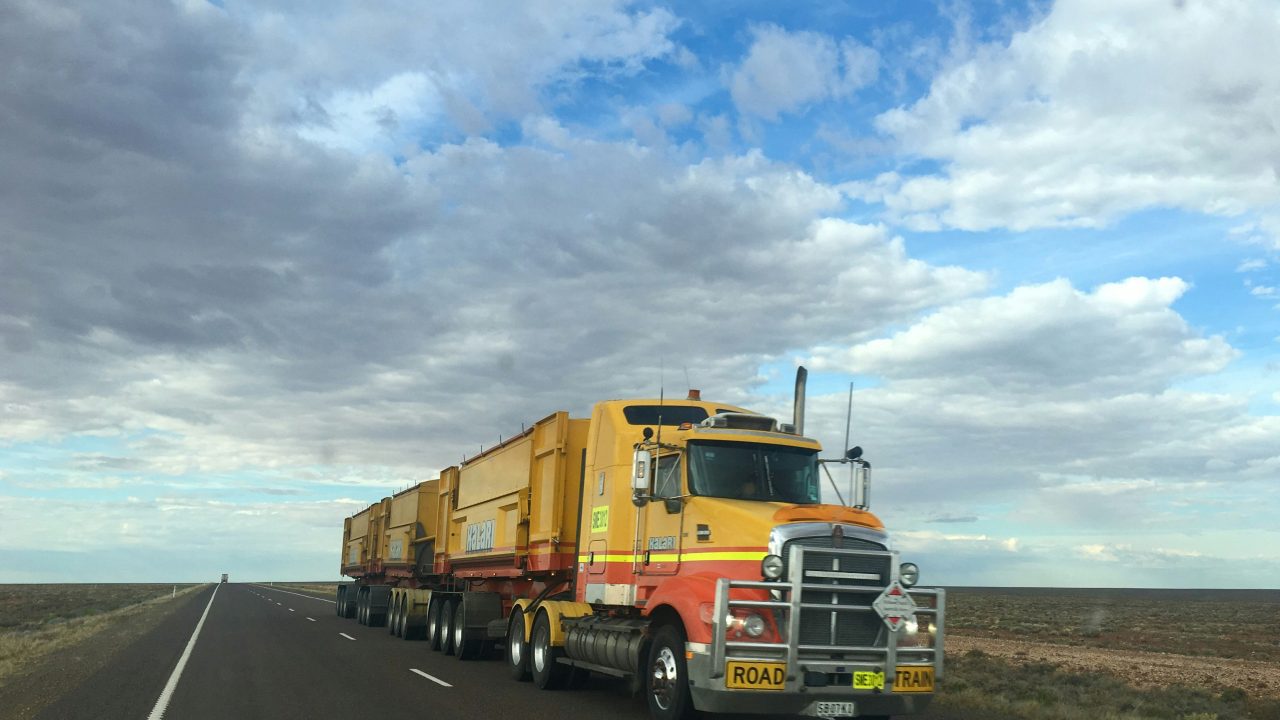
Photo by Rhys Moult on Unsplash
A soldier can spend three years moving a 20-ton vehicle through mud, checkpoints, and overnight convoys, then separate from the service and learn that the civilian world wants proof he can drive. That gap closes faster in one field than almost any other. Trucking careers for veterans have become one of the quickest routes from the military back into steady, well-paid work, and the reasons run deeper than a recruiting poster at the base exchange. The habits that keep a convoy rolling line up almost exactly with what a freight carrier needs on day one.
Military Driving Experience Transfers Almost One to One
The obvious match is the 88M, the Army’s motor transport operator, but the pool runs much wider. Engineers who ran dump trucks and earthmovers, artillery crews who handled HEMTTs and PLS rigs, Navy Seabees, Marine combat engineers, and Air Force vehicle operators all log real hours behind heavy equipment. They already understand pre-trip inspections, load weight, blind spots, and the discipline of not rushing a turn. A civilian recruit picks those up in a classroom. A veteran picked them up under a deadline with consequences attached.
The federal system rewards that experience directly. More than 40,000 service members and veterans have used the Military Skills Test Waiver, which lets qualified drivers skip the road-test portion of the commercial driver’s license. The program runs in every state. A driver who qualifies still sits for the written exams, but the toughest gate, the skills test, drops away, and that alone can cut weeks off the timeline.
The Road Is Where the Real Risk Lives
None of that erases what the job actually asks. Long-haul drivers share the interstate with rigs that can weigh up to 80,000 pounds and need as much as 525 feet to stop at highway speed. Federal numbers make the stakes plain. Nearly 6,000 people died in crashes involving large trucks in 2022, and most of them were riding in other vehicles rather than the truck, according to Large Truck and Bus Crash Facts from the Federal Motor Carrier Safety Administration.
A serious wreck involving a commercial truck also becomes a different kind of case than a fender bender. Hours-of-service logs, black box data, and several possible defendants all come into play, and the evidence can vanish within days. A driver who understands how large-truck accident claims work stands on firmer ground whether the worst happens in his own cab or to his family in the next lane. Knowing the process ahead of time beats scrambling after the fact.
Pay Climbs Higher Than Most Expect
The money tracks the responsibility. Median pay for heavy and tractor-trailer drivers sat in the mid-$50,000s as of 2024, according to the Bureau of Labor Statistics, and that figure hides a wide spread. Drivers who run long routes, pull tankers, or carry hazardous loads often clear $70,000 or more. Owner-operators who manage their own trucks can push past six figures in a strong year.
The cost of entry stays low for veterans too. Between education benefits and the skills-test waiver, the run from discharge to first paycheck can take six to eight weeks. Few civilian fields move a newcomer to a livable wage that fast.
Three Ways Into the Driver’s Seat
The path from separation to CDL runs through one of three doors. The first opens before discharge. DoD SkillBridge lets a service member spend the last 180 days of active duty training with a civilian carrier or CDL school while still drawing military pay and benefits. Several large fleets run SkillBridge programs built around trucking, and a driver who uses one can hold a license and a job offer before the final out-processing appointment.
The second door is the GI Bill. Approved commercial driving programs qualify, so a veteran can attend a private school or community college program without draining savings. Most full-time programs run three to eight weeks, and the benefit can also cover licensing fees and testing costs at approved schools.
The third door is company-sponsored training, where a carrier pays for schooling in exchange for a work commitment, usually a year. It costs nothing up front, but read the contract closely. Leave early and the training bill often comes due in full. A veteran with GI Bill benefits rarely needs this route, and skipping it keeps every option open once the license is in hand.
Endorsements Turn One License Into Several
The base CDL opens the door. Endorsements raise the ceiling. A tanker endorsement takes one written test and moves a driver into fuel and chemical hauling, where pay runs well above dry van rates. Hazmat requires a TSA background check on top of the written exam, and this is where a service record pays off again. A veteran who held a security clearance has already passed a screen far tougher than the TSA’s, so the process tends to move without drama. The doubles and triples endorsement adds the ability to pull multiple trailers, which matters to LTL carriers that pay some of the best hourly and mileage rates in the business.
Stack two or three endorsements and the mid-$50,000s median stops being a ceiling and starts being a floor. Drivers who hold the combined tanker-hazmat endorsement sit near the top of the pay scale for company positions, and many of those jobs run regional routes with regular home time.
Carriers Compete for the Veteran Hire
Freight companies do not recruit veterans out of charity. A driver who shows up on time, follows procedure, and keeps a clean record is worth real money to a carrier that lives under federal safety scoring. Military service signals all three before the first interview. Large fleets run dedicated veteran hiring tracks, and some pair new drivers with mentors who served, which smooths out the first months on the road.
That demand also hands veterans an edge at the table. Documented heavy-vehicle experience and a waiver-backed CDL let a driver negotiate starting pay and route assignments instead of taking whatever lands in front of them. In a field that has run short of qualified drivers for years, the applicant with a service record and a clean driving abstract holds more cards than most.
Trucking Careers for Veterans Reward the Same Discipline
Past the numbers, the rhythm of the work suits people who came up in a structured environment. A run carries a clear objective, a defined route, and standards that get measured. Logbooks stand in for duty rosters. The cab offers a kind of autonomy a cubicle never will, with the driver answerable for the load, the schedule, and the safe arrival. For someone used to owning a mission, that trade feels familiar instead of foreign.
The honest caveat is isolation. Over-the-road work means nights away from home, and some veterans already carrying the weight of long deployments find that part hard. Regional and local routes solve much of it, putting drivers in their own beds most nights while keeping the pay and the independence intact. Trucking careers for veterans come in more than one shape, and the long-haul grind is only one of them.
A Second Career, Not a Consolation Prize
The stereotype of trucking as a last resort misses what the record shows. The field draws disciplined people, pays them fairly, and hands them real responsibility from the first week, which is exactly why so many former service members gravitate toward it. The same habits that kept a convoy moving keep freight moving safely down I-10. For anyone weighing the next step after the uniform, trucking careers for veterans earn a serious look, with one clock worth watching. The skills-test waiver generally has to be claimed within a year of separation, so the window to turn that hard-won experience into a license does not stay open forever.
Buy Me A Coffee
The Havok Journal seeks to serve as a voice of the Veteran and First Responder communities through a focus on current affairs and articles of interest to the public in general, and the veteran community in particular. We strive to offer timely, current, and informative content, with the occasional piece focused on entertainment. We are continually expanding and striving to improve the readers’ experience.
© 2026 The Havok Journal
The Havok Journal welcomes re-posting of our original content as long as it is done in compliance with our Terms of Use.


