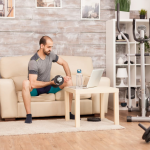
Photo by Benjamin Chambon on Unsplash
When you swing a leg over a bike, you are instantly connected to a machine that demands your complete physical and mental presence. Riding is always moving. Riding involves a lot of attention to tire pressure, bright clothes, and safe driving plans. We forget our own health. The truth is, when a sudden danger shows up—such as a distracted driver cutting in or a wet leaf patch on a hidden corner—our body takes over the steering. If you aren’t physically capable of manipulating the bike’s weight in a fraction of a second, the consequences can be devastating. Nobody ever plans to lay their bike down, but failing to physically prepare for these split-second emergencies is exactly what leaves so many riders facing severe injuries and trying to navigate the incredibly stressful process of securing motorcycle accident compensation. It’s a harsh reality, but conditioning your body is just as vital as maintaining your brakes.
Why Your Core is Your Ultimate Steering Damper
Your core drives every move you make on a bike. If your midsection is weak, a hard stop or sudden pothole will throw your weight forward, causing dangerous, accidental steering inputs. Building solid abdominal and back muscles gives you the stability to grip the tank with your knees and absorb sudden shocks with your torso. This keeps your arms loose and relaxed, allowing you to smoothly counter-steer through an emergency instead of stiffening up and fighting the machine.
Endurance as a Buffer Against Mental and Physical Fatigue
Long rides are exhausting, and muscle fatigue does a lot more than just make your back ache. As your muscles tire out from fighting wind resistance and engine vibration, your posture sags, and your reaction times inevitably slow down. Endurance training—whether that means cycling, swimming, or high-rep circuit workouts—builds up your body’s stamina so that you remain just as sharp in the final miles of a trip as you were when you pulled out of your driveway.
When a deer jumps out onto the highway three hours into a weekend ride, a fatigued rider is going to be sluggish, relying on panic braking instead of a calculated evasive maneuver. Muscular endurance gives you the stamina to stay properly positioned on the bike, keeping your head up and your eyes scanning the horizon for threats instead of staring tiredly at the pavement directly in front of your front wheel.
Translating Gym Work to Split-Second Evasive Maneuvers
The physical demands of an emergency on two wheels are incredibly violent. Require explosive coordinated movements to keep the rubber on the road. Imagine having to grab a handful of the brake while simultaneously shifting the body weight to avoid a car that just ran a red light. That action requires fast‑twitch muscle response and absolute control over the center of gravity.
Highway safety researchers continually note that executing a rapid, successful avoidance maneuver requires both optimal cognitive processing and substantial physical leverage from the rider. By incorporating functional fitness exercises into your routine—like planks, kettlebell swings, and medicine ball rotations—you train your nervous system to react powerfully and efficiently under stress.
This translates directly to the saddle. Instead of being completely tossed out of the seat during a violent wobble or an emergency stop, a conditioned rider can muscle the heavy bike back into a stable, upright trajectory.
The Final Takeaway on Rider Preparation
Premium brakes and premium tires do not help if you are not physically strong enough to handle an emergency. Training your core and building endurance gives you the leverage and reaction time you need to muscle your bike out of danger, turning a crash into a simple close call. Ultimately, putting in the sweat equity at the gym might just be the exact edge that keeps you safely out of the hospital, letting you enjoy the open road instead of dealing with insurance adjusters and fighting for motorcycle accident compensation after a devastating crash. Stay fit, ride smart, and never underestimate the power of your own physical preparation.
Buy Me A Coffee
The Havok Journal seeks to serve as a voice of the Veteran and First Responder communities through a focus on current affairs and articles of interest to the public in general, and the veteran community in particular. We strive to offer timely, current, and informative content, with the occasional piece focused on entertainment. We are continually expanding and striving to improve the readers’ experience.
© 2026 The Havok Journal
The Havok Journal welcomes re-posting of our original content as long as it is done in compliance with our Terms of Use.