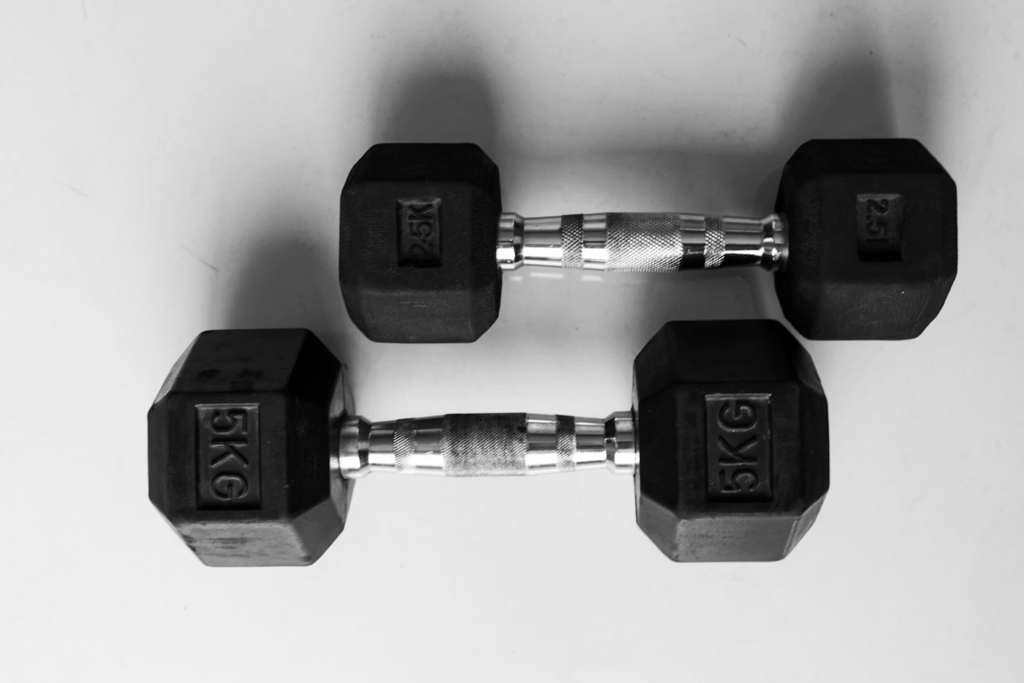
The modern business landscape demands more than sharp strategy and market insight. Executives and entrepreneurs increasingly recognize that physical conditioning directly influences cognitive performance, stress management, and sustained productivity. Among the most efficient approaches to building this dual-edge resilience is structured resistance training with free weights.
Unlike machine-based exercises that isolate single muscle groups, free weight training engages stabilizer muscles and demands coordination that translates beyond the gym. Regular resistance training improves not only muscular strength but also cognitive function, metabolic health, and emotional regulation—all critical factors for sustained business performance.
This comprehensive approach to fitness mirrors the demands of leadership itself: balancing multiple priorities, maintaining stability under pressure, and building capacity for long-term challenges. Whether you’re preparing for high-stakes negotiations or managing the daily grind of organizational leadership, the principles of progressive resistance training offer a practical framework for developing both physical and mental stamina.
Fundamentals of Resistance Training
Resistance training with free weights involves controlled movements against external load, typically using handheld weights that allow natural range of motion. This training methodology has evolved from bodybuilding subculture to become a cornerstone of evidence-based fitness programming, supported by decades of exercise science research.
The physiological adaptations extend well beyond aesthetic changes. According to the Mayo Clinic, consistent strength training produces measurable improvements across multiple health markers: enhanced bone density that reduces osteoporosis risk, improved insulin sensitivity that helps regulate blood sugar, and increased resting metabolic rate that supports weight management.
Key benefits of structured resistance training include:
- Enhanced muscular strength and endurance across major movement patterns
- Improved joint stability and reduced injury risk during daily activities
- Elevated metabolic rate that persists for hours after training
- Better cardiovascular efficiency and blood pressure regulation
- Reduced symptoms of anxiety and depression through endorphin release
- Improved sleep quality and recovery capacity
For business professionals, these adaptations translate to tangible performance advantages: sharper focus during extended meetings, better stress resilience during challenging quarters, and the physical energy to maintain demanding travel schedules without burnout.
Comprehensive Full-Body Training Protocols
A well-designed full-body routine targets all major muscle groups within a single session, creating balanced development and functional strength. This approach proves particularly effective for time-constrained professionals who need maximum return on their training investment.
Essential movement patterns for complete development:
- Lower Body Push (Squats): Holding weights at shoulder height or by your sides, descend until thighs reach parallel, then drive through heels to standing position
- Hip Hinge (Deadlifts): With weights positioned in front of thighs, hinge at hips while maintaining neutral spine, lowering weights to mid-shin before returning to standing
- Horizontal Push (Chest Press): Lying on a bench, lower weights to chest level with controlled tempo, then press upward until arms extend
- Horizontal Pull (Rows): Bent at waist with neutral spine, pull weights toward ribcage, squeezing shoulder blades together
- Vertical Push (Overhead Press): From shoulder height, press weights overhead until arms fully extend, then lower with control
- Elbow Flexion (Curls): With arms extended, curl weights toward shoulders while keeping elbows stationary
- Elbow Extension (Tricep Work): Extend weights overhead or behind body to target the back of the arms
This systematic approach ensures balanced development across opposing muscle groups, reducing injury risk while building functional capacity for real-world demands. For those looking to invest in reliable training equipment, suppliers such as Dumbbells.com provide professional-grade solutions suited for both home gyms and commercial facilities. Comparable retailers like Rogue Fitness and Titan Fitness also offer a wide range of durable, performance-oriented equipment.
Time-Efficient Training for Busy Schedules
Research published in the Journal of Sports Science & Medicine confirms that brief, high-intensity resistance sessions produce comparable strength gains to longer traditional workouts when properly structured. For executives managing packed calendars, this evidence supports strategic 20-minute training blocks.
A practical time-efficient protocol:
- Dynamic Warm-Up (3 minutes): Arm circles, leg swings, and bodyweight squats to elevate core temperature and prepare joints
- Compound Movement 1 (4 minutes): Goblet squats or front-loaded squats, 3 sets of 10-12 repetitions with 30-second rest intervals
- Compound Movement 2 (4 minutes): Push-ups or chest press variations, 3 sets of 8-12 repetitions
- Compound Movement 3 (4 minutes): Bent-over rows, 3 sets of 10-12 repetitions per arm
- Metabolic Finisher (3 minutes): Alternating lunges or step-ups, continuous movement with moderate load
- Cool-Down (2 minutes): Static stretching for major muscle groups, focusing on areas of tightness
This condensed format maintains training stimulus while respecting time constraints. The key lies in exercise selection—prioritizing multi-joint movements that engage multiple muscle groups simultaneously rather than isolation exercises that target single muscles.
Circuit Training for Cardiovascular Conditioning
Circuit-style resistance training combines strength development with cardiovascular conditioning, creating a time-efficient approach to comprehensive fitness. By minimizing rest intervals between exercises, this methodology elevates heart rate while maintaining sufficient load for muscular adaptation.
An effective endurance-building circuit:
- Goblet Squats: Hold a single weight at chest level, perform 15 controlled repetitions focusing on depth and stability
- Bent-Over Rows: Hinge forward at hips, pull weights to ribcage for 12 repetitions per arm, maintaining neutral spine throughout
- Push Press: Use leg drive to assist overhead press, 10 repetitions emphasizing explosive upward movement
- Renegade Rows: From plank position, alternate rowing each weight to hip, 10 repetitions per side while maintaining core stability
- Walking Lunges: Step forward into lunge position, 12 repetitions per leg with weights held at sides
Complete 2-3 rounds with 60-90 seconds rest between circuits. This approach develops work capacity—the ability to sustain high output over extended periods—which directly correlates to professional stamina during demanding business cycles.
Progressive Overload for Muscle Development
Muscle hypertrophy requires progressive tension overload: systematically increasing the mechanical stress placed on muscle tissue over time. This principle applies equally whether your goal is aesthetic development or functional strength for daily performance.
A muscle-building protocol emphasizes:
- Romanian Deadlifts: Hip-hinge movement targeting posterior chain, 4 sets of 8-10 repetitions with challenging load
- Flat or Incline Press: Horizontal pressing movement, 4 sets of 8-12 repetitions, progressively increasing weight across sets
- Overhead Press Variations: Vertical pressing from standing position, 3 sets of 8-10 repetitions
- Front-Loaded Squats: Weights held at shoulder height, 4 sets of 10-12 repetitions with controlled tempo
- Isolation Work: Bicep curls and tricep extensions, 3 sets of 12-15 repetitions to supplement compound movements
The critical factor for continued adaptation is progressive overload: incrementally increasing weight, repetitions, or training volume as your body adapts. Detailed training logs help track this progression, ensuring consistent advancement rather than random effort.
Integrating Training with Business Performance
Strategic resistance training serves as more than physical conditioning—it functions as a practical laboratory for developing mental resilience. The discipline required to maintain consistent training through busy periods, the focus needed to execute proper technique under fatigue, and the patience necessary for progressive adaptation all mirror the psychological demands of sustained business success.
Practical integration strategies:
- Morning Sessions: Training before the workday begins ensures completion regardless of unexpected business demands
- Travel Adaptations: Hotel room workouts using adjustable weights maintain consistency during business travel
- Recovery Prioritization: Viewing rest days as strategic recovery rather than lost productivity
- Performance Tracking: Maintaining training logs develops the same data-driven mindset valuable in business analytics
The American College of Sports Medicine recommends resistance training 2-3 times weekly for general health, with sessions separated by at least 48 hours to allow adequate recovery. This frequency proves sustainable even during demanding business periods while producing measurable fitness improvements.
Recovery as Strategic Investment
High-performing business leaders understand that sustainable productivity requires strategic recovery, not relentless grinding. The same principle governs effective training: adaptation occurs during rest periods, not during the workout itself.
Essential recovery practices include:
- Sleep Optimization: Prioritizing 7-9 hours nightly supports both muscular recovery and cognitive performance
- Nutrition Timing: Consuming adequate protein (1.6-2.2g per kilogram bodyweight) supports muscle protein synthesis
- Active Recovery: Light movement on rest days promotes blood flow without creating additional training stress
- Stress Management: Recognizing that training adds to total stress load, requiring balance with work and life demands
Research from UCHealth emphasizes that recovery encompasses both physiological repair and psychological restoration. Overtraining syndrome—characterized by persistent fatigue, declining performance, and mood disturbances—mirrors the symptoms of professional burnout, suggesting common underlying mechanisms.
The most effective business leaders recognize that physical conditioning isn’t separate from professional performance but integral to it. By approaching fitness with the same strategic thinking applied to business challenges—setting clear objectives, tracking progress, adjusting based on results—you develop not just physical capacity but the mental frameworks that drive success across all domains.
Buy Me A Coffee
The Havok Journal seeks to serve as a voice of the Veteran and First Responder communities through a focus on current affairs and articles of interest to the public in general, and the veteran community in particular. We strive to offer timely, current, and informative content, with the occasional piece focused on entertainment. We are continually expanding and striving to improve the readers’ experience.
© 2026 The Havok Journal
The Havok Journal welcomes re-posting of our original content as long as it is done in compliance with our Terms of Use.