
Leadership books are filled with stories of great men and women whose example is worth following. Military history is populated by names that have become shorthand for courage, innovation, and selfless service. We study Eisenhower’s coalition-building, Marshall’s integrity, Ridgway’s battlefield leadership, and Nimitz’s calm under pressure because excellence leaves clues.
Over the course of my 27 years of military service I was able to work with some great leaders, some of whom are legends in the Special Operations community. People with names like McChrystal. McRaven. Clarke. LaCamera. Votel. And before that, going back to my Junior ROTC and Boy Scouts: LTC Campbell. SGM Jackson. Mr. Reid. ROTC, and my early days in the Army: CPT Griffin. SFC Edwards. SSG Spencer. CPT Jenkinson. CPT Iverson. Towards the end of my career: SFC Smith. SFC Plaisance. CW5 O’Hara. COL Daniels. COL Howell. COL Sullivan. Far too many others to mention.

But there is another form of education that receives far less attention. And here it is: some of the most valuable lessons in leadership come from people who demonstrated exactly how not to lead.
Every military professional accumulates these examples over the course of a career. Some arrive as young privates or lieutenants under a toxic first-line supervisor. Others encounter them later, working for senior officers who possess extraordinary technical competence but almost no emotional intelligence. Some discover them in peers who sacrifice teammates for promotions or in commanders who mistake fear for discipline.
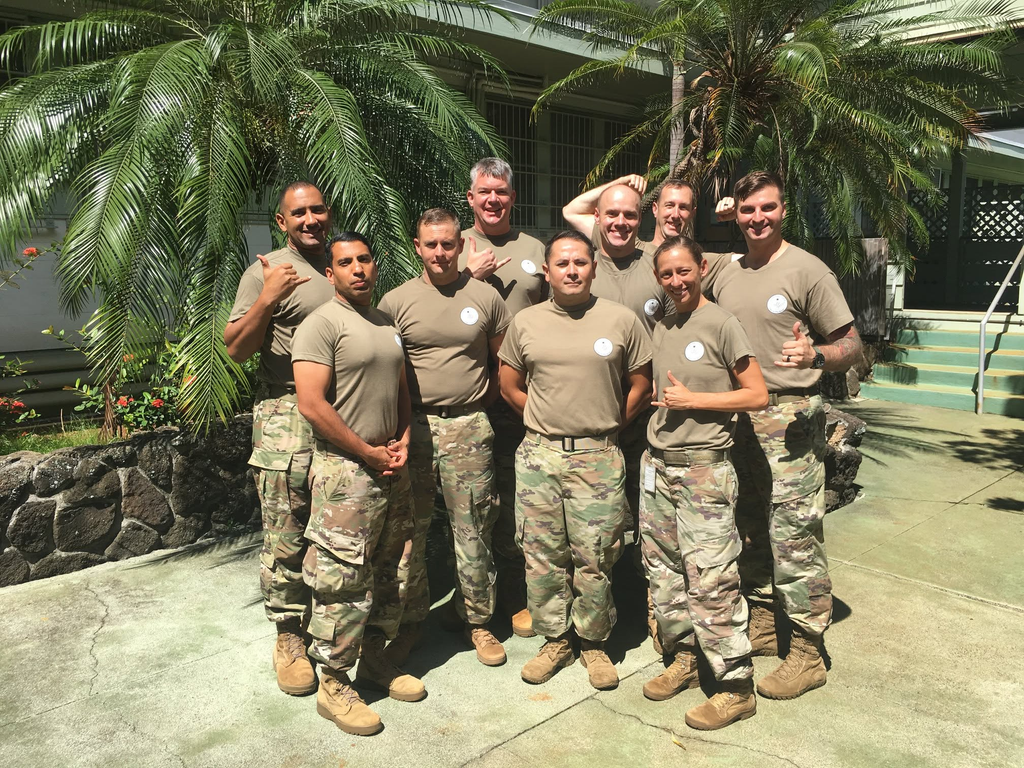
These people become instructors nonetheless, just not in the way they intended.
The military has a habit of celebrating mentorship. We speak often about finding role models and identifying leaders worth emulating. That is sound advice. But we rarely acknowledge the equal value of what psychologists sometimes describe as negative role models—individuals whose behavior shapes us precisely because we refuse to become like them.
Learning from failure has long been accepted as an essential component of military education. After-action reviews exist because mistakes contain information. Organizations improve by studying what went wrong. The same principle applies to people. Poor leadership is often just as instructive as exceptional leadership, provided we are honest enough to examine it.
The challenge is that bad leaders rarely recognize themselves as bad leaders.
Nearly every toxic commander believes he is simply maintaining standards. Every narcissistic executive believes she is the smartest person in the room. Every bully convinces himself that harshness is synonymous with accountability. Self-awareness is surprisingly uncommon, particularly in hierarchical organizations where rank can insulate individuals from honest feedback.
That insulation creates damage.
The lieutenant who publicly humiliates subordinates may achieve short-term compliance but quietly destroys initiative. The staff officer who hoards information gains temporary influence while weakening the organization. The commander who treats every disagreement as insubordination eventually surrounds himself with people who stop thinking and start nodding.
The unit functions… until it doesn’t.
Ironically, many of these leaders become unforgettable. Years after retirement, veterans can often recall their names instantly—not because of admiration, but because of the profound effect they had on everyone around them.
Ask a room full of veterans to name the best leader they ever served under, and thoughtful stories will emerge. Then ask them to name the worst. The answers come even faster. There is a reason for that.
Psychologists have long recognized that negative experiences often leave stronger and more durable memories than positive ones. A single humiliating interaction with a commander may remain vivid decades later. The emotional weight of poor leadership imprints itself deeply because it violates expectations of trust, fairness, and competence. While inspiring leaders motivate us toward excellence, destructive leaders often create equally powerful commitments—not to imitate them.
Many careers have been quietly shaped by a private promise: “If I’m ever in charge, I will never treat people that way.” That sentence has probably improved more organizations than we realize.
I can think of supervisors whose arrogance convinced me that humility was a strategic advantage. Others demonstrated that yelling is not leadership, only volume. Some taught me that protecting subordinates from unnecessary bureaucracy is one of the most valuable things a leader can do because I had experienced the opposite.
They never intended to mentor me.
They did anyway.
I’m proud to name the leaders who impacted me positively. I won’t name the ones who gave me the worst times. Instead, I’ll use nicknames that sound close to their real names, and reflect how I feel about them after the benefit of decades of hindsight: Sellout, Suck Hole, and Hellish.
And here’s the plot twist: I’m grateful for the lessons they taught me as well.
The Roman philosopher Seneca argued that wisdom can be gained from observing both virtue and vice. Niccolò Machiavelli spent as much time analyzing failed rulers as successful ones because political disasters often reveal principles more clearly than political triumphs. Military historians do the same. We do not study catastrophic campaigns merely to assign blame; we study them because failure exposes weaknesses that success can conceal. Leadership works much the same way.
This perspective also requires intellectual honesty.
It is easy to identify the flaws in former bosses. It is considerably harder to recognize fragments of those same behaviors in ourselves. Every officer who complained about poor communication eventually has an opportunity to communicate poorly. Every NCO who criticized favoritism eventually has the chance to play favorites. Every leader who resented micromanagement eventually faces the temptation to micromanage. The line separating admirable leadership from toxic leadership is often thinner than we imagine. That is why reflection matters.
The worst leaders in our careers should not simply become stories we tell over coffee or cautionary tales shared with junior personnel. They should become mirrors. Before condemning their behavior, we should ask whether any trace of it has begun to appear in our own. That question is uncomfortable. It is also necessary.
Perhaps the greatest compliment we can pay those difficult leaders is not resentment but gratitude. that’s not because they were good–far from it. Nor is it because they made us bitter. No. It’s because they made us better. Their failures became our curriculum. Their arrogance highlighted the value of humility. Their selfishness demonstrated the importance of stewardship. Their insecurity revealed the confidence required to develop others instead of competing with them.
In the end, inspiration comes in more than one form. Some people inspire us by showing us what greatness looks like. Others inspire us by convincing us that we must never become them.
Both leave a legacy. But only one is intentional. I’m hope I’m more like one, than the other.
_____________________________
Charles served over 27 years in the US Army, which included seven combat tours in Iraq and Afghanistan with various Special Operations Forces units and two stints as an instructor at the United States Military Academy at West Point. He also completed operational tours in Egypt, the Philippines, and the Republic of Korea and earned a Doctor of Business Administration from Temple University as well as a Master of Arts in International Relations from Yale University. He is the owner of The Havok Journal, and the views expressed herein are his own and do not reflect those of the US Government or any other person or entity.
As the Voice of the Veteran Community, The Havok Journal seeks to publish a variety of perspectives on a number of sensitive subjects. Unless specifically noted otherwise, nothing we publish is an official point of view of The Havok Journal or any part of the U.S. government.
Buy Me A Coffee
The Havok Journal seeks to serve as a voice of the Veteran and First Responder communities through a focus on current affairs and articles of interest to the public in general, and the veteran community in particular. We strive to offer timely, current, and informative content, with the occasional piece focused on entertainment. We are continually expanding and striving to improve the readers’ experience.
© 2026 The Havok Journal
The Havok Journal welcomes re-posting of our original content as long as it is done in compliance with our Terms of Use.


