Leadership is often mistaken for a title. We associate it with rank, authority, position, or the ability to direct the actions of others. Promotions are celebrated as though they automatically produce leaders, and too often we confuse organizational power with genuine influence.
I have come to believe something very different.
Leadership is not found in a title. It is revealed through character. It is strengthened through self-awareness. It is sustained by the discipline to master yourself before attempting to lead anyone else.
Titles can grant authority, but they cannot create integrity. Rank can require compliance, but it cannot earn trust. A position may place someone in charge, but it does not make people believe in them. Real leadership begins long before someone is handed a promotion. It begins in the quiet decisions no one else sees. It is built through humility, discipline, accountability, and the willingness to continually improve.
Throughout my life, I have served beside extraordinary leaders who never occupied the highest positions within an organization. Some wore stripes. Some wore bars. Some wore nothing that distinguished them from anyone else. Yet when uncertainty arrived, people naturally looked to them. Their calm settled the room. Their judgment inspired confidence. Their character created trust.
I have also witnessed the opposite.
I have seen talented people rise through organizations because of experience, politics, or technical competence, only to struggle once they became responsible for leading others. Their knowledge earned them promotions, but knowledge alone could not compensate for poor character, emotional instability, or an inability to connect with the people they served. The organization functioned because policies demanded it, not because people believed in its leadership.
That distinction stayed with me.
After years in the military, law enforcement, tactical operations, graduate studies in counterterrorism, and an ongoing pursuit of understanding human behavior through psychology, anthropology, sociology, neuroscience, and philosophy, I found myself asking a simple question.
What actually makes someone worthy of leading another human being?
The answer never came from another leadership book or management seminar.
It came from observing people under pressure.
Pressure has a remarkable way of stripping away appearances. It exposes what preparation cannot hide and what charisma cannot replace. When lives depend on decisions, titles become secondary. What matters is judgment. Emotional control. Humility. Courage. Trust. Character.
Pressure reveals the leader that already exists beneath the uniform. Over time, I realized leadership is not a collection of techniques. It is a process of becoming. It begins with learning to govern yourself before trying to govern others.
That realization eventually became what I now call the Seven Pillars of Leadership. They are not seven independent qualities, nor are they another checklist of leadership traits. They are a progression. Each pillar strengthens the next, creating leaders capable of making difficult decisions without losing their humanity, remaining calm without becoming indifferent, and influencing others without relying solely on authority.
This framework was not created in a classroom. It was shaped through military deployments, long nights on patrol, tactical operations, difficult conversations, mistakes, successes, failures, and countless opportunities to observe how human beings respond when everything around them becomes uncertain.
The more I reflected on those experiences, the more I realized leadership always begins in the same place. Not with influence. Not with communication. Not with authority. It begins with self-command.
Pillar One: Self-Command

The greatest battle any leader will ever fight is not against an external enemy. It is against themselves. Every day we face choices between patience and frustration, humility and ego, discipline and impulse. Those choices rarely make headlines, yet they determine the kind of leader we become. Self-command is often misunderstood as emotional suppression. It is nothing of the sort. It is emotional regulation. It is the ability to recognize what you feel without allowing those emotions to dictate your behavior. Fear, anger, disappointment, and frustration are part of being human. Leadership is not about pretending they do not exist. It is about refusing to let them make decisions for you.
Neuroscience reinforces what experienced leaders have understood for generations. Under acute stress, the brain naturally shifts toward survival. Heart rate increases. Attention narrows. Cognitive flexibility declines. People become more reactive and less reflective. Left unchecked, stress can push otherwise capable leaders toward impulsive decisions, emotional outbursts, or unnecessary conflict.
This is why self-command is not simply a philosophical virtue. It is a practical skill. A leader who cannot regulate themselves eventually creates instability within the people they lead. Emotions spread through teams faster than policies ever will. Anxiety becomes contagious. So does confidence. Panic spreads. Calm spreads even faster.
People rarely remember every decision a leader makes. They always remember how that leader made them feel when everything was falling apart.
The military taught me that discipline exists long before combat begins. Police work reinforced the same lesson. You cannot wait until chaos arrives to develop emotional control. You build it beforehand through training, preparation, honest self-reflection, and repeated exposure to difficult situations. Then, when pressure arrives, you rely on who you have already become.
That principle extends far beyond tactical professions.
Parents model self-command for their children. Teachers demonstrate it in classrooms. Coaches demonstrate it during competition. Business leaders demonstrate it during crisis. Every interaction becomes an opportunity to either strengthen or weaken the people watching.
Perhaps the greatest misconception in leadership is believing that controlling others is the objective. It is not. The strongest leaders I have known possessed remarkable control over only one person. Themselves. Everything else flowed from there. Next comes awareness, because once you learn to command yourself, you begin to see the world, and yourself, much more clearly.
Pillar Two: Awareness
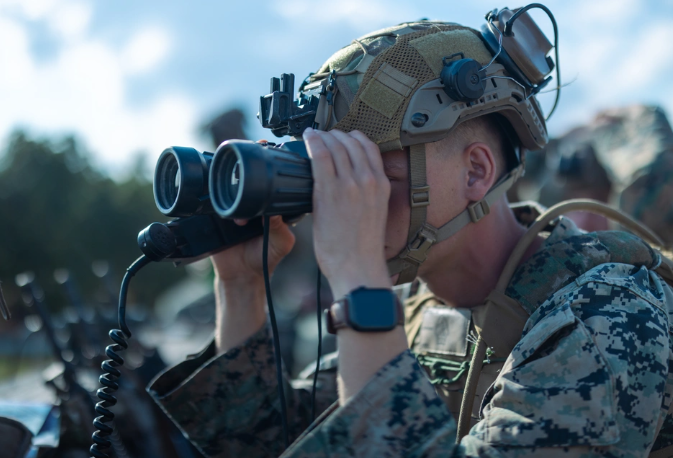
Once you learn to command yourself, your awareness begins to expand.
Most people hear the word awareness and immediately think of situational awareness. In the military and law enforcement, we are trained to identify threats, recognize danger, and anticipate what could happen next. Those are essential skills, but they represent only one dimension of awareness. The leaders who consistently make sound decisions possess something much broader. They understand themselves just as well as they understand the environment around them.
Self-awareness is where it begins. It requires the humility to recognize your own strengths without becoming arrogant, and your own weaknesses without becoming discouraged. It means acknowledging your biases, your emotional triggers, your blind spots, and the experiences that shape the way you interpret the world. Every leader carries a unique lens formed by upbringing, hardship, success, failure, education, and culture. That lens influences every decision we make.
The problem is not that we see the world through a lens. The problem is believing our lens is objective reality.
One of the greatest lessons I have learned is that two honest people can witness the exact same event and leave with completely different interpretations. Neither person has to be dishonest. Neither person has to be malicious. They simply perceive reality through different experiences. The moment we accept that possibility, we become less interested in defending our perspective and more interested in understanding someone else’s.
That realization changes the way we lead.
Instead of assuming we already have the answer, we begin asking better questions. What am I missing? What assumptions am I making? What information have I not considered? What perspective have I failed to understand? Those questions are not signs of uncertainty. They are signs of maturity. The most dangerous leader is not the one who lacks knowledge. It is the one who believes they already possess all of it.
Awareness also means understanding the people we lead. Leadership has never been about managing tasks alone. It has always been about understanding human beings.
Every person carries burdens that are invisible to everyone else. Family struggles, financial stress, grief, health concerns, exhaustion, self-doubt, and experiences that shape how they respond to adversity. A leader who only sees performance often misses the person behind it.
That does not mean lowering standards or avoiding accountability. Quite the opposite. I have found that accountability is most effective when people know it comes from a genuine desire to help them improve rather than from someone’s need to exercise authority. Human connection does not replace accountability. Sometimes, it is what makes accountability meaningful.
Awareness also extends beyond individuals. Every organization develops a culture, whether intentionally or by default. That culture influences every decision people make. It determines whether they speak up when something feels wrong or remain silent to avoid criticism. It determines whether mistakes become opportunities to learn or reasons to assign blame. It determines whether people compete with one another or commit to one another.
Culture is rarely created by mission statements hanging on a wall. It is created by what leaders consistently model, encourage, tolerate, and correct.
People pay far more attention to what leaders do than what leaders say.
If a leader speaks about integrity but cuts corners, people remember the shortcut. If they preach humility but refuse feedback, people remember the ego. If they demand accountability but never accept responsibility for their own mistakes, people quickly learn that accountability only applies to everyone else.
Leadership is always teaching. The only question is what lesson people are learning. Awareness also requires intellectual humility. The longer I have served, the more comfortable I have become saying three simple words: “I don’t know.”
There was a time when I believed leaders were expected to have every answer. Experience taught me something different. Strong leaders do not pretend to know everything. They surround themselves with people who know what they do not. They ask questions. They invite disagreement. They seek perspectives that challenge their own because they understand that better decisions emerge when ideas are tested rather than protected.
That requires confidence, not insecurity. An insecure leader surrounds themselves with agreement. A secure leader surrounds themselves with truth.
The pursuit of awareness never ends because people never stop changing. Communities evolve. Organizations evolve. Technology evolves. Even our understanding of human behavior continues to grow. Leadership demands that we grow with it.
Self-command gives us the discipline to pause before reacting. Awareness gives us the wisdom to understand what deserves our response. But awareness alone is not enough.
A leader can possess remarkable self-awareness, understand human behavior, recognize their own biases, and read a room with incredible accuracy. Yet none of that matters if they choose to ignore what they know. Knowledge does not make someone a leader.
Choice does.
Awareness simply illuminates the path. Character determines whether we have the courage to walk it. Every decision becomes an opportunity to act with integrity or compromise it. To accept responsibility or shift blame. To remain humble or allow ego to take control. To serve others or serve ourselves.
Over time, those choices become habits. Those habits become character. And character is what people trust when everything else becomes uncertain. Because in the end, leadership is not measured by what we know. It is measured by who we consistently choose to become.
That is where the next pillar begins. Character is not something we are born with. It is something we build, one decision at a time.
Pillar Three: Character
Character is often spoken about as though it were something we either possess or we do not. I have never believed that. Character is built. It is shaped by thousands of decisions that no one else sees. Every time we choose integrity over convenience, humility over ego, responsibility over excuses, or service over self-interest, we strengthen it. Character is not defined by our best moments. It is revealed by our most ordinary ones.
People often confuse reputation with character. Reputation is what people think about you. Character is who you are when nobody is watching. The two are not always the same. A leader can have an impressive résumé, decades of experience, and a title that commands respect, yet possess very little character. Conversely, I have known patrol officers, young soldiers, dispatchers, teachers, and parents whose names will never appear in leadership books, but whose character quietly transformed the people around them. That is because character is not measured by recognition. It is measured by consistency.
Anyone can demonstrate integrity when the decision is easy. Character emerges when doing the right thing carries a personal cost. It is choosing honesty when deception would be easier. Accepting responsibility when blame could be shifted elsewhere. Remaining humble after success and remaining principled after failure. Those moments rarely make headlines, but they shape the leader we become.
One of the greatest misconceptions about leadership is that authority creates trust. It does not. Authority may influence behavior because people are required to comply. Trust changes behavior because people choose to. There is a big difference between compliance and commitment. Compliance satisfies policy. Commitment builds culture. The difference between the two is almost always character.
People are remarkably perceptive. They may not remember every policy you implemented or every speech you gave, but they will remember whether your actions consistently matched your words. They remember whether you accepted responsibility when things went wrong. They remember whether you gave credit away instead of taking it for yourself. They remember how you treated the newest member of the team when nobody else was paying attention. Leadership is always being evaluated, not during presentations or ceremonies, but during conversations, difficult decisions, and moments of uncertainty.
Character is what remains when circumstances remove every advantage. It is easy to be patient when life is comfortable. It is easy to be compassionate when people agree with you. It is easy to be confident when everything is going your way. Leadership begins when those conditions disappear. Pressure does not create character. Pressure reveals the character we have been building all along.
Over the years, I have become convinced that people are not inspired by perfection. They are inspired by authenticity. Leaders who admit mistakes become more credible, not less. Leaders who ask questions become more approachable, not weaker. Leaders who continue learning demonstrate confidence, not insecurity. Character has never required perfection. It requires honesty, humility, and the courage to keep growing.
The strongest leaders I have known were not the ones who convinced everyone they had all the answers. They were the ones who were secure enough to admit when they did not. They listened before speaking. They corrected without humiliating. They challenged without demeaning. They understood that leadership is not about winning every argument. It is about helping people become better than they were yesterday.
Humility is often misunderstood as thinking less of yourself. I see it differently. Humility is thinking less about yourself. It is the confidence to seek advice, the maturity to celebrate someone else’s success, and the discipline to place the mission and the people ahead of personal recognition. Ironically, those are often the leaders who leave the greatest legacy because they never made leadership about themselves.
Over time, I have come to believe that every decision either deposits into or withdraws from what I think of as the bank of trust. Every honest conversation is a deposit. Every promise kept is a deposit. Every difficult decision made fairly is a deposit. Every moment of consistency is a deposit. The opposite is equally true. Every shortcut, every excuse, every broken promise, every act of hypocrisy, and every abuse of authority becomes a withdrawal. Eventually, every leader reaches a moment when they need people to trust them. The question is whether they have spent years making deposits or making withdrawals.
Character determines that answer.
It also prepares us for the next pillar.
Character, by itself, is deeply personal. It shapes who we are, but leadership has never existed for our benefit alone. Character is not the destination. It is the foundation that allows us to serve something greater than ourselves. Once character earns trust, leadership stops being about the leader. It becomes about the people they have been entrusted to develop, protect, and elevate.
That is where the fourth pillar begins.
Pillar Four: Service
Leadership reaches its highest purpose when it stops being about the leader.
Character earns trust, but trust carries responsibility. Once people place their confidence in you, leadership is no longer about personal achievement. It becomes about serving those who have entrusted you with their time, effort, and belief. That responsibility should never be taken lightly.
For years, I have said that we manage situations, but we lead people. Situations require decisions. People require leadership. Confusing the two is where many leaders lose their way. A crisis may demand authority, but people need guidance long after the crisis has passed.
Service is often mistaken for weakness or passivity. It is neither. Serving others does not mean lowering standards or avoiding difficult conversations. In many cases, it means having the courage to hold people accountable because you care about who they are capable of becoming. The easiest leader is the one who ignores problems. The servant leader steps into uncomfortable conversations because growth rarely happens inside someone’s comfort zone.
The best leaders I have worked with never measured their success by how much authority they possessed. They measured it by the people they developed. They taught, coached, challenged, and created opportunities for others to succeed. They understood that leadership is not about creating followers. It is about developing people who are capable of leading themselves and, one day, leading others.
That requires humility.
When leadership becomes centered on recognition, influence begins to fade. Ego demands attention. Service gives it away. Ego asks, “How do I look?” Service asks, “How can I help?” Those are two very different questions, and they create two very different cultures.
People know the difference.
They know when they are valued only for what they produce, and they know when someone genuinely cares about their growth. That does not mean every decision will make people happy. Leadership is not about popularity. Sometimes the most caring decision is also the most difficult one. Service is not measured by how comfortable people feel today. It is measured by whether they become stronger tomorrow.
The greatest investment a leader can make is not in equipment, policies, or technology.
It is in people.
Organizations improve when people improve. Culture improves when people improve. Performance improves when people improve. Everything else is built on that foundation.
Every interaction becomes an opportunity to leave someone better than you found them. Sometimes that happens through encouragement. Sometimes it happens through correction. Both are acts of service when they are rooted in respect, honesty, and a genuine desire to help another person grow.
Leadership is never about making yourself indispensable.
It is about making others more capable.
The measure of a leader is not how much they are needed. It is how well the people around them perform when they are no longer there. That is the legacy of service.
Service, however, is only as effective as the leader behind it. Good intentions cannot replace preparation. Compassion cannot compensate for poor judgment. A leader may genuinely care about people, but without the knowledge, skill, and discipline to make sound decisions, that care can unintentionally create more harm than good.
Service gives leadership its purpose.
Competence gives leadership its credibility.
That is why the next pillar is not simply about knowing more. It is about committing yourself to a lifetime of learning, training, and preparation, because the people you lead deserve nothing less.
Pillar Five: Competence
Leadership carries an obligation to become better than you were yesterday.
Good intentions matter, but they are never enough. Character may earn trust, and service may give leadership its purpose, but without competence, both eventually reach their limits. People deserve leaders who care enough to prepare.
Competence is more than technical skill. It is the discipline to continually learn, question your assumptions, and refine your craft. It is recognizing that no promotion, degree, certification, or number of years of experience marks the end of your education. The moment a leader believes they have nothing left to learn, they begin falling behind.
Experience alone does not create competence.
Experience without reflection simply creates repetition.
I have met people with 20 years of experience who were, in reality, repeating the same year 20 times. I have also met younger leaders who actively sought feedback, challenged their own thinking, and learned from every success and every mistake. Their competence grew because their curiosity never stopped.
The strongest leaders remain students.
They study their profession. They study people. They study history because history often repeats itself. They study psychology because every decision involves human behavior. They study communication because the best decision means very little if it cannot be understood. Most importantly, they study themselves, because the greatest limitation a leader will ever face is often the one they have yet to recognize.
Competence also demands humility.
There is strength in saying, “I don’t know.”
There is even greater strength in following it with, “Let’s find the answer.”
Too often, leaders believe admitting uncertainty weakens their credibility. In my experience, the opposite is true. Pretending to know everything eventually destroys trust. Honest curiosity strengthens it.
Competence is built long before anyone notices it.
It is built in early mornings spent studying when no one is watching. It is built during training that pushes you beyond what is comfortable. It is built by seeking criticism instead of avoiding it, by reviewing mistakes instead of defending them, and by accepting that excellence is never a finish line.
This is especially true in professions where decisions carry real consequences. In the military, law enforcement, fire service, emergency medicine, and countless other fields, people often have only one opportunity to make the right decision. Under pressure, we rarely rise above our level of preparation. We fall back on it.
Preparation is not about eliminating uncertainty.
It is about reducing it.
Every hour invested in learning, every difficult conversation, every realistic training scenario, and every honest after-action review become investments in future decisions. Competence is built one deliberate step at a time, and when the moment arrives, those investments begin paying dividends.
Ironically, the leaders who possess the greatest competence are often the least interested in proving it. They ask questions. They listen. They seek perspectives different from their own.
They understand that confidence rooted in ego eventually becomes arrogance, while confidence rooted in competence becomes quiet conviction. There is a difference. Arrogance believes it has arrived. Competence understands there is always another level to reach.
That mindset transforms leadership from something we achieve into something we continually pursue.
Competence does more than improve our decisions. It gives the people around us confidence that they are being led by someone who has done the work. Trust grows stronger when people know their leader has prepared and trained while continuing to learn alongside them.
Yet even competence has its limits.
The world changes. Organizations change. Communities change. The methods that solved yesterday’s problems may not solve tomorrow’s. Knowledge that remains rigid eventually becomes outdated, regardless of how valuable it once was.
Competence teaches us what to do.
The next pillar teaches us when to change.
That is where leadership requires adaptability.
Pillar Six: Adaptability

No leader has the luxury of leading in a world that never changes.
Communities evolve. Technology advances. Organizations grow. The problems we face today are often different from the ones we faced a decade ago, and they will continue to change. Leadership that refuses to adapt eventually becomes disconnected from the people it is supposed to serve.
Adaptability is often mistaken for changing your values to fit the moment. I believe it is the opposite. Your principles should remain constant. What changes is how you apply them. The mission may stay the same, but the path to accomplishing it rarely does.
Throughout my career, I have learned that uncertainty is not the exception. It is the environment. Whether in combat, on patrol, or leading people through difficult situations, things rarely unfold exactly as planned. Information changes. Circumstances change. People change. A leader who cannot adjust to new information will eventually begin making decisions based on the past instead of the present.
That requires humility.
Some of the strongest leaders I have known were willing to change their minds when the facts changed. They never viewed it as weakness. They viewed it as responsibility. They understood that protecting their ego was never more important than making the right decision.
There is a difference between consistency and rigidity. Consistency means remaining faithful to your principles. Rigidity means refusing to learn. One builds trust. The other slowly destroys it.
Adaptability also requires emotional discipline. Stress has a way of narrowing our thinking. Fear pushes us toward certainty, even when certainty does not exist. Fatigue can cause us to cling to familiar solutions simply because they are comfortable. Leaders who recognize those tendencies in themselves are far more likely to pause, reassess, and make better decisions.
That is why adaptability begins long before circumstances force it. It begins with curiosity. It begins with listening. It begins with the willingness to ask whether there might be a better way.
The leaders who continue growing are rarely the ones who believe they have arrived. They remain students. They seek different perspectives. They challenge their own assumptions. They understand that learning is not something we do early in our careers. It is something we commit to for the rest of our lives.
Every setback has something to teach us if we are willing to pay attention. Every mistake contains information. Every challenge offers an opportunity to grow. The goal is not to avoid adversity. The goal is to become wiser because of it.
Adaptability allows leadership to endure because it prevents us from becoming prisoners of our own success. Yesterday’s victories do not guarantee tomorrow’s. The willingness to learn, adjust, and improve is what keeps leaders relevant in a changing world.
Still, even adaptability does not answer the most important question.
A leader can possess self-command, awareness, character, a heart for service, competence, and the ability to adapt. But without a reason greater than themselves, those qualities eventually lose their direction.
Every leader, sooner or later, has to answer one question.
Why do I lead?
That question brings us to the final pillar.
Pillar Seven: Purpose

Every leader eventually reaches a point where skill is no longer enough.
There comes a time when experience, training, and competence can no longer answer the question that matters most. The excitement of promotion fades. Recognition becomes temporary. Success no longer provides the fulfillment it once did. At some point, every leader has to ask themselves why they continue to lead.
Purpose answers that question.
Without purpose, leadership eventually becomes transactional. Decisions become centered on personal success, protecting a reputation, or climbing to the next position. When leadership becomes about the individual, every criticism feels personal, every setback becomes discouraging, and every accomplishment quickly loses its satisfaction because there is always another achievement to chase.
Purpose changes that perspective.
When leadership is rooted in service, growth, and leaving people better than you found them, success is no longer measured by what you accumulate. It is measured by the lives you influence. Your focus shifts away from building your own legacy and toward investing in someone else’s future.
Purpose has a way of grounding us when everything around us feels uncertain. It reminds us why we chose this profession long after the excitement has faded. It gives us something to hold onto when the right decision is also the difficult one. Every leader will eventually face criticism, disappointment, and moments when doing what is right comes at a personal cost. Purpose reminds us that those moments are not reasons to quit. They are reminders of why leadership matters.
Over the years, I have come to believe that every leader leaves something behind. Some leave policies. Some leave awards. Some leave titles that eventually fade into history. The leaders who make the greatest impact leave behind people who are stronger, wiser, and more capable because they crossed paths with them.
That is the legacy worth pursuing.
Purpose also changes the way we see adversity. Challenges stop being interruptions to our lives and become part of our development. Failure becomes a teacher instead of an identity. Success becomes an opportunity to remain humble rather than a reason to seek recognition. The circumstances themselves may not change, but the meaning we assign to them does.
When I step back and look at these seven pillars, I no longer see them as separate qualities. I see them as one continuous process of becoming.
Self-command teaches us to govern ourselves before attempting to lead others. Awareness teaches us to see ourselves, others, and the world more clearly. Character determines what we do with that awareness. Service shifts our focus away from ourselves and toward the people we have been entrusted to lead. Competence prepares us to lead well. Adaptability allows us to continue growing in a changing world. Purpose gives every one of those pillars direction and meaning.
None of them stand alone.
Remove self-command and the rest eventually lose their foundation. Remove awareness and judgment begins to fail. Remove character and trust disappears. Remove service and leadership becomes self-centered. Remove competence and good intentions become poor decisions. Remove adaptability and growth comes to a stop. Remove purpose and leadership loses its reason for existing.
When I first began thinking about leadership, I believed it was something you eventually arrived at. I thought it came with experience, rank, education, or enough time spent making difficult decisions. Over the years, I have learned that leadership is not a destination. It is a discipline.
It is the daily decision to master yourself before attempting to influence others. It is the willingness to remain curious when certainty would be more comfortable. It is choosing character when compromise would be easier, serving when recognition is unlikely, preparing when no one is watching, adapting when circumstances demand it, and remaining anchored to a purpose greater than yourself.
None of those choices are made once. They are made every day.
That is why leadership can never be reduced to a position or a title. Titles can grant authority, but they cannot create trust. They can assign responsibility, but they cannot inspire commitment. Those things are earned through consistent actions over time.
I have been fortunate to serve in the military, in law enforcement, and alongside remarkable men and women who taught me lessons no classroom ever could. Some taught me through their example. Others taught me through their mistakes. Every experience reinforced the same truth: people rarely remember what authority you held. They remember how you made them feel, how you treated them under pressure, and whether you helped them become better than they were before they met you.
That, to me, is leadership.
If there is one idea I hope remains with you after reading this, it is that leadership is not reserved for those with rank. It belongs to anyone willing to accept responsibility for their own actions and recognize the influence they have on the people around them. Whether you are leading a family, a patrol squad, a military unit, a business, or simply leading yourself through a difficult season of life, the principles remain the same.
Lead yourself first.
Everything else grows from there.
The seven pillars are not a checklist to complete. They are practices to return to throughout your life. There will be seasons when one pillar demands more attention than another. There will be moments when you stumble. Every leader does. The goal has never been perfection. The goal is to continue growing with humility, honesty, and intention.
When you invest in your own self-command, your awareness deepens. When awareness shapes your character, trust begins to grow. Trust allows you to serve others with authenticity. Service compels you to pursue competence. Competence gives you the confidence to adapt. And through it all, purpose reminds you why the journey matters in the first place.
Leadership is not measured by the number of people who follow you. It is measured by the number of people who become better because you chose to lead. Long after the titles are gone, the awards have faded, and the career has come to an end, your greatest legacy will never be the position you held. It will be the lives you helped shape.
That is the kind of leadership worth pursuing.
_____________________________
Ayman Kafel is a patrol sergeant, combat veteran, and founder of Project Sapient, with more than 20 years of operational experience. He served in Iraq as a U.S. Army soldier and translator and has worked in law enforcement roles including SWAT, DEA task force work, and plainclothes interdiction; he also holds a master’s degree in counterterrorism. For The Havok Journal, he writes from that background on law enforcement, service, training, stress, resilience, and national security, often focusing on the physical and psychological demands of high-stress work. Follow Project Sapient on Instagram, YouTube, and all podcast platforms for engaging content. He can be reached at ayman@projectsapient.com.
As the Voice of the Veteran Community, The Havok Journal seeks to publish a variety of perspectives on a number of sensitive subjects. Unless specifically noted otherwise, nothing we publish is an official point of view of The Havok Journal or any part of the U.S. government.
Buy Me A Coffee
The Havok Journal seeks to serve as a voice of the Veteran and First Responder communities through a focus on current affairs and articles of interest to the public in general, and the veteran community in particular. We strive to offer timely, current, and informative content, with the occasional piece focused on entertainment. We are continually expanding and striving to improve the readers’ experience.
© 2026 The Havok Journal
The Havok Journal welcomes re-posting of our original content as long as it is done in compliance with our Terms of Use.


