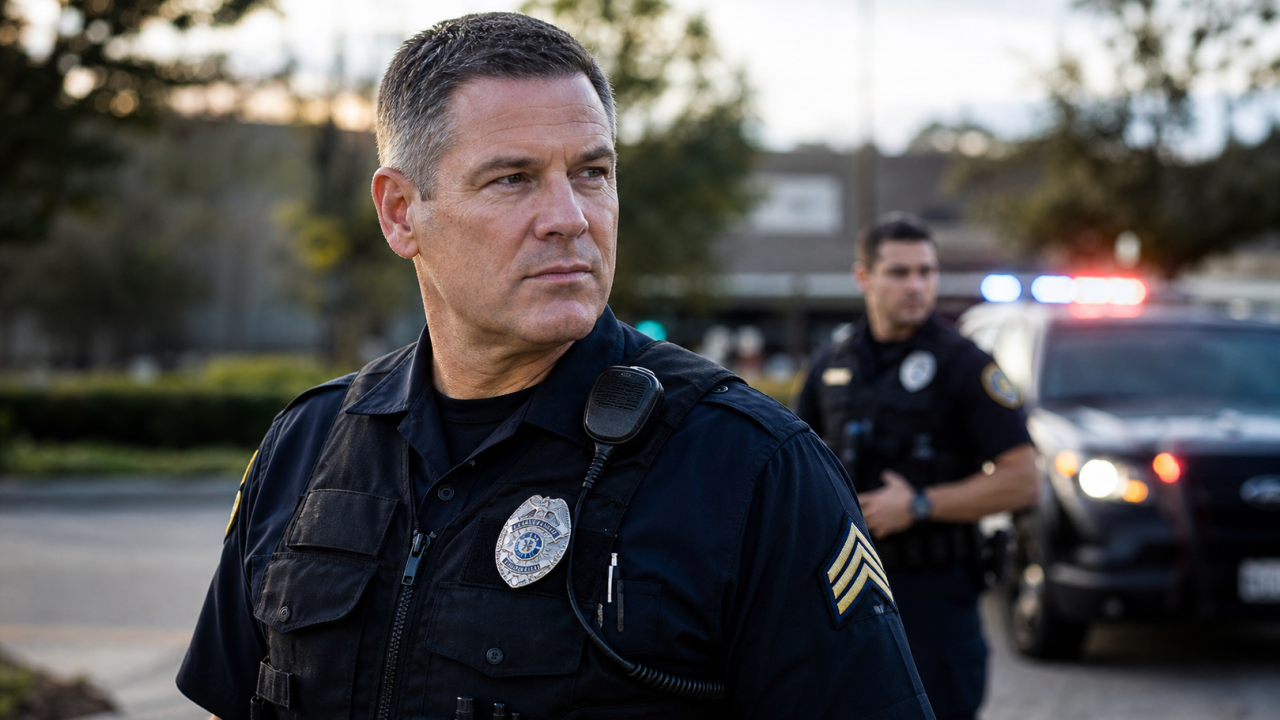
I recently listened to Episode 294 of The Shawn Ryan Show, with former Delta Force commander Pete Blaber. It was an outstanding episode, but more than that, it was one of those conversations that forces you to sit with what you just heard. Not because it was overly complex or filled with buzzwords, but because it was grounded in something that is often missing: common sense. What really captured my interest was his perspective on leadership, specifically what he calls leadership climate. The way he explained it stripped away everything unnecessary and brought it back to something real, something you can actually feel and observe. It immediately made me think about law enforcement, about the environments I have worked in, and about the leaders I have seen, both good and bad.
There are some very good leaders in law enforcement. I have been fortunate enough to work around a few of them. But if we are being honest, they are the exception, not the rule. More often than not, what we see are not leaders, but managers. People who have been selected, promoted, and placed into positions of authority based on how well they tested, how well they interviewed, or how well they navigate a process. Not necessarily based on how they actually performed when it mattered. Not based on how they treated people. Not based on whether others would willingly follow them when things got difficult. There is a difference between someone who knows how to check the boxes and someone who has earned the trust of the people around them, and that difference becomes very clear once they are put in a position of responsibility.

That is where I think we get it wrong. We treat leadership like it is something that is granted. Like it comes with rank, title, or assignment. Stars, bars, stripes, whatever you want to call it. We attach leadership to position, and in doing so, we overlook something far more important.
Leadership, to me, is not about any of those things. It is not something you put on your chest or on your collar. It is not something you gain the moment you promote. It is a character trait. It exists within every single person, regardless of rank, title, or profession. Some people develop it. Some people ignore it. Some people never even realize it is there.
When I say leadership is a character trait, I am talking about something deeper than authority. I am talking about how a person shows up every day. How they treat others when there is nothing to gain from it. How they carry themselves when no one is watching. It is in the way they take responsibility, not just for their own actions, but for the impact they have on others. It is in their ability to remain steady when things are chaotic, to think clearly when others are emotional, and to act with purpose when hesitation would be easier. Those are not skills you develop for a promotional exam. Those are qualities that are built over time, through experience, through self-reflection, and through a willingness to be honest with yourself.
Leadership as a character trait also means influence without authority. It means people listen to you not because they have to, but because they want to. It means your presence carries weight, not because of your rank, but because of your consistency. People know what they are going to get from you. They know you are not going to shift depending on who is in the room. They know you are going to be fair, that you are going to hold the standard, and that you are going to hold yourself to that same standard. That kind of leadership does not require a title. In fact, I have seen some of the strongest leaders in this profession who never held formal rank, but they influenced everyone around them, including the people who technically outranked them.
On the flip side, I have seen people with rank who had none of those qualities. People who relied entirely on their position to lead, who needed to remind others of their authority, who confused control with leadership. That is not leadership. That is dependency on a system that gives you power. And the moment that system is not there, the moment that title is removed, there is nothing left. No influence, no trust, no respect, just a position that no longer exists.
That is why I believe leadership has to be understood as something internal before it is ever external. If you do not have the character to lead without rank, you will not lead effectively with it. Rank might give you compliance. It might give you temporary control. But it will never give you genuine buy-in. It will never give you a team that is willing to go beyond the minimum, to think, to adapt, and to push themselves because they believe in what they are part of.
Blaber’s concept of leadership climate ties directly into this. Because climate is not created by rank alone. It is created by the collective behavior of leaders at every level, and if leadership is reduced to a title instead of a character trait, that climate will reflect it. You will see environments where people are more concerned with appearances than performance, where decisions are made based on perception rather than reality, and where initiative is stifled because it does not fit neatly within a controlled structure.
But when leadership is understood as a character trait, when individuals at every level take ownership of how they show up, how they influence others, and how they contribute to the environment around them, everything changes. You start to see accountability that is not forced, but chosen. You start to see people stepping up, not because they were told to, but because they recognize that leadership is not reserved for a select few. It is something that exists within all of us, waiting to be developed or ignored.
There is a difference between what leaders say their organization is and what it actually feels like to work inside it. Most leaders will tell you they value teamwork, initiative, and accountability. They will put it in mission statements, repeat it at roll call, and write it into policies and leadership philosophies. On paper, it all sounds right. On paper, most organizations look solid. But none of that defines the leadership climate. The climate is defined by what your people feel when they show up to work. It is in how they make decisions when you are not standing next to them. It is in whether they speak up or stay silent. It is in whether they are trying to grow or just trying to get through the shift without drawing attention. It is in whether they go home feeling like they are part of something or feeling like they are just surviving another day.
Blaber explains leadership climate in a way that cuts through everything else. You do not define it. You observe it. You feel it. Like weather, it is immediately apparent if you are paying attention. You can walk into a squad room, a briefing, or a scene and feel it. You can tell if people are engaged or checked out, if they trust each other or if they are guarded, if they are confident or if they are hesitant. That is not by accident. That is the result of leadership over time.
In law enforcement, that climate is not theoretical. It is operational. I have worked in environments where officers were empowered, where they were trusted to think, to make decisions, and to operate within intent. Those teams functioned the way they should. Communication was natural. There was ownership in the work. Mistakes were addressed, but they were used to build, not destroy. People wanted to be there. They took pride in what they were doing and in who they were doing it with.
I have also worked in environments where that was not the case. Where officers were so conditioned to second-guess themselves that even basic decisions became something they hesitated on. I have had officers call me to ask if they were allowed to eat. That is not a discipline issue. That is not a training issue. That is a leadership issue. That is what happens when people are placed in an environment where initiative is punished, where every action is scrutinized, and where the safest move is to do nothing unless you are told otherwise.
When I read about or see officers second-guess themselves, I can almost trace it back to their respective chains of command. The worst kinds of leaders in law enforcement and the military are the authoritarian types. They suck the life out of the organization, the officers, and the rest of the chain of command. That kind of climate does not just affect morale. It affects performance. It affects decision-making. It affects safety. When you create an environment where people are afraid to act, you are creating hesitation. And hesitation in this profession can have real consequences.
One of the most important things Blaber emphasizes is that leadership climate is not driven by one person at the top. It is the sum total of decisions made by all leaders within the organization. That includes sergeants, senior officers, anyone who has influence over others. You can have a strong chief, but if you have a toxic supervisor on a shift, that is the climate those officers will experience. That is what will define their day-to-day reality.
I have seen good officers burn out, shut down, or leave not because of the job itself, but because of the environment they were working in. And that is the part that leaders have to take ownership of. If you allow that environment to exist, you own it. It does not matter what your intent is. It does not matter what you say. What matters is what you allow.

Toxic leadership does not always look the way people expect it to. It is not always loud or aggressive. Sometimes it is quiet. Sometimes it is disguised as maintaining standards. It shows up in micromanagement, in leaders who need to be involved in everything, in those who correct publicly instead of mentoring privately, and in those who feel the need to announce their presence at every scene. It creates a culture where people stop thinking and start waiting. Waiting for direction. Waiting for approval. Waiting to not get in trouble. I have seen police chiefs make calls on fluid situations from the comfort of their home or office rather than from the field. They are not feeling, seeing, hearing, or smelling what the officers out there are dealing with.
That is not what we need. We need people who can think, who can assess, and who can act. You do not build that by tightening control. You build that by creating a climate where thinking is expected, where communication is open, and where people are trusted to operate within intent. The strongest leaders and chiefs are those who are with their officers in the field during a critical incident. I am not talking about solely running the entire scene, but about being available for whatever the officers need.
A strong leadership climate is built on trust, consistency, and accountability. It is built on leaders who are approachable, who listen, and who are willing to address problems directly. It is built on an environment where people can speak up without fear of being shut down. Because if your people cannot come to you with the truth, then you are not leading with the full picture. You are making decisions based on what you want to hear, not what you need to hear.
Leadership climate is not something you set once and forget. It requires constant attention. It requires you to stay connected to your people, to understand what they are experiencing, and to be willing to adjust when necessary. It requires presence, not just physically, but mentally. Because once you lose touch with what is actually happening, you start leading in a vacuum.
At the end of the day, your leadership climate is not what you think it is. It is what your people experience on their worst day. It is what they say about the job when you are not around. It is whether they feel trusted or controlled, whether they are growing or just surviving.
In this profession, we spend a lot of time preparing for critical incidents. We train for the worst day. But the environment we create every day determines how people perform when that day comes. Leadership climate is not a soft concept. It is operational. It is the difference between initiative and hesitation, between communication and silence, between a team that moves forward and one that falls apart under pressure.
And it all comes back to something simple. Leadership is not about rank. It is not about position. It is a character trait. And the climate we create is a direct reflection of that character, multiplied across every leader in the organization. It shows up in the smallest moments that most people overlook: the tone you use when correcting someone, the patience you have when someone makes a mistake, the consistency you maintain when no one is watching. Those moments compound over time. They either build trust or they erode it. They either create an environment where people feel confident to act or one where they hesitate and second-guess themselves.
The reality is, your people are always watching. Not just what you say, but what you do. They are watching how you handle stress, how you treat others, and how you respond when things do not go your way. That is what defines you as a leader, not the title on your chest. And whether you realize it or not, they are taking their cues from you. They are shaping their behavior based on what you tolerate, what you reinforce, and what you ignore.
If we are serious about improving law enforcement, about building stronger teams and better outcomes, then we have to start with leadership at its core. Not just who we promote, but how we define leadership in the first place. Because if we continue to treat leadership as a position instead of a character trait, we will continue to create environments that limit the very people we depend on the most.
But if we get it right, if we focus on character, on consistency, on building trust and empowering people, then everything else starts to align. Decision-making improves. Communication improves. Morale improves. And when the moment comes, when the pressure is real and the stakes are high, you are not relying on policy or rank to carry you through. You are relying on people who have been developed in an environment that prepared them to think, to act, and to lead, regardless of the circumstances.
Because that is what leadership climate ultimately produces. Not just better organizations, but better people. And in this profession, that is what matters most.
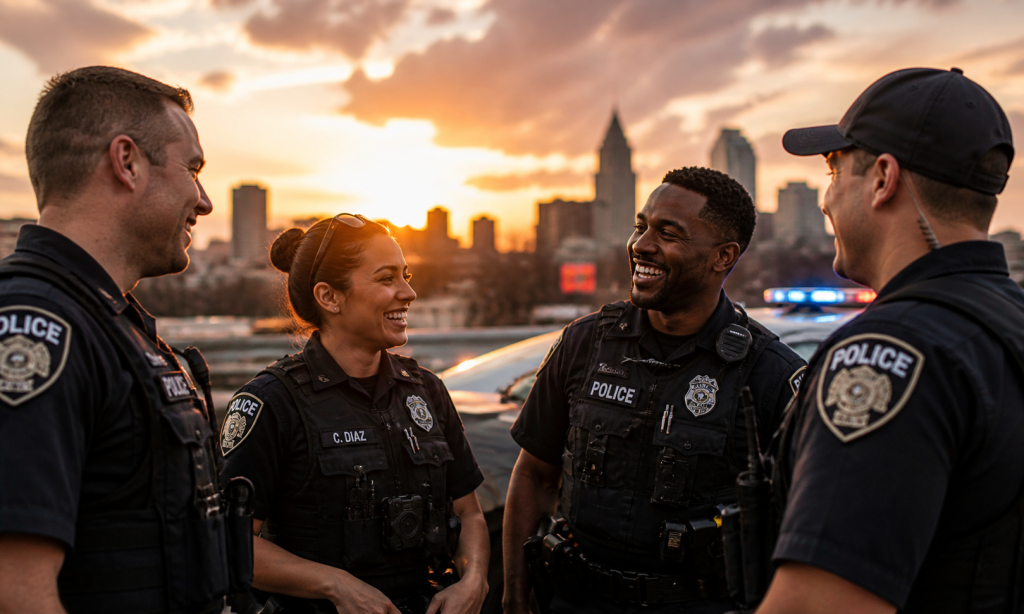
Reference: The Shawn Ryan Show, Episode 294, by The Shawn Ryan Show (YouTube).
_____________________________
Ayman Kafel is a patrol sergeant, combat veteran, and founder of Project Sapient, with more than 20 years of operational experience. He served in Iraq as a U.S. Army soldier and translator and has worked in law enforcement roles including SWAT, DEA task force work, and plainclothes interdiction; he also holds a master’s degree in counterterrorism. For The Havok Journal, he writes from that background on law enforcement, service, training, stress, resilience, and national security, often focusing on the physical and psychological demands of high-stress work. Follow Project Sapient on Instagram, YouTube, and all podcast platforms for engaging content. He can be reached at ayman@projectsapient.com.
As the Voice of the Veteran Community, The Havok Journal seeks to publish a variety of perspectives on a number of sensitive subjects. Unless specifically noted otherwise, nothing we publish is an official point of view of The Havok Journal or any part of the U.S. government.
Buy Me A Coffee
The Havok Journal seeks to serve as a voice of the Veteran and First Responder communities through a focus on current affairs and articles of interest to the public in general, and the veteran community in particular. We strive to offer timely, current, and informative content, with the occasional piece focused on entertainment. We are continually expanding and striving to improve the readers’ experience.
© 2026 The Havok Journal
The Havok Journal welcomes re-posting of our original content as long as it is done in compliance with our Terms of Use.