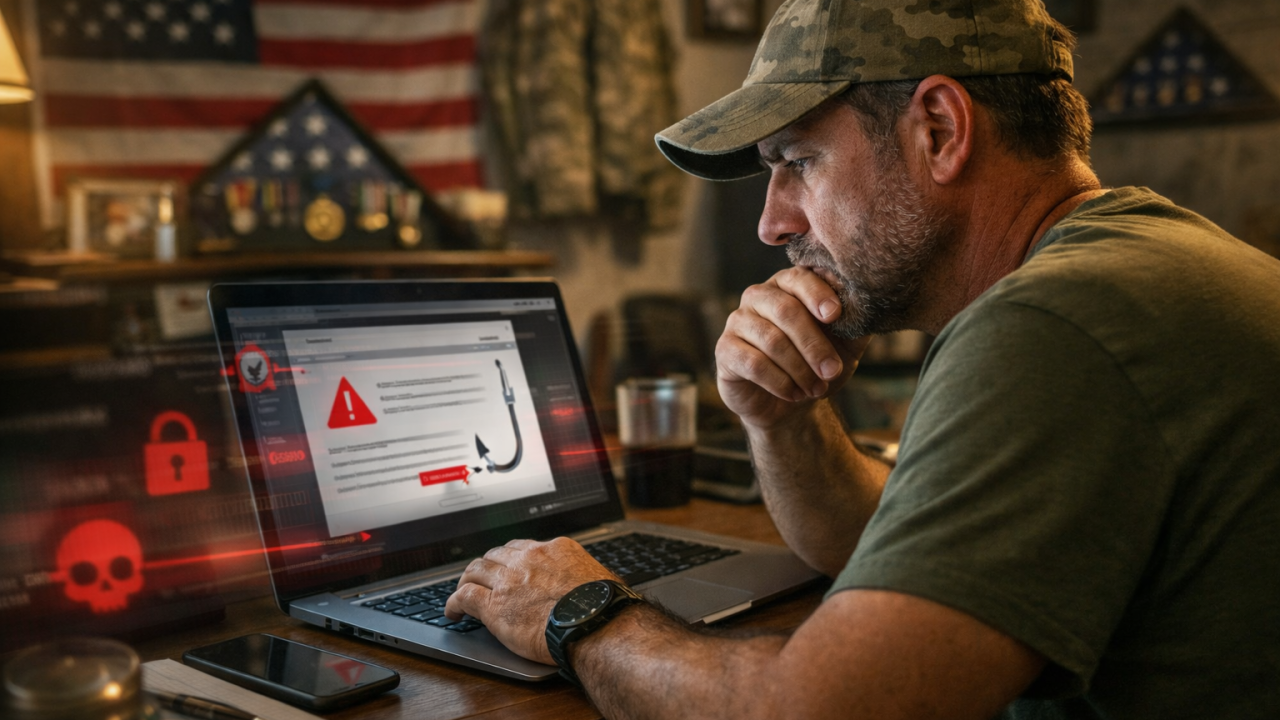
Scammers have figured out exactly who to target, and the military community is high on the list. Deployment schedules, PCS moves, benefits paperwork — there’s a constant stream of legitimate official communication that makes it easy for fraud to blend in.
What makes these scams effective isn’t sophistication. It’s familiarity. They borrow the language, the urgency, and the structure of real military communication closely enough that even sharp, experienced service members and Veterans get caught off guard.
1. Fake DFAS Pay Updates
Texts or emails claiming to be from the Defense Finance and Accounting Service, warning of a pay discrepancy or asking you to “verify” banking details through a link. DFAS doesn’t operate this way. Any message demanding immediate account verification is a red flag — go directly to the official DFAS site instead of clicking through.
2. VA Claim Impostors
Fraudsters posing as VA representatives offer to “expedite” disability claims for a fee, or request personal information to process a claim that doesn’t exist. The VA never charges Veterans to file or process a claim. If someone’s asking for payment to speed things along, that’s the scam.
3. PCS Rental Traps
Service members moving to a new duty station are prime targets for fake rental listings — properties that don’t exist, or are already occupied, with a “landlord” who’s conveniently overseas and needs a deposit wired before you can see the place in person. Always verify a listing through a legitimate property management company before sending money.
4. QR Code Parking Fines Near Bases
A relatively new one: QR code stickers placed on vehicles near base parking, claiming an unpaid fine, that lead to a payment page designed to harvest card information. Before scanning any QR code on a vehicle or in a parking lot, it’s worth running the destination through a link checker to confirm where it actually leads before entering any payment details.
5. Bogus Tricare Surveys
Fake surveys promising a gift card in exchange for personal and insurance information, designed to look like legitimate Tricare outreach. Tricare doesn’t run pay-for-survey campaigns. Treat any unsolicited survey requesting personal health or insurance details with suspicion.
6. Social Media Commander Spoofs
Fraudsters create fake social media profiles impersonating commanders or senior leadership, then reach out to junior service members or their families requesting money, gift cards, or personal information under the guise of an official request. Real chains of command don’t conduct business this way over social media DMs.
7. Holiday Charity Fraud
Fake charities soliciting donations “for deployed troops” or “wounded Veterans” around the holidays, often using real organization names with slightly altered URLs or payment processors. Verify any charity through Charity Navigator or the IRS’s tax-exempt organization search before donating, especially during high-traffic giving seasons.
8. Spearphishing Using Unit Rosters
Sophisticated attackers obtain unit roster information — sometimes through prior breaches, sometimes through social engineering — and craft highly personalized phishing emails referencing real names, ranks, and units to appear legitimate. These are harder to spot because the details check out. When in doubt, verify through a separate communication channel before clicking any link or responding with information.
What to Do If You Spot One
Don’t click. Don’t respond. Report it to your unit’s information security officer, the FBI’s Internet Crime Complaint Center (IC3.gov), or the platform where it occurred.
The faster these get reported, the faster the pattern gets flagged for others.
The military community is a target precisely because trust and chain of command are built into how things operate. Scammers exploit that structure. Staying skeptical of unsolicited requests — even ones that look official — is the best defense available.
Staying ahead of these scams takes the same vigilance the military teaches in every other context — situational awareness applies online too. For more on the threats facing the military community, explore more from our website.
Buy Me A Coffee
The Havok Journal seeks to serve as a voice of the Veteran and First Responder communities through a focus on current affairs and articles of interest to the public in general, and the veteran community in particular. We strive to offer timely, current, and informative content, with the occasional piece focused on entertainment. We are continually expanding and striving to improve the readers’ experience.
© 2026 The Havok Journal
The Havok Journal welcomes re-posting of our original content as long as it is done in compliance with our Terms of Use.