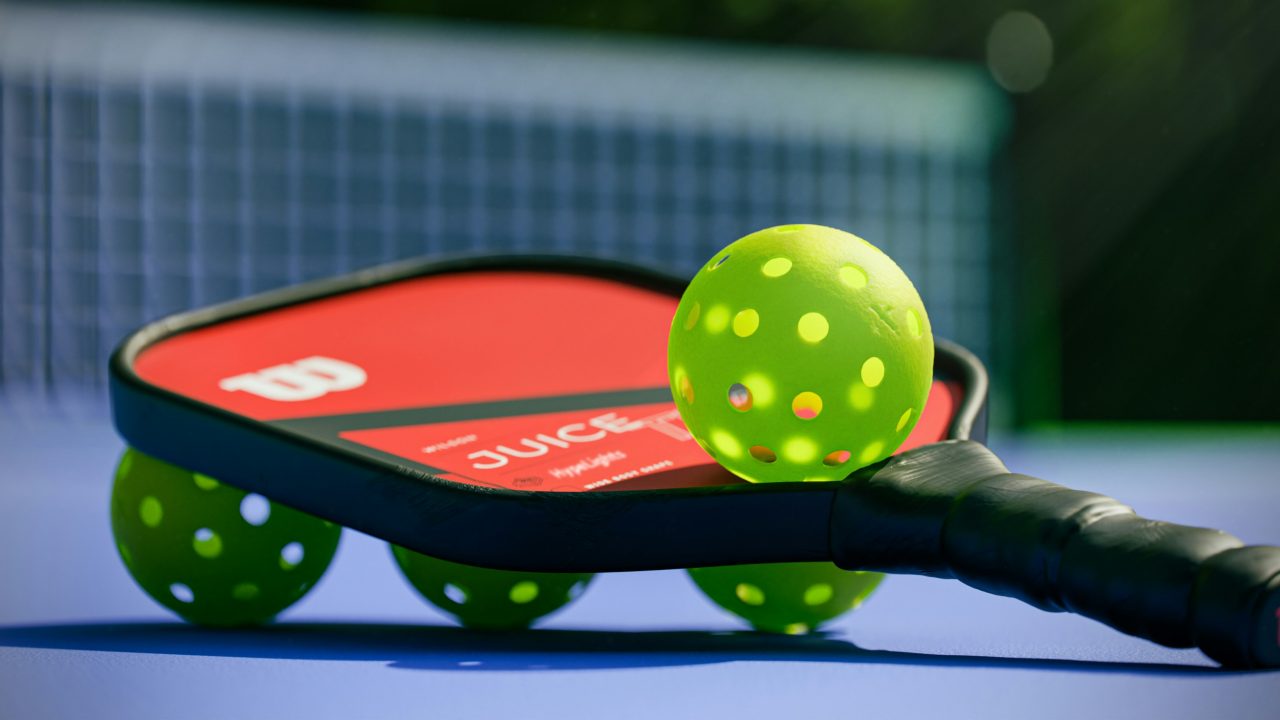
Photo by Brendan Sapp on Unsplash
A few years ago, mentioning pickleball got you a blank stare. Now it has crept onto courts everywhere, and two groups in particular have taken to it with surprising enthusiasm: veterans and retirees. On paper that pairing seems odd. Look a little closer and it makes perfect sense. Pickleball happens to solve several problems that hit these two groups harder than most, and it does so without asking for the athletic prime they may have left behind.
What pickleball actually is
For the uninitiated, pickleball is a racquet sport played on a court roughly a quarter the size of a tennis court, with a paddle and a perforated plastic ball. The smaller court means less ground to cover, and the slower ball keeps rallies going longer. The result is a game that is easy to start and genuinely hard to master.
That gentle on-ramp is the whole point. You can have a decent rally within an hour of picking up a paddle, which almost no other sport allows. The depth reveals itself later, once you start caring about placement and strategy.
Why it suits ageing bodies
The honest appeal for older players is that pickleball is kind to joints that have done their miles. The compact court reduces sprinting and hard pivots, the lighter equipment goes easy on shoulders and elbows, and the lower-impact movement keeps people playing long after tennis or squash would have wrecked their knees.
This matters enormously for veterans, who often carry the physical toll of service into civilian life. A sport that delivers real exercise and real competition without punishing old injuries is rare. Pickleball threads that needle better than almost anything else.
The social pull
Both veterans and retirees tend to face the same quiet challenge after a major life transition: the built-in community disappears. The forces hand you a ready-made group of people who understand you. Retirement removes the colleagues you saw every day. Suddenly the social calendar has gaps that did not used to be there.
Pickleball fills them naturally. It is doubles by default, so you are always playing alongside and against other people, and the culture around it is famously chatty and welcoming. Courts turn into social hubs, and a casual game has a way of turning into coffee afterward. For people rebuilding their circle, that built-in interaction is half the draw.
The competitive itch, scratched gently
Veterans in particular tend to miss competition. Not aggression, exactly, but the structured rivalry of trying to win at something measurable. Pickleball offers that in a low-stakes package. There are ladders, leagues, and tournaments for those who want them, and friendly open play for those who do not.
The scoring is quick and the games are short, so you get the satisfaction of plenty of wins and losses in a single session. It keeps the competitive engine ticking over without the bruising intensity of contact sport, which suits people who have already had their fill of high stakes.
Getting started the right way
The temptation is to grab a cheap paddle and wing it. That works for the first week and then bad habits set in. Picking up proper technique early saves a lot of frustration later, and it dramatically lowers the odds of an avoidable injury that sidelines you for months.
A bit of structured coaching makes the difference. Booking beginner pickleball instruction gets you sound fundamentals from the start, so you spend your energy improving rather than ingraining mistakes you will have to unlearn. For older players especially, learning to move efficiently and strike cleanly protects the body while accelerating the fun.
A sport built for the long haul
What makes pickleball stick is that it grows old with you. The intensity scales to whatever your body can handle on a given day, the social side only deepens with time, and the strategy keeps unfolding for years. There is no point at which you simply age out of it.
For veterans and retirees navigating a stretch of life with more time and fewer built-in routines, that combination is hard to beat. It is exercise, competition, and community in one tidy package, and it asks remarkably little to begin. The boom is no accident. It is the right sport meeting the right people at exactly the right moment.
Buy Me A Coffee
The Havok Journal seeks to serve as a voice of the Veteran and First Responder communities through a focus on current affairs and articles of interest to the public in general, and the veteran community in particular. We strive to offer timely, current, and informative content, with the occasional piece focused on entertainment. We are continually expanding and striving to improve the readers’ experience.
© 2026 The Havok Journal
The Havok Journal welcomes re-posting of our original content as long as it is done in compliance with our Terms of Use.


