Photo by Annie Spratt on Unsplash
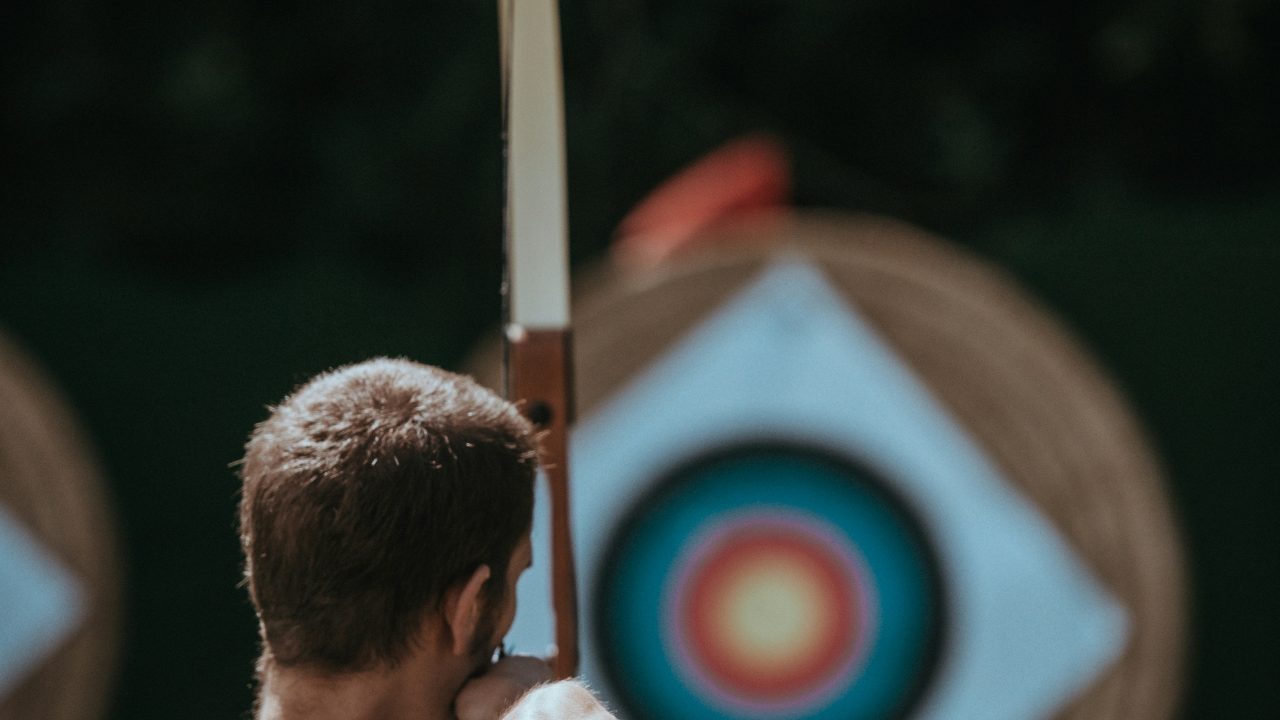
Stand behind an archer at full draw and you will notice something familiar if you have ever served. The stillness. The controlled breathing. The way everything narrows down to one point of focus while the rest of the world goes quiet. Archery and military marksmanship are cousins, separated by a few centuries of technology but built on the same human fundamentals. That overlap is exactly why so many veterans find a bow feels strangely like coming home.
The shot process is the firing sequence
Anyone trained on a rifle learns a sequence: stance, grip, sight picture, breathing, trigger control, follow-through. Archery has a near-identical checklist. Stance, nock, draw, anchor, aim, release, follow-through. The technology could not be more different, but the discipline of running a consistent process every single time is identical.
That is the heart of both pursuits. Accuracy does not come from a single perfect shot. It comes from repeating the same controlled sequence so reliably that variation disappears. Service members already think this way, so the transfer is almost immediate.
Breathing as a weapon
Marksmanship training spends an enormous amount of time on breath. You learn to release during the natural pause, to keep your heart rate from disturbing the sight, to treat your own physiology as something to manage rather than ignore. Archery demands precisely the same control.
A pounding pulse moves the bow. Shallow, anxious breathing wrecks the shot. The archer who learns to settle their breathing under pressure is practicing the exact skill a sniper drills, and veterans tend to arrive already fluent in it. Watching that crossover click into place is one of the quiet pleasures of taking up the sport.
Mental quiet under physical load
Holding a bow at full draw is harder than it looks. Your muscles shake, your mind wants to rush, and the longer you hold the more everything conspires to ruin the release. Learning to stay mentally still while your body screams to let go is a skill with obvious military parallels.
Service teaches people to function when their body is stressed and their adrenaline is up. Archery rewards that same capacity to keep a clear head while under load. The bow becomes a kind of test bench for composure, which is partly why it appeals to people who used to perform under far higher stakes.
Why veterans pick it up fast
Coaches who work with former service members notice the pattern quickly. Veterans rarely struggle with the discipline of repetition that frustrates other beginners. They understand that the boring drills are the point, and they have the patience to grind through a plateau without taking it personally.
If you want to test that overlap yourself, structured coaching is the fastest route in. Local archery instruction gives veterans a setting where their existing instincts pay off immediately, and where a good coach can sharpen the small details that separate decent shooting from genuine precision. Most former service members are surprised by how much of their old training simply carries over.
The therapy nobody calls therapy
There is something steadying about a sport that demands total presence. You cannot let your mind wander to last week or next month while holding at anchor. The shot forces you into the now, and for veterans carrying the kind of mental load that does not switch off easily, that enforced focus is genuinely restorative.
It is not framed as treatment, which is part of why it works. There are no questionnaires and no clinical setting. Just a target, a process, and the quiet satisfaction of a shot that lands where you meant it to. For a lot of people that does more than they expected.
Precision as a lifelong practice
The appeal of archery is that the standard never stops rising. There is always a tighter group to chase, a longer distance to master, a flaw in your form to iron out. It scales with you, demanding more focus the better you get, which keeps the challenge alive for years.
For veterans, that endless refinement echoes the standards they once held themselves to. The uniform is gone, but the pursuit of precision under pressure does not have to be. A bow turns out to be one of the most natural places to keep it alive.
Buy Me A Coffee
The Havok Journal seeks to serve as a voice of the Veteran and First Responder communities through a focus on current affairs and articles of interest to the public in general, and the veteran community in particular. We strive to offer timely, current, and informative content, with the occasional piece focused on entertainment. We are continually expanding and striving to improve the readers’ experience.
© 2026 The Havok Journal
The Havok Journal welcomes re-posting of our original content as long as it is done in compliance with our Terms of Use.