The four simple veteran habits for better aim are showing up with a clear objective, tracking performance data honestly, mastering fundamentals before chasing speed, and keeping a consistent ammunition supply.
These proven military routines transform unstructured civilian shooting practice into measurable skill development. You can improve significantly without requiring expensive new gear.
It happened again last week during a post-service range session. I was running 25-yard handgun drills at a public range while keeping a deliberate pace.
A neighboring shooter noticed and asked what class I was prepping for. My honest answer was that neither was true.
I was simply carrying over what military service ingrained in me years ago. These habits run on autopilot now, and none of what makes these sessions effective costs money in tactical gear or optics upgrades.
1. Show Up with a Clear Objective
Military range blocks exist with defined tasks, measurable standards, and clear success criteria built in from the first formation. You do not just step to the firing line to turn your hard-earned money into empty noise.
By contrast, civilian shooting practice often starts with the loose goal of getting some unstructured trigger time.
Without a solid plan in place, you burn through ammunition and produce empty brass rather than gathering actionable data.
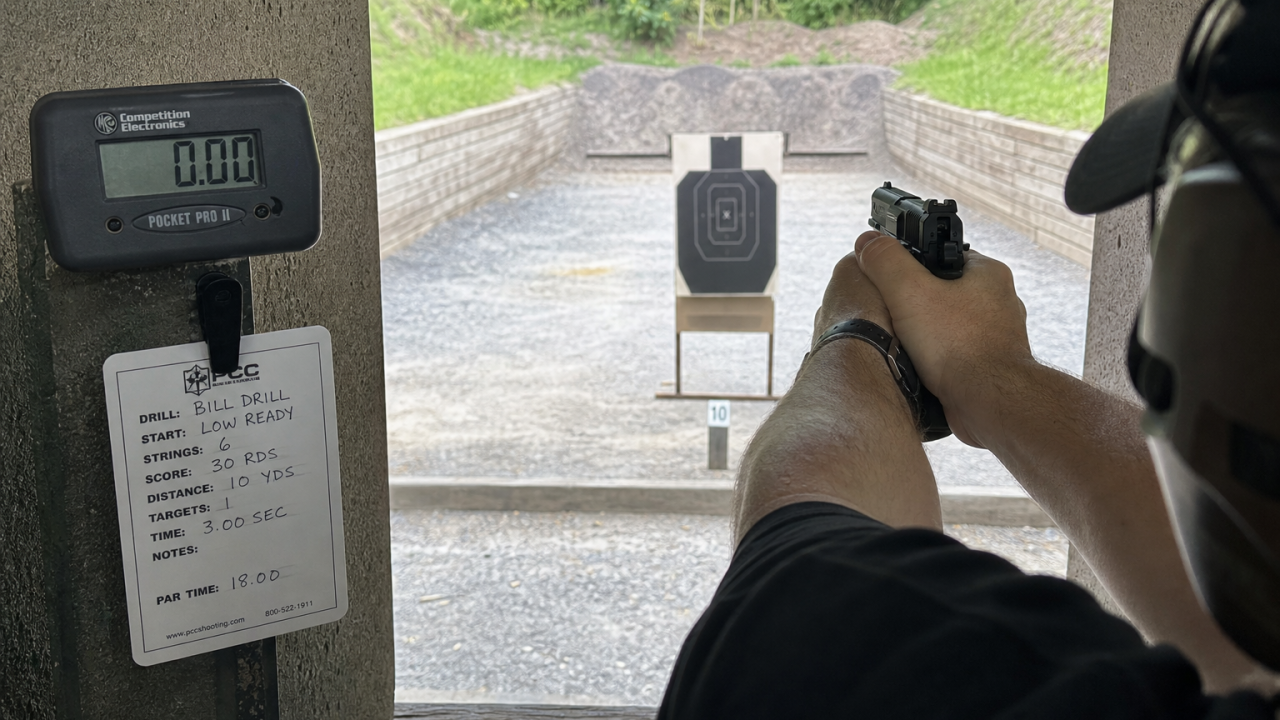
Defining one or two measurable objectives is essential before you even load the first magazine. Try setting a specific group size at 10 yards under a strict par time to simulate this type of pressure.
The focus must be entirely on the quality of each shot fired rather than the volume. This structured setup guarantees you stop wasting valuable time.
Purposeful repetition builds lasting marksmanship habits, while mindless volume just builds physical calluses on your fingers.
Maintaining this level of discipline requires managing logistics upfront by keeping a dedicated shot timer handy and stocking up on reliable bulk 9mm ammo from BulkMunitions.
This way, you always have enough rounds on hand to complete a full session at the range without cutting drills short.
2. Track Performance as It Matters
After-action reviews are a cornerstone of military culture where scores are accurately recorded and weak points are clearly identified.
Nothing is padded for morale purposes, yet most civilian shooters leave the firing line with only a vague impression of how they shot.
The critical habit that closes that gap is simply writing everything down in a notebook. Apply this comprehensive review model to your personal sessions with absolutely no emotional softening.
Use a simple range log to accurately record the drill name, specific distance, strict par time, and total hit percentage.
Always include specific notes on whether your grip degraded noticeably across multiple firing strings.
When you write things down physically, distinct performance patterns emerge that your intuition misses entirely. You might suddenly notice your support hand drifting in after finishing the fourth string.
Tracking your veteran range training progress reveals hidden accuracy gaps that usually disappear after two basic warm-up drills.
It also clearly shows how an inconsistent ammunition supply quietly creates a highly inconsistent overall training schedule.
| Key Insight: After-action reviews aren’t just for debriefs. Writing down your hit percentage and grip notes reveals patterns your intuition misses, like cold start accuracy gaps. |
3. Master Fundamentals Before Chasing Speed
The fastest competitive shooters built their speed on an obsessive and completely unglamorous foundation of strict fundamentals.
Veterans have watched far too many shooters chase performance metrics while their physical shooting platform quietly deteriorated.
Smooth is fast, and that vital smoothness is built exclusively through highly disciplined repetition.
Modern range culture, unfortunately, often falls into the dangerous trap of using raw speed as a status signal.
Experience clearly reveals the truth that support hand drift, front sight float, and aggressive trigger slap all compound heavily under pressure.
Unchecked speed exposes your fundamental weakness instead of properly building up your physical platform.
Your primary tool here is dedicated dry fire practice to refine your mechanics perfectly and safely. Work on each trigger press diligently until the sights stay perfectly still.
A major component of solid marksmanship training involves actively practicing the exact form of your trigger pull for much better precision.
No actual round count is required because the true discipline lies solely in the consistency of the press itself.
4. Keep Ammo Stocked for Consistent Practice
Proper logistics win massive battles, and thoughtful logistics will seamlessly sustain your overall training schedule.
The very best training plan immediately collapses when your ammunition supply is treated merely as an afterthought.
Consistent skill development always requires highly consistent and uninterrupted trigger time. This critical requirement means you absolutely cannot be scrambling for rounds the night before a big session.
In the military, strict supply chain thinking keeps a unit fully combat-ready at all times. On the civilian side, it ensures that your scheduled training remains completely intact without any interruptions.
I used to deal heavily with the friction of last-minute big box store runs and finding uncertain stock.
My personal resolution was to completely eliminate the variable by keeping a highly dependable supply of familiar training rounds on hand.
Buying in larger quantities is not about stockpiling, but rather about fiercely protecting your vital training consistency.
| Important: Rationing 50 rounds across a drill block that calls for 150 ruins the data. Keep a dependable supply on hand to preserve training consistency. |
The Bottom Line
None of these proven habits requires any custom gear, expensive optics upgrades, or costly premium subscriptions.
The actual foundational platform you really need is pure discipline, and that discipline is entirely free.
Better aim clearly comes from showing up with a defined purpose and tracking your performance metrics honestly.
You must constantly prioritize solid fundamentals over speed while proactively keeping your supply lines fully stocked.
Veteran range training clearly taught me that true capability is built strictly through highly deliberate repetition.
It is subsequently maintained through a stubborn routine rather than being assembled directly from a shopping list.
Buy Me A Coffee
The Havok Journal seeks to serve as a voice of the Veteran and First Responder communities through a focus on current affairs and articles of interest to the public in general, and the veteran community in particular. We strive to offer timely, current, and informative content, with the occasional piece focused on entertainment. We are continually expanding and striving to improve the readers’ experience.
© 2026 The Havok Journal
The Havok Journal welcomes re-posting of our original content as long as it is done in compliance with our Terms of Use.