Getting older changes vision. Small print may require more light. A prescription that held steady for years may need an update. Menus start moving farther from your face.
That does not mean every visual problem after 40, 50, or 60 belongs in the “normal aging” file.
Night-driving glare that keeps getting worse, narrowing side vision, a sudden swarm of floaters, flashes of light, or a shadow crossing your sight are not symptoms to dismiss because another birthday passed. Some changes belong on the schedule for a medical eye exam. Others need attention now.
Gregory T. Clariday, M.D., from Coastal Eye Associates, notes that the pattern of a vision change often matters as much as the symptom. Did it begin suddenly or gradually? Is it in one eye or both? Does it happen only at night? Is it affecting driving, reading, work, or awareness of what is happening around you?
Pushing through discomfort can be useful in the right setting.
It is a poor diagnostic tool.
Night driving problems are not always just part of getting older
Night driving often becomes more demanding with age, especially when glare and low contrast make hazards harder to identify. There is a difference, however, between concentrating a little more after dark and changing your life because you no longer trust what you see.
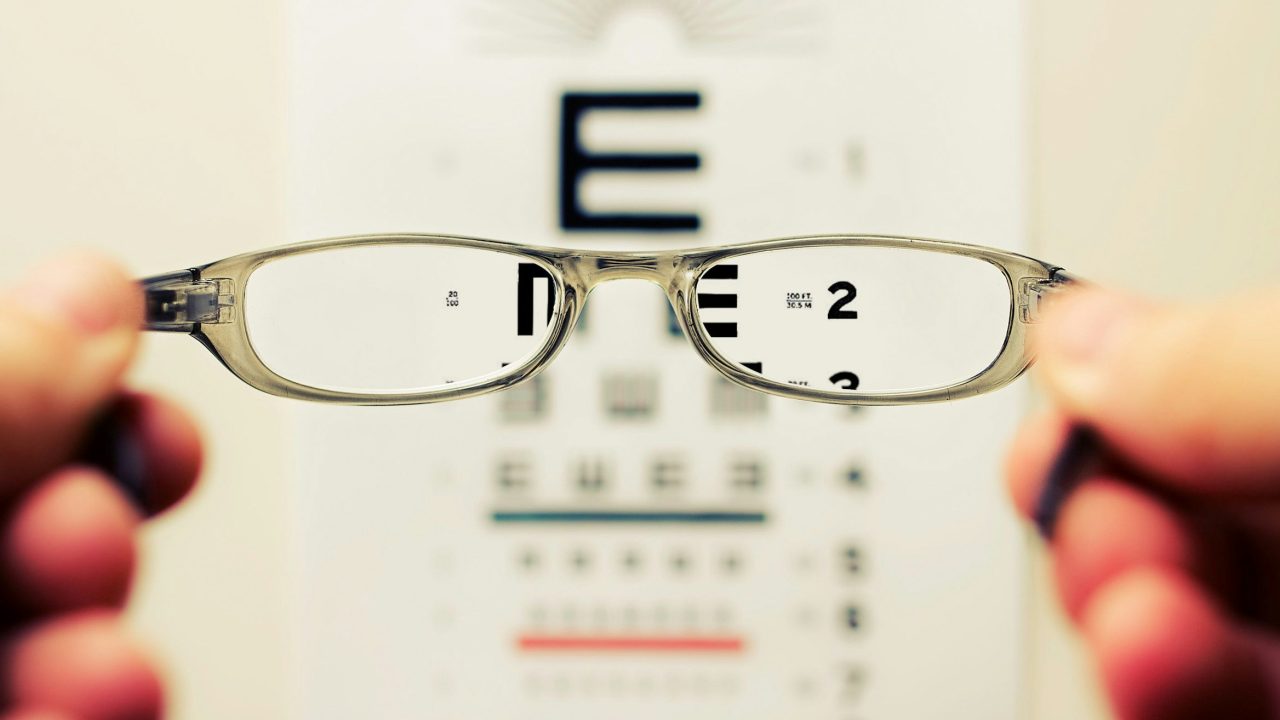
A standard eye chart does not tell the whole story. It measures high-contrast visual acuity: dark letters against a bright background. Night driving asks the visual system to detect pedestrians, lane markings, road edges, debris, and dark vehicles under poor contrast and rapidly changing glare.
In a small 2022 driving-simulator study of 15 healthy adults between ages 55 and 81, contrast sensitivity and low-contrast visual acuity were associated with nighttime hazard-detection distance, while conventional high-contrast acuity was not [1]. The study was limited in size, but it illustrates an important point: reading the chart well does not guarantee that someone can identify a low-contrast hazard quickly on a dark road.
Cataracts are one possible reason. A cataract clouds the eye’s natural lens and can cause blurry vision, faded colors, light sensitivity, glare, and trouble seeing at night [2]. Early cataracts do not always make daytime vision look obviously poor. The first clue may be that headlights feel harsher, wet roads become difficult to read, or unfamiliar routes after dark no longer feel worth the risk.
Dry eye, an outdated prescription, corneal irregularity, and other eye conditions can also affect night vision. Previous eye injuries may complicate the picture. Veterans who experienced blast exposure, debris injuries, training accidents, or other ocular trauma should mention that history even when the injury happened years earlier.
The point is not to assume every glare complaint means cataracts. It is to stop assuming glare is harmless because age is involved.
Gradually worsening night-driving difficulty deserves a scheduled medical eye exam, particularly once it begins limiting where or when you drive. Sudden vision loss, severe eye pain, or an abrupt visual disturbance belongs in a different category and should be evaluated promptly.
Losing side vision can happen before you notice it
Peripheral vision rarely disappears with an announcement.
The change may be slow. You turn your head more often without realizing it. Door frames seem closer. Another car appears to come from nowhere at an intersection. Objects on a workbench or countertop are missed until you look directly at them.
The brain adapts. The other eye may compensate. Daily routines gradually narrow around the problem.
Glaucoma is one reason side vision can be lost quietly. The disease damages the optic nerve and often has no symptoms in its early stages. A comprehensive dilated exam, including visual field testing, is needed to check for it [3].
A 2025 systematic review found that people with significant glaucoma-related visual field defects generally showed poorer driving performance, greater collision risk, slower hazard responses, and more difficulty maintaining lanes [4]. That does not mean every person with glaucoma is unsafe to drive. It means moderate, severe, or bilateral field loss can have practical consequences that a distance eye chart may not reveal.
Waiting until side vision feels obviously missing is a bad plan. Once glaucoma damages the optic nerve, the lost vision cannot be restored. Treatment can often slow or prevent further damage, which is why identifying the disease before daily function changes is so important [3].
Veterans are not uniquely prone to ignoring vision loss. But years spent adapting, compensating, and completing tasks can make gradual limitations easier to work around.
That ability has value.
It also has limits.
Some health conditions seen in veteran populations can affect the eyes. Diabetes, for example, can damage the retina before obvious symptoms appear [5]. Steroid use, family history, previous eye trauma, and other medical conditions may also change what an eye doctor needs to examine.
If you are increasingly uncomfortable merging, changing lanes, moving through crowded spaces, or detecting movement from the side, do not settle for a quick prescription check. Ask whether your peripheral vision and optic nerves have been evaluated.
Flashes, floaters, and shadows deserve a faster response
Floaters may look like spots, threads, cobwebs, or small shapes that drift when the eyes move. Some remain stable for long periods.
A sudden change is different.
A rapid increase in floaters, repeated flashes of light, or a curtain or shadow moving across the field of vision can signal a retinal tear or retinal detachment. The National Eye Institute advises people with these symptoms to contact an eye doctor or go to an emergency department immediately [6].
The retina is the light-sensitive tissue at the back of the eye. When it tears, fluid can move underneath it and pull it away from its normal position. A detached retina can cause permanent vision loss if treatment is delayed.
A review of patients who presented with acute-onset flashes or floaters found that approximately 14% had a retinal tear. New subjective vision loss made a tear more likely [7]. That figure applies to people seeking care for sudden symptoms, not to everyone who has ever noticed a floater.
Previous eye trauma matters here too. An old injury does not prove that a new floater is dangerous, but it is information the eye doctor needs. So are severe nearsightedness, previous eye surgery, and a history of retinal problems in the other eye.
The practical distinction is simple:
Longstanding, unchanged floaters are generally less urgent than a sudden increase, but they should still be discussed with an eye professional, particularly if they have never been evaluated.
A sudden shower of new floaters, flashes, missing vision, or a curtain-like shadow requires urgent evaluation.
Do not wait to see whether it clears overnight. Do not assume it is fatigue. Do not drive yourself if part of the visual field is missing.
That is not overreacting.
It is appropriate triage.
A medical eye exam can find what a vision screening misses
A vision screening answers a narrow question: can you see the target well enough under the conditions of the test?
That information has value. It can identify an obvious refractive problem and show whether glasses may help. It cannot rule out every medical cause of vision loss.
A comprehensive dilated eye exam looks deeper. Depending on the patient’s history and symptoms, it may include visual-acuity testing, eye-pressure measurement, examination of the retina and optic nerve through dilated pupils, and visual-field testing to check peripheral vision [3, 8].
That broader evaluation can find glaucoma before side vision feels absent, assess a cataract that mainly affects glare and contrast, or identify retinal changes that have not yet produced a clear complaint.
The medical history matters just as much as the equipment. Diabetes, high blood pressure, autoimmune disease, steroid use, previous eye trauma, medications, family history, and past surgery can change what the doctor looks for.
Bring that information.
Mention the eye injury from training, even if it happened decades ago.
Mention that you stopped driving after dark.
Mention that you are turning your head farther before changing lanes.
Mention that one eye seems dimmer.
Mention that a cluster of floaters appeared yesterday.
Those details are not side notes. They help determine which tests are needed and how quickly the problem should be addressed.
For veterans and families in the Houston Bay Area, the practice provides comprehensive ophthalmology and optometry across multiple locations, with access to cataract, glaucoma, retina, and other subspecialty care. That range can matter when the problem does not fit neatly into a prescription update and may require coordinated evaluation.
Aging explains some vision changes. It does not explain all of them.
Gradual difficulty with glare, contrast, night driving, or side vision deserves a proper medical eye exam. Sudden flashes, new floaters, a curtain-like shadow, or abrupt vision loss deserve urgent attention.
You do not need to panic over every change.
You do need to stop calling every change normal.
References
[1] Jones, P. R., Ungewiss, J., Eichinger, P., Wörner, M., Crabb, D. P., & Schiefer, U. (2022). Contrast sensitivity and night driving in older people: Quantifying the relationship between visual acuity, contrast sensitivity, and hazard detection distance in a night-time driving simulator. Frontiers in Human Neuroscience, 16, 914459.
[2] National Eye Institute. Nov 26, 2025. Cataracts.
[3] National Eye Institute. Nov 26, 2025. Glaucoma.
[4] Toh, Z. H., Koh, S. Y. N., Yang, W. Y. L., Munro, Y. L., & Ang, B. C. H. (2025). The effect of glaucomatous visual field defects on driving: A systematic review. Journal of Glaucoma, 34(11), 837-852.
[5] National Eye Institute. Sep 11, 2025. Diabetic retinopathy.
[6] National Eye Institute. Nov 5, 2025. Retinal detachment.
[7] Hollands, H., Johnson, D., Brox, A. C., Almeida, D., Simel, D. L., & Sharma, S. (2009). Acute-onset floaters and flashes: Is this patient at risk for retinal detachment? JAMA, 302(20), 2243-2249.
[8] National Eye Institute. Nov 26, 2025. Get a dilated eye exam.
Buy Me A Coffee
The Havok Journal seeks to serve as a voice of the Veteran and First Responder communities through a focus on current affairs and articles of interest to the public in general, and the veteran community in particular. We strive to offer timely, current, and informative content, with the occasional piece focused on entertainment. We are continually expanding and striving to improve the readers’ experience.
© 2026 The Havok Journal
The Havok Journal welcomes re-posting of our original content as long as it is done in compliance with our Terms of Use.