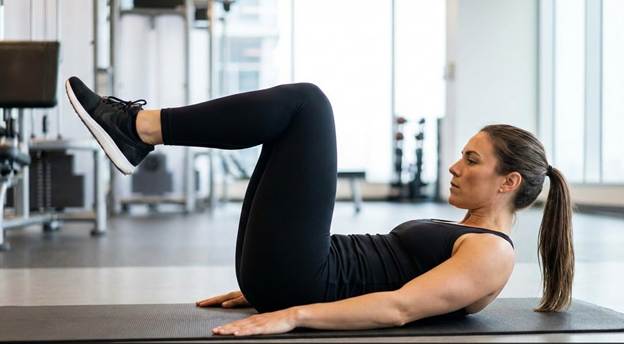
The lower abdominal region requires specific, targeted exercise addressing distinct muscle groups.
Best bottom ab workouts focus on the lower rectus abdominis and lower transverse abdominis—muscles requiring specific movement patterns and exercises. Understanding lower ab anatomy enables effective exercise selection and targeted muscle development.
Many fitness enthusiasts struggle achieving lower abdominal definition despite significant overall abdominal training. Specialized lower ab exercises address this challenge through targeted muscle activation, proper form, and progressive progression. Professional guidance enables efficient lower ab development.
Why Lower Abs Prove Challenging to Develop
Lower abdominal development presents specific challenges. Most compound exercises emphasize upper and mid-abdominal regions leaving lower abs under-stimulated. Genetic factors influence fat distribution complicating lower ab visibility despite adequate muscle development. Proper exercise selection is essential for targeted lower-ab development.
Specialized lower-ab exercises overcome these challenges by targeting the muscles directly and using specific movement patterns.
Leg Raises and Variations
Leg raises are primary lower ab exercises that require hip flexion against resistance. Variations include—lying leg raises, hanging leg raises, and decline board leg raises. Progressive variations increase difficulty through the range of motion and external resistance.
Proper leg raise form emphasizes the lower abs rather than hip flexor dominance. Controlled movement patterns maximize activation of the lower abs.
Reverse Crunches and Pelvic Tilt Exercises
Reverse crunches involve spinal flexion with hip flexion, emphasizing lower abdominal contraction. Proper form focuses on pelvic tilt, maximizing lower ab activation. Progressive variations include weighted reverse crunches and incline reverse crunches.
Reverse crunches effectively target lower abs through accessible yet effective movement patterns.
Mountain Climbers and Dynamic Movements
Dynamic exercises like mountain climbers engage lower abs through core stabilization during rapid alternating leg movements. Dynamic exercises build functional core strength and endurance supporting athletic performance.
Dynamic lower ab exercises improve functional fitness beyond aesthetic development.
Vertical Leg Raises and Suspended Exercises
Vertical leg raises using Roman chairs or suspension training provide progressive resistance challenging lower abs significantly. Advanced variation difficulty enables continuous progression and muscle development.
Progressive resistance enables long-term strength development and continued muscle stimulation.
Dead Bugs and Core Stability Patterns
Dead bug exercises emphasize core stability through contralateral movement patterns. This movement pattern addresses functional core strength supporting athletic performance and injury prevention.
Stability emphasis builds comprehensive core strength beyond aesthetic benefits.
Lying Knee Tucks and Ab Wheel Variations
Knee tucks involve hip flexion and spinal flexion from the lying position, emphasizing lower abs. Ab wheel variations provide advanced progression through an extended range of motion and body-weight resistance.
Progressive variations enable continued advancement and muscle challenge.
Decline Board Exercises and Leverage Variation
Decline board positioning increases exercise difficulty through leverage variation. Decline exercises provide progressive resistance without external weights. Angle adjustment enables fine-tuning difficulty.
Leverage variations enable accessible progression without equipment limitations.
Progressive Overload Principles
Consistent lower ab development requires progressive overload—increasing difficulty through volume, intensity, or resistance. Progressive challenge forces continued muscle adaptation and development.
Systematic progression prevents plateaus enabling continuous improvement.
Form Emphasis and Mind-Muscle Connection
The effectiveness of lower ab exercises depends on proper form and focused muscle activation. Mind-muscle connection ensures the lower abs bear the primary load rather than momentum or other muscles. Controlled tempo maximizes lower ab activation.
Quality form produces superior results compared to higher reps with poor form.
Frequency and Recovery Considerations
Lower abs recover quickly, enabling frequent training—3-4 sessions weekly prove appropriate. Adequate recovery between sessions prevents overtraining while maintaining consistent stimulus.
Optimal frequency balances adequate stimulus with complete recovery, enabling continuous progression.
Integration into Complete Core Programs
Specialized lower ab work complements comprehensive core training, addressing all abdominal regions. Balanced programs develop complete core strength and balanced aesthetics.
Balanced training prevents imbalances and develops comprehensive functional strength.
Nutrition and Body Composition for Abdominal Definition
Abdominal muscle visibility requires adequate body composition, revealing muscle definition. Nutrition and caloric balance significantly influence the visible development of the abdomen. Professional guidance supports achieving a composition supporting a visible definition.
A comprehensive approach combining training, nutrition, and consistency produces optimal results.
Conclusion
Best bottom ab workouts provide targeted exercises developing lower abdominal strength and definition. Through proper exercise selection, progressive overload, consistent training, and appropriate nutrition, specialized lower ab training produces visible results. For fitness enthusiasts prioritizing comprehensive abdominal development and core strength, specialized lower ab workouts represent essential training components supporting aesthetic and functional goals.
Buy Me A Coffee
The Havok Journal seeks to serve as a voice of the Veteran and First Responder communities through a focus on current affairs and articles of interest to the public in general, and the veteran community in particular. We strive to offer timely, current, and informative content, with the occasional piece focused on entertainment. We are continually expanding and striving to improve the readers’ experience.
© 2026 The Havok Journal
The Havok Journal welcomes re-posting of our original content as long as it is done in compliance with our Terms of Use.