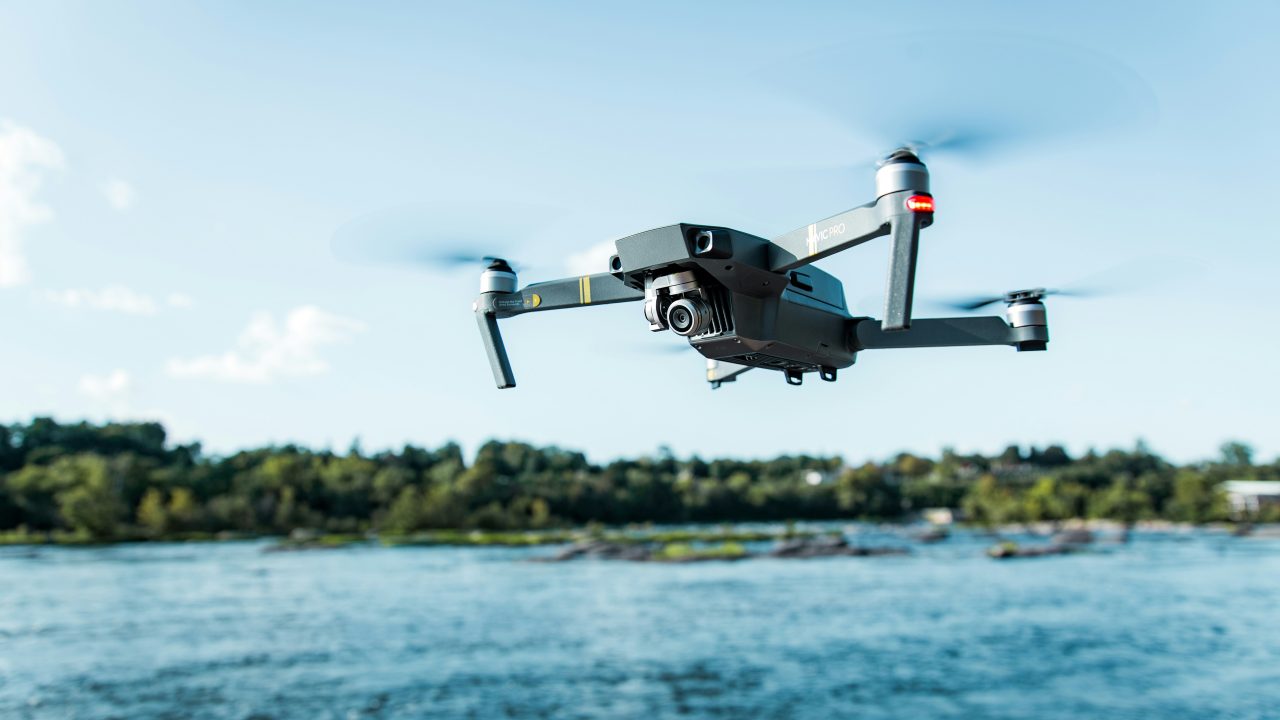
Photo by Karl Greif on Unsplash
For decades, modern warfare relied on expensive hardware: fighter jets, tanks, and precision missiles that required massive budgets and long production cycles. That picture is now changing.
In recent conflicts, from Ukraine to the Middle East, small unmanned aerial vehicles have moved from supporting tools to central weapons on the battlefield. Cheap FPV drones can destroy armored vehicles. Loitering munitions can hunt targets for hours. At the same time, more advanced systems are being developed with AI-based navigation and autonomous decision capabilities.
The result is a new model of warfare where quantity, software, and adaptability matter as much as traditional military power.
The Old Model of War vs the New One
For most of the 20th century, military power was measured by heavy equipment. These systems were powerful but extremely expensive. A single modern fighter jet can cost tens of millions of dollars, and advanced missile systems can reach similar price levels. Because of this, wars were often shaped by the ability to produce and maintain a relatively small number of high-value assets.
The emerging model looks very different. Instead of relying only on a few sophisticated platforms, modern conflicts increasingly use large numbers of smaller and cheaper systems. Unmanned aerial vehicles have become one of the most visible examples. Many drones cost a fraction of traditional military equipment, yet they can still provide surveillance, targeting data, or even direct strike capability.
This shift changes the economics of warfare. Losing a fighter jet or a missile system is a major strategic and financial loss. Losing a small drone is often expected and sometimes even part of the strategy.
Technology is also accelerating the transition. Improvements in sensors, satellite navigation, communication systems, and artificial intelligence allow drones to operate with increasing autonomy.
Why Drones Matter So Much Now
Drones are adding a new layer to warfare, one that emphasizes speed, numbers, and adaptability rather than only cost and technological sophistication.
One of the most important factors is cost efficiency. Many military drones are relatively cheap compared to the systems they threaten.
Another major advantage is constant surveillance. Small reconnaissance drones can remain in the air for long periods, providing units with a continuous view of the battlefield.
Drones also allow for precision strikes without deploying large platforms. Loitering munitions can stay above an area and wait for a target to appear. Once identified, the drone itself becomes the weapon.
Perhaps most importantly, drones speed up the decision cycle. Information can move directly from the drone operator to artillery units or strike systems within seconds.
Together, these factors explain why drones are becoming central to military strategy.
The Three Wars That Help Explain the Drone Shift
The growing role of drones in modern warfare did not emerge overnight. It developed across several conflicts where unmanned systems moved from supporting tools to central battlefield assets. Three wars help explain how quickly this shift has taken place.
Israel–Iran and Direct U.S. Involvement
The latest Middle East escalation shows how drones are now embedded in regional military strategy.
Low-cost one-way attack drones have become especially important in this conflict. Systems like the Iranian Shahed drones can travel long distances and strike infrastructure or military bases while costing far less than traditional missiles. This creates a difficult economic imbalance. Because defenders usually respond with much more expensive interceptors.
The result is a new form of pressure on air-defense networks. Instead of facing a small number of sophisticated weapons, defenses must deal with repeated waves of relatively cheap drones.
Russia–Ukraine
The war in Ukraine is widely seen as the first conflict where drones have been used on a massive scale across the entire battlefield.
The conflict also introduced the widespread use of FPV drones, small devices originally designed for racing or hobby use. Because they are cheap and easy to produce, both sides deploy them in large numbers.
Production is now measured in the millions. Ukraine alone has aimed to produce millions of drones annually as it tries to match Russia’s expanding drone fleet.
This war has also accelerated innovation. New interceptor drones are being developed to shoot down enemy UAVs, and electronic warfare systems to disrupt navigation and communication signals. The result is a rapid technological cycle where tactics and designs evolve in months rather than years.
Azerbaijan–Armenia
An earlier preview of this transformation appeared during the 2020 Nagorno-Karabakh war between Azerbaijan and Armenia. Azerbaijan relied heavily on drones, including Turkish Bayraktar TB2 systems and Israeli loitering munitions, to locate and destroy Armenian armor and air defense systems.
Drone footage released during the conflict showed tanks, artillery, and troop positions being targeted from the air with surprising precision.
Many analysts now see this conflict as an early warning. It showed that even countries without large air forces could achieve battlefield advantages through unmanned systems. The lessons from Nagorno-Karabakh were later studied closely by militaries around the world and became even more visible during the war in Ukraine.
The Next Step Is Autonomy
The next stage of drone warfare is not only about building more hardware. It is increasingly about software.
Today electronic warfare can jam signals, GPS systems can be disrupted, and communication links can be unreliable. This is where autonomous capabilities begin to matter. New systems are being designed to navigate environments with limited communication, identify objects through onboard sensors, and continue missions even if the operator loses direct control.
For defense companies, this shift means the competitive edge may come from software rather than the airframe itself. Algorithms for navigation, targeting, and coordination could become just as important as the drone’s physical design.
Swarm Drones and the Logic of Saturation
One of the most discussed concepts in modern drone warfare is the idea of swarm attacks. Instead of relying on a few highly advanced systems, militaries can deploy dozens or even hundreds of smaller drones at the same time. Each individual drone may be simple, but together they can create a level of pressure that traditional defenses struggle to handle.
This approach is based on the logic of saturation. Air defense systems are designed to track and intercept a limited number of incoming threats. When too many targets appear at once, the system can become overwhelmed. A swarm of low-cost drones can force defenders to fire expensive interceptor missiles or split their defensive coverage across many directions.
The economic logic behind swarm warfare is simple. If dozens of drones costing thousands of dollars each can threaten or disable systems worth millions, the balance of cost and defense shifts dramatically.
Why This Matters for Investors
The U.S. stock market has always been at the center of global capital. It is where the largest and most influential companies are listed. Some of these companies are valued in hundreds of billions, even trillions of dollars.
What is changing now is not just another sector cycle. It is the emergence of a new defense and technology ecosystem shaped by drones, autonomy, and AI-driven warfare. Procurement priorities are changing. U.S government is increasing its defense budget despite of $38T Debt.
Traditional systems are still important, but funding is flowing toward unmanned systems, software, and scalable production capabilities. That means new winners can emerge. The opportunity is not limited to drone manufacturers. The ecosystem is much broader:
- Autonomy and AI software providers
- Sensor and imaging technology companies
- Electronic warfare and counter-drone systems
- Data processing and battlefield intelligence platforms
- Scalable manufacturing and supply chain players
In other words, this is a full-stack transformation.
Top 8 Companies Benefit from Drone-War Economy
As drones move to the center of modern military strategy, the defense industry is adapting quickly.
Several companies have already positioned themselves around these technologies and are actively supplying drones or drone-related systems to governments and military organizations.
1. AeroVironment
AeroVironment is one of the most established companies in the small tactical drone and loitering munition market. The company is widely known for systems such as the Switchblade loitering munition, which has been used extensively in recent conflicts, including the war in Ukraine.
The company also produces reconnaissance drones like Puma and Raven, which are used by the U.S. military and several allied forces for battlefield surveillance. These lightweight drones can be deployed quickly by small units and provide real-time intelligence from the air.
AeroVironment has secured multiple U.S. Department of Defense contracts over the years. The company continues to receive large orders through U.S. Army programs and foreign military sales agreements.
2. Kratos Defense
Kratos Defense focuses on high-performance unmanned systems designed to support advanced military operations. One of its most notable projects is the XQ-58 Valkyrie, an unmanned combat aircraft designed to operate alongside manned fighter jets as part of a “loyal wingman” concept.
Unlike small tactical drones, systems like the Valkyrie are intended to extend the reach of modern air forces while reducing operational costs. These unmanned aircraft can carry sensors, electronic warfare equipment, or weapons while supporting larger manned platforms.
Kratos has worked closely with the U.S. Air Force and other defense organizations on unmanned aircraft development and autonomous systems.
3. Red Cat Holdings
Red Cat Holdings focuses on smaller tactical drones designed for military and government use. Through its subsidiaries, the company develops lightweight reconnaissance drones that can be deployed by soldiers in the field.
One of its most prominent platforms is the Teal drone family, which was designed specifically for U.S. military applications and secure supply chains. These drones are intended to provide rapid surveillance capabilities in environments where larger systems may be impractical.
Red Cat has been selected for several U.S. military drone programs, including projects linked to short-range reconnaissance systems.
4. RTX
RTX, formerly Raytheon Technologies, is one of the largest defense contractors in the world. While it is not primarily known as a drone manufacturer, the company plays a major role in the counter-drone defense market.
RTX produces a range of radar systems, missile interceptors, and electronic warfare technologies that can track and destroy hostile drones.
One example is the Coyote counter-drone system, which is designed to intercept and disable unmanned aerial threats. With the rise of swarm attacks and mass drone deployments, companies like RTX are expected to benefit from the growing demand for layered air-defense systems.
5. Skydio
Skydio is a U.S. drone manufacturer known for its strong focus on autonomous flight technology. The company specializes in drones that rely heavily on onboard sensors and artificial intelligence to navigate complex environments without constant human control.
Skydio drones are widely used by military units, public safety organizations, and infrastructure operators. Their autonomy systems allow drones to avoid obstacles, follow targets, and operate in environments where GPS signals may be unreliable.
The company has secured contracts with U.S. government agencies and has expanded its presence in allied defense markets, making it one of the most prominent autonomy-focused drone developers.
6. Shield AI
Shield AI focuses on artificial intelligence systems designed for autonomous military operations. Rather than only producing drones, the company concentrates on the software and autonomy layer that allows unmanned systems to operate in contested environments.
Its flagship autonomy platform, Hivemind, enables drones to navigate without GPS, identify objects, and execute missions even when communication with human operators is limited.
Shield AI also produces the V-BAT drone, which is designed for intelligence, surveillance, and reconnaissance missions.
7. Ondas
Ondas operates in the broader drone ecosystem through subsidiaries focused on autonomous drone networks and counter-drone technology. The company’s Airobotics platform provides automated drone operations designed for security, surveillance, and industrial monitoring.
Another part of the business focuses on counter-drone solutions through Sentrycs, which develops electronic warfare systems designed to detect and disrupt hostile UAVs.
With both drone operations and counter-drone technology in its portfolio, Ondas sits at an interesting intersection of the expanding drone defense market.
8. Anduril
Anduril Industries has quickly become one of the most influential defense technology companies in the unmanned systems space. Founded by technology entrepreneurs from the software industry, the company focuses on autonomous defense systems powered by advanced software.
Anduril develops a wide range of unmanned platforms, including drones, surveillance towers, and autonomous defense networks. Its Lattice software platform connects sensors, drones, and defense systems into a unified battlefield network.
Buy Me A Coffee
The Havok Journal seeks to serve as a voice of the Veteran and First Responder communities through a focus on current affairs and articles of interest to the public in general, and the veteran community in particular. We strive to offer timely, current, and informative content, with the occasional piece focused on entertainment. We are continually expanding and striving to improve the readers’ experience.
© 2026 The Havok Journal
The Havok Journal welcomes re-posting of our original content as long as it is done in compliance with our Terms of Use.


