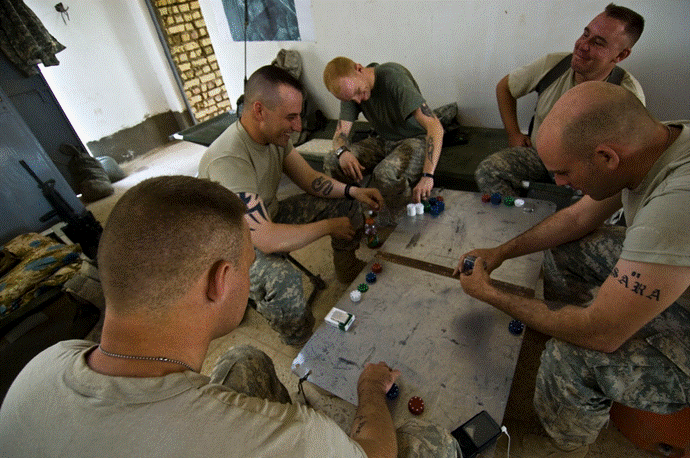
Military training teaches more than just tactics. Military training teaches habits of mind; tolerance for calculated risk, reading a room or situation quickly, and acceptance of structure most civilian routines do not provide. That wiring does not simply switch off after service is completed. Many veterans and active-duty service members find that their leisure time activities are not passively engaging, but rather activities that reward the same instincts as they did while in service (discipline, strategy, and progress).
Leisure time pursuits tend to have similar qualities: defined rules, a visible way to track improvement, and other people who take the activity seriously. Four pastimes show up again and again across the veteran community for exactly those reasons.
Golf and Its Rewards for Self-Control
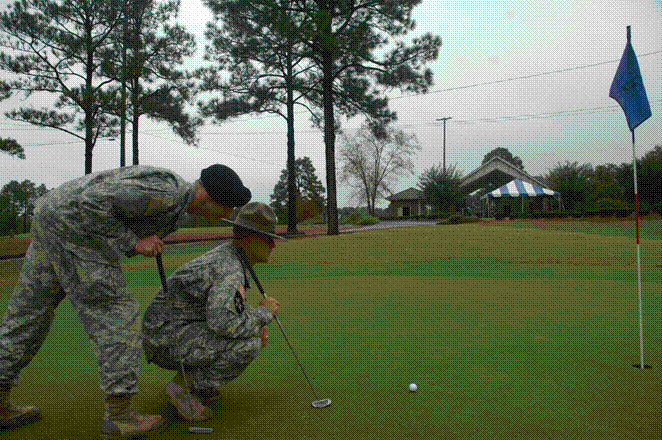
Golf provides the type of self-control that military life has taught. Each shot is an exercise in patience and course management: assessing wind, distance, and lie before committing to a swing, then living with the outcome. For many veterans, this slow and deliberate rhythm offers a counterpoint to the urgency of service life without sacrificing the structured routine to which they are accustomed.
Additionally, there have been dedicated pathways established within the sport specifically for veterans. PGA HOPE is the flagship program for the veteran population of the PGA of America’s REACH Foundation. The program introduces golf to veterans and active duty service members at no cost using a six- to eight-week curriculum that is taught by professionals trained both in golf instruction and military culture. The program is offered through PGA sections nationwide. Many participants go on to play in club-level and regional tournaments, turning a new hobby into an ongoing source of camaraderie and measurable improvement. Additionally, a handicap system exists to give every player (regardless of skill level), a clear and constantly updated number to compare against their own past performance – not just the field.
Poker and the Math of Decision Making
At its core, poker is an exercise in managing limited information. Players evaluate probabilities, analyze betting patterns, make calls based upon little and often misleading signals – all skills similar to the situational judgment built during deployments and training exercises. Impulsiveness is punished as much as over confidence. Regardless of winning or losing, every hand ends with a clearly determinable result and an obvious lesson about where the read went right or wrong.
Veterans who enjoy that style of thinking now have access to the game like never before. Home games and organized leagues remain common, however, a growing number of players now turn to CoinPoker app to fit in a few hands between other obligations instead of scheduling a full evening at a table.
The Long View of Chess and Other Games
The thought process used in playing chess — thinking about multiple moves ahead of you, considering what you will need to do next (and the actions your opponent might take), and then making decisions based upon those considerations — helps to describe the long-term nature of building and modifying systems in the field. This could be a reason why there seems to be a steady level of interest in virtual chess clubs across the United States. These clubs range from informal groups based upon a local VFW post or Veterans Affairs facility to groups of individuals with no geographic relationship other than they share the experience of being a veteran.
People are returning to their past hobbies because the game provides clarity. Each position has its own set of inherent logical processes, and players can see improvements in performance over successive games. As a result, the game is portable and does not require specialized equipment. Players can travel with their phone or carry a small board to a barracks, waiting room, or porch and play anywhere with another player.
Competitive Shooting Sports
Many veterans continue to compete in shooting sports such as trap, sporting clays, and precision rifles. In these competitions, shooters use the same basic techniques as they did when they were in the military: proper stance, breathing techniques, and repetition of motions to shoot accurately. The main difference is that these events involve peer-based scoring and ranking (i.e., events designed specifically for veterans) versus qualification scores. While some veterans build skills for the sake of recreation, others compete because they want to maintain proficiency in skills that were developed in order to meet specific requirements during their time in the military. Like golf and chess, competitive shooting sports also provide an opportunity to evaluate performance objectively (based upon scorecards or ranking).
Some of the clubs offer veterans an additional opportunity to socialize, in addition to the competitions, which often become secondary to the conversations among veterans during times when they may be participating together but not competing. The type of club activity is generally less important than providing some structure and optional way for a veteran to continue utilizing the skills that were developed through military service, while doing so on his/her own terms.
Similar Threads Among Different Hobbies
While golf, poker, chess, and competitive shooting seem unrelated on the surface, all four activities have several commonalities. These include:
- Clearly defined rules and an objective method for measuring performance.
- A clear progression pathway from instruction (at various levels) to formal competition.
- A group of participants interested in focusing on improving performance.
For some veterans, structured hobbies offer a way to keep using familiar skills in a civilian setting, without recreating the pressures of service.
Buy Me A Coffee
The Havok Journal seeks to serve as a voice of the Veteran and First Responder communities through a focus on current affairs and articles of interest to the public in general, and the veteran community in particular. We strive to offer timely, current, and informative content, with the occasional piece focused on entertainment. We are continually expanding and striving to improve the readers’ experience.
© 2026 The Havok Journal
The Havok Journal welcomes re-posting of our original content as long as it is done in compliance with our Terms of Use.


