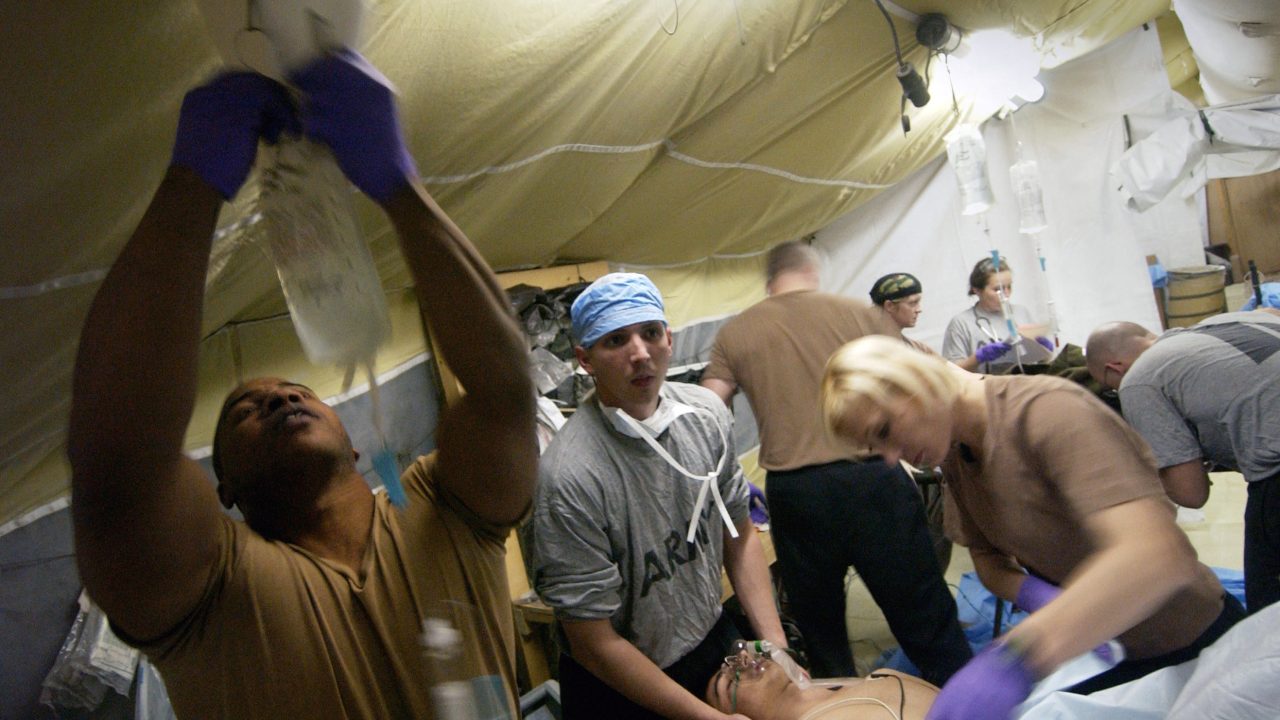
The dream is back. I’m an Operating Room (OR) nurse again.
The dreams always return when I get too close to the years I’ve sealed away. I’m in a different OR every time, but it’s the same sequences, the same rising tension.
I’m always in ORs I don’t recognize but should. The patient is intubated. The surgeon is about to start, but I don’t know enough about what’s going on to function. I don’t know the staff. They don’t know me. I can’t find what I need. I don’t know where supplies and equipment are. I know what my role demands but lack the means to see it through.
Every failure to prepare compounds. It’s always a slow unraveling that builds until I wake up just before incision, just as panic sets in.
I can’t accept failing the patient or the team.
I’ve buried those memories because I don’t want to remember. I just want to live life. I want to enjoy my remaining years, even though I know I’ll be better off having finished what I started.
What’s left unresolved always intrudes until it’s faced. Writing gives it a shape I can hold. It enables understanding. I once heard someone say, “There’s power in naming something.”
For two decades, I lived and worked in ORs where control was paramount: timing, efficiency, precision, order. All necessary amid unending physical and mental exhaustion and the fear of making a mistake, or people got hurt.
Not just soldiers, but babies, mothers, sons, and daughters, all depending on a system that sometimes put the unqualified in charge of the unready, with patients as the price. Clinical inexperience and poor leadership can cost lives. That responsibility burrowed into me: I won’t fail.
But leaving that world didn’t end it; it just buried it deeper. Part of me still yearns to find my place there again. It’s like a sweet venom: meaningful, comfortably familiar, yet toxic and destructive. I can’t erase the wiring. But I can learn to redirect it.
Turning that focus inward. Cutting through the bullshit. Getting to what never healed.
That’s what I’m trying to capture on the page: a measured descent. A blend of precision and emotion. I want to control the bleeding, but it can’t be too sterile either. It has to be real.
Writing controls the chaos. The words become an OR in which I can function. Because in the years since leaving the military, The Havok Journal did the same for me.
Other writers’ words said what I couldn’t. Even when I didn’t consider myself a real veteran, I recognized their voices amid an internal maelstrom. They became beacons. And if I can do the same, I owe it to those who might benefit as I have.
It’s why I write. It’s why I publish others.
Last night’s dream was the first time I saw the patient on the OR table: a young boy of twelve. That’s the kid still in “The Shadow of JSOC.”
I can feel what’s coming: leaving the Air Force, joining the Army, Fort Irwin, Iraq again, Fort Bragg, and the years beyond. Places where I would wear down and sense a brokenness, and each time push it away. There was never time. I’d deal with it later. But later has come at last, and thankfully, I do have the time.
There were moments and places when everything clicked; where I found my place. Those memories are waiting too. They remind me that I wouldn’t have done anything differently. All of it had a hand in shaping me.
But I would do things differently now.
This time, I’m not running from those memories. I’m walking toward them slowly, deliberately, methodically.
Because I finally understand what the dreams are.
It’s not about surgery. The dream is about the part of me that still thinks love is only earned at the edge of failure.
Close to the end of his life, my dad spoke of the example he set for me: “Keep the good, chuck the bad,” he said. His simple, self-deprecating words surprised me. They were almost whimsical.
I hear him now as I write this.
The dreams are the part of me trying to keep what’s worth keeping, chuck what isn’t, and become something new.

_____________________________
Mike Warnock is the editor-in-chief of The Havok Journal, a retired U.S. Army Major and Air Force veteran with 20 years of active service across both branches.
During his military career, he led surgical teams as an Operating Room Officer-in-Charge at the hospital, medical center, and combat-support levels. He later served in senior clinical, administrative, and inspector general roles before retiring in 2019.
Over his 23-year civilian and military nursing career, he deployed to Guam and twice to Iraq, leading surgical and clinical teams in both peacetime and combat environments. He holds a B.S. in Nursing from the University of North Carolina at Charlotte and an M.A. in Military History from Norwich University.
As the Voice of the Veteran Community, The Havok Journal seeks to publish a variety of perspectives on a number of sensitive subjects. Unless specifically noted otherwise, nothing we publish is an official point of view of The Havok Journal or any part of the U.S. government.
Buy Me A Coffee
The Havok Journal seeks to serve as a voice of the Veteran and First Responder communities through a focus on current affairs and articles of interest to the public in general, and the veteran community in particular. We strive to offer timely, current, and informative content, with the occasional piece focused on entertainment. We are continually expanding and striving to improve the readers’ experience.
© 2026 The Havok Journal
The Havok Journal welcomes re-posting of our original content as long as it is done in compliance with our Terms of Use.


