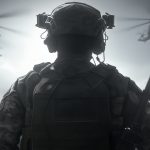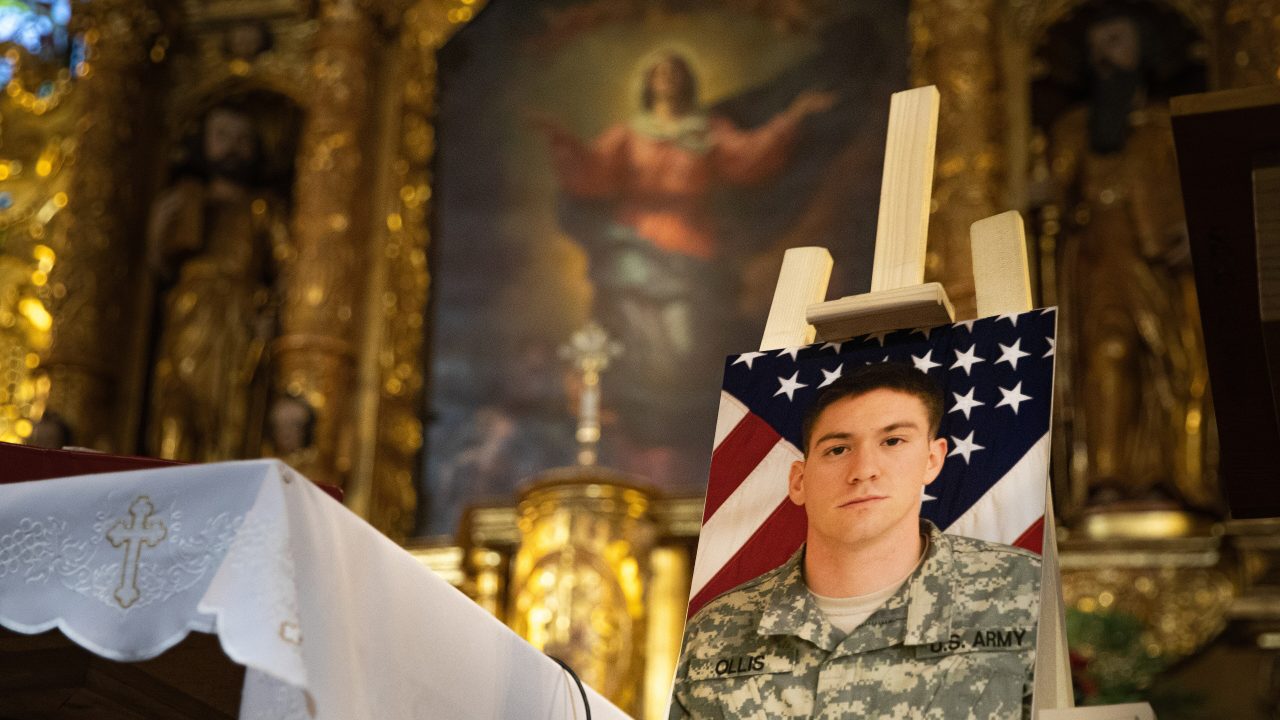
Michael H. Ollis, the Triple Deuce standard, and the long road to “Medal of Honor”
By Calder M Serba
[Editor’s Note: Citation superscripts have been removed to align with The Havok Journal’s formatting. Full references remain listed at the end.]
I watched the call the way you watch something you’re not sure you’re allowed to see.
Bob and Linda Ollis on the phone. The President on the other end. A few sentences delivered plainly, and you can feel thirteen years of weight compress into a living room.
Their son’s award is being upgraded to the Medal of Honor.
There’s a kind of relief in a sentence like that, and there’s no relief at all. Not for parents. Not for the people who knew him. Not for the guys who still carry the name around in their chest like a piece of shrapnel they decided not to dig out.
It hit me in a familiar place. I’ve watched my own parents sit in the quiet aftermath of grief since we lost my younger brother, Connor. He wore the uniform too. That kind of loss changes what you hear in a parent’s voice. You can’t unlearn it.
I served in 2nd Battalion, 22nd Infantry Regiment (2-22). My time overlapped with Michael H. Ollis’s. That overlap is why this isn’t a story I respect from a distance. It’s personal to me, and to a lot of our shared friends. It’s one of those names that doesn’t live in a book for us. It lives in the unit’s muscle memory.
Staff Sgt. Michael Ollis was the best of us in the 2-22, 10th Mountain Division. I don’t mean that in a nostalgic way. I mean it objectively, like a standard we measure against.
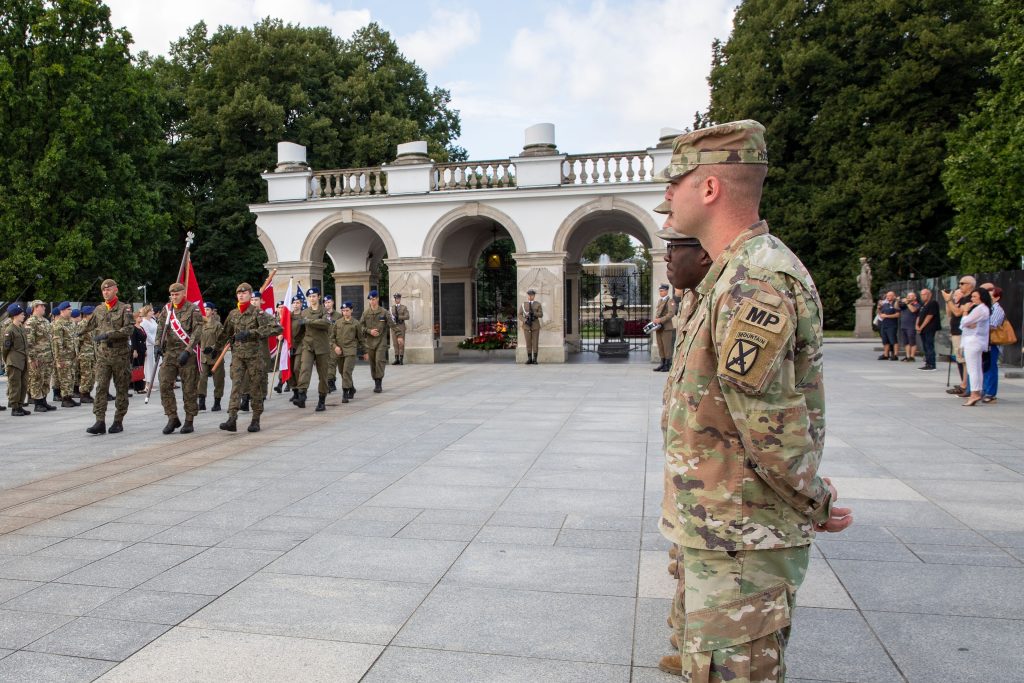
Multiple outlets reported in early February 2026 that President Donald Trump called the Ollis family and confirmed the Medal of Honor upgrade had been approved. Military Times reported the development and quoted the award citation language. The call itself circulated publicly in video credited to the SSG Michael Ollis Freedom Foundation. A ceremony date wasn’t confirmed at the time of reporting.
Ollis had already been awarded the Distinguished Service Cross after his Silver Star was upgraded in 2019. That’s the kind of line a civilian reads and thinks, “Okay. That’s the end.” But anyone who’s watched awards move through the machine knows how often the first answer is not the final answer.
If you want to understand why so many people pushed for this, you have to go back to the breach. Not to make it dramatic. The act is already dramatic enough. You go back because the sequence matters, because the standard is in the order he did things, not just in the way he died.
Aug. 28, 2013. OEF. Forward Operating Base Ghazni in Afghanistan comes under attack. A vehicle bomb breaches the perimeter wall. Enemy fighters wearing suicide vests push into the gap while additional fire continues from outside the wire, according to reporting and citation language quoted in that reporting.
“Breach” is a clean word for a dirty reality. Breach is a hole where there used to be protection. It’s dust and pressure. It’s alarms and shouted fragments. It’s the moment the line you trusted stops existing in the only place you needed it to hold.
This is where most retellings skip ahead, straight to the last act: the shield, the blast, the sacrifice. People love that part because it’s simple to understand. A man puts himself between death and somebody else. You can feel it in one sentence. You can frame it. You can post it.
But before the sacrifice there’s leadership, and leadership has an order of operations.
The citation language quoted in reporting describes Ollis accounting for his soldiers and checking for casualties before he moved toward the assault.
That’s not flourish. That’s not the narrator trying to make him look good. That’s the job done in the right order when everything is trying to pull you into the wrong one.
If you’ve ever had a roster running in your head while bodies are moving in smoke, you know what that takes. You don’t get to assume. You don’t get to guess. You find out. Then you move.
And then he moved.
Not to a safe position. Not to a better vantage point. Toward the breach. Toward the contact. Toward whatever was coming next.
Reporting states he linked up with coalition forces, including Polish Army 2LT Karol Cierpica, and moved to engage attackers with rifles, without full personal protective equipment.
People argue about alliances like they’re contracts: policy, burden-sharing, talking heads. That is not what it feels like in a fight.
In a fight, an ally is the person beside you when the corner opens up.
Then the fight compresses.
An insurgent comes around a corner and engages them with small arms fire. Cierpica is wounded in both legs and cannot move. Citation language quoted in reporting describes what happens next: Ollis positions himself between the attacker and the wounded Polish officer, fires and incapacitates the threat, and is mortally wounded when the attacker’s suicide vest detonates.
He stepped between the threat and his teammate.
He engaged the attacker.
The vest still detonated.
He took the force of it.
That is the act. Everything else is the shadow it cast.

If you don’t get it from a headline, ask the people who walked away from that attack. Ask the ones who went home when they weren’t supposed to. Ask the ones whose kids still have a dad because time got bought in the ugliest currency there is.
There’s another detail that follows this story everywhere: the “40-plus” claim. Dozens saved. A window created. Witnesses and advocacy efforts have long said it wasn’t just one life saved, that his actions created the seconds that let others move, survive, and keep the breach from becoming a full-on massacre. Some outlets have repeated versions of the “over 40” figure as an advocacy estimate tied to the case.
If you’re going to publish, you owe the reader precision. “40-plus” is commonly presented publicly as a credited estimate tied to witness recollection and advocacy statements, not as a universally published, audited count in every official document. That doesn’t make it false. It just means you label it honestly.
Here’s what can be said without inflation: the record supports that he saved Cierpica’s life. And in a breached-perimeter environment with suicide vests inside the wire, seconds matter. Stopping or delaying a suicide attacker at that exact point can change the entire shape of a fight. It buys time for people to move. It buys time to get behind cover. It buys time to drag casualties. It buys time for the breach not to turn into a slaughter.
And I’ll say it plainly: I believe with certainty the exact number is irrelevant, because the facts support the toll would have been significantly higher than it was because of Ollis.
That’s why this story sticks with soldiers. Because we understand what one decision does when the conditions are worst-case and the clock is violent. We understand what a few seconds can buy. We also understand what it costs.
So why did it take so long for the country to say “Medal of Honor”?
Because after the blast, the war changes shape.
Valor has an afterlife, and most of that afterlife is paperwork.
Ollis had the Distinguished Service Cross, the second-highest award for valor. People hear that and assume the institution has done its part. But upgrades exist for a reason. War is messy. Records are imperfect. Recommendations are built under pressure with incomplete witness statements and scattered documentation. Leaders rotate. Units redeploy. People PCS. Evidence ends up in binders, hard drives, and memory.
Then the family becomes an investigator. A curator. A case manager. They collect witness statements, timelines, after-action fragments, unit histories, anything that can keep the record intact long enough for the institution to look again.
That work isn’t glamorous. It’s grief with a filing system. It’s persistence in a world that rewards convenience.
This is the point where people throw around the word “politics,” and I hate that word for it because it instantly makes people choose a team. That’s not what this is. The act happened on Aug. 28, 2013. That part is untouchable. Everything after that is process, friction, and institutional caution.
The Medal of Honor is supposed to survive history’s cross-examination. The evidentiary bar is high by design. The machine moves slow because it has to be able to defend the decision decades from now, after the last witness has retired, after the last commander has moved on, after the last person who remembers the smell of that dust has stopped answering their phone.
There is also a legal doorway for late or previously unsubmitted decorations: 10 U.S.C. § 1130, which directs the Secretary concerned to review a proposal upon request of a Member of Congress. That doesn’t cheapen anything. It’s simply the mechanism the law provides when time limits and battlefield reality don’t line up.
That’s not partisan. That’s how the system is built. A slow machine that sometimes needs a lever.
The country often doesn’t see that second war: the years of persistence required to make the system say out loud what the men on the ground already know.
This week, it said it.
And that’s why the call matters. Not as a clip. Not as a viral moment. As the visible end of a long invisible road.
His legacy didn’t stop in Ghazni.
The U.S. Army documented the naming of the “SSG Michael Harold Ollis Warrior Grill” at Camp Kosciuszko in Poland, with the Ollis family present and Cierpica in attendance. That’s not abstract alliance talk. That’s soldiers in another country choosing to eat under the name of an American infantryman who died protecting one of theirs.
Back home, Staten Island put his name on a ferry that runs every day. New York City DOT lists the Staff Sergeant Michael H. Ollis among the Ollis-class ferries that began serving passengers in early 2022. People board that boat thinking about traffic and dinner plans. His name stays there anyway.
You can call these “tributes.” The word doesn’t quite cover it. They’re aftershocks. They’re the world rearranging itself around one decision made in a narrow hallway of time.
I served in 2-22. My time overlapped with his. That’s why this matters to me, and to the men who shared that world. Because when we say “best of us,” we mean something specific: if this is the standard, then we know what right looks like, even when it costs everything.
So I’m going to end this in the unit’s language, because it’s still the truest way I know how to say it.
Staff Sgt. Michael Ollis was the best of us in the 2-22, 10th Mountain Division. I don’t mean that in a nostalgic way. I mean it objectively, like a standard we measure against.
He got his men to cover, accounted for them, and then moved toward the fight.
He linked up with coalition forces, including Polish 2LT Karol Cierpica.
They encountered a suicide attacker. Ollis stepped between the threat and his teammate. He engaged the attacker. The vest still detonated. He positioned himself between the blast and his Polish counterpart, saving his life.
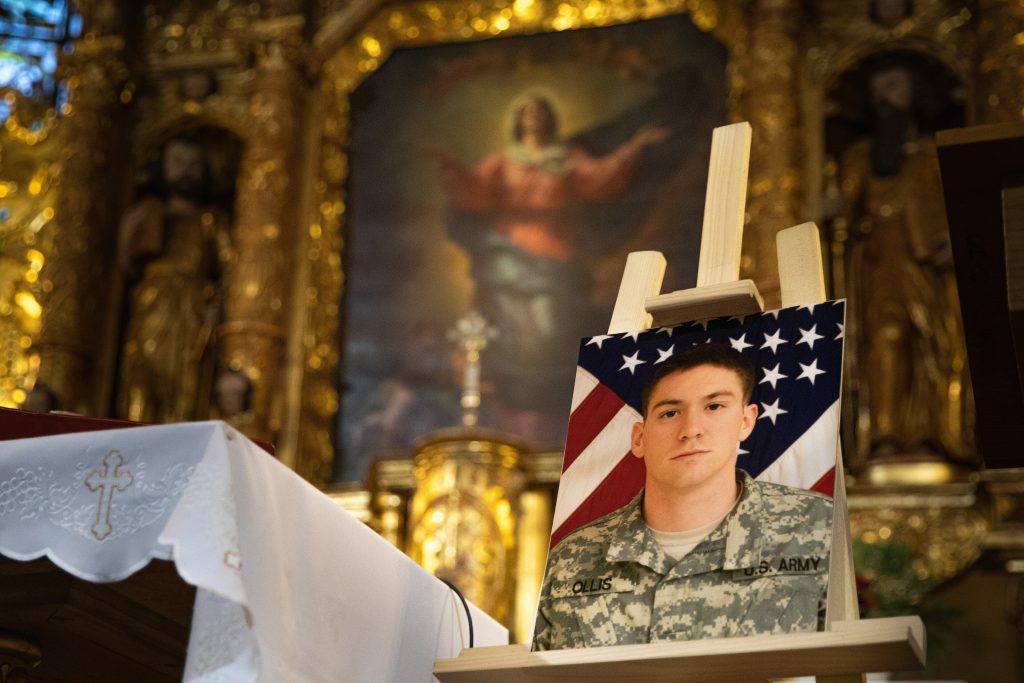
SSG Michael Ollis. 09/16/1988 – 08/28/2013.
Deeds, Not Words.
He really was the best of us.
References
- Hope Hodge Seck, “Soldier who died shielding Polish ally to receive Medal of Honor,” Military Times, Feb. 4, 2026 (includes quoted citation language and attack description).
- “10th Mountain soldier’s Silver Star upgraded for shielding Polish soldier from suicide bomber,” Army Times, June 12, 2019 (Silver Star upgraded to Distinguished Service Cross).
- Video of President Trump calling the Ollis family, credited to the SSG Michael Ollis Freedom Foundation; widely reposted by major outlets in early Feb. 2026.
- Example public reporting repeating the “over 40” figure as an advocacy estimate tied to the case: New York Post, Feb. 5, 2026.
- 10 U.S.C. § 1130, “Consideration of proposals for decorations not previously submitted in timely fashion.”
- U.S. Army, “SSG Michael Harold Ollis Warrior Grill,” Army.mil (Camp Kosciuszko memorialization).
- New York City Department of Transportation, “Staten Island Ferry Facts” (Ollis-class ferry service information).
_____________________________
As the Voice of the Veteran Community, The Havok Journal seeks to publish a variety of perspectives on a number of sensitive subjects. Unless specifically noted otherwise, nothing we publish is an official point of view of The Havok Journal or any part of the U.S. government.
Calder M. Serba is a U.S. Army infantryman and combat veteran whose writing explores the human and strategic costs of modern conflict. His work blends on-the-ground observation with analysis of deterrence, alliances, and the downstream effects of national decisions. IG @TheDustwunDispatch
Buy Me A Coffee
The Havok Journal seeks to serve as a voice of the Veteran and First Responder communities through a focus on current affairs and articles of interest to the public in general, and the veteran community in particular. We strive to offer timely, current, and informative content, with the occasional piece focused on entertainment. We are continually expanding and striving to improve the readers’ experience.
© 2026 The Havok Journal
The Havok Journal welcomes re-posting of our original content as long as it is done in compliance with our Terms of Use.