By Bruce D. Kowal
The Proposal in Brief
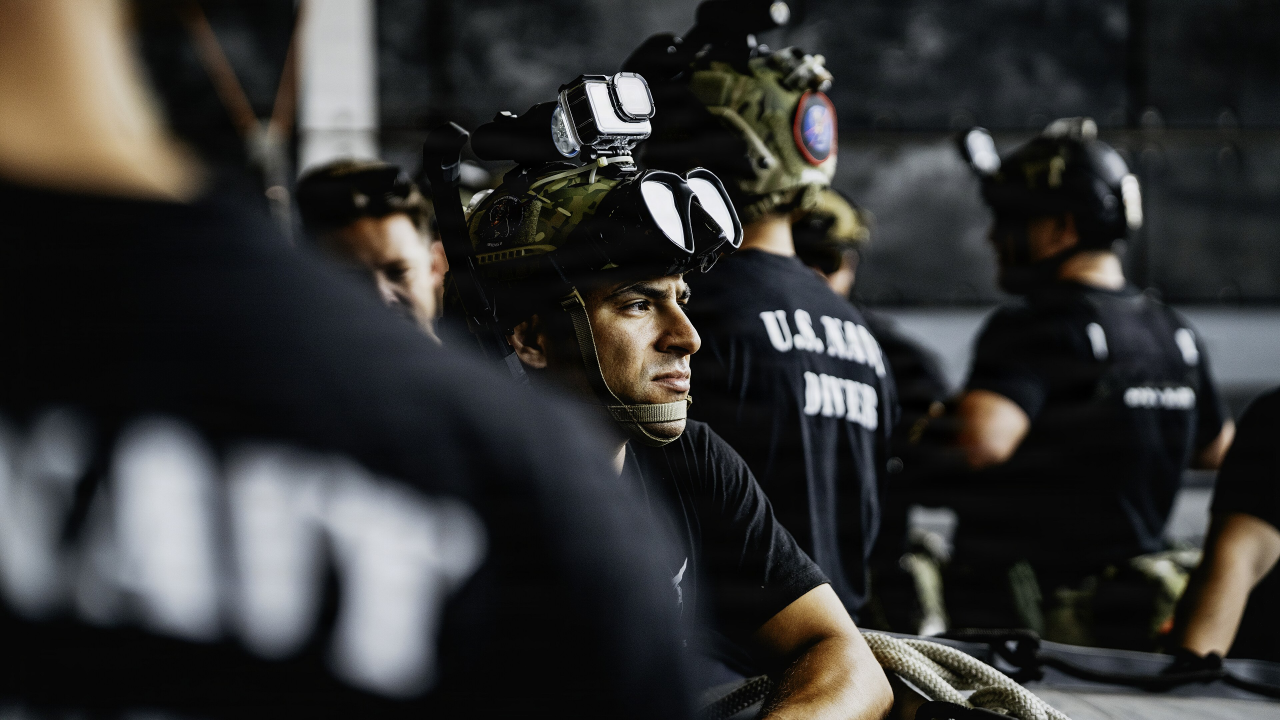
This is a proposal to create a United States Navy Auxiliary, a volunteer organization of U.S. Navy veterans, to boost Navy outreach, assist local Navy Talent Acquisition Groups (NTAGs), support the Department of Veterans Affairs, and partner with FEMA in disaster response. The organizational structure would be modeled after the highly successful U.S. Coast Guard Auxiliary, borrowing and adapting existing programs and structures from the Navy Office of Community Outreach (NOCO).
The long-term goal is to create what I call “Navy Towns,” communities where the benefits of naval service are already well known to high school students, building the kind of military tradition that exists naturally in the Southern states but is largely absent in the Northeast and elsewhere. This is, by its nature, a long-term endeavor.
While this proposal is targeted specifically at the needs of the U.S. Navy, the framework could ultimately be applied across all branches of the armed forces. Its effectiveness, however, depends on a fundamental principle: veterans helping veterans of the same branch. A Navy veteran speaks a language that no one else fully understands. That shared experience is the proposal’s greatest asset.
The effort draws on the resources and goodwill of three federal partners: the Department of the Navy, the Department of Veterans Affairs, and FEMA. The result would be a nationwide organization of veterans visibly and actively engaged in their communities, going well beyond the scope of any previous effort. As Abraham Lincoln put it in his Second Inaugural Address, it is about caring for “him who shall have borne the battle, and for his widow, and his orphan.”
The Problem: Recruiting
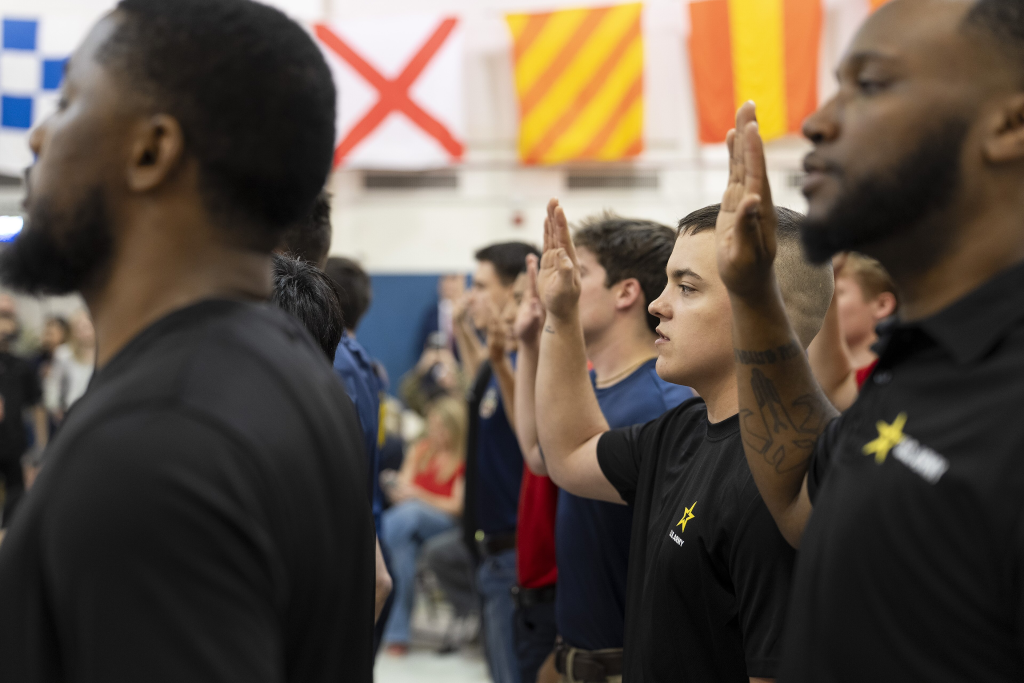
Navy recruiting has historically faced a steep challenge in the Northeast. Unlike the Southern tier of states, where enlisting in the armed forces is a family tradition passed from generation to generation, the Northeast has no such culture. After the end of the draft, enlistments fell off sharply, and they have never fully recovered. Today’s broader cultural environment compounds the problem. Military service is too often undervalued unless it can be exploited for political advantage.
The deeper issue is the absence of mentors. Young people in many Northern communities have no one in their lives who can explain what military service truly means, not the financial benefits, but the profound personal ones. The benefits of belonging to a culture that venerates honor, courage, tenacity, and the ability to work with others and lead. A culture that does not immediately reward with money, but with something more lasting: letters and honors. Without mentors who have lived that life and can speak to it credibly, the message never reaches the young people who need to hear it.
The Problem: The Emotional Condition of Veterans
The mental health and well-being of our veterans has rightly become a major national concern. Suicide rates among veterans have risen to alarming levels, documented in studies such as Costs of War, by Brown University’s Watson Institute for International and Public Affairs (Brown University). The scale of the problem demands a large-scale response, one that goes beyond what current institutions can provide on their own.
The most effective help, I believe, is best delivered by Navy veterans themselves. No therapist, no bureaucrat, no well-meaning civilian can fully substitute for a shipmate who has been there.
Beyond caring for veterans, there is also the matter of supporting the families of active-duty Navy personnel: their parents, spouses, and children. When a sailor deploys, an entire family is left behind to manage alone. They deserve support too.
How to Motivate Navy Veterans to Get Involved
An appeal to help shipmates is a powerful motivator, but it is not the only one. Navy veterans tend to be drawn to organized activity involving real-world problems. They are mission-oriented, practical, and frankly, many of them just love working with gear. Active participation in FEMA training alongside local first responders speaks directly to that instinct.
The prospect of being part of a trained, identifiable, uniformed volunteer unit with a clear mission and tangible equipment is a genuine draw. The proposal is designed to offer multiple vectors of engagement, recognizing that different veterans will be motivated by different things.
Three Missions, All Volunteer
The proposed Navy Auxiliary would operate across three distinct but complementary mission areas.
The first is Family and Veteran Support. Families of active-duty sailors would be “adopted” by the local auxiliary unit, checked on, kept connected, and reminded that they are not forgotten. Active-duty members serving far from home could rest easy knowing that someone has their family’s back. For veterans themselves, auxiliary members would be trained to recognize warning signs of emotional distress, connect with isolated or struggling shipmates, and simply show up as a buddy when one is needed.
The second mission is Recruitment Support. Volunteer members of the auxiliary, locally connected, trusted faces in their communities, would serve as mentors and advocates for Navy service. They could ease a recruiter’s access to high schools and community events, give presentations when recruiters are short-staffed, visit the homes of potential recruits, and build a visible presence in junior high schools long before enlistment age. Each NTAG recruiter would have an assigned auxiliary team backing them up around the clock. Once that pool of volunteer manpower exists, the NTAG itself will find ways to put it to work, and the cumulative effect over years will be to build genuine brand awareness for the U.S. Navy.
The third mission is FEMA Incident Command System (ICS) Support. Following the Coast Guard Auxiliary model, all Navy Auxiliary members would be required to develop a basic proficiency in the FEMA Incident Command System, creating a pool of ICS-qualified volunteers ready to plug into local command posts during emergencies. Specialized units could be formed around radio communications, equipment operation, or other niche skills. Members would train regularly alongside full-time first responders such as fire departments. There are also additional opportunities through programs like FEMA Reserve. The high visibility of this work, Navy veterans showing up in uniform with gear when a community is in crisis, is both intrinsically valuable and a powerful long-term investment in the Navy’s reputation.

The Broader Message: You Are Not Alone
The central message this organization would send to every corner of a community is a simple one: you are not alone. Families with members on active duty are not alone. Recruiters are not alone. Local first responders are not alone. All of these stakeholders would have visible, tangible backup from the United States Navy Auxiliary.
There is also a political dimension worth noting. The goodwill generated by a nationwide organization of uniformed Navy veterans visibly serving their communities at no cost to the taxpayer is considerable. It cannot hurt, when the Navy comes before Congress seeking appropriations, to remind legislators of how much the Navy gives back through the voluntary labor of the veterans it has produced.
The Motivation to Serve: Learning from the Coast Guard Auxiliary
Navy veterans who wish to stay connected to their service already have options. They can join the Navy League, volunteer with the VA, support Navy Relief, participate in ad hoc civic associations, or get involved with the Armed Services YMCA. These are all worthy endeavors. But none of them offer what the Coast Guard Auxiliary model provides: a clear mission in direct support of an active military branch, a recognizable uniform identity, no age restrictions, and the tangible sense that your volunteer labor is making a specific, measurable difference to an institution you love.
In the Coast Guard Auxiliary, members wear a uniform, the same one as active-duty Coast Guardsmen, with silver replacing gold, and carry out tasks that genuinely support the Coast Guard mission. That sense of still belonging, of still serving in a meaningful and visible way, is a powerful retention tool for volunteers. A Navy Auxiliary could offer exactly the same thing.
Making It Work: Structure and Accountability
The Coast Guard Auxiliary is organized around local “flotillas,” a somewhat grandiose term for what is essentially a neighborhood group of 20 to 80 members who meet monthly and carry out their assigned mission. The specific tasks Coast Guard Auxiliary members perform, recreational boating safety inspections, radio watchstanding, serving as crew on Coast Guard vessels, are obviously not applicable to a Navy Auxiliary. But the organizational model is entirely transferable: set clear tasks, implement them locally, and report results up the chain.
For the Navy Auxiliary, the local unit might be called a “Squadron” or even a “Task Force” rather than a Flotilla, though for purposes of this discussion, the familiar term works just as well. The important thing is the structure: a local unit with assigned responsibilities, regular meetings, clear leadership, and accountability for results.
Accountability means measurable reporting. For family support, that means tracking responses to assistance requests and activities attended. For recruiting support, it means counting events organized, speakers deployed, and manpower provided. For ICS and first responder work, it means logging exercises, training sessions with local fire departments and emergency management agencies, and hours contributed. The U.S. Coast Guard Auxiliary has a well-developed reporting template that could serve as the starting model.
Helping Families: The Full Picture
The Armed Services YMCA has already done important work in the area of child care for active-duty military families, and its model provides useful inspiration. But the stresses on active-duty families go far beyond child care. Deployment and training create anxiety, depression, and isolation. Frequent moves strain finances and friendships. Spouses are often expected to “just handle it” while managing children, employment challenges, and an ever-shifting support network on their own. A Navy Auxiliary can extend a hand across all of these pressure points.
One dimension that existing organizations often miss is support for family members who are geographically distant from naval bases: parents and siblings of active-duty sailors who may live hundreds of miles from any military installation. An active-duty sailor serving at sea or overseas may worry about an aging parent or a sibling going through a hard time back home, and may feel guilty about being so far away. Auxiliary members, operating locally in every community across the country, could be assigned to connect with these families, checking in, offering assistance, and reporting back to the active-duty sailor.
The message is clear and powerful: you join the Navy, and we have your back, not just you, but the people you love at home. Word of that commitment spreads through a community. It builds the Navy’s brand over years and decades.

Reaching Veterans in Emotional Crisis
Veterans struggling with depression, isolation, or suicidal ideation are among the hardest people to reach. The VA does not have the manpower to seek them out proactively. Auxiliary members, embedded in their local communities and connected to the veteran network, would be positioned to bridge that gap. Leads could come from VA help center calls or other referral channels, and auxiliary members could be assigned to follow up, to show up, to listen, to maintain contact.
This is not clinical counseling. It is the simple, irreplaceable act of a fellow sailor saying, “I see you, I’ve been there, and you’re not alone.” Sometimes that is what saves a life. The approach would involve continuous learning from others working in the field, and it would require resourcefulness and adaptability.
Working with FEMA: A Practical Partnership
The FEMA Incident Command System is a structured approach to managing emergency responses, and it is something the Coast Guard Auxiliary already uses as a baseline training requirement. A Navy Auxiliary would adopt the same standard, producing a ready pool of ICS-qualified volunteers who can integrate smoothly into local emergency command structures during floods, fires, hurricanes, tornadoes, and other disasters.
The practical applications are only limited by imagination. In winter, a unit with plow-equipped pickup trucks, each prominently marked with “U.S. Navy Auxiliary” on magnetic door signs, could clear snow for local nonprofits, religious schools, and isolated shipmates, while simultaneously checking in on those who might need help. In a flood, who better than Navy veterans to rig rescue lines or operate rigid inflatable boats? The “Cajun Navy” phenomenon, the spontaneous fleet of private boat owners who showed up to help during Hurricane Katrina and subsequent disasters, provides a model for what organized, trained Navy veterans could do.
For fires and hurricanes, the options multiply. Equipment storage could potentially be arranged through partnerships with FEMA, state highway departments, and local authorities, who generally welcome reliable, trained volunteer partners.
The community visibility this work creates is significant. Navy veterans showing up in uniform, with gear, doing difficult and necessary work when their neighbors need help, that image does more for Navy recruitment and goodwill than any advertising campaign ever could.
Why Three Missions?
The three-mission structure is not arbitrary. It is designed to satisfy different dimensions of what motivates veterans to give their time and energy.
Recruiting support offers a kind of service that is impersonal and abstract. You are helping the U.S. Navy as an institution, contributing to something larger than yourself with little immediate one-to-one gratification. For veterans who feel a deep, abiding loyalty to the Navy as a kind of “mother,” an institution that shaped them, this is deeply satisfying.
Family and veteran outreach is the opposite: it is intensely personal. You are sitting with someone, listening, taking note of their needs, and doing something concrete to meet them. The human connection is immediate and direct.
First responder work is something else again. It is for us. This is where veterans get to work together as a team, with gear and communications equipment, solving real-world problems under pressure. It is the closest thing to being back in service, and for many veterans, that is exactly what they are looking for.
Taken together, these three missions offer different rewards for different personalities and different seasons of life. They are designed to keep volunteers engaged, fulfilled, and coming back.
Getting Started Today
A formal nonprofit takes time to establish. But that is no reason to wait. Any group of Navy veterans who want to get started can do so right now, before any organizational paperwork is filed.
Purchase a set of Operational Dress Uniforms (ODUs). Add a garrison cap. Pin on a Vanguard U.S. Navy Veteran lapel pin, available for a few dollars, on the cap and the lapels of the ODU. Add name tapes to the right breast and a U.S. Navy Veteran tape on the left. Affix large magnetic “U.S. Navy Auxiliary” decals to both car doors and the hood. There is no law against veterans assembling for this purpose, and there is nothing that needs to wait. The only rule is the one you already know: conduct yourselves in a way that honors the Navy’s name.
When the formal nonprofit structure does come, the chartered organization, the official uniform standards, the full administrative apparatus, you will simply make the transition. But the work of building relationships, making contacts, attending community events, connecting with recruiters and VA offices and local emergency management agencies, all of that can begin the moment a few motivated shipmates decide they are ready to serve again.
Putting It All Together
This proposal does not seek to replace the many excellent organizations already at work supporting veterans and active-duty military families. The Navy League, Navy Relief, the Armed Forces YMCA, veterans’ service organizations, they all do important work and will continue to do so. The goal of a United States Navy Auxiliary is something more expansive: to embed the Navy so deeply into the fabric of American communities that a young person growing up anywhere in this country will feel, not just intellectually understand, but genuinely feel, that the Navy is present in their life, that Navy veterans are their neighbors and mentors and friends, and that when they consider their future, the Navy belongs on the list.
That is Navy outreach at full strength. As for credit, there is none to be claimed here. If others take this idea and run with it under a different name, in a different form, through a different channel, that is entirely fine. The point is not who gets credit. The point is that it gets done.
_____________________________
Bruce D. Kowal is a U.S. Navy and Naval Reserve veteran, a member of the U.S. Coast Guard Auxiliary, and a certified public accountant. He lives in the New York City metro area.
As the Voice of the Veteran Community, The Havok Journal seeks to publish a variety of perspectives on a number of sensitive subjects. Unless specifically noted otherwise, nothing we publish is an official point of view of The Havok Journal or any part of the U.S. government.
Buy Me A Coffee
The Havok Journal seeks to serve as a voice of the Veteran and First Responder communities through a focus on current affairs and articles of interest to the public in general, and the veteran community in particular. We strive to offer timely, current, and informative content, with the occasional piece focused on entertainment. We are continually expanding and striving to improve the readers’ experience.
© 2026 The Havok Journal
The Havok Journal welcomes re-posting of our original content as long as it is done in compliance with our Terms of Use.


