Editor’s note: This piece is drawn from the author’s Coast Guard correspondence.
The dry dock that we endured in the last two months of 2015 was trying. The first patrol of the year, in all honesty, was a mistake and shouldn’t have occurred. This patrol has been an enduring anticlimax. It has been sort of like watching a tire burn; unpleasant, slow and something you can’t really walk away from in case the flames spread. Only in our case, that might actually be worth it, as it would mean we got to do something.
I am bitter and frustrated. The Coast Guard as a whole is still suffering from the bureaucratic and political changes that were brought about by 9/11, a fact only more relevant as we observed Memorial Day and the June 6 Normandy landings, D-Day. Often, over the last six months, that bitterness and frustration has turned to anger. Not so much at my own situation but anger at the treatment of my shipmates. We give the service our valuable time to fulfill a mission and, in return, we are supposed to be able to build a valuable and fulfilling career. Over and over, I am watching people, friends and family, burn out, get used up and run down for no discernible reason and no return on investment for their time.
It angers me. It angers me beyond words and hinders my ability to function as a polite human being. That emotion has worked its way into my writing, unfortunately. I have written a half-dozen debriefs prior to this one, and all have been unpleasant reads that I wouldn’t ask any of you to endure. So, I worked hard and focused on something positive this time. It took a few drafts and restarts, but I managed to put words to paper that didn’t depress me.
I am not out here for myself anymore. I am out here for my shipmates. I will be standing by for when this job gets to be too much and they need someone to carry them for a while.
I will make more of an effort to keep these missives coming on a regular basis.
2016 06 06, Monday
“Regard your soldiers as your children, and they will follow you into the deepest valleys; look on them as your own beloved sons, and they will stand by you even unto death.”
The Art of War, by Sun Tzu
Grand epics have been written about charismatic military commanders over the last ten thousand years or so of recorded human history. There are entire fields of study devoted to masters of the battlefield that became heads of state, kings, emperors and martyrs. King Leonidas, King David, Alexander the Great, Napoleon, George Washington, Eisenhower… the list is extensive, to say the least. They were feared, loved, revered and followed by legions of faithful.
There is also a great deal about the love between soldiers. Maybe love is the wrong word, but bond doesn’t carry enough weight for me. It is often romanticized and made overly dramatic, but I can tell you that Hollywood and novels do not do it justice. It is a very real thing. I can only ever remember my father crying once. It was a very brief moment at the Vietnam Veterans Memorial in Washington, D.C.
Part of me wishes I’d endured the hardships of combat. Maybe then I could be a true sympathetic soul to others who’ve gone through that gauntlet more or less in one piece. Maybe then I could justify my bitterness at the headaches of the military. However, the rest of me knows just how fortunate I truly am. I’ve never lost a friend to enemy action. I’ve never spent the night hunkered down in a ditch catching naps between volleys of mortar fire. I still have all my appendages. I don’t wake up screaming three nights in five. Being largely out of the conflict, I never expected to find the above-mentioned affection for my officers or the bond between myself and my shipmates.
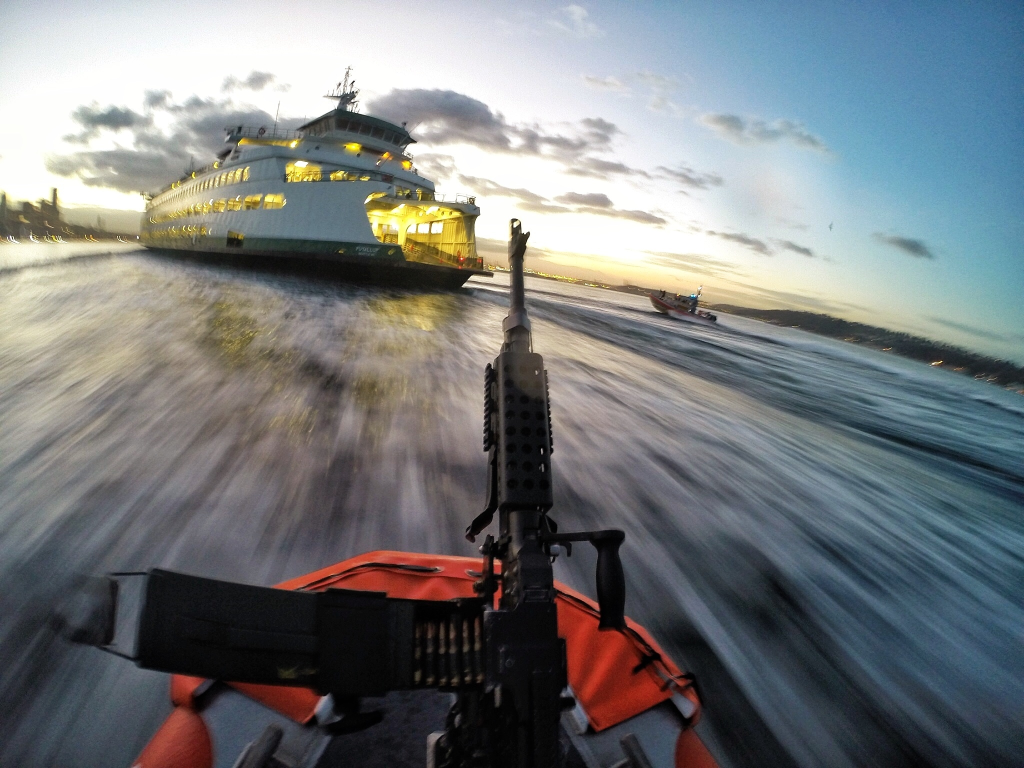
Life out there on the water was stressful, more so than one might normally suspect. While we weren’t being shot at on a regular basis, or at all, we didn’t get to go home in the evening; we never left work. There was pressure to perform our primary duties, our collateral duties and tertiary duties, maintain a constant level of ready alertness, remain civil to our superiors and bathe on a regular basis. You wouldn’t think taking a shower would be something you had to tell someone to do, but there are only so many hours in a day and sometimes we literally forgot to eat, much less change clothes or shave. There were days when we had to choose among sleep, taking time to decompress and eating. Often, we were too tired to do more than sit on a convenient bit of gear or box and stare at the bulkhead.
Over time, that tension turned to pervasive low-level stress. It was part of why we formed bonds out there on the edge. It’s why you’d sometimes see one big, burly man giving another one a shoulder rub on the mess deck in front of everyone else. It might be a bit rough and masculine in its delivery, but he’s giving that massage because he can see the tension in his friend’s neck and shoulders. He can see the lines of stress in the other man’s face. He noticed when one of the people in his life he may depend on needed help, or at least an oblique acknowledgement of their silent burdens. The contact never lasted long and was usually accompanied by a heavy thump on the back when it was done. Underway, it’s all we were allowed to do for one another when we didn’t have the time to sit down and vent over a beer or two.

When we saw shipmates getting a raw deal, it angered us. When we saw them treated unjustly, it stirred an urge to rise to their defense and commit acts of violence on their behalf. It was a vehement and visceral reaction. When taken out of context, it was vastly disproportionate to what most of polite society would consider reasonable or appropriate. A shipmate’s triumphs were ours, as were their failures and pains.
As often as not, it was mistaken for fraternization. On rare occasions, it turned into that when it was between opposite sexes, which caused trouble for everyone else. As service members, we understood why there were rules against it. We also understood why it happened despite the rules. When you had no one else within reach and you were about to crack, sometimes you made unwise decisions to survive. Unfortunately, because of the extreme minority that did give in and do something foolish, the rest of us had to walk a knife-edge between caring and being suspected of caring too much… one more damn thing to stress about.
I found fellowship and family out there on the edge. I encountered leaders who, if they called, I would get up in the middle of the night, pack a bag and go, no questions asked. I say that because I knew that if they were going to the trouble of reaching out to me at all hours, it was serious.
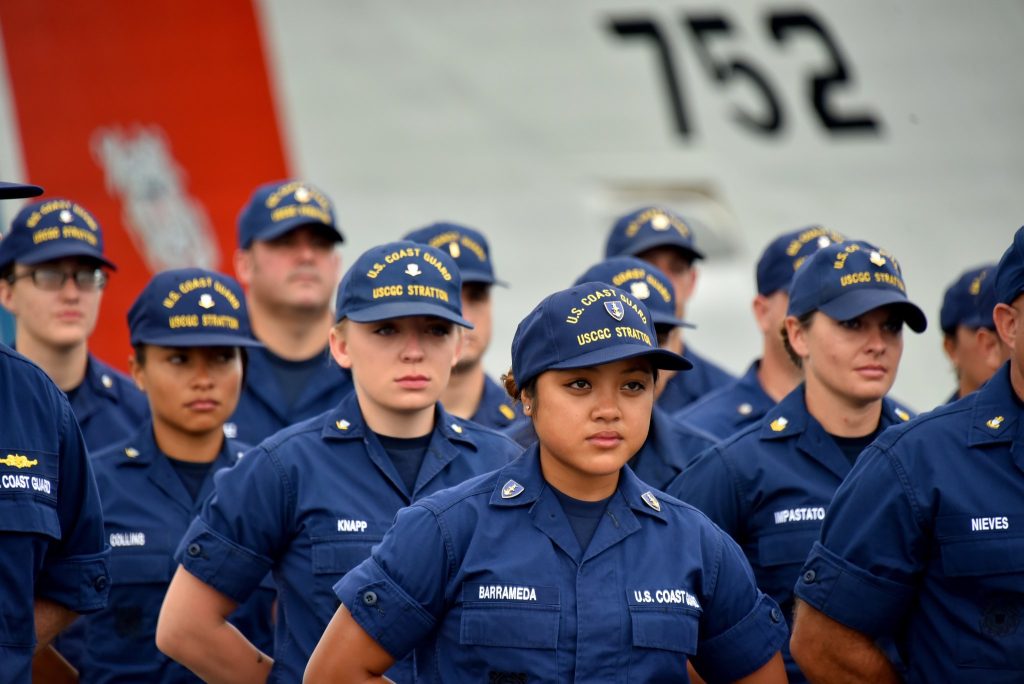
So, if you’ve ever wondered about the odd relationships between service members, know that there is a reason for it. It’s more than just common jargon and uniforms; you can find that in almost any profession. For service members, it’s a connection born of stress and shared hardship. We’d all endured the separation from family, the endless loop of cutter life and the unforgiving, oblivious superiors. We’d all endured policies written by those who’ve never spent a day out of their swivel chairs back at headquarters. In some cases, we tore our hair out over those policies because they were so disconnected from reality they bordered on insanity.
We called it “trauma bonding” and laughed when we said it out loud because it felt better than crying in frustration.
It was a different sort of love and bond that we sometimes put on equal footing with our spouses, children, siblings and parents. It was the difference between two oceans. Both were vast and powerful things that tossed our lives around like ships, but they were different enough in nature to deserve a distinction. Sometimes, where their edges met, the currents joined into something stronger. Sometimes, those same edges generated storms that pulled the ships down and tore them apart.
As service members, it was heartbreaking to watch, and we did what we could to help the survivors. It’s what we would want them to do for us.
All for the love of a brother.
_____________________________
K.C. Aud is a U.S. Coast Guard reservist and Navy civilian contractor in the Puget Sound region. He enlisted in the Coast Guard in 2010 as an Operations Specialist, later served aboard USCGC Active, left active duty after several years, and reenlisted in 2020 as a Maritime Law Enforcement Specialist. Before returning to the service, he worked a range of civilian jobs, including brewing, farm work, machining, and Navy contract support. For The Havok Journal, he writes from Coast Guard and veteran experience, with a focus on military life and maritime service.
As the Voice of the Veteran Community, The Havok Journal seeks to publish a variety of perspectives on a number of sensitive subjects. Unless specifically noted otherwise, nothing we publish is an official point of view of The Havok Journal or any part of the U.S. government.
Buy Me A Coffee
The Havok Journal seeks to serve as a voice of the Veteran and First Responder communities through a focus on current affairs and articles of interest to the public in general, and the veteran community in particular. We strive to offer timely, current, and informative content, with the occasional piece focused on entertainment. We are continually expanding and striving to improve the readers’ experience.
© 2026 The Havok Journal
The Havok Journal welcomes re-posting of our original content as long as it is done in compliance with our Terms of Use.