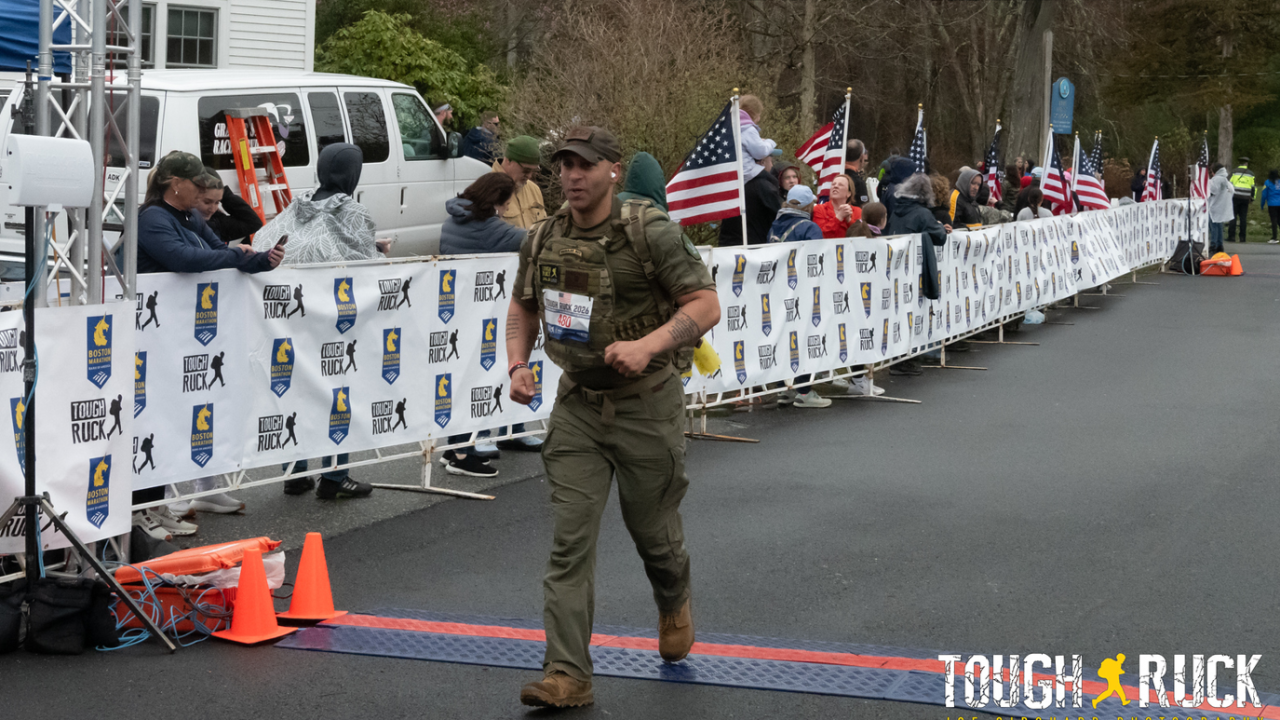
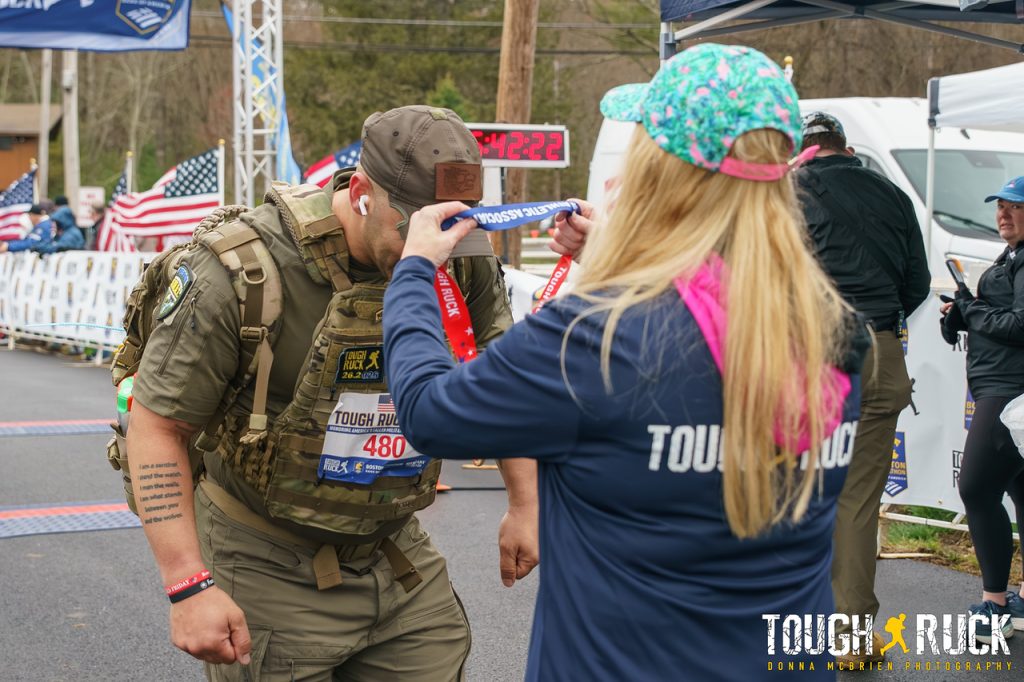
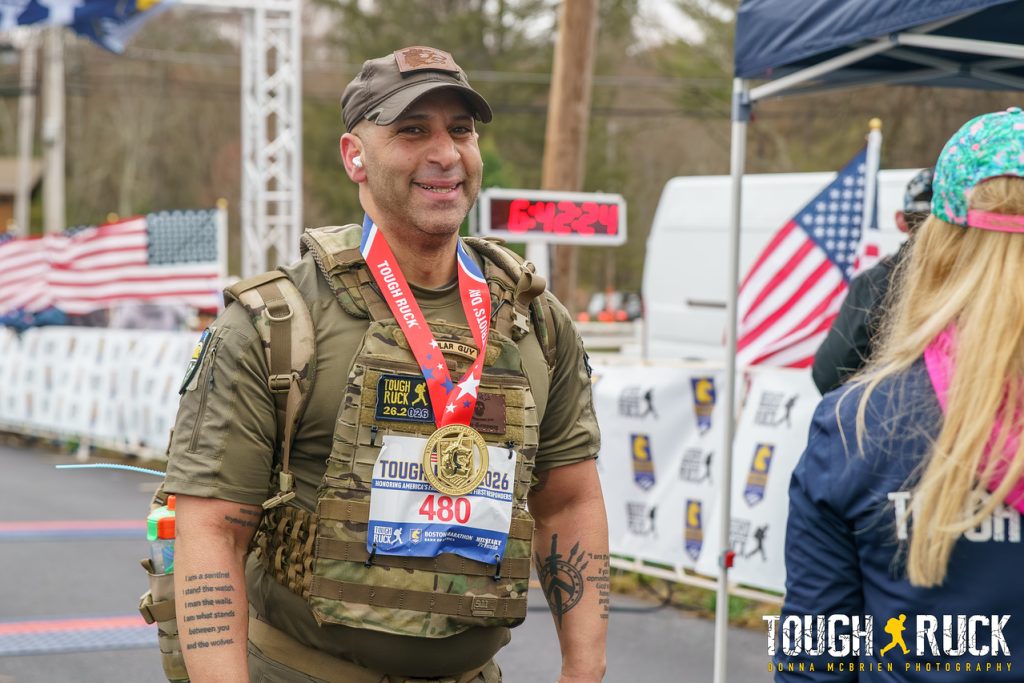
On April 19, 2026, I completed the Boston Marathon Tough Ruck for the tenth time. Ten years of stepping to the line, putting weight on my back, and moving 26.2 miles with purpose. You would think after a decade it would become routine, something predictable that experience alone could carry you through. It never does. If anything, it becomes more revealing every year. The distance does not change. The weight does not change. What changes is how clearly you see yourself inside of it.
As a combat veteran, a SWAT operator, and a police sergeant, I have spent most of my adult life operating in environments where discomfort is not optional. Long hours, heavy gear, unpredictable conditions, and moments that demand performance whether you feel ready or not. You show up prepared or you get exposed. That is the standard.
But the ruck strips all of that away. There are no radios, no calls stacking, no one directing your next move. There is no external pressure forcing you forward. It is just you, the load, the distance, and the conversation happening in your own head. And that conversation has a way of becoming brutally honest when there is nowhere to hide.
There were stretches where my feet hurt enough that I could feel my stride change without consciously thinking about it. Moments when my pace dropped and I had to decide whether I was going to acknowledge what was happening and adjust, or ignore it and deal with the consequences later. Early hotspots were forming, subtle at first, but I have done this enough times to know exactly how that ends if you pretend it is not there. Problems do not usually show up fully developed. They start small, manageable, easy to ignore, until they are not. That applies to endurance, to leadership, and to life.
But this year carried a different kind of weight.
The physical load was the same, but mentally, it was heavier than it has ever been. The war in Lebanon was not just something I was watching from a distance. It was personal. Family homes destroyed. People displaced. People I know and love forced into survival overnight. And then there was the loss. Family members. People connected to my family. Lives interrupted and ended in a way that never makes sense, no matter how many times you try to process it.
That kind of weight does not stay where you think you left it. You can push it aside to function. You can bury it under responsibility, under routine, under the next task that needs to get done. But it does not disappear. It waits.
Somewhere in those miles, it caught up to me.
Memories from my childhood started coming back. Growing up around conflict. Hearing artillery in the distance. Watching mountains and knowing something was happening, even if I did not fully understand it at the time. That feeling of instability, of uncertainty, of knowing that everything can change in an instant. Those experiences do not leave you. They stay, even when you think you have moved past them.

And layered on top of that were the experiences from my adult life. Combat deployments. Iraq. Calls from the job that never fully sit right. The accumulation of years of responsibility, decisions, and moments that stay with you long after they are over.
With every step I took, determination, anger, sorrow, and every type of emotion you can think of came out.
For a long time, I did what most of us in this profession do. I compartmentalized. I stayed busy. I focused on the next thing in front of me. But this year, it became harder to do that.
There were days when the weight of everything felt overwhelming. Days when getting out of bed felt like a task in itself. Not because of physical exhaustion, but because of something deeper. A heaviness that sits in your chest and makes even simple things feel difficult. A kind of depression that does not always look dramatic, but quietly drains you. That is not something we talk about enough.
There is an expectation in this profession to keep moving, to push through, to not slow down. But there is a difference between resilience and denial. Between discipline and ignoring what needs to be acknowledged. This year forced me to confront that.
And that is where the words of Khalil Gibran hit in a way they never had before: “Out of suffering have emerged the strongest souls; the most massive characters are seared with scars.”
That line is often read like a quote you pass over quickly, something that sounds good but does not fully land. But when you have lived through suffering, when you have carried loss, trauma, and responsibility over years, you realize it is not meant to comfort you. It is meant to tell you the truth.
Suffering does not automatically make you stronger. It does not guarantee growth. There are people who go through suffering and break under it. That reality exists. What Gibran is pointing to is not suffering itself, but what can emerge from it if you are willing to face it.
The “strongest souls” are not the ones who avoid pain. They are the ones who have been forced to confront it. People who have had their sense of control stripped away. People who have seen what instability looks like. People who understand loss not as a concept, but as something real. That kind of experience creates depth. It changes how you see the world. It forces you to decide who you are going to be in the face of it.
And then there are the scars.
Scars are not something to hide. They are evidence. Evidence that something happened. Evidence that it mattered. Evidence that you went through something that changed you. Being “seared” with scars means those experiences did not just pass over you. They became part of you.
But scars also mean something else. They mean you survived. They mean you endured something that could have taken you out, and it did not.
There is a difference between someone who has lived a comfortable life and someone who has been shaped by hardship. Not just in what they have experienced, but in how they carry it. The ones who grow from it develop a level of awareness and resilience that cannot be taught. It has to be earned.
That is what I felt this year. The weight was not just physical. It was everything behind it.
And instead of pushing it away, I carried it. Step by step. Mile by mile.
That is something the Stoics understood long before any of us tried to apply it in our own lives. In Meditations, by Marcus Aurelius, he wrote, “You have power over your mind, not outside events. Realize this, and you will find strength.” On the surface, that sounds simple. Almost too simple. But when you start to live through things you cannot fix, cannot stop, and cannot change, you begin to understand how much weight is behind those words.
There are things in this world that exist completely outside of your control. War is one of them. Loss is one of them. What happens to people you love often falls into that category. You can prepare, you can care, you can stay connected, but at a certain point, reality does not bend to your intentions. It does not ask for your permission. It simply unfolds.
That is where most people struggle, because our instinct is to fight for control. We try to make sense of things that do not make sense. We try to find a way to influence outcomes that are already in motion. And when that fails, it creates frustration, anger, and a sense of helplessness that can consume you if you let it.
What the Stoics were pointing to is not passivity. It is not about accepting everything in a way that makes you indifferent. It is about clarity. It is about understanding where your influence begins and where it ends. Because once you recognize that boundary, you stop wasting energy trying to control what is uncontrollable, and you redirect that energy toward what actually matters.
And what actually matters is how you carry it.
You cannot control the fact that something happened. You cannot undo loss. You cannot reverse damage or erase experiences that have already left their mark. But you can control how those experiences shape you. You can control whether they turn into bitterness or into perspective. You can control whether they break you down or deepen you.
That is not easy. It is not something that happens automatically. In fact, it is often the harder path. Because it requires you to sit with what you are feeling instead of avoiding it. It requires you to process pain instead of numbing it. It requires you to move forward without closure, without answers, without the kind of resolution people hope for but rarely get.
Strength, in that sense, is not about eliminating the weight. It is about learning how to carry it without letting it control you.
That is where the real discipline is.
It shows up in small decisions. Getting out of bed when everything feels heavy. Showing up for your responsibilities even when your mind is somewhere else. Choosing not to let anger or frustration dictate your actions. Continuing to move forward, even if that movement is slow.
The Stoics believed that your mind is the one place where you can always exercise control, even when everything else feels chaotic. That does not mean you will always feel strong. It does not mean you will not have moments where the weight feels overwhelming. It means that even in those moments, you still have a choice in how you respond.
You can give in to it, or you can carry it. And carrying it does not mean ignoring it. It means acknowledging it fully and still choosing to take the next step.
That is where your control exists. Not in changing the external world, but in refusing to let it define the limits of who you are.
There is a principle in The Book of Five Rings, by Miyamoto Musashi, that says, “Today is victory over yourself of yesterday.” That line means more when the battle is not just physical. Some days, victory is not about performance. It is about showing up. It is about getting out of bed. It is about taking a step forward when everything in you is telling you not to. That is still discipline. That is still strength.
Hours into the ruck, nothing dramatic changed. The weight was still there. The thoughts were still there. The memories were still there. But something shifts when you keep moving anyway.
The focus narrows. The noise quiets just enough.
Somewhere in those last few miles, everything external starts to fade. The crowd noise becomes distant, and the internal chatter that’s been running for hours begins to loosen its grip. It’s not that the pain disappears or the fatigue goes away. It’s that it stops being the loudest thing in the room.
I turned off my music. For most of the ruck, it had been there in the background, a way to keep rhythm and fill space. But toward the end, I didn’t need it. I wanted to hear what was actually around me. I wanted to be present in a way that you can’t be when you’re constantly feeding your mind noise.
That’s when everything shifted. I started to hear the birds, not just as background sound, but clearly. The rhythm of their chirping, the way it cut through the stillness. I heard the rustling of leaves, subtle at first, then more defined. Probably small animals moving through the brush, going about their lives without any awareness of the miles being covered just a few feet away.
It grounded me. I began focusing on the feeling of the earth underneath me. Each step became more deliberate. The impact of my foot hitting the ground, the way that force traveled up through my legs, into my core, and up into my shoulders where the weight of the ruck sat. For a moment, everything aligned: body, mind, and environment.
I wasn’t thinking about how many miles were left. I wasn’t thinking about pace or time. I was just there.
In that moment, I asked myself a simple question: what am I feeling? Not physically. That answer was obvious. Fatigue, soreness, pressure. I meant something deeper than that. What am I actually feeling right now?
The answer came back without hesitation: purpose.
Not excitement. Not adrenaline. Not even relief that the end was close. Purpose. And it hit differently.
Because purpose has always been the thing that drives me. It’s what got me through the military. It’s what keeps me grounded in this job. It’s what pushes me to keep showing up, even when things get heavy, even when life outside of the job feels overwhelming.
Purpose isn’t loud. It doesn’t come with emotional highs or bursts of energy. It’s steady. It’s quiet. It’s the reason you keep moving when everything else is telling you to stop.
In that moment, the miles didn’t matter. The discomfort didn’t matter. Even the weight, both physical and mental, faded into the background. All that mattered was continuing. One step, then another. Not because it was easy, but because it was what I was meant to do in that moment.
That’s what purpose does. It simplifies everything. It removes the noise, strips away the distractions and leaves you with one clear directive: keep going. And when you’re able to tap into that, even briefly, everything changes. The ruck stops being about distance. It stops being about effort. It becomes about alignment between who you are, what you’ve been through, and what you’re still willing to carry forward.
Step by step. Mile by mile.
The Spartans lived by simplicity. Discipline was not situational. It was constant. You trained so that when the moment came, you did not have to think about whether you were ready. In Gates of Fire, by Steven Pressfield, that idea is stripped down to its core through the warriors who understood that preparation was not something you turned on when it mattered. It was something you lived every day. There is a line that captures it clearly: “The opposite of fear is love.” Not comfort. Not confidence. Love, of your brothers, of your duty, of something greater than yourself. That is what carries you when everything else starts to break down.
That mindset applies here.
Because at a certain point, it is not about feeling ready.
It is about being willing.
Willing to carry the weight. Willing to keep moving. Willing to face what is in front of you without looking for an easier way out. Pressfield writes in Gates of Fire that “Pain is the opposite of love. Not hate.” Pain isolates. It narrows your world and makes everything feel heavier than it already is. But love, purpose, commitment, and responsibility pull you forward despite it. It reminds you why you are there in the first place.
There is another idea woven through Pressfield’s work that connects directly to this. In The War of Art, by Steven Pressfield, he describes resistance as the force that pushes back against anything meaningful you try to do. It shows up as doubt, fatigue, distraction, or the urge to stop when things get hard. The closer you are to something that matters, the stronger that resistance becomes.
You feel that in a ruck.
You feel it in the miles when your body starts to push back and your mind begins looking for exits. You feel it in the internal negotiation: the quiet voice telling you to slow down, to stop, to justify taking the easier path. That is resistance. And the only way through it is not to negotiate with it, but to move anyway.
A marathon ruck is brutally honest. It does not care about your intentions. It does not care about what you meant to do. It shows you exactly what you have built. It reveals what is actually there when everything else is stripped away.
This year, it showed me something else. It showed me that even with everything I was carrying, I was still willing to move forward. Not perfectly. Not easily. But consistently.
Pressfield writes about the difference between amateurs and professionals. Amateurs wait for the right conditions. Professionals show up regardless. They do the work whether they feel like it or not. That distinction matters when things get hard, because there is no perfect moment to act. There is only the moment you are in.
And maybe that is the point.
Because strength is not built by avoiding weight. It is built by carrying it. By acknowledging it. By continuing forward anyway. And in that, there is something deeper, something the Spartans lived and something Pressfield captures throughout his work. Courage is not the absence of fear or pain. It is the decision to act despite it. It is the willingness to stand in it, to move through it, and to not turn away. That is where strength is forged. Not in comfort. Not in ease. Not in the moments where everything goes according to plan. It is forged in the weight you didn’t ask to carry, in the losses you can’t undo, and in the days where getting out of bed feels like the hardest thing you will do.
It shows up in the miles where every step feels heavier than the last, and you take it anyway. That is the truth most people don’t see.
Strength isn’t loud. It doesn’t always look like victory. Sometimes it looks like survival. Sometimes it looks like showing up when you don’t feel like yourself. Sometimes it looks like carrying everything you’ve been through without letting it take everything from you.
This year reminded me of that.
The ruck didn’t just test my body. It tested everything behind it. The weight wasn’t just on my back. It was in the memories, in the loss, in the moments that don’t leave you when everything else is quiet. And what I found out there wasn’t perfection. It wasn’t ease. It was something simpler. I’m still here. Still moving. Still willing to carry it. And maybe that’s enough.
Because at the end of the day, the weight doesn’t disappear. The memories don’t fade on command. The scars don’t go away. But neither do you. So you carry it. Not because it’s light. Not because it’s easy. But because it’s yours. Heavy is the load. And we carry it anyway.
_____________________________
Ayman Kafel is a patrol sergeant, combat veteran, and founder of Project Sapient, with more than 20 years of operational experience. He served in Iraq as a U.S. Army soldier and translator and has worked in law enforcement roles including SWAT, DEA task force work, and plainclothes interdiction; he also holds a master’s degree in counterterrorism. For The Havok Journal, he writes from that background on law enforcement, service, training, stress, resilience, and national security, often focusing on the physical and psychological demands of high-stress work. Follow Project Sapient on Instagram, YouTube, and all podcast platforms for engaging content. He can be reached at ayman@projectsapient.com.
As the Voice of the Veteran Community, The Havok Journal seeks to publish a variety of perspectives on a number of sensitive subjects. Unless specifically noted otherwise, nothing we publish is an official point of view of The Havok Journal or any part of the U.S. government.
Buy Me A Coffee
The Havok Journal seeks to serve as a voice of the Veteran and First Responder communities through a focus on current affairs and articles of interest to the public in general, and the veteran community in particular. We strive to offer timely, current, and informative content, with the occasional piece focused on entertainment. We are continually expanding and striving to improve the readers’ experience.
© 2026 The Havok Journal
The Havok Journal welcomes re-posting of our original content as long as it is done in compliance with our Terms of Use.

