
A while back, I had a conversation with a friend that has stayed with me long after it ended. He said something simple: “Observe the observer observe.” At first, I thought it was one of those philosophical statements people repeat because they sound profound. The kind of thing people nod at for a few seconds, post online, and then move on from without ever really sitting with it.
“Observe the observer observe.” But the more I reflected on it, the more I realized it may describe one of the most important internal battles a human being can ever fight. I felt this went beyond metacognition.
Most people spend their entire lives focused outward. Watching the world. Reacting to people. Reacting to stress. Reacting to pain. Reacting to disappointment. Very few ever stop long enough to examine the person doing the observing in the first place. The internal narrator. The lens. The filter. The conditioned mind.
Because the truth is, none of us see reality exactly as it is. We see reality through our experiences. Through trauma. Through fear. Through ego. Through pain. Through memory. Through conditioning.
Two people can walk through the exact same hardship and come out completely different because each person interpreted the experience through a different internal framework. One person becomes bitter, while another becomes wiser. One person collapses inward, while another becomes resilient. The event may be the same. The observer is not.
That realization changed the way I started looking at human behavior. Most people think they are reacting to reality itself, when many times they are reacting to the meaning their mind assigned to reality long before the moment even happened.
A traumatized mind scans the world for danger. An insecure mind scans the world for judgment. An angry mind scans the world for disrespect. A hopeless mind scans the world for proof that nothing will ever improve. The observer is constantly filtering reality before conscious thought even catches up.
Modern neuroscience supports a lot of this. The brain is not simply recording life like a camera. It is constantly predicting, filtering, interpreting, and comparing based on previous experiences. In many ways, people are not just seeing reality. They are seeing reality through conditioned expectation.
That is why two people can stand in the same room, witness the same event, and walk away believing two completely different things happened. And maybe that is why self-awareness matters so much. Because if you never examine the observer within yourself, you may spend your entire life mistaking conditioning for truth.
You may mistake hypervigilance for wisdom. Bitterness for intelligence. Emotional shutdown for strength. Cynicism for realism. But the moment a person starts observing the observer, something changes. You start asking yourself harder questions.
Why do I react this way? Why does this trigger me so deeply? Why do I automatically expect the worst? What experiences shaped this lens? Is this reality… or is this conditioning?
That level of introspection can change a person completely. Because eventually you realize the greatest battle was never just against the world around you. Sometimes the real battle is against the unconscious patterns within you.
Once I began thinking about it deeper, I found myself reflecting on concepts from psychology, neuroscience, trauma research, and even quantum physics. Not in the trendy social media way where people misuse science to justify magical thinking, but in the real sense: how attention influences systems, how repeated focus changes perception, and how the mind itself adapts to whatever it rehearses most often.
That realization forced me to confront something uncomfortable: What if many of us are not only suffering from external hardship? What if we are also suffering from the way we have been conditioned to observe life itself?

The Observer Effect
Many people have heard the phrase “observer effect” without fully understanding what it means.
In quantum physics, observation is not simply passive viewing. At the subatomic level, the act of measurement itself can influence the behavior of particles. One of the most discussed examples of this is the double-slit experiment, where particles behave differently depending on whether measurement occurs. When unobserved, particles can behave like waves of possibility, but once measured, their behavior appears to change.
Now, I am not saying human consciousness magically controls the universe. I think people oversimplify and misuse quantum physics constantly online. But I do think there is something deeply important hidden inside the principle itself: attention changes systems. Observation matters. Interaction matters.
What we repeatedly focus on changes us. Not magically, but psychologically, emotionally, and neurologically. The mind adapts to what it rehearses. If a person spends years feeding fear, eventually the nervous system begins expecting danger before danger even appears. If someone constantly rehearses hopelessness internally, the brain slowly conditions itself to search for proof that nothing will improve. If someone repeatedly focuses on resentment, anger eventually becomes part of their identity.
The reverse is also true. Hope changes behavior. Gratitude changes perception. Discipline changes outcomes. Purpose changes endurance. Modern neuroscience supports much of this through neuroplasticity, attentional bias, and predictive processing. The brain is constantly rewiring itself based on repeated thoughts, emotional patterns, and experiences. In many ways, the human mind becomes shaped by what it consistently observes internally.
And maybe that is where this idea becomes deeper than philosophy.
Most people spend their lives observing the external world without ever examining the observer within themselves. They react to stress, react to pain, react to disappointment, and react to fear. But very few stop long enough to examine the internal narrator assigning meaning to all of it.
The lens. The filter. The conditioned mind.
I will dig deeper into these concepts later.
Because eventually you realize something important: two people can experience the exact same hardship and emerge completely different afterward, not because the event changed, but because the observer interpreted it differently. One becomes bitter while another becomes wiser. One collapses inward while another becomes resilient.
The event may be identical.
The observer is not.
Every human being carries an internal narrator, whether they realize it or not. A voice constantly interpreting events, assigning meaning, replaying memories, predicting outcomes, and shaping identity. Most people are not listening to reality directly. They are listening to the story their mind creates about reality.
That narrator can become your greatest ally or your greatest liability.
For some people, the narrator becomes harsh, critical, fearful, and destructive. It constantly whispers failure before action even begins. It replays embarrassment, amplifies insecurity, and keeps old wounds alive long after the moment has passed. For others, the narrator becomes disciplined. Grounded. Reflective. Honest without being self-destructive. It learns how to acknowledge suffering without becoming consumed by it.
The dangerous part is that most people never consciously examine that voice. They simply assume every thought that appears in their mind must be true. But thoughts are often conditioned responses, not objective reality.
A traumatized narrator tells you the world is unsafe. A hopeless narrator tells you nothing will improve. An angry narrator interprets everything as disrespect. An insecure narrator constantly searches for proof of inadequacy. Over time, the narrator becomes the script through which a person experiences life itself. And if you never challenge the narrator, you eventually become imprisoned by its story.
OK, let’s go over the concepts of the lens, the filter, and the conditioned mind.
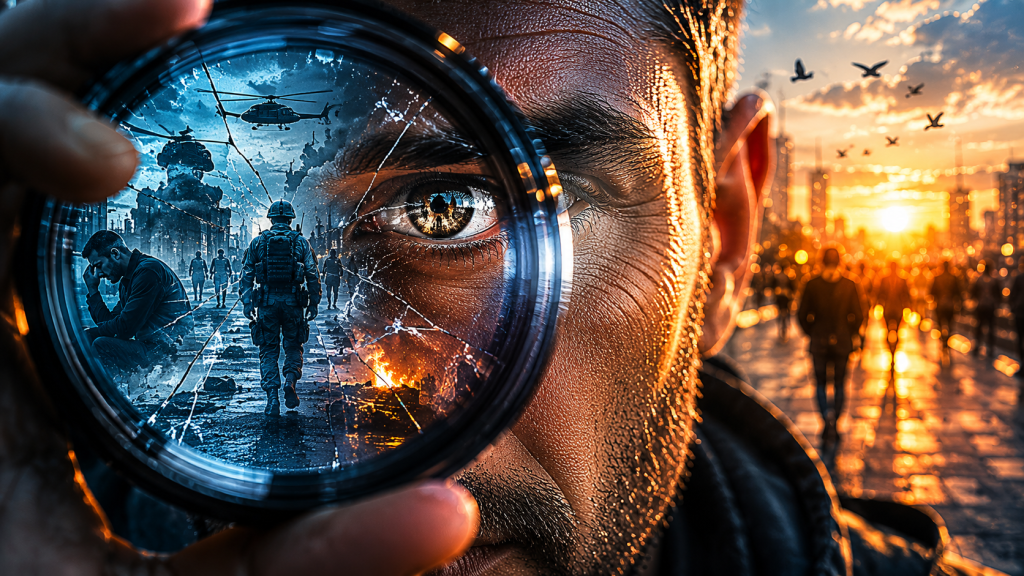
The Lens
The lens is the perspective through which you interpret the world.
No human being sees life completely objectively. Every experience passes through an invisible psychological lens shaped by upbringing, trauma, belief systems, relationships, victories, failures, pain, culture, and memory.
That lens affects everything.
Two people can experience the exact same event and walk away with completely different interpretations because each person viewed it through a different internal lens.
One person sees hardship and concludes life is unfair. Another sees hardship and discovers resilience. One person experiences failure and gives up. Another experiences failure and grows stronger because of it. The event itself is not always what defines people. The interpretation often does.
That lens becomes especially important after trauma. Human beings who spend years in survival mode often begin viewing the world through protective distortion. They may expect betrayal before trust. Conflict before peace. Rejection before connection.
The lens adapts to previous pain.
And eventually, people stop seeing life as it truly is and start seeing life through accumulated emotional conditioning.
That is why self-awareness matters so much. Because if you never examine your lens, you may mistake your conditioning for reality itself.

The Filter
The filter determines what your mind notices, prioritizes, and emotionally responds to. The human brain processes enormous amounts of information every second, but conscious awareness only notices a fraction of it.
The filter decides what enters focus. And that filter is heavily shaped by repetition and emotional conditioning.
Someone struggling with anxiety may unconsciously filter the world for danger. Someone consumed by insecurity filters interactions for judgment. Someone carrying unresolved anger filters life for disrespect. Someone grounded in gratitude filters life differently altogether. This is why two people can walk into the same room and experience completely different emotional realities.
One notices hostility. Another notices opportunity. One notices threat. Another notices connection. The nervous system learns what to prioritize through repetition. Neuroscience refers to parts of this process through attentional bias and predictive processing. The brain becomes more efficient at identifying whatever it repeatedly rehearses emotionally.
Fear trains the filter toward danger. Bitterness trains the filter toward negativity. Hope trains the filter toward possibility. Discipline trains the filter toward action. Eventually, people stop consciously choosing what they see because the filter begins operating automatically beneath awareness.
That is why intentionality matters. Because whatever repeatedly passes through your filter slowly conditions the way you experience life itself.
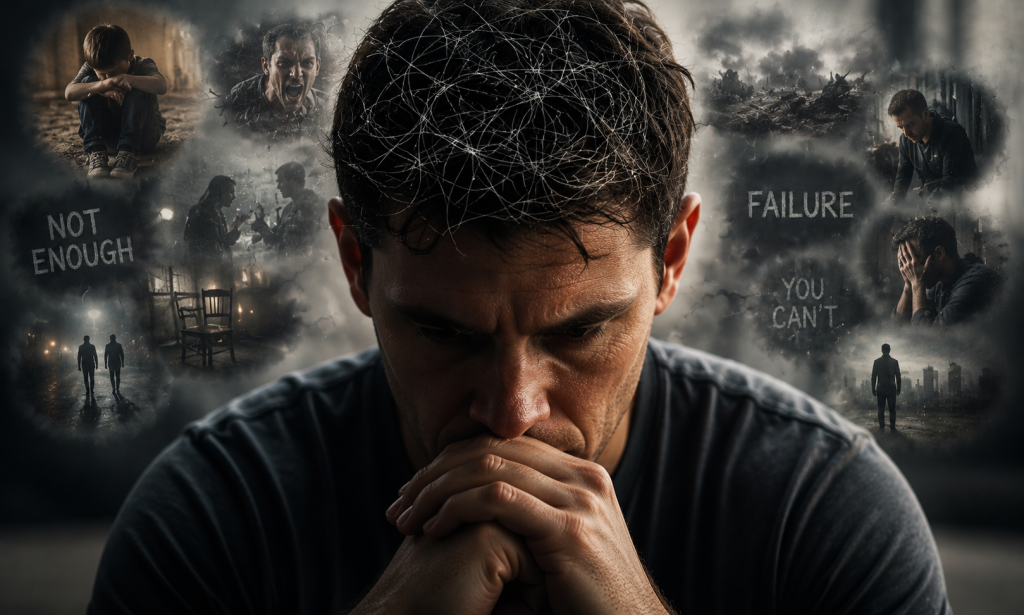
The Conditioned Mind
The conditioned mind is the result of accumulated experiences repeatedly shaping perception, emotion, behavior, and identity over time. No one enters adulthood untouched by conditioning.
Family conditions us. Trauma conditions us. Culture conditions us. Success conditions us. Pain conditions us. The nervous system learns patterns through repetition and survival. If someone grows up around chaos, the mind may begin associating calmness with danger because chaos has become psychologically familiar. If someone experiences repeated betrayal, trust may begin to feel unsafe even when love is genuine.
The conditioned mind often operates automatically. That is why many people repeat emotional cycles without understanding why. The same fears. The same reactions. The same insecurities. The same self-sabotage. The same unconscious patterns. Not because they consciously choose suffering, but because the nervous system became conditioned to familiarity over health.
And this is where self-awareness becomes transformational. Because the moment a person begins observing their conditioning instead of blindly obeying it, change becomes possible.
You begin realizing: Not every thought deserves belief. Not every emotional reaction reflects truth. Not every fear is present reality. Some responses are simply echoes of old survival patterns still operating in the background. That realization can completely change a person’s life.
Because eventually you understand something powerful: You are not only fighting the external world. You are also fighting the unconscious conditioning within yourself.

Trauma Changes the Observer
I think this becomes especially important in professions where trauma becomes normalized. Law enforcement. Military service. Firefighters. EMS. Emergency dispatch. Corrections. Many of us spend years conditioning ourselves to anticipate danger before it appears. We scan rooms automatically. We identify exits without thinking. We study body language constantly. We prepare for worst-case scenarios by instinct.
People often call this paranoia, but it is more accurately pattern recognition shaped through exposure. The problem is that the nervous system does not always know when to turn that process off. After enough trauma, enough stress, enough exposure to violence, betrayal, death, and chaos, the observer itself changes. The mind begins expecting darkness.
I know this personally. I served in the military after 9/11 and deployed to Iraq in 2005 as an Arabic linguist attached to a battalion commander. Years later, I entered law enforcement, eventually working SWAT operations and serving as a DEA task force officer and DEA SRT assistant team leader.
People often romanticize those environments from the outside. They imagine adrenaline, excitement, purpose, and brotherhood. Those things exist. But so does cumulative stress. So does emotional compartmentalization. So does the burden that quietly follows you home afterward.
I remember operations where your heart rate spikes so violently you can feel it pounding through your armor. One operation in particular still stands out in my memory. We were serving a warrant on a violent gang member. I was carrying a rifle-rated shield weighing roughly 50 pounds while running a handgun behind it. At one point, the suspect reached toward a Glock with an extended magazine while commands were being shouted.
Time slowed down. That sensation is difficult to explain unless you have lived it. Your vision narrows. Your hearing changes. Your entire nervous system shifts into survival mode. Eventually, the suspect complied. The operation ended. Everybody went home. But two days later, after the adrenaline wore off, I crashed emotionally in a way I did not expect.
That is something many people never discuss openly: trauma does not always hit during the event itself. Sometimes it arrives afterward in silence. Sometimes the body absorbs the impact before the conscious mind does.
If you spend enough years in professions like these without reflection, your internal observer slowly becomes conditioned toward danger permanently. You begin seeing life through the lens of threat detection. You expect betrayal before trust. Conflict before peace. Loss before connection. The observer itself becomes wounded.

War Never Fully Leaves Some People
I think this becomes even more true for people who grew up around war. Long before I ever wore a military uniform, I had already been exposed to violence overseas as a child. I remember being in Liberia during the civil war in 1988 and witnessing things children should never have to see. Fear. Chaos. Armed men. The atmosphere itself felt unstable, as if danger could erupt at any moment.
Later, in southern Lebanon, I remember hearing artillery strike mountains in the distance and watching militant convoys move through villages as though war itself had become part of the landscape. When you are exposed to those environments early in life, something changes inside of you. Even if you leave physically, a part of your nervous system never fully does.
I do not think I understood that when I was younger. Looking back now, I realize I was drawn toward conflict long before I consciously recognized it. After 9/11, I joined the Army and eventually deployed to Iraq in 2005 as an Arabic linguist attached to a battalion commander. At the time, I believed I was answering a sense of duty, and I was. But I also think there was something deeper happening psychologically.
War already felt familiar to me. I’ve always said I felt like something woke up inside me that was dormant.
For some people raised around instability, conflict does not always feel foreign. Sometimes peace feels more unfamiliar than chaos. The nervous system adapts to survival environments, and eventually, heightened alertness becomes baseline functioning. Hypervigilance becomes identity. You begin feeling most comfortable in environments where other people feel overwhelmed.
I think many veterans, first responders, and people exposed to repeated trauma understand this even if they cannot fully explain it. The body becomes conditioned to intensity. Calmness can almost feel suspicious after years of operating in survival mode.
During my time in Iraq, I saw firsthand how prolonged exposure to conflict changes people psychologically. You begin living in constant awareness. Every movement, every sound, every vehicle, every interaction is analyzed through the lens of potential threat. The nervous system stops relaxing completely. Even when your body is physically still, the mind remains operational.
The difficult part is that many of us carry that conditioning home long after the deployment ends.
Years later, I entered law enforcement and eventually SWAT operations, environments that demanded many of the same psychological adaptations. Once again, heightened awareness became survival. Once again, the nervous system learned to scan constantly for danger before danger appeared.
And then decades later, war found my family again.
Over the past year, airstrikes devastated areas connected to my family in southern Lebanon. People I know personally were displaced. A family member working in EMS was killed when an ambulance was struck. A newly built family home was destroyed.
People see headlines. For many of us, those headlines have names attached to them. That changes everything emotionally. War becomes less theoretical when it reaches into your own bloodline. It stops being geopolitics and starts becoming phone calls, grief, fear, uncertainty, and helplessness.
If I am being honest, there were periods where the accumulation of all of it became overwhelming. Combat memories. Law enforcement stress. Family overseas. Trauma layered on top of trauma. There were mornings where getting out of bed felt difficult. Moments where the weight of responsibility, grief, and emotional exhaustion started shaping the way I viewed the world itself.
And that is the dangerous part of suffering. If left unchecked, it slowly becomes your only lens. You stop observing life objectively. You begin observing life through injury.
A wounded mind begins scanning for more wounds. A traumatized nervous system begins anticipating loss before loss even arrives. Eventually, pain stops becoming something you experience and starts becoming the framework through which you interpret reality itself.
That realization forced me to confront something difficult inside myself.
I realized that if I was not careful, survival mode would eventually become my permanent identity. Hypervigilance would replace peace. Cynicism would replace hope. Emotional armor would replace genuine connection.
And I think that is one of the hardest battles many veterans and trauma survivors quietly fight.
Not the initial trauma itself.
But the unconscious decision of whether we will allow trauma to permanently define the way we see the world.

The Brain Learns What We Rehearse
Modern neuroscience supports much of this. The brain is not static. It rewires itself constantly based on repeated experience and attention. This process, neuroplasticity, is one of the most powerful discoveries in modern neuroscience because it reveals that repeated thoughts and behaviors physically strengthen pathways in the brain.
The nervous system learns patterns through repetition.
If someone constantly rehearses fear internally, the brain becomes more efficient at detecting fear externally. If someone repeatedly lives in outrage, the mind begins searching for reasons to remain angry. If someone continually anticipates betrayal, they begin interpreting neutral events through suspicion.
This is not weakness. It is conditioning. The brain adapts to what it practices. That realization changed the way I started viewing self-awareness. I began asking myself difficult questions:
What am I feeding mentally every day?
What emotional states am I rehearsing repeatedly?
Am I training my mind toward resilience or reinforcing my own suffering?
That does not mean suppressing emotion or pretending life is positive all the time. False positivity is just another form of denial. Pain is real. Trauma is real. Grief is real. But so is mental conditioning.
Eventually, I realized something important: You cannot always control what happens around you, but you can influence the lens through which you interpret what happens.

Manifestation, Intentionality, and the Mind
This is where conversations about manifestation often become misunderstood.
Some people hear concepts like attention, mindset, and energy and immediately drift into magical thinking. They begin believing thoughts alone create reality, as if the universe operates like a vending machine responding to positive affirmations. I do not see it that way.
Good people still suffer. Children still get sick. Wars still happen. Violence still exists. Reality can be brutally unfair. But I also believe many people dismiss manifestation too quickly because they misunderstand what healthy manifestation actually means.
To me, manifestation is not about magically controlling the universe. It is about conditioning the mind toward intentional action. Your focus influences your habits. Your habits influence your decisions. Your decisions influence your direction in life.
A person who constantly rehearses hopelessness eventually moves through the world differently than someone who rehearses discipline, faith, resilience, and possibility. One hesitates before action even begins. The other adapts, endures, and keeps moving. That is not mysticism.
That is psychology.
Neurobiology.
Human behavior.
The brain is constantly scanning for patterns. It filters information based on emotional conditioning and repeated focus. Cognitive psychology even describes this through concepts like attentional bias and predictive processing: the idea that the brain uses previous experiences and expectations to help interpret reality.
In many ways, what people call “manifestation” may simply be the long-term effect of attention, belief, emotional conditioning, and repeated action aligning together over time.
At its healthiest, manifestation can become a form of intentionality: choosing what kind of mind you are building while life unfolds around you. Because eventually, the mindset you carry begins shaping the energy you bring into every room, every relationship, every challenge, and every decision. Not because you magically altered the universe. But because you altered yourself.

The Difference Between Delusion and Intentionality
This distinction matters tremendously because there is a very real difference between intentionality and delusion, and I think many people unintentionally blur that line when talking about manifestation.
Delusion says: “If I think positively enough, nothing bad will happen.”
Intentionality says: “I will choose the mindset I carry into difficult situations regardless of what happens.”
That difference changes everything.
I do not believe manifestation means we magically control reality with our thoughts alone. Life does not work that way. Good people still suffer. Trauma still exists. Wars still happen. Disease still exists. People still lose loved ones. Reality can be brutally unfair no matter how positive someone tries to remain.
And I think this is where manifestation can become dangerous if a person is not careful.
When manifestation loses connection to reality, accountability, and self-awareness, it can slowly drift into psychological escapism. People begin believing that simply “thinking correctly” will protect them from hardship or guarantee success. Some begin avoiding difficult truths because they believe acknowledging pain somehow “attracts negativity.” Others begin blaming themselves or others for suffering as if every tragedy is simply the result of improper thinking.
That is not growth. That is avoidance disguised as spirituality. Real growth requires confronting reality honestly, even when reality hurts. Intentionality is different because it does not deny suffering. It acknowledges suffering while still choosing the mindset you carry into it.
That distinction matters because mindset affects behavior. Behavior affects decisions. Decisions affect outcomes.
A person who constantly anticipates failure behaves differently than someone who carries grounded confidence. Someone trapped in hopelessness moves through the world differently than someone connected to purpose. One hesitates before action even begins. The other adapts, learns, and continues moving despite uncertainty.
The internal observer influences external action. Not magically. Psychologically. Biologically. Spiritually.
Modern neuroscience supports much of this. The brain is constantly adapting to repeated thought patterns, emotional states, and behaviors through neuroplasticity. If someone continually rehearses fear internally, eventually the nervous system becomes conditioned toward hypervigilance and threat detection. If someone constantly rehearses hopelessness, the brain begins filtering reality through defeat before action is even taken.
The reverse is also true. Discipline conditions action. Hope conditions endurance. Gratitude conditions perception. Purpose conditions resilience. This is not mystical thinking. It is the interaction between psychology, biology, behavior, and perception.
And I think healthy manifestation, when understood correctly, is really about intentional alignment rather than fantasy. It is the understanding that your thoughts influence your behavior, your behavior influences your choices, and your choices influence the direction of your life over time.
But it must remain grounded in reality.
Because the moment manifestation becomes detached from accountability, humility, suffering, and honest self-reflection, it can become dangerous. People stop adapting to reality and start trying to psychologically escape from it.
Real intentionality does the opposite.
It teaches you to face reality directly while refusing to let fear become the only voice shaping your future.

Attention Shapes Identity
The deeper I explored this concept, the more I realized attention itself may be one of the most powerful forces shaping human identity.
What we repeatedly focus on changes us.
Social media algorithms understand this. Advertising understands this. Political propaganda understands this. Repeated exposure conditions belief.
Unfortunately, modern society has become extremely skilled at monetizing fear.
Outrage spreads faster than nuance. Conflict gets more engagement than peace. Anxiety keeps people consuming.
Many people spend entire days unconsciously feeding their nervous system negativity without realizing what it is doing internally. Then they wonder why they feel exhausted, cynical, angry, hopeless, or emotionally fractured.
The observer has been conditioned.
That is why intentionality matters.
Not because we are denying darkness, but because we are refusing to feed darkness more energy than it already deserves.

Observing the Observer Observe
This brings me back to the original concept my friend mentioned:
Observe the observer observe.
Most people never step outside their own reactions long enough to examine them objectively. They simply become whatever emotion appears strongest in the moment. But growth begins when you create distance between yourself and your automatic conditioning.
Why am I reacting this way?
Why does this trigger me?
Why do I expect disaster automatically?
Why do I feed certain thoughts repeatedly?
That level of introspection can become transformative. Because once you begin observing the observer, you realize something important: Not every thought deserves belief. Not every fear deserves obedience. Not every emotional reaction reflects objective truth.
Some are simply conditioned survival responses from previous experiences. Once you recognize that, you begin reclaiming agency over your own mind.

Final Thoughts
Life will still hurt sometimes. Trauma will still exist. Loss will still arrive unexpectedly.
Chaos will still visit all of us eventually. No philosophy, science, mindset, or belief system removes that completely. But I think there is tremendous power in learning to observe ourselves honestly. To recognize the patterns we are feeding internally. To understand how attention conditions identity. To stop unconsciously rehearsing fear every day. And to intentionally cultivate resilience, awareness, gratitude, discipline, faith, and hope instead.
Not because we are weak. Not because we are pretending suffering is not real. But because we understand something important: The observer inside of us matters.
And if we are not careful, the darkness we repeatedly stare into eventually begins staring back through us. So maybe the question is not simply:
“What are you observing?”
Maybe the real question is:
“Who are you becoming while observing it?”
_____________________________
Ayman Kafel is a patrol sergeant, combat veteran, and founder of Project Sapient, with more than 20 years of operational experience. He served in Iraq as a U.S. Army soldier and translator and has worked in law enforcement roles including SWAT, DEA task force work, and plainclothes interdiction; he also holds a master’s degree in counterterrorism. For The Havok Journal, he writes from that background on law enforcement, service, training, stress, resilience, and national security, often focusing on the physical and psychological demands of high-stress work. Follow Project Sapient on Instagram, YouTube, and all podcast platforms for engaging content. He can be reached at ayman@projectsapient.com.
As the Voice of the Veteran Community, The Havok Journal seeks to publish a variety of perspectives on a number of sensitive subjects. Unless specifically noted otherwise, nothing we publish is an official point of view of The Havok Journal or any part of the U.S. government.
Buy Me A Coffee
The Havok Journal seeks to serve as a voice of the Veteran and First Responder communities through a focus on current affairs and articles of interest to the public in general, and the veteran community in particular. We strive to offer timely, current, and informative content, with the occasional piece focused on entertainment. We are continually expanding and striving to improve the readers’ experience.
© 2026 The Havok Journal
The Havok Journal welcomes re-posting of our original content as long as it is done in compliance with our Terms of Use.


