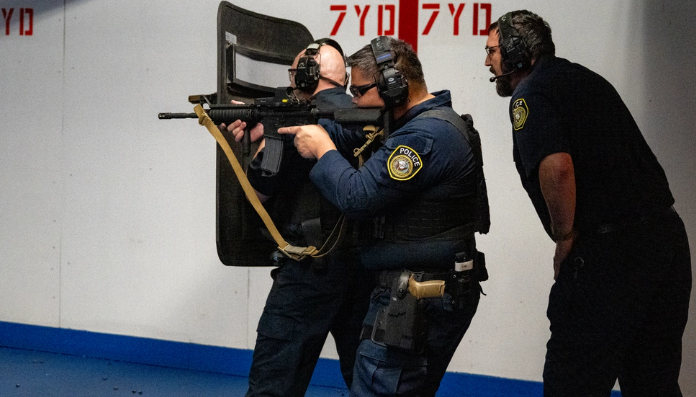
In 2020, while serving as an assistant team leader on a DEA Special Response Team operation in Boston, I found myself standing behind a rifle-rated ballistic shield weighing roughly 50 pounds. Intelligence indicated the suspect was armed and dangerous. As our team made entry and began clearing the structure, the suspect suddenly reached toward a Glock pistol equipped with an extended magazine.
In an instant, every physiological system in my body shifted into survival mode.
Years of military service, law enforcement experience, SWAT training, and stress inoculation took over. My vision sharpened. My focus narrowed. Time seemed to slow. The conscious mind stepped aside while training and instinct assumed control. Fortunately, the suspect complied with commands before the situation escalated further, and everyone went home safely.
Later, after reviewing my Apple Watch data, I discovered my heart rate had reached 209 beats per minute. At the time, I viewed that number as a point of curiosity. It was simply evidence that my body had responded appropriately to a potentially deadly encounter.
What surprised me was not what happened during the operation. It was what happened afterward.
Nearly 48 hours later, I felt exhausted in a way that made little sense. I had slept. I wasn’t injured. I wasn’t physically depleted. Yet there was a lingering fatigue that felt deeper than anything I could explain through lack of rest alone.
The operation had ended. My nervous system simply hadn’t received the message.
For most of my life, I believed recovery was straightforward. If I was tired, I slept. If I felt stressed, I trained harder. If I felt overwhelmed, I worked more. Like many warriors, I viewed recovery as something passive, something that happened automatically when I stopped moving.
Years of military service, law enforcement, SWAT operations, undercover work, and leadership responsibilities eventually forced me to reconsider that belief. The deeper I explored neuroscience and human performance research, the more I realized that survival and recovery are not the same skill. In fact, many military members and first responders spend decades mastering one while neglecting the other.
The scientific community has a name for the physiological burden created by chronic exposure to stress: allostatic load. First introduced by neuroscientists Bruce McEwen and Eliot Stellar, allostatic load describes the cumulative wear and tear placed on the body when stress-response systems are activated repeatedly over time. Human beings are remarkably adaptable. The problem is that adaptation comes with a biological cost. While the body is designed to respond to acute threats, it was never designed to remain in a constant state of readiness.
This distinction becomes especially important in professions where exposure to stress is not an occasional occurrence but a routine part of life. Every foot pursuit, overdose death, domestic violence call, use-of-force incident, officer-involved shooting, deployment, or critical medical call leaves a physiological fingerprint. Individually, these events may be manageable. Collectively, they begin to accumulate. Over the course of a career, the nervous system starts carrying a burden that many operators never consciously recognize. Poor sleep becomes normal. Hypervigilance becomes normal. Irritability becomes normal. Emotional detachment becomes normal. Living in a constant state of readiness becomes normal.
One of the greatest misconceptions within warrior culture is that these experiences are simply evidence of toughness or dedication. Neuroscience suggests something different. What many of us describe as “just the job” may actually be the biological consequences of a nervous system that has become exceptionally skilled at activation but increasingly inefficient at recovery.
To understand why this occurs, it helps to understand the autonomic nervous system. The autonomic nervous system regulates heart rate, blood pressure, respiration, digestion, and countless other physiological functions largely outside conscious awareness. It consists of two primary branches: the sympathetic nervous system and the parasympathetic nervous system.
The sympathetic nervous system is the accelerator. It prepares the body for action. Heart rate increases. Blood pressure rises. Glucose is mobilized. Attention narrows. The body prepares for survival.
The parasympathetic nervous system serves as the brake. It promotes recovery, restoration, digestion, immune function, tissue repair, and sleep. While the sympathetic nervous system helps us survive the fight, the parasympathetic nervous system helps us recover from it.
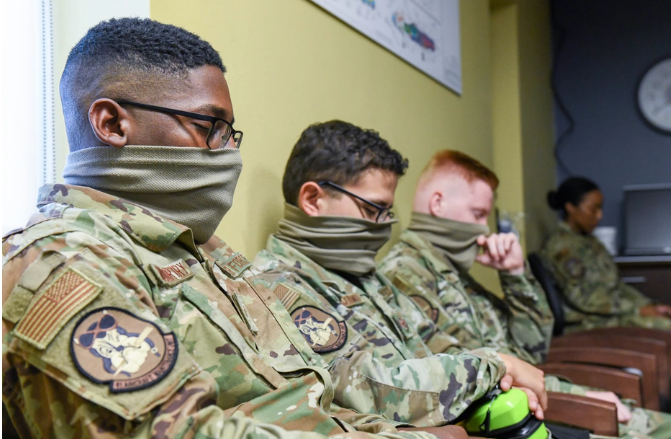
Most warriors spend their careers training the accelerator. We become exceptionally proficient at functioning under pressure. We learn to perform while adrenaline floods our bloodstream. We learn to make decisions in chaos. What receives far less attention is the ability to deliberately engage the brake.
Yet emerging research suggests that the ability to transition efficiently between activation and recovery may be one of the most important predictors of long-term resilience and performance.
One metric that has received increasing attention in both scientific literature and high-performance communities is heart rate variability, or HRV. Contrary to popular belief, a healthy heart does not beat with perfect consistency. The interval between heartbeats constantly changes. These subtle variations provide insight into how effectively the autonomic nervous system is regulating itself. Higher HRV is generally associated with greater autonomic flexibility and stronger parasympathetic influence. Lower HRV is often associated with chronic stress, fatigue, and diminished recovery capacity.
At the center of this conversation sits the vagus nerve, one of the most important components of the parasympathetic nervous system. Researchers have increasingly linked vagal activity to emotional regulation, resilience, cardiovascular health, and recovery from stress. When vagal function improves, the body becomes more efficient at transitioning away from survival mode and toward restoration.
The more I learned about these concepts, the more I began to question a belief many military members and first responders carry throughout their careers. We often assume that because we are physically away from danger, we are recovering. Neuroscience suggests otherwise. The body can leave the fight while the nervous system remains behind.
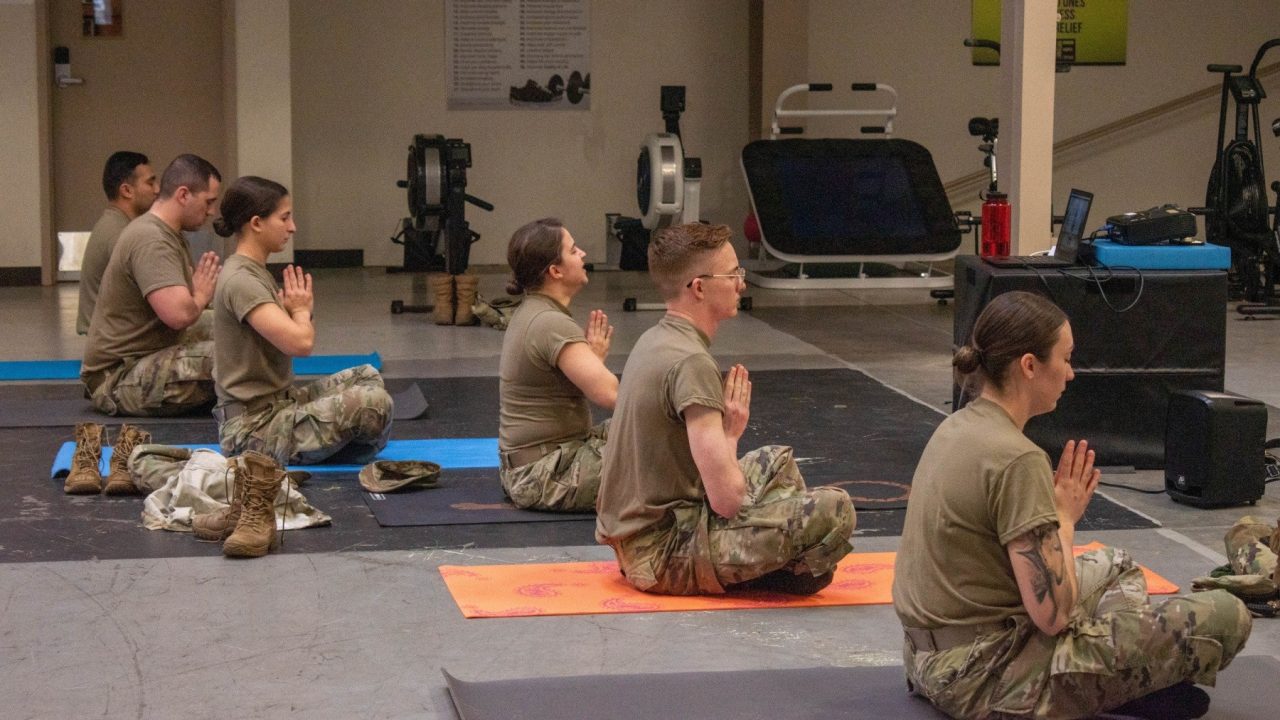
This realization has fueled growing interest in recovery methods designed to support autonomic regulation. Breathwork, meditation, mindfulness training, sleep optimization, physical exercise, sauna exposure, HRV training, and nervous system regulation technologies have all gained attention because they target the same objective: helping the body transition from activation to recovery.
One technology that has entered this conversation is NuCalm. The reason I’m bringing this up is that it was introduced to me by a close friend. I was visiting him one day, and he could tell my mind was all over the place. He asked me if I had ever heard of NuCalm. I had no idea what he was talking about. He gave me noise-canceling headphones, opened NuCalm, and had me listen to what sounded like spa music. Except it wasn’t.
NuCalm was developed through the work of Solace Lifesciences under the leadership of Jim Poole, the company’s chairman and CEO. Poole’s background is rooted in psychology, healthcare, biotechnology, and human performance. Since joining Solace Lifesciences, he has helped guide the development and expansion of NuCalm into medical settings, professional sports organizations, military communities, veteran populations, and first responder agencies.
What drew my attention was not a marketing campaign or a promise of some revolutionary shortcut. It was the problem Poole and his team were attempting to address. Modern society, and particularly professions built around exposure to stress and trauma, has become remarkably effective at teaching people how to activate. Very little attention is given to teaching them how to recover.
The fundamental question behind NuCalm is one that should resonate with everyone: if chronic stress can train the nervous system to remain on alert, can the nervous system also be trained to return more efficiently to a state of recovery?
My own experience was not dramatic. What stood out was something much more subtle. The constant internal scanning that often accompanies years of operational work began to quiet. The background noise diminished. The nervous system appeared less interested in searching for threats. For someone who has spent much of his life in environments where vigilance can determine survival, that sensation was surprisingly unfamiliar.
It wasn’t weakness. It wasn’t escapism. It wasn’t sedation. It felt more like permission. Permission for the nervous system to stop standing watch. Even if only briefly.

Whether NuCalm ultimately becomes a widely adopted recovery tool is a question future research will continue to explore. What interests me more is what its growing popularity reveals about professions built on service and sacrifice. More people are beginning to recognize that performance is not built solely through stress exposure. It is built through recovery from stress exposure.
Perhaps that is the missing lesson. Resilience is not simply the ability to endure stress. Resilience is the ability to recover from it. The strongest people I have encountered throughout my career are not simply capable of activating when circumstances demand it. They are equally capable of deactivating when circumstances allow it. They understand how to return to baseline. They understand how to recover. They understand how to come home, not only physically, but neurologically.
The fight ending and the nervous system understanding that the fight has ended are two very different things.
For many people, learning that distinction may be one of the most important skills they ever develop.

References
Stress and the Individual: Mechanisms Leading to Disease, by Bruce S. McEwen and Eliot Stellar (Archives of Internal Medicine)
Physiology and Neurobiology of Stress and Adaptation: Central Role of the Brain, by Bruce S. McEwen (Physiological Reviews)
The Polyvagal Theory: Neurophysiological Foundations of Emotions, Attachment, Communication, and Self-Regulation, by Stephen W. Porges (W.W. Norton & Company)
A Model of Neurovisceral Integration in Emotion Regulation and Dysregulation, by Julian F. Thayer and Richard D. Lane (Journal of Affective Disorders)
An Overview of Heart Rate Variability Metrics and Norms, by Fred Shaffer and J.P. Ginsberg (Frontiers in Public Health)
Applying Resilience Promotion Training Among Special Forces Police Officers, by Judith P. Andersen and others (SAGE Open)
Why We Sleep: Unlocking the Power of Sleep and Dreams, by Matthew Walker (Scribner)
On Combat: The Psychology and Physiology of Deadly Conflict in War and in Peace, by Dave Grossman and Loren W. Christensen (Human Factor Research Group Inc.)
The Neuroscience Behind NuCalm, by NuCalm (NuCalm)
Clinical Research and Outcomes Data, by NuCalm (NuCalm)
_____________________________
Ayman Kafel is a patrol sergeant, combat veteran, and founder of Project Sapient, with more than 20 years of operational experience. He served in Iraq as a U.S. Army soldier and translator and has worked in law enforcement roles including SWAT, DEA task force work, and plainclothes interdiction; he also holds a master’s degree in counterterrorism. For The Havok Journal, he writes from that background on law enforcement, service, training, stress, resilience, and national security, often focusing on the physical and psychological demands of high-stress work. Follow Project Sapient on Instagram, YouTube, and all podcast platforms for engaging content. He can be reached at ayman@projectsapient.com.
As the Voice of the Veteran Community, The Havok Journal seeks to publish a variety of perspectives on a number of sensitive subjects. Unless specifically noted otherwise, nothing we publish is an official point of view of The Havok Journal or any part of the U.S. government.
Buy Me A Coffee
The Havok Journal seeks to serve as a voice of the Veteran and First Responder communities through a focus on current affairs and articles of interest to the public in general, and the veteran community in particular. We strive to offer timely, current, and informative content, with the occasional piece focused on entertainment. We are continually expanding and striving to improve the readers’ experience.
© 2026 The Havok Journal
The Havok Journal welcomes re-posting of our original content as long as it is done in compliance with our Terms of Use.