
My wife and I have two daughters, one away at college (Emily) and one still in high school (Shannon). Both of them are contemplating carrying on the family tradition of Army service.
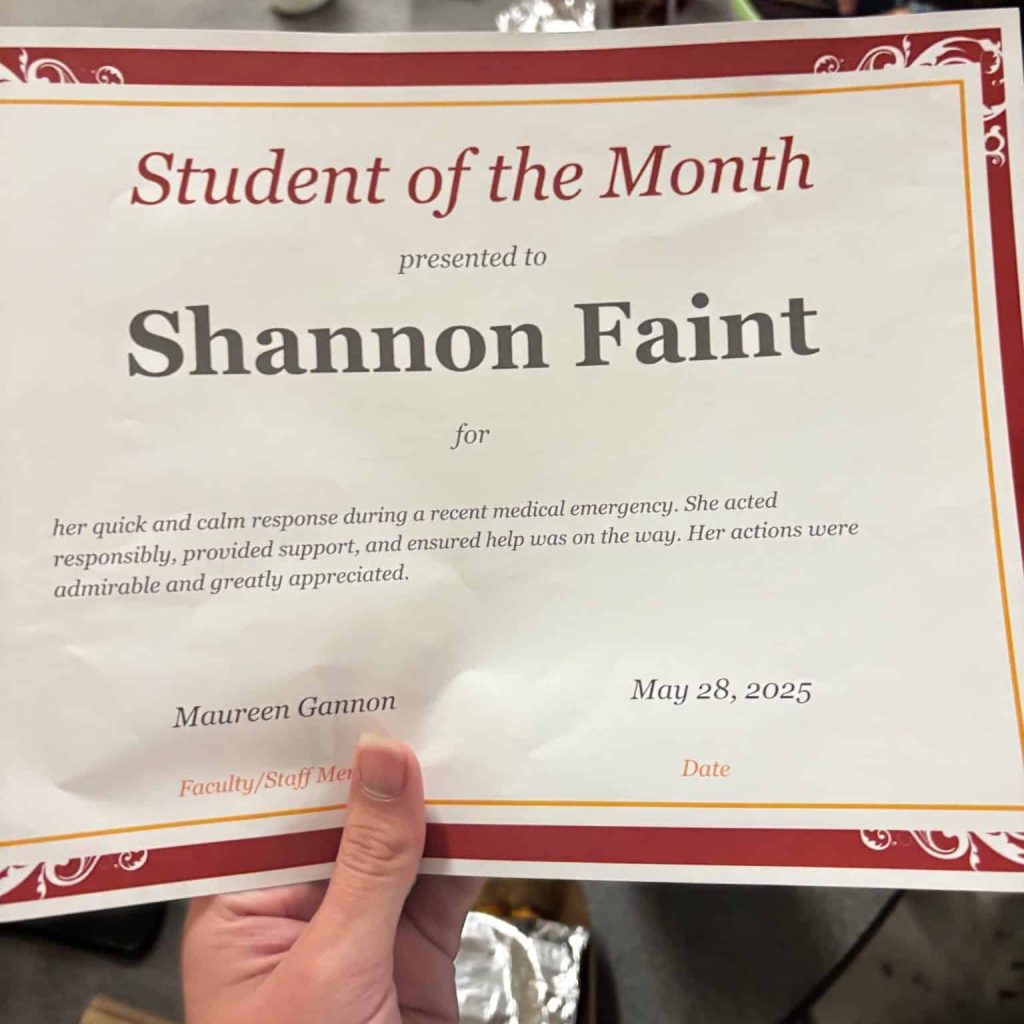
A few weeks ago there was an incident at Shannon’s high school in which a classmate experienced a potentially serious health emergency. Fortunately, the event was sorted out, and the student has fully recovered. But as it was happening, Shannon was one of the students who stepped in to render aid, notify first responders, and manage the scene until the adults took over.
As she very matter-of-factly related the details of the incident to her mother and me during dinner that night, I was struck by both her calm demeanor and the actions that she took during the incident itself. It reminded me of If, my favorite poem by British soldier and author Rudyard Kipling.
Kipling has produced some of the most-memorable military poetry in recent history: If. Gunga Din. White Man’s Burden. Tommy. Rikki Tikki Tavi. The list goes on and on. You’ve probably heard the poem If, or at least heard about it, before. It starts like this:
If you can keep your head when all about you
Are losing theirs and blaming it on you;
…and ends like this:
If you can fill the unforgiving minute
With sixty seconds’ worth of distance run—
Yours is the Earth and everything that’s in it,
And—which is more—you’ll be a Man, my son!
I fully admit that Kipling isn’t the easiest read. He’s from a different era and a different culture. His works often incorporate British slang, speaking mannerisms, and turns of phrase that have largely fallen out of use in modern American English. (I mean seriously—who says “knaves” anymore?)
As we talked about the poem, I realized it could probably use a modern update. Plus, my wife and I have daughters, not sons. So, seeing that If could use a modern rewrite, I asked my good friend ChatGPT to rewrite it for modern times—and to write it for a daughter instead of a son.
I changed a few words here and there, but I thought it was pretty damn good as written. I also had ChatGPT create an image of my daughters standing together against the storms of life, with the supporting light of everyone who cares about them shining down in their times of trouble.
That kind of mental imagery—knowing that I’m prepared for anything life might throw at me because I have the support of so many great people around me—that’s what helped get me through everything my 27 years in the Army and seven combat deployments threw my way.
I chose to call the new poem when, not if. In our lives, especially as those who have chosen a life of service like so many in our family have done, it’s a question of “when” we will need to step up, not “if.”
Not “If,” but “When”—(For Our Daughters)
After Rudyard Kipling
by Charles Faint
If you can keep your head up when the world is spinning faster,
And stay quick and calm while others panic, chasing ever after;
If you can trust your heart when doubters crowd your view,
But make space for their doubts and still believe in you;
If you can wait with grace and never tire of waiting,
Or face false talk without yourself retaliating,
If you can meet both praise and blame and stand your ground,
And not let shallow voices shake what you have found;
If you can dream, but not be ruled by dreams alone,
If you can think, but never claim your thoughts are stone,
If you can meet Triumph and Disaster eye to eye,
And treat them both as guests who simply stop nearby;

If you can bear to see your words misunderstood,
Or watch your kindness mocked, though you meant good,
If you can build again with worn and weathered tools,
When all you’ve built is gone, and still not lose your cool;
If you can risk all you have on one brave turn,
And lose it, and begin again, and never moan or burn,
If you can hold your heart, your nerve, your breath, your pace
Long after strength is gone—and still stay in the race;
If you can dance with queens and never lose your grace,
Or sit with those ignored and still uplift their space;
If neither hate nor appreciation can claim your voice,
If you can stand your ground and still respect their choice;
If you can fill each minute with meaning and with art,
And carry courage softly, with a wild and tender heart—
Yours is the world, and all its paths and sky and sea,
And—more than that, my girls—you’ll always be free.
Today, Shannon’s school recognized her with a Student of the Month certificate for her actions on the day of the emergency. I thought it was a fitting tribute to the power of If and a reminder about When.
Charles Faint served over 27 years in the US Army, which included seven combat tours in Iraq and Afghanistan with various Special Operations Forces units and two stints as an instructor at the United States Military Academy at West Point. He also completed operational tours in Egypt, the Philippines, and the Republic of Korea and earned a Doctor of Business Administration from Temple University as well as a Master of Arts in International Relations from Yale University. He is the owner of The Havok Journal, and the views expressed herein are his own and do not reflect those of the US Government or any other person or entity. He is very proud of both of his daughters.
As the Voice of the Veteran Community, The Havok Journal seeks to publish a variety of perspectives on a number of sensitive subjects. Unless specifically noted otherwise, nothing we publish is an official point of view of The Havok Journal or any part of the US government.
Buy Me A Coffee
The Havok Journal seeks to serve as a voice of the Veteran and First Responder communities through a focus on current affairs and articles of interest to the public in general, and the veteran community in particular. We strive to offer timely, current, and informative content, with the occasional piece focused on entertainment. We are continually expanding and striving to improve the readers’ experience.
© 2026 The Havok Journal
The Havok Journal welcomes re-posting of our original content as long as it is done in compliance with our Terms of Use.


