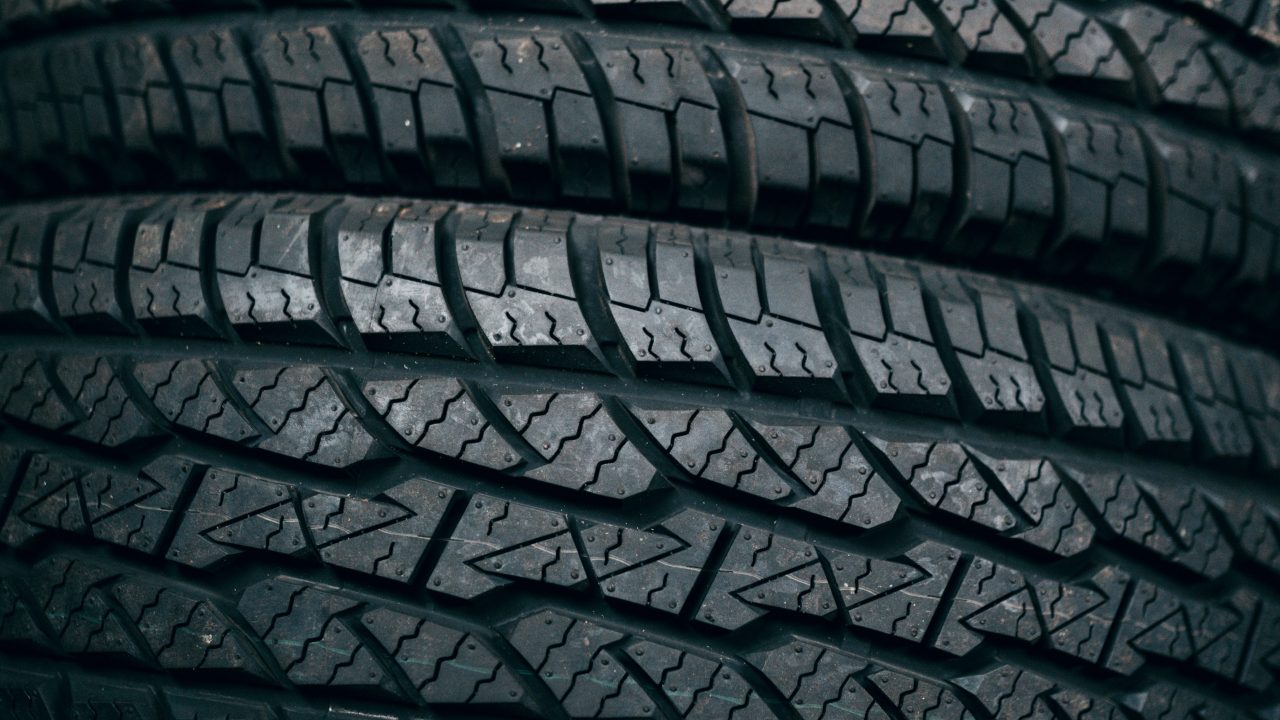
Photo by Shadrach Warid on Unsplash
Most drivers notice when tires look worn but fewer stop to ask why the wear happened where it did. Uneven tire wear causes are rarely about the tire itself. They are signals from the suspension, steering, or alignment system that something needs attention. Reading those signals correctly saves money and protects the car from more expensive damage.
A tire wearing evenly across its surface is doing its job correctly. One wearing on an edge or faster than its pair is worth investigating.
What Different Tire Wear Patterns Actually Reveal
Inner edge wear usually means the wheel is angled inward at the top, a condition called negative camber. This can result from worn suspension components, a bent control arm, or driving on rough roads without regular alignment checks. The inner shoulder of the tire bears too much of the load and wears through considerably faster.
Outer edge wear often points to positive camber or chronic underinflation. A tire running consistently low on pressure bows outward at the contact patch, causing the outer edges to wear before the center. This is why tire pressure and wheel alignment belong in the same diagnostic conversation.
Cupping, which creates a scalloped or wavy surface across the tread, usually points to worn shocks or struts. When the wheel bounces rather than rolling smoothly, the tire wears in an irregular pattern that also produces road noise.
Why Alignment Problems Do Not Stay in One Place
Wheel alignment is not a one-time setting that holds forever. Road impacts, potholes, curb strikes, and accumulated miles all shift it gradually over time. A car that was aligned two years ago may be running noticeably off today, especially if it has hit rough roads or been in a minor collision.
When alignment is off, the tire scrubs slightly sideways rather than rolling cleanly. That scrubbing removes rubber from one part of the tread instead of distributing wear evenly. Over thousands of miles, the difference in tread depth across the tire becomes significant.
Alignment problems also spread. A toe angle that is off on one axle changes how the car steers, which adds load to other tires. Front alignment issues affect rear wear patterns over time.
Uneven Tire Wear Causes and the Steering Pull Connection
A car that pulls consistently to one side on a flat road means the driver is constantly making small corrections to stay straight. Those corrections tire the driver and wear the tires on the pulling side faster. The steering wheel is doing work the alignment should be handling.
Shops that handle tire sales and alignment together see this pattern regularly. In Waco, providers offering tire alignment waco services can assess both the tire condition and the underlying cause in the same visit, which is a more complete approach than addressing one without the other.
Suspension wear is another cause of steering pull that often goes undiagnosed. A worn tie rod end, ball joint, or strut mount changes how the wheel sits relative to the road. The pull may start subtle and grow.
How Vehicle Handling Changes Before Most Drivers Notice It
Handling changes from tire and alignment problems accumulate slowly and without obvious warning. The car that felt tight and responsive a year ago may now feel slightly loose around corners, require more steering input at highway speed, or feel different on one side of the road. Most drivers adapt without fully realizing what has changed.
Tire life suffers when these problems go unaddressed. A set that should last fifty thousand miles may wear out in thirty if alignment, tire rotation, and inflation are neglected. Rotation distributes wear more evenly but does not fix a root alignment problem on its own.
Braking also changes. A car with uneven tire wear may not stop in a straight line under hard braking. The tire with less tread grips less, and that difference becomes a handling problem when it matters most.
When to Stop Guessing and Get the Car Checked
When a new set of tires shows uneven wear within the first ten thousand miles, alignment should have been checked before installation and most likely was not. New tires wearing fast on one side reveal a problem the old tires were also experiencing. The issue did not begin with the new tires.
A steering wheel that no longer sits straight on a level road, vibration that worsens at highway speed, or a car that wanders in its lane all point to alignment, balance, or suspension needing attention. These symptoms do not resolve on their own.
Getting an alignment check after any significant road impact is a smart standard to keep. A hard pothole strike can shift alignment enough to affect tire wear without causing any visible damage to the wheel.
Tire Wear Is Evidence, Not the Problem Itself
Replacing worn tires without addressing what caused the wear means the new ones will follow the same pattern. The money spent is partly wasted if the alignment or suspension problem that caused the original wear stays in place.
The tread on a tire records every mile driven in a condition the driver may not have noticed. Reading that record gives a shop useful information about the car mechanical health, often before anything more serious has a chance to develop.
The uneven tire wear causes that show up on most cars are preventable with attention to alignment, inflation, and suspension. Catching them early keeps tires lasting longer, keeps handling predictable, and keeps ownership costs lower over time.
Buy Me A Coffee
The Havok Journal seeks to serve as a voice of the Veteran and First Responder communities through a focus on current affairs and articles of interest to the public in general, and the veteran community in particular. We strive to offer timely, current, and informative content, with the occasional piece focused on entertainment. We are continually expanding and striving to improve the readers’ experience.
© 2026 The Havok Journal
The Havok Journal welcomes re-posting of our original content as long as it is done in compliance with our Terms of Use.