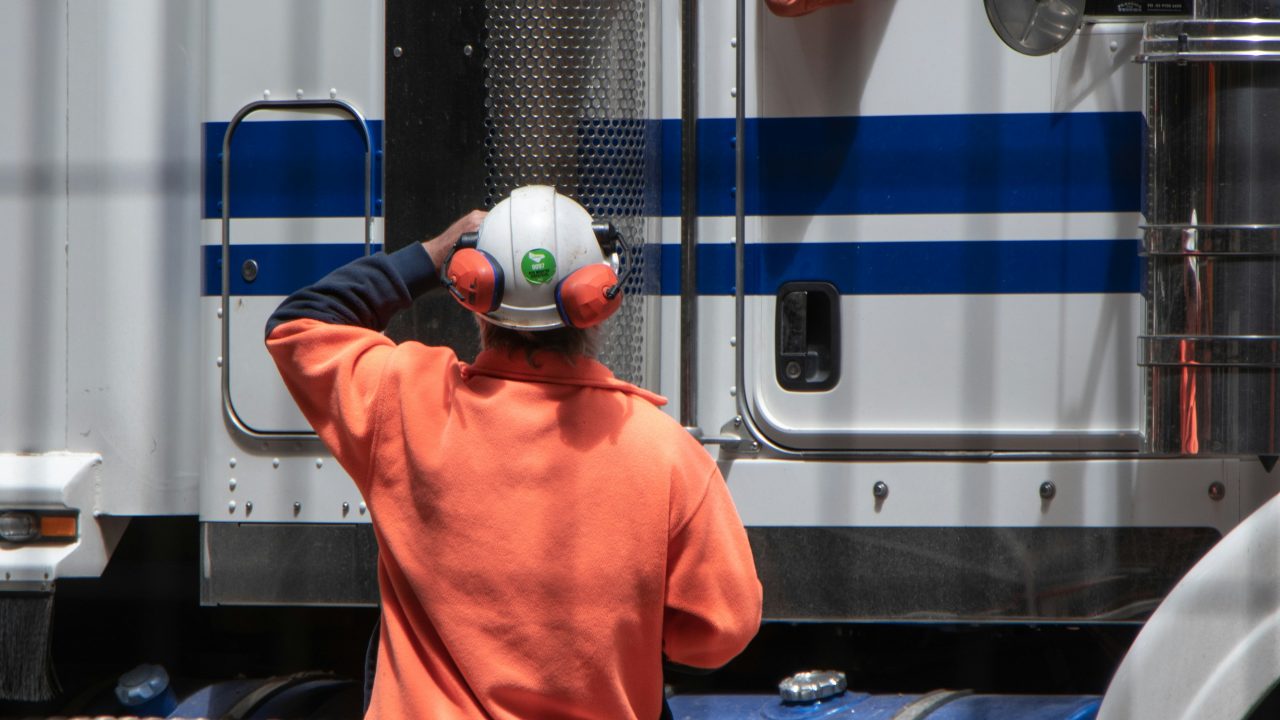
Photo by Mitchell Luo on Unsplash
Every May, Military Appreciation Month offers Americans an opportunity to recognize the service and sacrifice of those who have served in the armed forces. This piece takes a closer look at the veteran truck driver statistics behind that service.
While public attention often focuses on active-duty personnel and veterans’ healthcare, another contribution quietly supports the country every day: the role of veterans behind the wheel of America’s freight network.
From long-haul routes crossing multiple states to regional supply chains supporting local economies, many veterans continue serving the nation after military life by working in commercial transportation. The data surrounding veteran truck drivers reveals a workforce known for discipline, safety, and reliability — qualities that remain essential to keeping American highways moving efficiently.
<h2>Why Military Appreciation Month Highlights Veteran Truckers</h2>
Military Appreciation Month recognizes the continued impact veterans have across nearly every industry in the United States. Transportation and logistics stand out because many service members already possess experience operating heavy vehicles, managing cargo, and working under demanding conditions before transitioning into civilian employment.
The trucking industry has increasingly relied on veterans to help address ongoing driver shortages while maintaining high operational standards. For many employers, the transition from military service to commercial driving is a natural fit due to the overlap in training, structure, and responsibility.
In many ways, the story of veterans in trucking reflects a broader national trend: military experience often translates into careers that support critical infrastructure long after active service ends.
<h2>How Many Truck Drivers in America Are Veterans?</h2>
Veterans remain heavily represented throughout the commercial transportation industry. According to data from the American Trucking Associations and federal transportation sources, approximately 10% of professional truck drivers in the United States are military veterans. In some sectors of long-haul transportation, estimates suggest that nearly one in four drivers has prior military experience.
That level of participation makes trucking one of the largest civilian career pathways for former service members. Many carriers actively recruit veterans transitioning from military to civilian truck driver roles because military training often includes vehicle inspections, logistics coordination, route planning, and operational safety procedures.
The trucking sector also sees a significant number of veteran CDL holders, particularly among drivers who used military driving experience to streamline the commercial licensing process after leaving service. Federal initiatives have helped simplify that transition, allowing qualified veterans to apply relevant military vehicle experience toward commercial driving requirements.
<h2>What the Safety Numbers Show About Veteran Truck Drivers</h2>
Safety data continues to draw attention to the performance of veteran drivers on American roads. Several industry studies have reported that veteran drivers are involved in significantly fewer preventable accidents compared to industry averages. Some analyses estimate accident rates are approximately 42% lower among veteran-operated fleets.
Part of that reputation stems from the extensive operational training veterans receive before entering civilian transportation careers. Military driving environments often involve high-pressure conditions, strict compliance standards, and advanced vehicle handling instruction.
Industry retention numbers also suggest that the veteran trucking workforce tends to remain in the profession longer than many other driver groups. Carriers frequently point to reliability, procedural consistency, and lower turnover rates as major benefits of hiring veterans.
That broader conversation around safety is also reinforced by what the military trucker safety record reveals about long-term highway performance. Many companies view military-trained drivers as particularly valuable for routes involving hazardous cargo, oversized loads, or difficult interstate conditions because of their background in structured transportation operations.
<h2>How Federal Programs Move Veterans Into Civilian Trucking</h2>
Several federal programs now help veterans transition directly into commercial transportation careers after military service.
One of the most widely used initiatives is the Federal Motor Carrier Safety Administration (FMCSA) Military Skills Test Waiver Program. This program allows qualified veterans with heavy vehicle operating experience to bypass portions of the CDL skills testing process, reducing barriers to entry into trucking careers.
GI Bill education benefits have also become a major pathway for veterans entering commercial transportation. The Department of Veterans Affairs allows eligible service members and recently separated veterans to apply GI Bill funding toward CDL training programs, covering tuition costs and reducing financial barriers to a commercial driving career.
In recent years, the Department of Defense SkillBridge program has expanded opportunities for active-duty personnel nearing separation from military service. Through partnerships with private employers, participants can receive civilian trucking training and job placement assistance before officially leaving the military.
<h2>Where Texas Fits Into the Veteran Trucker Story</h2>
Texas plays a major role in the relationship between military service and commercial transportation. The state is home to several major military installations, including Fort Cavazos, formerly Fort Hood, which has long served as a significant source of trained vehicle operators transitioning into civilian careers.
At the same time, Texas remains one of the country’s busiest freight corridors. Interstate 35, which runs through Austin and connects major distribution hubs from Mexico to the Midwest, carries substantial commercial truck traffic every day.
That combination of military presence and freight demand has made Texas an important center for veteran trucking employment. Commercial transportation companies throughout the region continue recruiting veterans because of their operational experience and familiarity with heavy vehicle systems.
As freight traffic continues growing across Central Texas, roadway safety remains a critical concern for both drivers and the public. Austin firms that focus on commercial vehicle cases often monitor trends involving freight volume, driver fatigue, fleet safety standards, and highway accident data to better understand how trucking activity impacts regional roadways. Ongoing data tracking and case-level analysis from regional legal and safety organizations also help contextualize the broader risks facing Texas highways today.
<h2>Recognizing Service Beyond the Uniform</h2>
Military Appreciation Month serves as a reminder that service often continues long after military careers end. Across highways, shipping routes, and supply chains nationwide, veteran truck drivers continue playing an essential role in supporting commerce, infrastructure, and public safety.
Veteran truck driver statistics are clear. While much of their work happens quietly and without recognition, the statistics surrounding veteran participation in trucking reveal a workforce that continues contributing to the country in meaningful ways every day.
Buy Me A Coffee
The Havok Journal seeks to serve as a voice of the Veteran and First Responder communities through a focus on current affairs and articles of interest to the public in general, and the veteran community in particular. We strive to offer timely, current, and informative content, with the occasional piece focused on entertainment. We are continually expanding and striving to improve the readers’ experience.
© 2026 The Havok Journal
The Havok Journal welcomes re-posting of our original content as long as it is done in compliance with our Terms of Use.


